Talk to Our Expert
Our sales and engineers are available all the time, you can ask your specific requirements to our sales, and inspiration to our engineer here.

A tech once told me, with total confidence, that “a good base coat works on everybody,” and I remember looking at the client’s sidewalls lifting like cheap wallpaper while the free edge was already starting to chip, thinking: no, that’s not confidence, that’s just bad diagnosis wearing a nice bottle. It happens.
And that’s really the whole problem. People keep treating base coat like a brand choice when it’s a nail-condition choice. Oily, lift-prone nails don’t fail for the same reason brittle nails fail. One loses grip. The other loses integrity. Same manicure aisle. Totally different mess.
But the industry loves shortcuts, doesn’t it? One base. One script. One “works for all nail types” claim slapped across a product page like nobody in a salon has ever seen pocket lifting, sidewall pop-off, or stress fractures running through a weak free edge after a supposedly premium service. I frankly believe that kind of advice survives because it’s convenient, not because it’s true.
Here’s the ugly truth: retention problems are rarely random. They usually point to the wrong base, the wrong prep, or both. If the nail plate runs oily or just refuses to hold product, the issue sits at the bond line. If the natural nail is peeling, thin, or flexing under everyday pressure, the issue is structural. Different failure pattern. Different fix.
And the damage side is real too. According to the AAD’s guidance on gel manicures, repeated gel services and removal can leave nails brittle, peeled, and cracked. That’s not salon gossip. That’s dermatology. (aad.org)
Start here: oily nails don’t usually need more product. They need better anchoring.
From my experience, the worst thing you can do with a lift-prone client is panic and reach for a thicker, cushier base as if volume equals adhesion, because all that extra product often turns into leverage at the sidewall, and then the set peels up in one clean, insulting sheet. Looks strong. Isn’t.
So I keep it lean. Careful cuticle work. No dead tissue left sitting on the plate. Controlled etch, not overfiling. Dehydration. Then a thin bonding layer—sometimes with an acid-free primer in the system—followed by a slim transparent base coat or a classic base coat for nails. Not floated on. Scrubbed in. Thin enough to grip.
That part matters more than brands like to admit. “Long-lasting” is fluff. “Salon grade” is fluff. What I care about is whether the formula can be applied wafer-thin without shrinking weirdly, whether it plays nicely with prep, and whether it locks at the cuticle line instead of pooling there like syrup. Oily nails expose fake performance very fast.
Brittle nails are different. Completely.
I’ve seen techs treat a peeling, paper-thin nail plate like it’s some kind of discipline problem—more primer, more buffing, more aggression—and honestly, that’s backwards, because a brittle nail usually isn’t begging for extra bite; it’s begging for support, flex, and a little forgiveness built into the system. That’s the job.
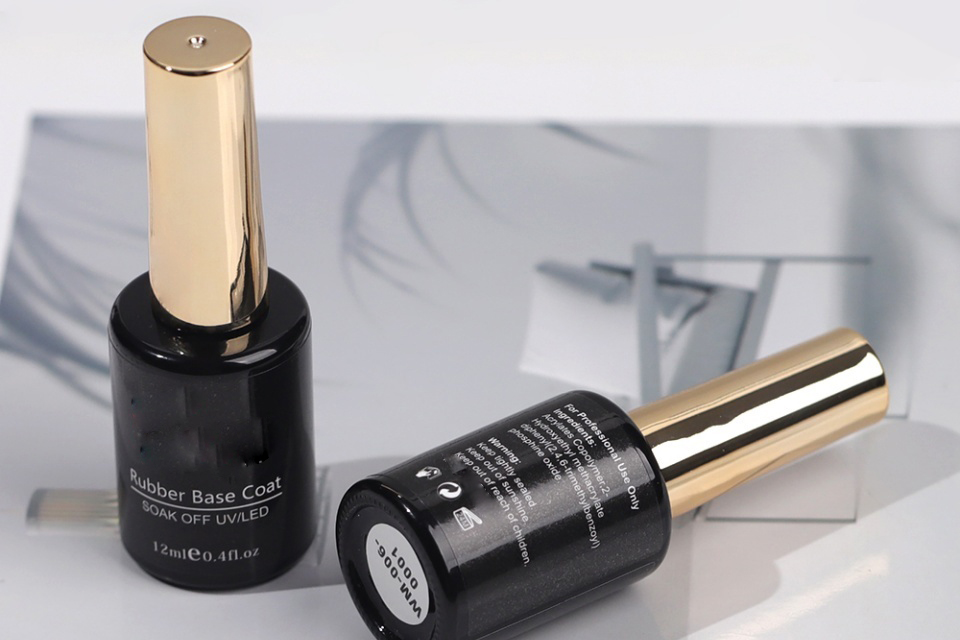
Which is why I’d rather move toward a colored rubber base than a stripped-down adhesion base when the nail is weak, ridged, or splitting at the free edge. And when the nail is already halfway to failure—little tears, flaky layers, edge breakdown—a fiberglass rubber base repair builder makes much more sense than pretending a thin clear coat will somehow rescue it. It won’t.
This is where salon jargon actually matters. A brittle nail needs a cushiony overlay, a controlled apex if length allows, and a base that can move with the plate instead of locking it into a rigid shell. That’s the difference between a service that wears and a service that snaps. Yet plenty of people still chase “grip” when the real issue is stress distribution.
And yes, I’ll say it plainly: over-buffing brittle nails to squeeze out a few extra days of retention is lazy work. It can make the set wear longer. Sure. It can also leave the client with a worse natural nail when the product comes off. Bad trade.
This one gets mangled all the time, even by people selling the stuff.
Primer is prep chemistry. Base coat is the working layer. That’s the clean version. Primer helps adhesion at the surface. Base coat determines how the enhancement behaves once the client starts living in it—typing, washing dishes, tapping counters, using their nails like tiny screwdrivers even though they swear they never do.
So when someone asks me, “Which matters more?” my answer is annoying but honest: it depends on the failure pattern. On oily nails, primer may absolutely help. On brittle nails, primer alone won’t fix a weak platform. You can’t solve structural fragility with prep fluid. Doesn’t work like that.
And this is where newer techs get tripped up. They hear “lifting” and immediately think “stronger bond.” But sometimes the set isn’t lifting because the bond is weak. Sometimes it’s lifting because the nail flexed underneath a base coat that was too thin, too rigid, or just wrong for the client. Subtle difference. Expensive difference.
Now the uncomfortable bit.
If a client has ever had itchy sidewalls, redness around the folds, fingertip dermatitis, or that weird delayed irritation people love to blame on “the lamp,” you’re no longer having a style conversation. You’re having an exposure conversation. Big difference.
And the data has gotten harder to wave away. This 2024 Contact Dermatitis study and this 2024 HEMA patch-testing paper both point in the same direction: methacrylate sensitivity in nail users is not a fringe issue. That’s why a HEMA and TPO-free base coat isn’t just a nice extra for certain client profiles or for brands selling into stricter markets. It’s smart risk control. (pubmed.ncbi.nlm.nih.gov)
Then there’s the compliance mess, which a lot of buyers still treat like someone else’s problem. It isn’t. The Commission’s own Q&A on TPO in nail products makes clear that professionals may not continue supplying TPO-containing cosmetic nail products in the EU after that date. So when a supplier talks endlessly about color payoff but gets vague around photoinitiators, documentation, or reformulation status, my guard goes up immediately. (single-market-economy.ec.europa.eu)
Honestly, this is why I look at paperwork before I get impressed by texture. If I’m sourcing seriously, I want to see the boring stuff—the specs, the consistency, the traceability, the compliance habits—which is exactly why the quality assurance page matters more than another glossy sales phrase about “super adhesion technology.” The pretty bottle isn’t the product. The system is.
If you strip away the branding noise, the matching logic is actually simple. Not simplistic. Just simple.
| Nail condition | Main failure pattern | Better base-coat direction | What I would avoid | Why |
|---|---|---|---|---|
| Oily or lift-prone nails | Sidewall lifting, pocket lifting, early separation | Thin adhesion-focused base with careful prep and, where appropriate, acid-free primer | Thick, self-leveling application meant to “hold harder” | The issue is surface bond failure, not lack of bulk |
| Brittle or peeling nails | Free-edge cracks, flaking layers, stress splits, chipping | Rubber base or reinforcing base with light structure | Heavy etching, aggressive prep, ultra-thin rigid base layers | The issue is weak structure and poor stress distribution |
| Brittle nails with sensitivity history | Weak nail plus redness or prior reaction | Flexible lower-sensitivity formula, ideally HEMA/TPO-free where needed | Random system mixing and harsh removal habits | The goal is support with lower exposure pressure |
That table is the decision tree I wish more salons used. Not “What’s trending?” Not “What did the rep say?” Not “Which bottle looks premium on camera?” Just: how is this client’s nail most likely to fail?
That answer usually tells you everything.
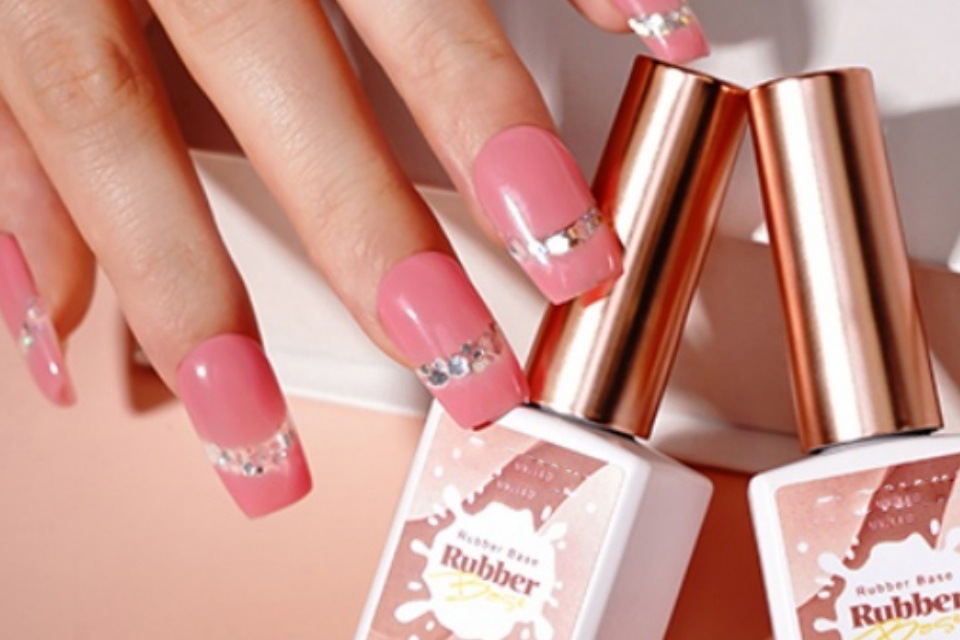
The best base coat for brittle nails is usually a flexible rubber or reinforcing base that adds a small amount of structure, cushions impact, and moves with the nail plate rather than fighting it. That kind of formula helps reduce cracking, peeling, and premature chipping better than a thin, rigid base. From my experience, rubber base is the first smart move; a repair-style reinforcing base is the next step when the free edge is already breaking down.
The best base coat for oily nails is generally a thin, adhesion-focused base applied over meticulous prep and, if the system allows it, an acid-free primer that improves bonding without adding unnecessary bulk. The whole goal is clean anchoring at the plate. Not padding. For most lift-prone clients, a thin scrubbed-in application beats a thicker self-leveling layer every time.
Rubber base can be used on oily nails, but it works best only when applied in a restrained, thin layer over excellent prep, because too much thickness can create leverage and increase the risk of sidewall lifting. So yes—it can work. Usually. I just wouldn’t make it the automatic choice unless the nail also needs some flexibility or minor structural help.
Nail primer and base coat serve different purposes, so neither automatically matters more in every case; primer improves surface bonding, while base coat controls how the enhancement behaves on the nail during wear. That’s the proper split. On oily nails, primer can matter a lot. On brittle nails, base selection usually matters more because the wear problem is mechanical, not just adhesive.
HEMA-free and TPO-free base coats matter most when the client has a sensitivity history, when the buyer wants lower-exposure formulas, or when the product must meet stricter market requirements, especially in Europe after the TPO prohibition took effect on 1 September 2025. They’re not magic. They won’t rescue sloppy prep or bad curing. But ignoring ingredient profile now is just reckless purchasing dressed up as confidence. (single-market-economy.ec.europa.eu)
That’s really it.
Don’t choose a base coat because a distributor pushed it, because a tech on TikTok got nice overlays with it, or because the bottle says “universal.” Choose it based on how the client’s nail is most likely to fail. Oily nails need adhesion control. Brittle nails need structural forgiveness. Sensitive clients need smarter chemistry. Once you see the categories that way, half the nonsense falls away.
If you’re refining a service menu or sourcing for private label, start with the base coat collection, compare it with the colored rubber base range, review the HEMA and TPO-free base coat options, and check the supplier’s quality assurance documentation. That’s how you cut lifting, reduce breakage, and make the final product choice look like a technical decision—not a guess.