Talk to Our Expert
Our sales and engineers are available all the time, you can ask your specific requirements to our sales, and inspiration to our engineer here.

A polished layout helps. But in nail—especially gel—buyers aren’t really shopping for aesthetics first, even when they say they are; they’re scanning for reassurance about shade accuracy, viscosity, cure time, pack size, reorder stability, and whether the supplier behind the pretty homepage actually has their act together.
That’s the gap. I’ve seen too many catalogs that look expensive and still feel flimsy five seconds later, because the presentation is all mood and no proof, all branding gloss and no usable product truth, which is a fast way to lose a distributor, a salon chain, or a private-label buyer who knows the difference.
Here’s the ugly truth: a lot of nail brands confuse “premium-looking” with “credible,” and those are not the same thing once a buyer starts asking real questions about opacity, undertone drift, self-leveling behavior, wear time, or whether “HEMA-free” is a tested formula position instead of a nice sticker slapped onto a mockup.
Looks nice.
That’s not enough.
A serious nail brand website should work like a doubt-killer. It should calm the buyer down before they ever hit the contact form. The distributor wants to know if reorder quality will stay tight. The salon owner wants fewer complaint loops at the table. The private-label founder wants to know whether sample batch one will still resemble production batch three. From my experience, if the site doesn’t answer those pressures early, the design stops helping and starts hiding.
And the market is big enough now that sloppy presentation is just wasted opportunity. According to Adobe’s May 2024 e-commerce report, cosmetics accounted for $35 billion in online spend in 2023, and consumers had already spent $13.2 billion online on cosmetics in the first four months of 2024, up 8% year over year. Adobe also said mobile overtook desktop during the 2023 holiday season, which means your shade range, swatches, and buying logic have to work on a phone, not just on a large desktop screen.
So yes, I’d still build the experience around a strong gel polish catalog, give serious wholesale buyers a straight path into OEM/ODM gel polish services, support every sales claim with a visible quality assurance page, and keep technical shoppers one click away from HEMA & TPO-free nail systems or trend-led ranges like cat-eye gel lines. That structure isn’t glamorous. It works.
But this is where brands make a mess of it.
They create SKU soup.
One endless page. One long grid. Base coats next to builder gels next to glitter gels next to cat-eye sets next to tools—like the buyer has nothing better to do than decode your range architecture from scratch. They won’t. And honestly, they shouldn’t have to.
I frankly believe the best catalog structure is almost boring if you describe it out loud: system first, finish or effect second, collection third. That means base coat, top coat, rubber base, builder, BIAB, color gel, cat-eye, painting gel, glitter, tools. Then you split the range by what a buyer actually needs to compare—nude, jelly, milky, matte, reflective, magnetic, sheer, full-coverage, maybe salon backbar staples versus trend drops if your assortment is deep enough.
That’s the clean version.
The reason it matters is simple: buyers don’t browse like brand managers. A distributor is watching assortment logic and reorder potential. A salon owner is looking for table-turning, complaint-resistant shades. A startup founder is asking, “Can I launch with this without drowning in sampling chaos?” Same site. Different math.
And there’s research behind that friction point. Baymard’s 2023 mobile research found that 57% of sites failed to make all color swatches available in product lists, which adds friction exactly where visually driven products need speed. If the buyer has to click into individual pages just to compare three nudes that should’ve been visible from the listing grid, you’ve already made the experience feel heavier than it needed to be. Baymard’s 2023 mobile research makes that problem painfully clear.
A bottle render is branding. A swatch set is selling.
That distinction gets missed all the time, and it’s one of the reasons nail sites can look polished while still feeling oddly unconvincing; the visuals are designed for a hero banner, not for a buyer trying to judge shimmer density, flash response, opacity build, magnetic line sharpness, or whether a nude leans pink, beige, taupe, or that tricky gray-milk tone that looks elegant in studio light and dead on real hands.
Show more.
Not random more—useful more.
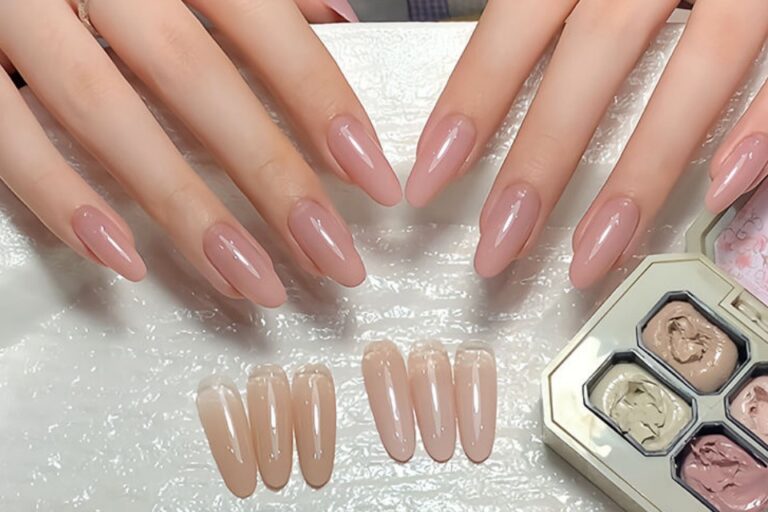
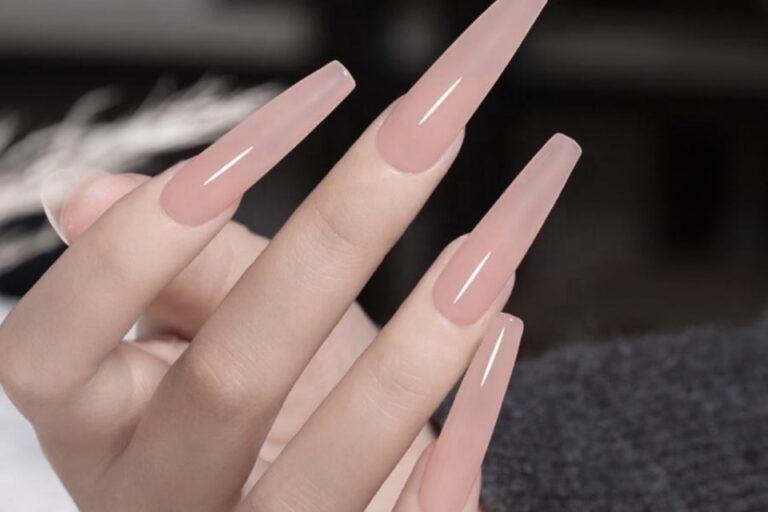
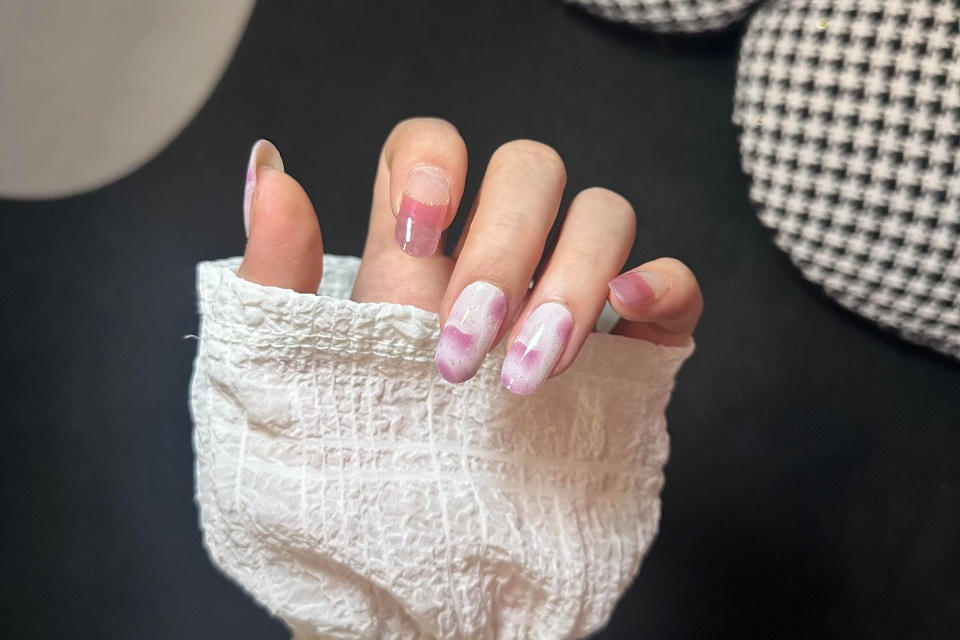
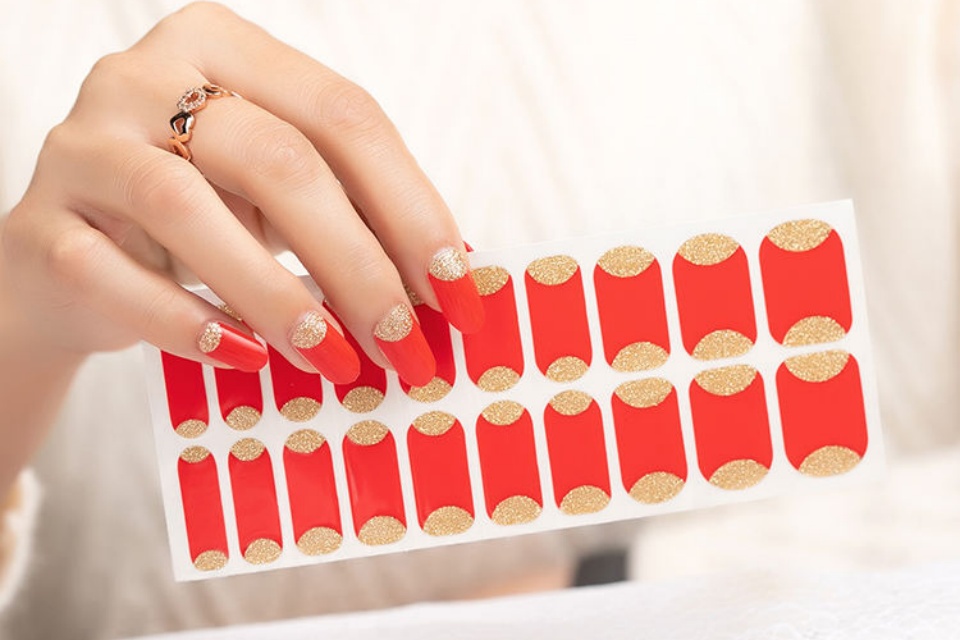
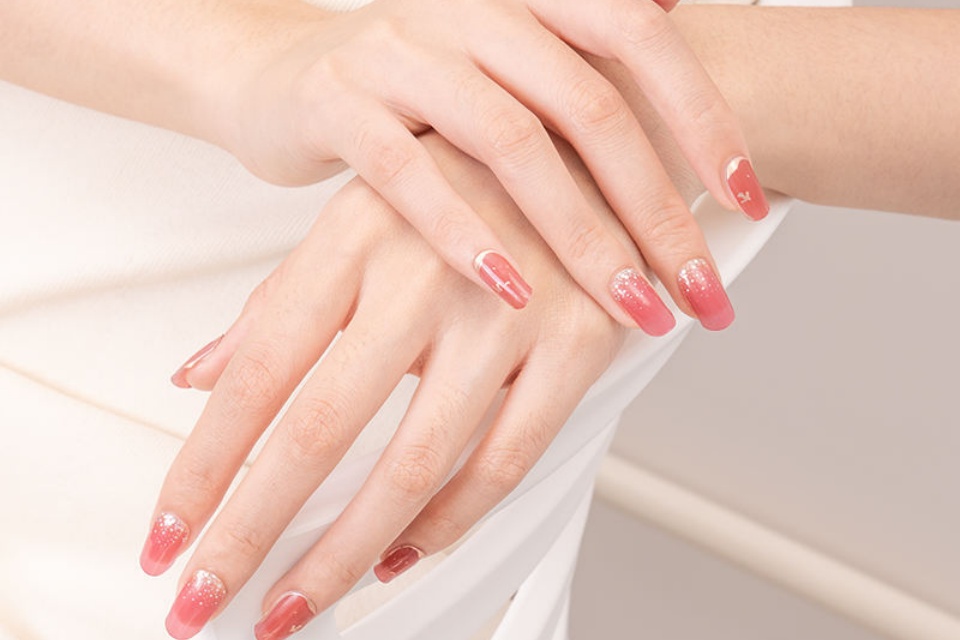
For a serious SKU or collection, I’d want at least four image layers: the bottle or jar shot, the clear-tip swatch, the real-nail application, and the texture/effect close-up. If it’s cat-eye, show the magnet line. If it’s builder, show body and leveling. If it’s glitter, show particle load under direct light. If it’s nude, keep the white balance under control and stop cooking the tone with warm editorial lighting. Buyers notice. Maybe not in fancy language, but they notice.
The broader UX data backs that up. Baymard’s product page research says nearly all users pass through a product page before purchase, while 51% of benchmarked e-commerce sites still have mediocre or worse product page UX. In separate 2024 research, Baymard also found that 67% of sites do not include social-media visuals from past buyers on product pages, even though those images often increase buyer confidence by giving shoppers an unfiltered, real-world view. In beauty, that’s not a minor miss. It’s a trust leak. The details are in Baymard’s product page research.
This is the part brands keep treating like admin work.
It isn’t.
A nail product description should feel like a tight sell sheet with just enough chemistry and commercial detail to let a buyer judge fit fast: shade code, undertone, opacity level, viscosity, LED cure time, UV cure time, fill size, soak-off behavior, self-leveling behavior, system pairing, target use case, MOQ, lead time, and documentation access. That’s not overkill in gel. That’s baseline competence.
From my experience, once buyers see disciplined product data, they assume the backend is disciplined too. And when they don’t see it? They assume they’ll be chasing answers later—shade cards, COAs, batch notes, sample timelines, all the fun stuff nobody wants to drag out over six emails and two WhatsApp voice notes.
Compliance belongs in that same trust layer. Under FDA MoCRA guidance, manufacturers and processors must register cosmetic facilities with FDA and renew registration every two years, and FDA can suspend a facility registration in serious safety situations. That means U.S.-facing buyers are not being picky when they ask for more than glossy claims. They’re being rational. If your site buries documentation behind vague copy like “contact us for details,” it reads as evasive—even if you didn’t mean it that way.
Yet this is where so many catalogs quietly lose the sale.
A bottle isn’t really the full product. The system is. Prep, base, color, top, cure behavior, removal, wear, complaint rate, reorder consistency—that whole chain is what the buyer is trying to picture, even when they only think they’re choosing a shade family.
That’s why isolated SKU pages can feel thin. They make the customer do assembly work in their own head. Bad idea.
I’d rather show the tested relationships between products. Pair the nude builder with the base and top it was actually run with. Clarify which lines are salon workhorses and which ones are launch bait for seasonal campaigns. Show which assortments are better for private-label starters and which belong in deeper wholesale programs. When the system is visible, the buyer can estimate risk faster. And faster, in B2B, usually means better.
Also—small but important point—a website usually beats a PDF once the range gets even mildly complex. A PDF is still useful, sure. Good for forwarding. Good for internal review. But a website can filter by chemistry, finish, effect, bottle size, and buyer type while keeping inquiry forms, spec pages, and sample requests in reach. PDFs inform. Websites convert. Usually.
I keep coming back to structure because it’s the part brands underestimate most, even though it affects everything else—navigation, image use, product descriptions, lead quality, even how many repetitive questions your sales team has to answer on a Tuesday afternoon.
Here’s the structure I trust:
| Section | What the buyer must see immediately | Why it works |
|---|---|---|
| Category page | System family, finish type, top 6-12 hero SKUs, visible swatches, price tier or MOQ cue | Helps buyers narrow fast without opening 20 tabs |
| Collection page | Collection story, full shade map, undertone grouping, pack options, launch angle | Turns a random color set into a merchandisable line |
| Product page | Bottle shot, swatch tip, hand shot, texture/effect shot, specs, cure time, fill size, MOQ | Reduces doubt and cuts repetitive sales questions |
| Technical sheet | INCI or formula positioning, compliance notes, shelf life, storage, batch/QC notes | Signals seriousness to distributors and private-label buyers |
| Trust page | QA process, sample approval flow, reorder controls, certifications, testing documents | Reassures buyers that repeat orders will match the first order |
| Conversion block | Sample request, quote form, WhatsApp/email, expected reply time | Turns passive browsing into a real inquiry |
And one more thing—because this part is getting uglier across beauty sites.
Don’t fake the social proof.
The FTC’s 2024 final rule on fake reviews and testimonials prohibits fake reviews, certain insider reviews without clear disclosure, and other deceptive review practices, and the rule took effect on October 21, 2024. So those suspicious five-star blurbs that all sound like the same intern wrote them? They’re not just cheesy. They can become a liability.
I’d take three disclosed salon reviews with imperfect hand photos over thirty polished “Amazing quality!!!” quotes every single time. Real swatches beat review theater. Every time.
A nail catalog is a structured sales asset—digital or downloadable—that helps salons, distributors, and private-label buyers compare shades, systems, specifications, pack sizes, and ordering terms quickly enough to shortlist products without emailing for basic information first. After that, the practical rule is simple: organize by system, then by finish or effect, then by collection. Keep swatches visible, specs tight, and the sample-request path obvious.
The best website design for nail brands is a mobile-first catalog structure that lets buyers sort products by chemistry, finish, effect, and intended use while keeping swatches, technical details, compliance cues, and inquiry options accessible throughout the buying journey. I’d choose clarity over theatrics every time. Fancy motion is fine, but not if it slows down comparison or hides the important stuff under design flourishes.
The best way to showcase gel polish colors online is to present every important shade with a consistent image stack that includes packaging, swatch tips, real-nail application, and effect-specific closeups so buyers can judge color, finish, and opacity with less guesswork. Keep the lighting standardized. Keep the angles repeatable. And don’t let “creative direction” wreck shade accuracy—that happens more than people admit.
A strong nail product description is a concise technical summary that gives buyers the information needed to judge fit, including shade code, undertone, opacity, viscosity, cure time, fill size, compatibility, removal type, MOQ, and documentation availability. In this category, vague copy usually backfires. The more technical the product, the more buyers expect disciplined specs—and honestly, they should.
A PDF catalog is a portable reference document, while a website is a searchable and filterable sales platform that supports discovery, comparison, trust-building, and inquiry generation at the same time, which is why growing nail brands usually need both instead of choosing one. The PDF is for forwarding. The website is for selling. That split tends to become obvious the moment your range stops being tiny.
If your current presentation still behaves like a brochure, I’d fix the structure before I touched the styling. Tighten the gel polish catalog, connect it to your OEM/ODM gel polish services, bring the quality assurance page out where buyers can actually see it, and keep technical shoppers close to HEMA & TPO-free nail systems and cat-eye gel lines. That’s not cosmetic. It’s commercial.