Talk to Our Expert
Our sales and engineers are available all the time, you can ask your specific requirements to our sales, and inspiration to our engineer here.

Nude is a scam word. Not always. But often.
A brand slaps “NUDE” on a beige, shoots it under forgiving studio lights, and suddenly we’re supposed to believe it works on everyone—from porcelain to espresso—when the reality is messier: lighting shifts, nail beds vary, undertones fight pigments, and your “neutral beige” can turn into dusty chalk or weird peach in two minutes. It happens. Constantly. So why does the industry keep acting surprised?
Here’s the ugly truth: “nude” sells because it sounds safe. Safe shades move units. Safe shade names keep returns low (until they don’t). And nobody wants to admit their nude range is just six versions of beige with different marketing copy.
So let’s talk like adults.
But undertone advice is everywhere, right? “Are your veins green or blue?” “Do you look good in gold jewelry?” Cute. Not enough.
I start with depth because depth decides the first impression: does the nude look like “your nails, cleaner,” or does it look like paint sitting on top of skin?
Depth first. Then undertone.
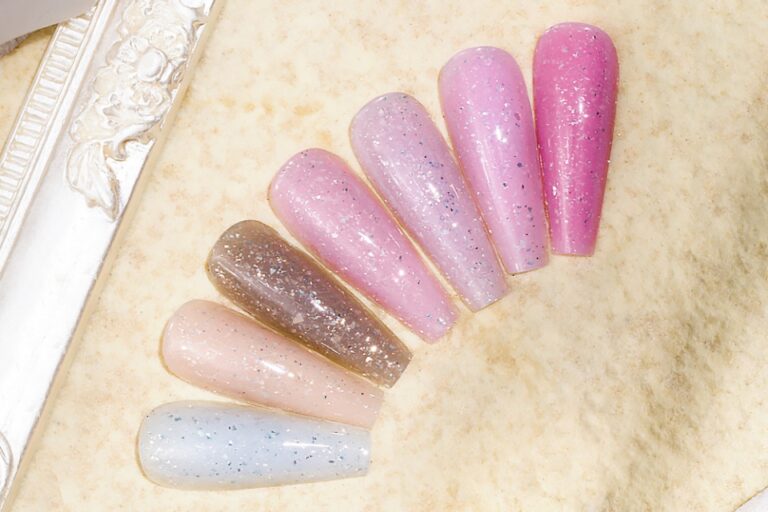
If you’re buying shades for a salon wall—or building a product line—don’t start by guessing. Start by scanning a real spread like the gel polish catalog so you can see the gaps. Most ranges don’t fail because they lack colors. They fail because the depths cluster in the same boring middle.
So. You want something less vibes-based?
Color science already did the homework: Individual Typology Angle (ITA°), built on CIE Lab values (L lightness and b* yellow-blue), gets used to classify skin tone in a way that’s… blunt. Less arguing. More measuring. One 2024 overview lays out how researchers map tone categories and why ITA stays popular when people need repeatable sorting, not guesswork. ITA skin tone measurement overview (2024)
Do you need to calculate angles in a salon? Nope.
But stealing the logic helps: measure first, label later. Your phone camera lies. Your mirror lies. Even your brain lies (especially under 6500K LEDs).
Let’s keep this clean. Not mystical.
And here’s the part people don’t like hearing: a lot of brands use “cool nude” as a polite label for “pink beige.” That’s not cool. That’s pink. Different job.
If your nude looks “off,” it’s usually one of three failures:
Which one are you seeing?
Three words: opacity controls everything. Okay, more than three. But you get it.
Sheer nudes—jelly, syrup, “my nails but better”—borrow realism from the nail bed. They hide small undertone mistakes because the natural pink shows through, so the shade doesn’t need to be perfect to look believable.
Opaque nudes don’t forgive. Not even a little.
If the undertone is wrong, opaque nude turns flat. If the depth is wrong, it turns chalky. If the pigment load is sloppy, it streaks. And nude shades expose streaks the way bright red can sometimes hide them with saturation.
If you’re buying for pros, builder-style nudes often work because they’re doing two jobs: color + structure. That’s why I keep pointing buyers at dual-purpose items like nude pink builder gel in a bottle for OEM when they want that clean, natural finish without playing “guess the undertone” every single time.
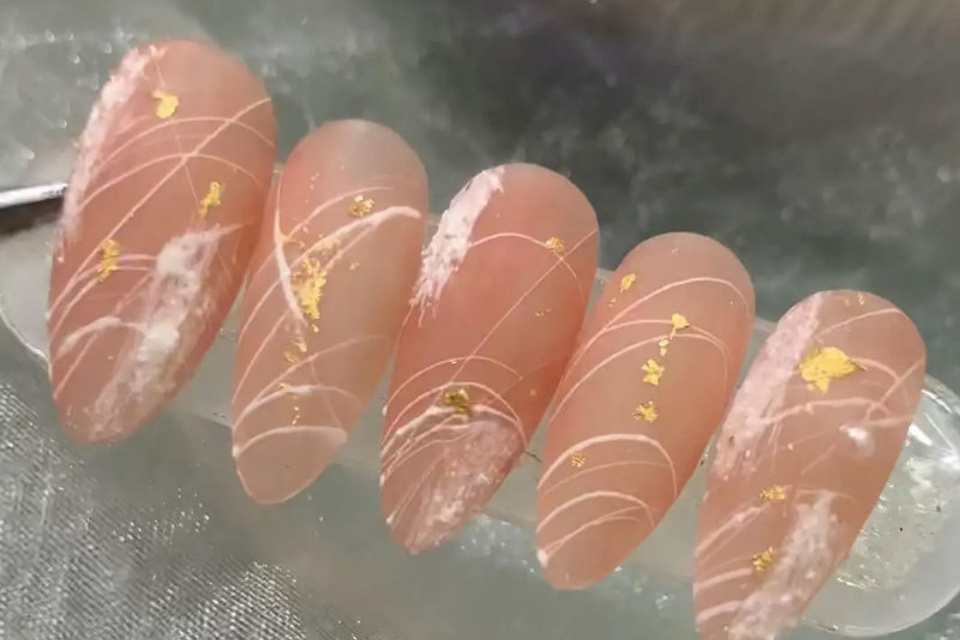
Yet the word “natural” has a history in beauty. And it’s not neutral.
If your nude range doesn’t include:
…then your range is telling on you. Loudly.
If you want a fast service menu option that looks polished without stacking layers, a tinted base can carry a lot of the load. That’s why camouflage bases exist. A good one like a nude camouflage rubber base coat isn’t “extra.” It’s a repair tool for weak shade ranges and inconsistent nail beds.
| Skin depth | Undertone cue you’ll see in real life | Nude family that usually works | Best finish choice | What to avoid |
|---|---|---|---|---|
| Fair | Pink flush shows easily; beige can look sallow | pink-beige, soft rose nude, light taupe | sheer or semi-opaque | stark beige, bright peach |
| Fair to light-medium | Can swing warm/cool; “neutral” is common | beige-pink, neutral sand, pale caramel | semi-opaque | high-white “milky nude” that reads correction fluid |
| Medium | Undertone shows in sunlight; indoor lighting can shift | caramel nude, peach-tan, warm taupe | semi-opaque or opaque (if matched) | grey taupes that drain warmth |
| Medium-deep | Many beiges turn ashy; warmth reads cleaner | toffee, mocha, cinnamon nude | semi-opaque to opaque | pale beige, pastel “nude” |
| Deep | Light shades look chalky fast; undertone needs pigment | espresso nude, red-brown nude, deep cocoa | opaque with correct undertone | anything “light nude,” unless it’s intentionally contrast art |
If you’re stocking for medium-to-deep clients, I frankly believe you should carry fewer shades—but pick them with discipline. A tight mocha lane beats a sloppy beige lane every day. And if you need a clean starting spine, a curated set like the mocha series HEMA-free gel polish color set gives you depth anchors you can build around without pretending pastel beige is “universal.”
So you matched the shade. Great. Now watch it fail because the formula is trash.
Nude shows everything: leveling, shrinkage, pigment dispersion, brush marks, lamp mismatch. And under-curing isn’t just a cosmetic problem—it’s an exposure problem.
A 2024 review of patch-test data on nail cosmetics keeps pointing at acrylate allergy, with 2-hydroxyethyl methacrylate (HEMA) showing up as a frequent culprit in allergic contact dermatitis cases tied to nail products. 2024 paper summary on acrylate allergy and HEMA
And Amsterdam UMC went public in late 2024 with a warning tone that wasn’t subtle: gel polish can drive acrylate allergy with long-term consequences, and exposure pathways (skin contact, incomplete curing) are common in both salons and DIY. Amsterdam UMC note on gel polish acrylate allergy (Dec 2024)
That’s the real-world context. Not marketing.
If you’re sourcing product, don’t just ask “Is it HEMA-free?” Ask about cure testing, lamp compatibility, and batch consistency. If a supplier can’t explain how they manage that, you’re buying risk wrapped in a pretty label. Start where the boring truth lives: quality assurance.
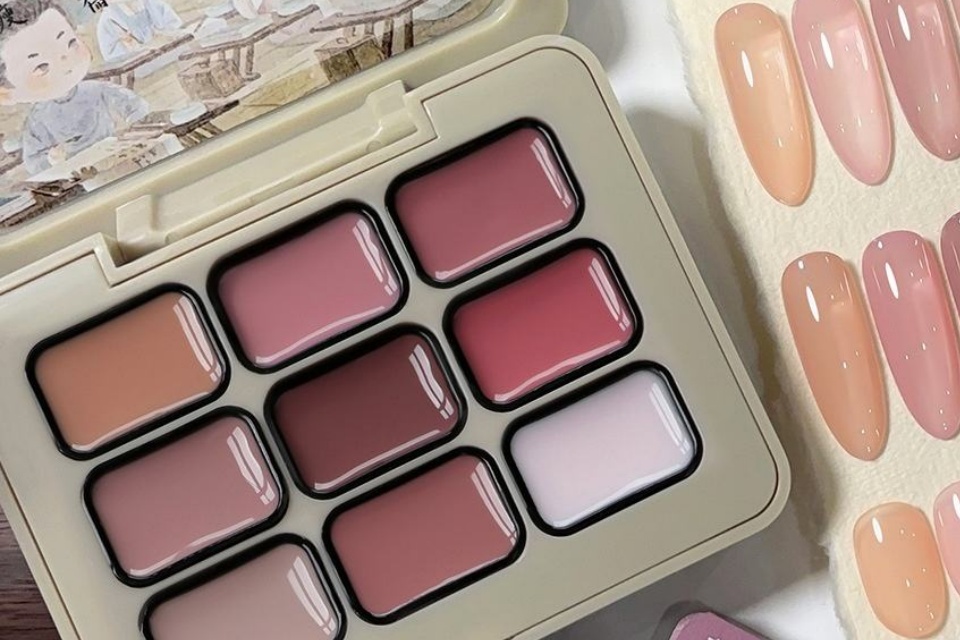
What does “nude gel polish” mean? Nude gel polish is a UV/LED-cured gel color designed to look “natural” by using low-chroma pigments (beige, pink, taupe, caramel, cocoa) that visually blend with a person’s skin and nail-bed tone rather than contrasting like bright colors, and it can be formulated as sheer, semi-opaque, or fully opaque. If it looks like concealer on the hand, it’s not nude for that wearer—it’s just beige paint.
How do I figure out my undertone for nude gel polish? Undertone is the stable color cast under your skin (warm, cool, neutral, or olive) that stays consistent even when your surface tone changes, and you can spot it by comparing how your skin looks next to true-white paper in daylight, plus whether pink-leaning nudes turn “too rosy” or yellow-leaning nudes turn “too orange” on you. If both extremes look wrong, you’re often neutral or olive—and olive needs careful, slightly muted warmth.
What nude gel polish shade matches my skin tone if I’m between “medium” and “tan”? A matching nude for in-between medium and tan skin usually sits in the caramel-to-toffee range with a balanced (not overly yellow) undertone, because that depth avoids the “too light = chalky” problem while still reading clean and natural, and it also stays stable under common 4000–6500K salon lighting. Start semi-opaque, not fully opaque, then build coverage in thin coats.
Should I choose sheer nude gel polish or opaque nude gel polish? Sheer nude gel polish is a translucent gel color that lets the natural nail-bed tone show through, making shade matching more forgiving across different undertones and depths, while opaque nude gel polish is fully covering and demands a near-exact undertone match or it will look flat, ashy, or peachy in real lighting. If you’re unsure, pick sheer or jelly first. It fails less.
Why does nude gel polish look grey or ashy on dark skin? Nude gel polish looks grey or ashy on dark skin when the shade is too light, too cool, or too desaturated for the wearer’s depth, because low-pigment beige formulas can’t “carry” against deeper melanin levels and the result reads like chalk, especially under bright LED lighting and high-gloss top coats. Choose deeper families (mocha, cocoa) and keep warmth controlled, not orange.
What ingredient “red flags” should buyers watch for when stocking nude gel polish? Red-flag ingredients and risks in gel systems often involve reactive acrylates and methacrylates (such as HEMA, 2-hydroxyethyl methacrylate) that can trigger sensitization when product touches skin or cures incompletely, so buyers should prioritize consistent curing behavior, clear compliance documentation, and options labeled for reduced allergen exposure where appropriate. If a brand can’t explain lamp compatibility and cure testing, don’t stock it.
If you want a nude range that sells cleanly (and doesn’t come back as “this looks weird on me”), build it like a system: depth anchors, undertone variants, and a clear sheer-vs-opaque lane.
Start by browsing a wide assortment in the Best Gel Polish catalog or the main gel polish collection. If you’re building a private-label nude story—mocha sets, nude rubber bases, or builder nudes—check the OEM/ODM services page, then contact the team with your target skin-tone bands and finish goals. I’d rather you launch 12 nudes that work than 48 that don’t.