Talk to Our Expert
Our sales and engineers are available all the time, you can ask your specific requirements to our sales, and inspiration to our engineer here.

I used to roll my eyes at the term “rubber.” Marketing word.
Then I watched a factory run three “rubber base” batches on the same line, same day, same operator, and the viscosity still swung enough to change self-leveling, cuticle flooding, and removal time—because the real story isn’t the word on the bottle, it’s the resin system, the monomers, the photoinitiator package, and whether the brand can actually hold a spec window when production gets busy.
So, what are we really talking about?
“Rubber base coat” usually means a soak-off rubber base coat gel that’s thicker and more flexible than a standard base coat, designed to move with bendy nail plates instead of cracking like a rigid film when the free edge flexes, taps, and twists all day.
That’s the promise. Here’s the hard truth: the same flexibility that helps rubber base coat for weak nails can also hide sloppy prep, encourage over-application, and tempt people to build thickness they can’t fully cure. And undercure isn’t a vibe. It’s a problem.
If you’ve ever seen “mysterious lifting” at day 5, or a client who swears they did everything right, rubber bases can make that mess worse when they’re laid on too thick.
Regular base coat behaves like adhesive primer: thin, fast, simple. Rubber base behaves like a micro-overlay: thicker, elastic, ridge-filling, sometimes lightly building.
But the difference that matters most isn’t feel. It’s failure mode.
A thin base coat typically fails as clean lifting (often prep, oil, or cuticle contamination). A rubber base can fail as soft lifting, “bouncy” edges, or peeling sheets—especially when the product swells from solvents, water exposure, or repeated heat cycles (hot shower → cold outside → repeat).
And yes, brands love to sell rubber base as a fix for everything. It isn’t.
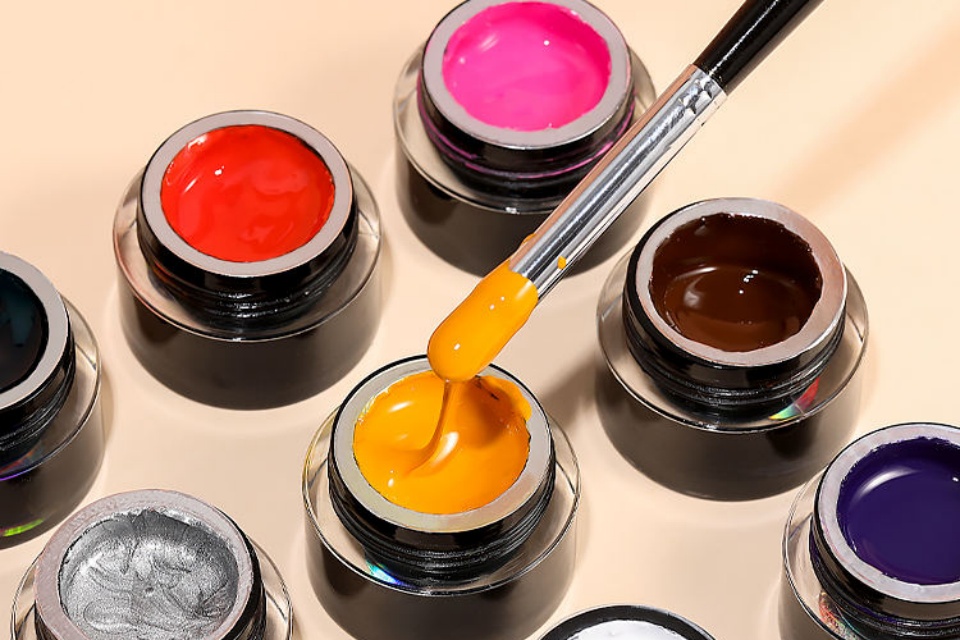
Use it when the nail plate bends so much that normal gel can’t keep up.
Three words. Flex kills retention.
More specifically, I reach for rubber base when I see:
That’s the sweet spot for rubber base coat for weak nails and rubber base coat for peeling nails.
Skip it when:
One uncomfortable question: if your retention is poor, are you using rubber base to cover process issues instead of fixing them?
The “best way” isn’t one way. It’s controlled steps.
But here’s the pattern I trust:
If you’re shopping, “best rubber base coat” isn’t about hype. It’s about consistency: self-leveling that doesn’t run, flexibility that doesn’t feel gummy, and documentation that proves the formula isn’t changing every other batch. That’s why I pay attention to a supplier’s quality controls, not just the shade card—start with how they talk about quality assurance for gel systems and whether they can explain batch tracking without getting defensive.
And if you’re sourcing for a brand, you already know the follow-up: private label needs process discipline. A glossy brochure doesn’t cure gel. A stable spec does. If you’re going that route, read the fine print on OEM/ODM services before you lock in a formula.
Let’s talk allergies, because people keep pretending it’s rare.
A 2023 clinical review in Contact Dermatitis reports that HEMA (2-hydroxyethyl methacrylate) has “recent prevalences” above 3% in the USA/Canada and 1.5%–3.7% in Europe, with most modern cases tied to nail cosmetics (both consumers and nail pros). That’s not influencer drama. That’s clinical literature. PubMed link. (PubMed)
Then you look at real-world clinic data: a retrospective Amsterdam university hospital study (patients from 2015–Aug 2023) found that among people diagnosed with allergic contact dermatitis from acrylate nail cosmetics, 97% tested positive to HEMA, and avoidance cleared dermatitis in 80%. PubMed link. (PubMed)
So yes, “rubber base coat gel” can be part of a compliance story, not just a beauty story.
Now the legal pressure: the European Commission spells out that TPO (Trimethylbenzoyl Diphenylphosphine Oxide), a common photoinitiator in UV/LED systems, was classified as a CMR category 1B reproductive toxicant under Commission Delegated Regulation (EU) 2024/197, which triggers a prohibition timeline under EU cosmetics rules. If you sell into the EU, this isn’t optional reading. EU Commission Q&A. (single-market-economy.ec.europa.eu)
This is why “free-from” labels can be misleading. Some “HEMA-free” systems simply swap to other acrylates. That may help some users. It may do nothing for others. Your risk doesn’t magically vanish because the label looks clean.
If you want a safer sourcing starting point, at least compare ingredient approaches in a documented line like a HEMA/TPO-free base coat gel category instead of buying mystery bottles off a marketplace listing.
| Product type | Flexibility | Build/strength | Best for | Common failure | Removal reality |
|---|---|---|---|---|---|
| Standard base coat | Low–medium | Low | Normal nails, thin layers, fast services | Cuticle lift from prep issues | Soak-off is usually easy |
| Rubber base coat | Medium–high | Medium | Weak/bendy nails, light ridge fill, overlay feel | “Bouncy” lift if too thick or undercured | Soak-off works, but thicker layers take longer |
| BIAB / builder-in-a-bottle | Medium | Medium–high | Overlay + light structure | Sidewall cracks if apex is wrong | Soak-off varies by formula |
| Hard gel | Low–medium | High | True structure, length, heavy wear | Cracks if stressed, or pop-off if prep is bad | Often file-off, not soak-off |
If you don’t know what category you’re in, you’ll blame the wrong thing. Every time.
For reference shopping (not promises, just navigation), it helps to compare suppliers’ positioning across a base coat lineup, a colored rubber base range, and the broader gel polish catalog so you can see what’s marketed as “base,” what’s “builder,” and what’s doing double duty.
People ruin nails in removal. Not in application.
Here’s what I tell salons when retention complaints start stacking up:
It’s boring. It works.
If you’re trying to reduce damage complaints at scale, train removal like a procedure, not like a personality trait.
A rubber base coat is a flexible soak-off gel base layer that uses elastic oligomers and (meth)acrylate monomers to create a slightly thicker, more forgiving bond between natural nail and color gel, so thin or bendy nails crack less and lifting slows when the application is correct. In practice, it behaves like a thin overlay. If you apply it like a normal base (too thin, no structure) you’ll get mediocre results. If you apply it like builder (too thick), you risk undercure and soft lifting.
A standard base coat focuses on adhesion in a very thin film, while a rubber base coat adds viscosity and flexibility so it can fill shallow ridges and absorb bend stress; in practice, that means you treat it like a micro-overlay, not just ‘glue’ for color. If you want speed on healthy nails, standard base wins. If you want forgiveness on flexible nails, rubber wins—assuming your lamp can cure it.
You should use a rubber base coat on weak nails when the free edge bends, splits, or peels under normal daily impact, because the product’s elasticity distributes stress across the plate instead of concentrating it at the cuticle line where lifting starts. Pair it with controlled thickness. The goal is support, not bulk.
If you have peeling nails, a rubber base coat can help only when peeling comes from mechanical flex and dehydration, not when you’re ripping product off; it works by adding a smooth, slightly thicker layer that reduces snagging and keeps polish from popping at the tips. If the peeling is removal damage, fix removal first. Product choice won’t save you.
Rubber base coat gel is usually removable by acetone soak-off because most formulas are built on methacrylate networks designed to swell and release, but safe removal still means breaking the top coat seal, using saturated wraps for 10–15 minutes, and pushing softened product off with almost no pressure. If your soak-off takes forever, you probably built it too thick, or you’re using a formula that’s closer to builder than base.
You don’t need a rubber base coat for every manicure; it’s a purpose-built flexible base that trades some rigidity for shock absorption, so it shines on thin, bendy, or problem nails, but it can be overkill on naturally hard plates where a thin adhesion base reduces bulk and removal time. Use it with intent. Your service menu will get cleaner overnight.
The best rubber base coat for salon work is the one that cures fully in your lamp, self-levels without flooding cuticles, and comes with complete documentation (INCI list, SDS, batch traceability), because durability problems almost always trace back to undercure, inconsistent viscosity, or sloppy raw-material control in production. If a supplier can’t show process control, don’t bet your brand on their chemistry.
If you’re buying for a salon team, start by standardizing one rubber base system, one removal protocol, and one lamp spec—then measure returns and allergy complaints for 60 days. If you’re sourcing for B2B or private label, browse the gel polish catalog and vet the supplier’s quality assurance process before you fall in love with a color.