Talk to Our Expert
Our sales and engineers are available all the time, you can ask your specific requirements to our sales, and inspiration to our engineer here.

Most brands blur.
I’ve looked at too many nail catalogs that read like warehouse exports with nicer fonts, where every page is packed with 12 ml bottles, 84-color sets, cat-eye effects, BIAB textures, HEMA-free claims, and custom-logo promises, yet none of it answers the only question that actually matters in a buyer’s head: why should anyone remember this brand next month? And if they don’t remember it, why would they reorder it?
That’s the hard truth. Storytelling in beauty is not decoration. It’s memory engineering.
And no, I’m not talking about writing a sentimental paragraph about “passion” and “dreams.” I mean building a brand narrative that explains where your line came from, what problem it solves, what aesthetic world it belongs to, why its formulas look the way they do, and why a salon owner, distributor, or consumer should trust it over the fifty other options sitting in the same feed.
According to McKinsey’s 2024 beauty analysis, global beauty retail sales reached $446 billion in 2023, up 10% from 2022. Big market, yes. Easy market? Not remotely. Bigger categories create more noise, and more noise raises the price of attention. (McKinsey & Company)
A gel polish line becomes a brand when the products stop looking random and start looking inevitable.
That shift matters in both directions. B2B buyers want a line they can pitch, merchandise, and reorder with confidence. Consumers want a line they can identify with. So the story has to do two jobs at once: lower perceived risk for the buyer and raise emotional pull for the end user.
I’ve seen this mistake again and again: founders assume storytelling is mainly for Instagram captions. It isn’t. A real brand story shapes your sampling kits, your MOQ conversations, your collection names, your box copy, your training deck, your shade architecture, and even which claims you repeat most often. If your story doesn’t affect those things, it’s probably fake.
In adjacent consumer-brand research from BoF-McKinsey, 68% of consumers said they were bothered by the amount of sponsored content on social platforms, 65% said they rely less on fashion influencers than five years ago, and 71% of executives planned to spend more on brand marketing in 2024 than before. Read that again. People are tired of polished noise, and companies know brute-force performance tactics are not enough anymore.
Here’s my view: most gel polish brands should build their narrative around one of three spines.
The first is the founder spine. This works when the founder’s background actually shaped the formula, positioning, or service model. Maybe the line was built because salon owners were tired of inconsistent viscosity, weak retention, or overhyped trend colors that did not sell through. That’s a story. But a generic “I always loved beauty” origin? Forget it.
The second is the problem-solution spine. This is often stronger for B2B. You focus on what your line fixes: better shade planning, cleaner category logic, salon-ready packaging, private-label flexibility, HEMA/TPO-free options, faster trend adaptation, or more dependable OEM execution. Buyers respond well to this because it sounds like business, not theater.
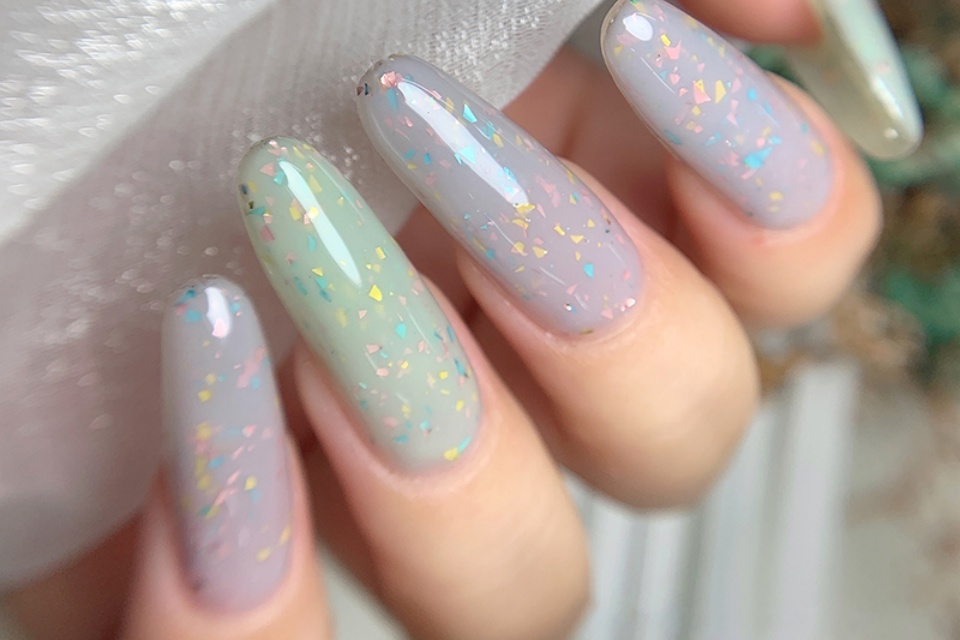
The third is the world-building spine. This is where your collections feel like chapters in the same visual universe. Seasonal palettes, mocha tones, jelly builders, cat-eye effects, reflective glitters, matte systems, pastel rubber bases—they shouldn’t feel like unrelated SKUs tossed into one basket. They should feel like a coherent aesthetic language.
That’s where pages like your gel polish catalog and OEM/ODM services stop being utility pages and start becoming evidence. Not hype. Evidence.
Look at TIME’s April 2024 profile of Rare Beauty. The brand had reached a reported $2 billion valuation, and Selena Gomez said she did not want to enter cosmetics without a mission, framing Rare Beauty around community and mental-health conversation. You can dislike celebrity beauty—and I often do—but mission plus repetition plus product fit is a serious formula. (TIME)
Then take Bloomberg’s June 2024 feature on Glossier’s You perfume. Bloomberg said the brand now sells a bottle every 20 seconds, and its reporting framed that success as turning a viral moment into a lasting business. Earlier in the same coverage stream, Bloomberg noted a jump from roughly 600 bottles sold in a day to about 6,000 after a surge in attention. That matters because virality alone is cheap; conversion into durable brand memory is the expensive part. (彭博社)
So what should a gel polish founder learn from that?
Simple. Don’t copy the celebrity. Copy the discipline.
Rare Beauty repeats a mission. Glossier repeats a sensory identity. Both brands give customers a story that is easy to retell. That’s the real test. If a distributor or salon owner can’t explain your brand in one sharp paragraph, you don’t have a story yet.
This is where many beauty articles get fluffy. I’m not going to.
In the nail business, story lives inside category structure. If your brand sells builder gel, rubber base, color gel, painting gel, sticker gel, top coat, and glitter powder, each family should play a role in the same argument. Your story might be about salon efficiency. Or safer-feeling professional systems. Or fashion-driven color curation. Or private-label flexibility with reliable manufacturing. But it has to ladder up.
That means your hero products should do narrative work. A line like custom-logo gel polish options says one thing: brand-building for private-label buyers. A page built around HEMA- and TPO-free salon-use gel polish says something else: modern compliance-minded positioning. A page featuring private-label rubber base gel polish pushes the story toward performance plus customization.
Now compare that with the weak version most brands publish: “We offer many colors and high quality.” That sentence means nothing. Every competitor says it. Every buyer ignores it.
| Brand Element | Weak Version | Story-Led Version | Why It Sells Better |
|---|---|---|---|
| Founder story | “We love beauty.” | “We built this line after seeing salons struggle with weak retention, scattered collections, and inconsistent supplier support.” | It ties the brand to a real market pain point. |
| Product range | “Many colors and products.” | “A structured system: core shades, seasonal capsules, salon builders, and private-label hero SKUs.” | It feels curated, not random. |
| Safety/compliance message | “High quality materials.” | “Selected HEMA-free and TPO-free options for buyers who need modern claim language and cleaner positioning.” | It gives buyers a practical reason to care. |
| B2B offer | “OEM available.” | “OEM/ODM with custom-logo development, catalog planning, and collection storytelling support.” | It turns manufacturing into a service story. |
| Collection launch | “New arrivals.” | “A theme-led drop with a visual mood, customer type, and retail use case.” | It becomes easier to merchandise and remember. |
This part matters more than founders admit.
There’s a legal angle now, not just a branding angle. The FTC adopted revised Endorsement Guides effective July 26, 2023, and in August 2024 announced a final rule banning fake reviews and testimonials; the agency said the rule would allow courts to impose civil penalties for knowing violations, and its official Q&A says the rule took effect on October 21, 2024. Translation: if your “storytelling” strategy leans on bought reviews, undisclosed relationships, or synthetic praise, that isn’t edgy marketing. It’s sloppy risk. ([Federal Register][4])
I frankly believe this is where a lot of smaller beauty brands go off the rails. They rent credibility instead of building it.
A believable story is not made from louder adjectives. It is made from proof: your manufacturing standards, your founder logic, your category discipline, your customer service behavior, your formula choices, your packaging consistency, your training materials, your reorder logic.
And yes, your about page matters here. So does your contact page. Buyers read those pages when they’re trying to decide whether the brand is real or just visually competent.
Here’s the version I would actually use in the field.
Start with the origin. What frustration, market gap, or professional insight led to the line?
Define the enemy. Is it short-lived trend chasing? Weak product systems? Generic private label? Confusing category overlap? Poor salon profitability?
Build the promise. What do you consistently help buyers or users achieve—faster assortment building, cleaner branding, better retention, more premium presentation, easier collection planning?
Choose the proof assets. These might be OEM support, custom-logo development, HEMA/TPO-free options, high-count shade systems, or a structured catalog by finish and use case.
Then shape the visual language. Not just pretty photos. I mean repeatable identity: bottle style, naming tone, color families, campaign mood, sample kit logic, and collection chapters.
And finally, set the retell line. One sentence. One clean sentence that a buyer can repeat after a meeting.
If they can’t repeat it, it won’t travel.
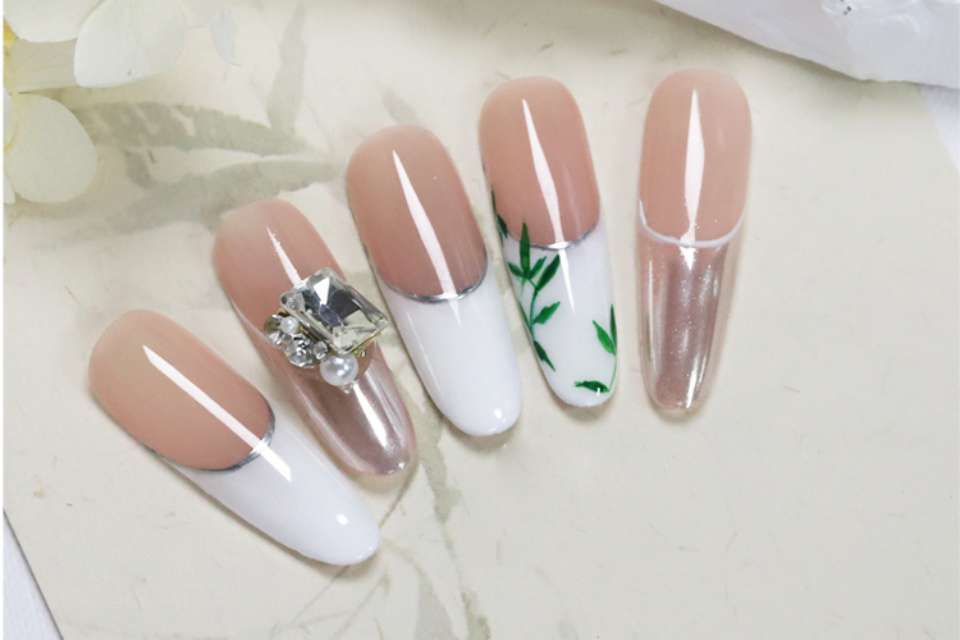
Gel polish branding is the process of giving a nail product line a clear commercial identity by linking product categories, founder logic, visual style, claims, and customer promise into one repeatable narrative that buyers and consumers can recognize, trust, and describe without confusion.
In plain English, it means your brand stops acting like a pile of SKUs and starts acting like a business with a point of view. Good branding makes your catalog easier to sell, your launches easier to remember, and your products easier to position across retail, salon, and distributor channels.
Marketing a gel polish line through storytelling means building every brand touchpoint around a central narrative, then proving that narrative through product logic, collection themes, claims, visuals, founder perspective, and customer experience rather than relying on random posts, vague slogans, or trend-chasing campaigns.
The smartest approach is to pick one strong story spine—founder, problem-solution, or world-building—and repeat it across your catalog, packaging, website, sampling materials, and launch content. Repetition is not boring. In branding, repetition is how memory gets built.
Storytelling matters for B2B buyers because it reduces uncertainty, makes assortment decisions easier, and gives distributors, salons, and retailers a cleaner commercial pitch, while also helping end consumers understand what makes the line different from hundreds of nearly interchangeable beauty products online.
B2B buyers do not purchase emotion alone, but they absolutely purchase clarity. A strong story tells them who the line is for, how to merchandise it, which hero SKUs deserve attention, and why the brand has enough internal logic to support reorders.
A believable founder story in the nail industry connects personal experience to concrete business choices such as formula direction, category structure, quality standards, salon workflow, compliance claims, or service model, instead of leaning on generic passion statements that could belong to any beauty startup.
The founder should sound like someone who noticed a real pattern and built a line to answer it. Once that story starts affecting the product mix, claims, and customer materials, buyers take it more seriously.
If you’re building a private-label line, start by tightening the narrative behind your gel polish catalog, align the offer with your OEM/ODM services, and make sure your hero SKUs actually support the story you want the market to repeat. That’s how a gel polish line stops looking like inventory and starts looking like a brand.
[4]: https://www.federalregister.gov/documents/2023/07/26/2023-14795/guides-concerning-the-use-of-endorsements-and-testimonials-in-advertising ” Federal Register \:: Guides Concerning the Use of Endorsements and Testimonials in Advertising “