Talk to Our Expert
Our sales and engineers are available all the time, you can ask your specific requirements to our sales, and inspiration to our engineer here.

I watched this happen in real time.
One week it was “Can you squeeze me in?” The next week it was a DM: “I bought a lamp. I’m doing it myself now.” And that’s the whole story of the at-home gel manicure kit boom—clients didn’t wake up craving chemistry experiments; they just got tired of the friction: bookings, prices, time, and the occasional removal session that feels like punishment.
Three words. People got tired.
And here’s what nobody wants to say out loud: salons didn’t lose clients because DIY is “better.” They lost clients because salons made basic gel feel like a commodity—same beige, same shine, same 60 minutes—then priced it like every set was museum work. Customers did what customers do. They found a cheaper workflow.
So what’s left for pros?
The hard stuff. The annoying stuff. The high-skill stuff that doesn’t fit neatly in a little Amazon box.
Ever done the back-of-napkin calculation a client does in their head, silently, while you’re chatting about weekend plans—because once they see a $40–$120 upfront kit (lamp + base + color + top), and realize each set afterward is a few bucks in consumables, they stop thinking “luxury service” and start thinking “cost per wear,” and that mental shift is brutal for salons that rely on repeat basics.
It adds up. Fast.
Now, I’m not pretending DIY is free. It costs time. Lots of it. People burn two hours on prep, then curse at lint, then redo a thumbnail, then do the whole “why is it wrinkling?” spiral. But the pain is private, at home, with Netflix on. For many clients, that’s still a win.
But, and this matters, DIY doesn’t just “disrupt.” It also creates a whole new pile of avoidable problems—especially with skin contact and under-curing, which are basically the two horsemen of gel chaos (and yes, salons can mess this up too, but home users do it more often because nobody’s watching them flood the cuticle).
Short sentence. Big consequences.
The British Association of Dermatologists didn’t tiptoe around this in 2023. They warned about at-home artificial nail kits, called out allergy risk, and stressed that people shouldn’t mix random products with random lamps like it’s Lego. Read their wording—it’s not subtle: BAD warning on at-home kits. (bad.org.uk)
And lamps? Don’t let the “LED” label lull you to sleep.
A 2023 paper in Nature Communications found UV nail dryers can damage DNA and leave mutation patterns in mammalian cells. That doesn’t mean your client will combust after a mani. It does mean the device isn’t a toy, and heavy use should make people think twice: Nature Communications study on UV nail dryers. (nature.com)
If you want the same idea in plainer language (less lab-speak, more “what does this mean?”), UC’s summary hits the headline point: UC news summary. (universityofcalifornia.edu)
Now the part that really punches salons in the face: allergy issues don’t stay at home. People show up later with irritated cuticles, lifting, brittleness, weird rashes, and they want you to “fix it.” A 2024 review on adverse effects tied to DIY nail cosmetics (NIH-hosted full text) lists allergic contact dermatitis as the most common issue and ties it to (meth)acrylates used in gel systems. That’s the same chemical family behind HEMA exposure and sensitization: NIH review on DIY nail cosmetic adverse effects. (pmc.ncbi.nlm.nih.gov)
That’s not a moral panic. That’s a business opportunity—with a duty-of-care angle—if salons stop sulking and start packaging expertise.
Yet the story isn’t just “pandemic hobby.” It’s supply chain + e-commerce + creators selling a repeatable routine.
Lockdowns lit the fuse. E-commerce kept it burning. TikTok poured gasoline on it.
And yes, market research is squishy. I know. Still, the directional signal is loud. One 2024 estimate pegged the global at-home gel nail kits market at $758.67M in 2024 and projected more growth: Data Bridge market estimate. (databridgemarketresearch.com)
And the broader nail care category is projected to keep expanding too. Technavio’s 2024 note (distributed via PRNewswire) estimates the global nail care products market size will grow by $5.96B from 2024 to 2028: Technavio via PRNewswire. (prnewswire.com)
So when a salon owner tells me, “DIY is a phase,” I frankly believe that’s wishful thinking disguised as strategy.
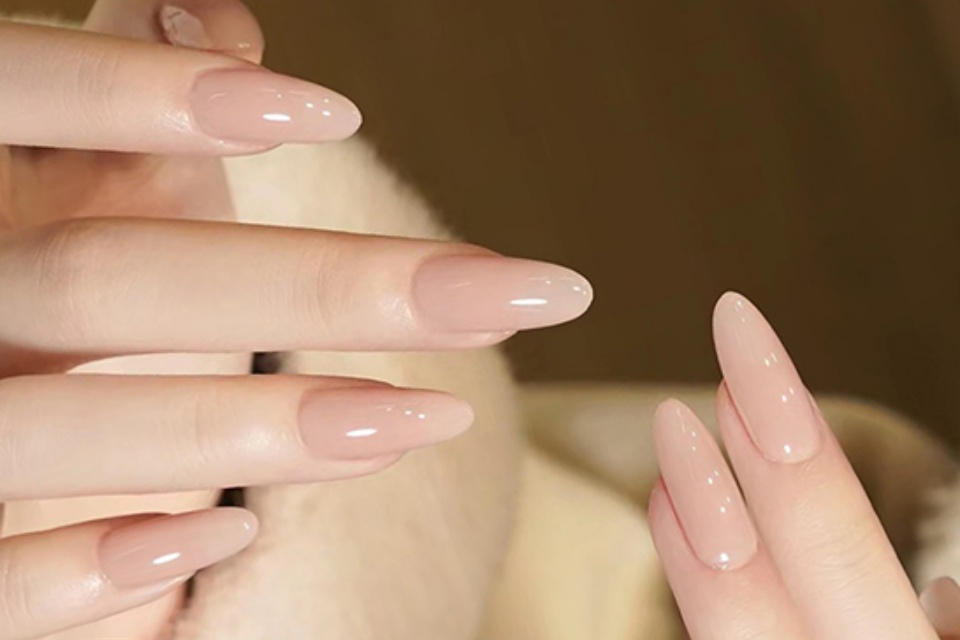
Confession: I’ve seen salons handle this brilliantly.
And I’ve seen salons handle it like toddlers—posting scare-y content, shaming clients, and basically pushing people to buy even more kits out of spite. Not smart.
Here’s what actually works in the real world:
And if you’re building a kit shelf (or a take-home program), don’t lead with 98 colors. Lead with foundations. Always.
Most DIY failures start at the base layer, not the shade. That’s why builders and rubber bases exploded. If you’re building a kit or a retail shelf, I’d start with a controlled foundation like a builder-in-a-bottle gel and a safer-leaning option such as a HEMA/TPO-free base coat for clients who worry about sensitization. (No, “free-from” isn’t magic. But it’s part of the risk conversation now.)
Then you add the “fun.” Color sets. Effects. Cat-eye. Glitter. People buy those later, after they’ve stopped lifting on day three.
And if your client wants extensions at home, they’re already shopping for poly systems. Better to guide them than let them get burned by mystery gel in an unmarked jar. A retail-ready option looks like a professional poly nail kit for extensions.
If you’re a brand or salon group thinking bigger—private label, salons selling their own “take-home” line—skip the back-alley sourcing and build it properly with documented batching, stability checks, and repeatable QC through an OEM partner. That’s exactly what OEM/ODM services exist for, and it’s how you avoid becoming the next allergy horror story on social media.
They don’t compare artistry. They compare friction.
| Factor | At-home gel manicure kit | Salon gel manicure |
|---|---|---|
| Upfront cost | $40–$120 typical (lamp + products) | €55–€110 per visit (varies by city/service) |
| Ongoing cost per set | ~$3–$8 consumables | Same as service price |
| Time cost | 60–150 minutes (learning curve is real) | 45–90 minutes |
| Outcome variance | High (lamp mismatch, thick layers, flooding cuticles) | Lower (trained prep + controlled curing) |
| Allergy risk drivers | Skin contact + under-curing + poor removal habits | Repeated exposure still matters, but technique is steadier |
| Best use case | Simple colors, occasional wear, budget control | Long wear, clean prep, repairs, complex finishes |
That table is why salon owners arguing online about “DIY quality” are missing the point. Clients aren’t holding a tribunal. They’re optimizing their week.
Sometimes DIY wins. Sometimes salons win. The overlap is where the money shifts.
1) How do I do a DIY gel manicure at home safely? A DIY gel manicure at home is a step-by-step process where you prep the nail, apply thin gel layers (base, color, top), and cure each layer under a compatible UV/LED lamp to fully harden the polymer—safety depends on avoiding skin contact, preventing under-curing, and removing product gently without scraping the nail plate. Now the real-world part: keep coats thin, wipe any flooding before curing, and don’t do the “close enough” cure time because you’re rushing. And don’t mix random gels with random lamps—dermatologists have warned that misuse increases allergy risk. (bad.org.uk)
2) What’s the best at-home gel nail kit for beginners? The best at-home gel nail kit for beginners is one that pairs a reliable lamp with beginner-friendly, self-leveling formulas and clear instructions so curing is consistent, layers stay thin, and the user can avoid cuticle flooding—the goal is predictable results, not maximum wattage or the biggest color count. If the kit “teaches” anything, it should teach discipline: thin coats, full cure, clean edges. Beginners don’t fail because they picked the wrong pink. They fail because they treat gel like regular polish.
3) At-home gel manicure vs salon: what’s the real difference? At-home gel manicure vs salon is mainly a trade-off between cost control and professional technique—DIY lowers price per set but raises error risk (under-curing, skin exposure, rough removal), while salon service costs more but typically delivers cleaner prep, steadier curing discipline, and better repairs when nails are damaged. Here’s my blunt take: if you want predictable retention and you hate redoing thumbs, salons still win. If you can tolerate a learning curve (and a few disasters), DIY can be “good enough.”
4) Are at-home gel manicure kits worth it? At-home gel manicure kits are worth it when you do simple sets often enough to amortize the upfront cost, can follow curing instructions precisely, and are willing to learn prep and removal—if you cut corners, the “savings” can flip into expensive salon repairs and possible allergy problems. Most people break even after 2–4 salon visits. The sneaky cost is time, plus the occasional “why is this lifting” rage session.
5) Do UV/LED nail lamps cause damage? UV/LED nail lamps are curing devices that emit ultraviolet light to harden gel polymers, and the risk discussion centers on repeated exposure and device output—lab research has found UV nail dryers can cause DNA damage and mutation patterns in cells, which doesn’t prove real-world harm in clients but raises valid caution for heavy use. If someone DIYs a lot, I tell them to reduce extra cure cycles, consider fingerless UV gloves, and stop treating the lamp like a desk toy. (nature.com)
6) Why do some people develop gel nail allergies (HEMA and other acrylates)? Gel nail allergies are immune reactions—most often allergic contact dermatitis—triggered when (meth)acrylate monomers (like HEMA) touch skin, especially if product is under-cured, over-applied, or repeatedly contacts cuticles; once sensitized, people may react to related chemicals in dental materials, adhesives, and more. So yes, that tiny “flooded cuticle” detail matters. A lot. A 2024 review of DIY nail cosmetic harms highlights allergic dermatitis as the most common adverse event linked to these materials. (pmc.ncbi.nlm.nih.gov)
DIY isn’t going away. So let’s stop pretending it will.
If you’re building a retail shelf, a salon take-home program, or a full private-label kit line, start with foundations and safer formulation options, then scale into color. Browse the gel polish catalog and, when you’re ready to spec a kit (lamp pairing, base system, viscosity targets, HEMA/TPO-free options, MOQ), reach out here: contact our team.