Talk to Our Expert
Our sales and engineers are available all the time, you can ask your specific requirements to our sales, and inspiration to our engineer here.

Private label gel polish looks simple. Pick colors. Print labels. Post swatches. Collect margin.
Then reality shows up. Fast.
Here’s the hard truth I see over and over: most “brands” aren’t brands. They’re packaging decisions sitting on top of a formula they don’t control, a factory they’ve never audited, and a compliance burden they didn’t price in. You can still win. But you need to stop thinking like a marketer for a minute and think like a risk manager who also likes pretty colors.
Let’s talk like adults.
Gel polish isn’t one thing. It’s a system: oligomers + monomers + photoinitiators + pigments + fillers + stabilizers, all tuned to cure under a lamp band (typically ~365–405 nm), hit a viscosity target, avoid yellowing, and not separate in transit. One “cute nude” shade can behave like three different products depending on pigment load, shear mixing, and how long it sat in a warm container.
So when you’re choosing private label gel polish pre-made colors, you’re also choosing the factory’s ability to hold tolerances over time.
And no, “same formula” isn’t a guarantee. It’s a sales phrase.
If you want to move quickly, start with a real catalog and pick from proven series. That’s why I’d begin with a gel polish catalog for private label options and narrow to a tight launch set instead of chasing 98 shades on day one. Browse your baseline range in a place like the gel polish catalog and build a launch that you can actually reorder consistently.
Because reorders break brands.
Minimum order quantity (MOQ) for gel polish is where fantasies go to die.
Here’s what buyers miss: MOQ is not only “how many bottles.” It’s also how many SKUs, how many shades, how many labels, and how much line time the factory is willing to give you before they prioritize larger clients.
If you’re asking best private label gel polish suppliers the right questions, you’ll hear real operational constraints, not just “Yes friend, no problem.”
You can often negotiate MOQs, but the price moves. And the factory will protect its margin. Always.
Three things can ruin your launch: a customs hold, a retailer compliance questionnaire you can’t answer, or a safety issue that turns into refunds and chargebacks.
If you sell into the U.S., MoCRA changed the tone. Registration and product listing became real deadlines, not “nice to have.” The FDA explicitly reminded industry about MoCRA facility registration and product listing compliance tied to the July 1, 2024 enforcement timeline. Read it yourself: FDA’s June 13, 2024 MoCRA deadline update.
If you sell into the EU, ingredient pressure keeps rising. One example: TPO (Trimethylbenzoyl Diphenylphosphine Oxide), a common photoinitiator in nail gels, got pulled into the regulatory grinder after reclassification, with a hard market cut-off discussed by the Commission in its Q&A. If you operate internationally, you don’t get to ignore that. See the Commission’s explainer: TPO in nail products Q&A.
So here’s my blunt take: if your supplier can’t give you documentation fast, clean, and consistent, you’re not buying a product. You’re buying future delays.
A serious gel polish private label manufacturer should be able to support you with quality documentation and process controls. If you want to see how a supplier frames that work, check what “quality” actually claims in writing, like this quality assurance overview. Don’t trust it blindly. Use it as a checklist.
Private label gel polish quality control isn’t a single test. It’s a chain.
And yes, allergies matter. Acrylate and methacrylate monomers (think HEMA: 2-hydroxyethyl methacrylate) are frequent culprits in allergic contact dermatitis when exposure happens. A 2024 study on patch-tested women in Amsterdam found nail cosmetics were a frequent source of acrylate allergy signals, with HEMA showing up as a key marker. That’s not internet panic; that’s clinical data: Contact allergy to acrylate-containing nail cosmetics (PubMed).
Now add the lamp side. UV nail dryers aren’t just “beauty devices.” A 2023 Nature Communications paper reported DNA damage and mutation signatures in mammalian cells after irradiation with a nail polish dryer. Read the actual research, not TikTok summaries: Nature Communications (2023) UV nail dryer DNA damage study.
Do I think every gel manicure equals disaster? No. Do I think brands should treat exposure risk, curing performance, and ingredient compliance as “somebody else’s problem”? Also no.
You need repeatable checks at three layers:
And you need it documented.
Because when a salon complains that shade “Rose Milk 07” cures tacky under a 48W lamp and another says it’s fine, you’ll need to prove whether it’s formulation variance, lamp variance, or user error. Guessing is not a strategy.
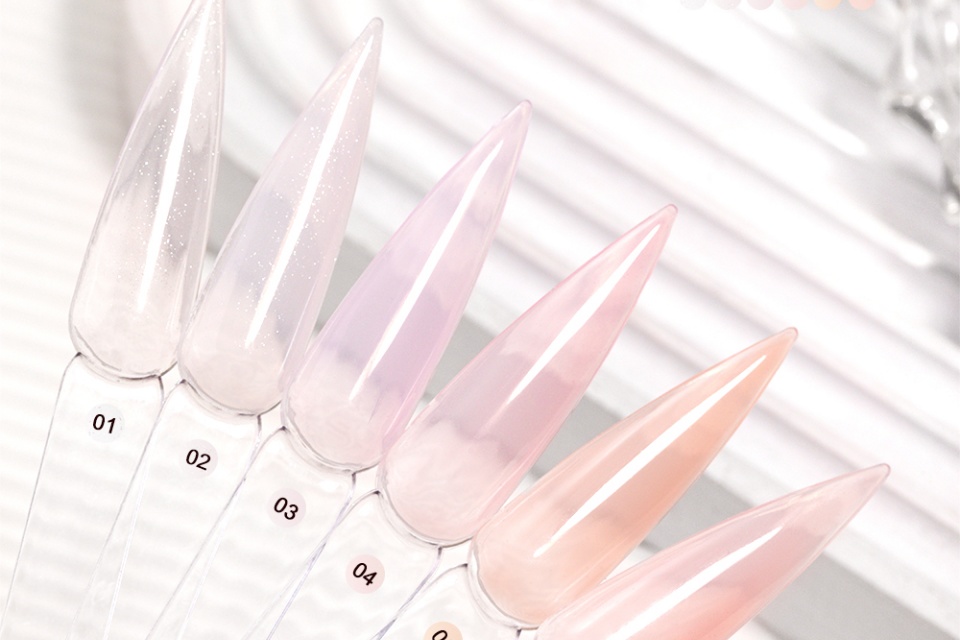
People love the phrase “custom gel polish branding.” It sounds like ownership.
But OEM gel polish usually means you’re selecting from existing formulas and customizing packaging/labeling. ODM often means the supplier offers more development input (and still owns a lot of the know-how). Both can work. Both can trap you if you assume you “own” the product because you paid for a logo.
If you want a realistic view of how manufacturers structure these offers, look at how services are grouped on pages like OEM/ODM services. Then ask the questions they don’t answer:
You’ll obsess over bottle cost. You should obsess over returns.
Private label gel polish margins often get eaten by:
So I’d rather launch 12 shades that reorder perfectly than 60 shades that drift.
Want a simple rule? If you can’t reorder it twice, it’s not a product. It’s a sample.
| Topic | What suppliers often promise | What you should demand in writing | Why it matters |
|---|---|---|---|
| MOQ for gel polish | “Low MOQ, easy” | MOQ by shade + MOQ by packaging component + reorder MOQ | Packaging MOQs quietly lock your cash |
| Color matching | “Same as sample” | Tolerance definition (ΔE target), master standard retention, batch approval method | Color drift triggers refunds and bad reviews |
| Cure performance | “Works with most lamps” | Cure spec by wavelength band (365/405 nm), recommended lamp range, tack-free expectations | Inconsistent curing becomes your customer support nightmare |
| Compliance support | “We can provide docs” | Document list + turnaround time + update policy | Retailers and customs don’t wait |
| Change control | “No changes” | Written notification requirements + re-approval workflow | Ingredient swaps happen under cost pressure |
| QC system | “We have QC” | Batch COA, stability approach, retention samples, traceability | You need evidence, not slogans |
I’d start boring. On purpose.
Sounds slow? It’s faster than relaunching after a mess.
Private label gel polish is a branded gel polish product that you sell under your own name while the formula and manufacturing are produced by a third-party factory, typically with your packaging, label design, and shade selections—meaning your main control points are specs, documentation, and reorder consistency, not the underlying chemistry. If you want control, define specs for cure behavior, shade tolerance, viscosity, and documentation up front. Then enforce them.
Minimum order quantity (MOQ) for gel polish is the supplier’s required production and packaging threshold—often set per shade, per batch, and per packaging component—so you’re not just buying “bottles,” you’re committing to manufacturing time, material purchasing, and inventory you must store and reorder intelligently. Ask for MOQ broken down by shade, by packaging, and by reorders. Hidden MOQs are where budgets break.
Private label gel polish quality control is the documented system that proves each batch meets defined standards for identity, appearance, viscosity, pigment dispersion, curing performance, and stability, using traceable records and retained samples—so when failures happen, you can isolate root cause instead of arguing by email. Request batch records, a COA structure, retention-sample policy, and a change-control policy. “We do QC” isn’t evidence.
OEM gel polish is private labeling based on an existing factory formula where you customize branding and sometimes shade selection, while ODM gel polish typically includes more manufacturer-led development or customization work that can affect formula, performance targets, and packaging—yet the supplier often still controls key know-how and process decisions. Choose OEM if you want speed and proven bases. Choose ODM if you have tight performance targets and budget for development.
Compliance documents are the records that support legal sale and responsible distribution—covering ingredient identity, safety substantiation, labeling claims, and traceability—and they vary by market, so you must align documents to your launch country before production, not after your cartons are already in transit. If you sell in the U.S., understand MoCRA timelines and obligations using the FDA’s own guidance and updates like the June 2024 FDA MoCRA reminder. If you sell in the EU, monitor ingredient shifts that can force reformulation.
If you’re serious about launching private label gel polish, don’t start with “a vibe.” Start with specs, documents, and reorder logic.
Pick a baseline range from the gel polish catalog, review how the manufacturer positions OEM/ODM services, and pressure-test their quality assurance process with real questions. When you’re ready to talk MOQs, timelines, and compliance scope, use the contact page and show them you’re a buyer who reads the fine print.