Talk to Our Expert
Our sales and engineers are available all the time, you can ask your specific requirements to our sales, and inspiration to our engineer here.

Let’s be honest. Most articles on this topic are fluff. They pretend the choice between BIAB and traditional pot builder gel is just about “preference,” as if viscosity, refill speed, apex control, heat spike behavior, and labor cost per service are all small details. They are not. They decide whether a salon keeps clients, whether a private-label line gets repeat orders, and whether a tech spends the day fighting product instead of shaping nails.
I’ve watched this argument play out the same way for years. Newer techs love BIAB because it feels faster and less messy. Veteran extension techs often roll their eyes because they know a bottle brush can only do so much once length, structure, or severe nail correction enters the room. So who’s right? Both. And neither. The hard truth is this: builder gel vs BIAB is not a beauty trend debate. It’s a systems decision.
BIAB is builder gel packaged in a bottle, usually with a built-in brush, designed for overlay work, short natural nail strengthening, and quicker application. That’s the sales pitch. And to be fair, the pitch works.
It works.
The demand is not imaginary either. The broader nail salon market was valued at USD 11.96 billion in 2023 and is projected to reach USD 20.30 billion by 2030, which helps explain why faster, easier builder systems keep gaining shelf space and salon attention. See the 2024 market summary from Grand View Research. (大视野研究)
For brands, BIAB solves a commercial problem. It is easier to explain, easier to sample, easier to upsell, and easier to private-label in clean, Instagram-friendly packaging. For salons, it reduces setup friction. For clients, it feels less intimidating than a pot, a separate gel brush, and a full sculpting conversation.
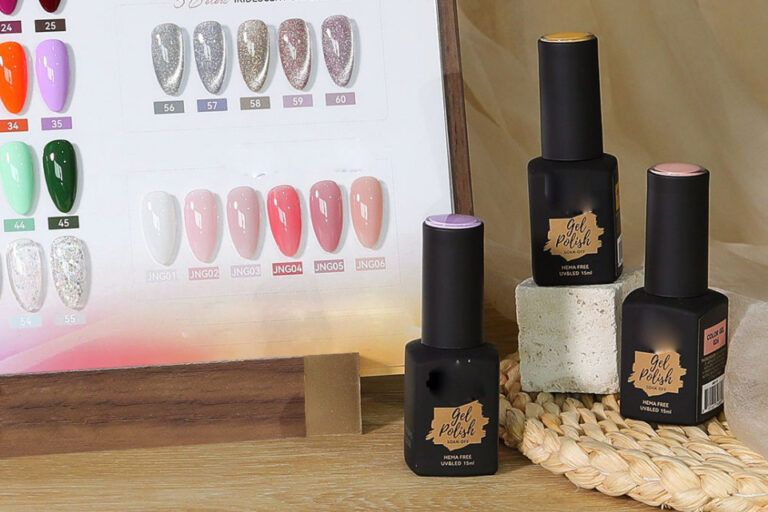
That is why product catalogs keep expanding around Builder in a Bottle gel systems and ready-to-brand formats like custom BIAB builder gel. The bottle is not just packaging. It is a positioning strategy.
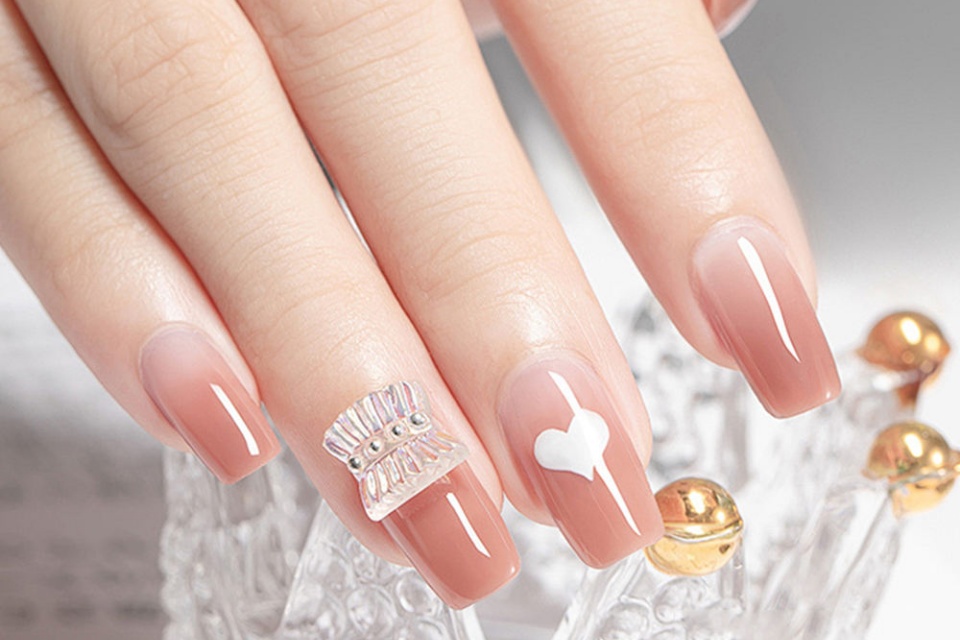
Because it still does jobs BIAB cannot do well. Simple.
Traditional pot builder gel gives you more freedom over pickup amount, brush angle, bead placement, and structural correction. When a client has flat nails, ski-jump growth, one sidewall that collapses inward, or a habit of using her nails as screwdrivers, pot gel still gives the tech more room to build a proper architecture.
And that matters more than marketing copy.
A bottle brush is convenient. But convenience is not control. Once you start building long overlays, correcting asymmetry, or pushing strength into stress zones without creating bulk at the free edge, the pot format starts to look less “old school” and more “professional.” That is exactly why many serious salons still keep both traditional builder gel and bottle systems on the table instead of pretending one format can replace the other.
Here is the version most suppliers won’t say out loud: BIAB often wins the first appointment, while pot gel often wins the harder refill cycle.
Why? Because short, healthy natural nails are easy money with BIAB. The brush is already there. Product dispensing is quick. Training time is shorter. The service menu is easier to standardize. But after three or four infills, especially on clients with uneven wear patterns, pot builder can be easier to rebalance with precision.
So the argument should never be “Which one is better?” The smart question is: better for which nail, which technician, and which service price point?
| Factor | BIAB / Builder in a Bottle | Traditional Pot Builder Gel |
|---|---|---|
| Application speed | Usually faster for overlays and short natural nails | Slower at first, especially for less experienced techs |
| Ease of use | Easier for beginners; built-in brush simplifies workflow | Needs separate brush control and better hand skills |
| Structure control | Moderate; good for small apex work | High; better for full architecture and corrections |
| Refill performance | Fine for routine clients with stable nail shape | Better for problem nails and major rebalancing |
| Extension work | Limited to short extensions in many systems | Stronger choice for sculpting and longer builds |
| Product waste | Lower mess, cleaner station | More handling, more chance of overpickup |
| Salon training | Faster to teach across teams | Requires stronger technical standards |
| Premium feel | Modern, retail-friendly, easy to market | More pro-oriented, less beginner-friendly |
| Best use case | Fast strengthening services, natural nail clients | Advanced overlays, extensions, complex nail correction |
Here’s the ugly part. The format does not remove the chemistry risk.
Whether you choose BIAB or pot builder, uncured acrylates are still the main problem if product touches skin, floods the cuticle, or cures poorly. The U.S. FDA says nail products containing methacrylate ingredients can create sensitization risk and stresses that skin contact should be avoided to reduce the chance of allergic reaction. Their guidance on nail care products is plain about that. (U.S. Food and Drug Administration)
And the dermatology literature is even less polite. A 2024 study in Acta Dermato-Venereologica reported that in a cohort of 153 patients with acrylate allergic contact dermatitis, 131 patients, or 85.6%, were identified through 2-HEMA testing; the paper also notes a steady worldwide increase in acrylate allergy reporting. Read the study here: Is the Use of the Extended (Meth)acrylate Series – Nails Justified?. ([PMC][3])
That should change how you think about “easy application.” Easier for whom? If a bottle encourages sloppy cuticle flooding by undertrained users, then speed becomes a liability. A 2024 review in Skin Appendage Disorders also warned that allergic contact dermatitis remains the most common adverse effect in at-home nail cosmetics and tied the issue directly to methacrylates and poor technique. See Adverse Effects of Do-It-Yourself Nail Cosmetics. (Karger Publishers)
So, no, BIAB is not “safer” just because it comes in a bottle. And pot gel is not “riskier” just because it looks more technical. Skill, curing behavior, labeling clarity, and formulation quality matter more than container style. That is why a serious supplier should be able to point you to its quality assurance standards and, if you are building a private-label line, its OEM/ODM services without dancing around compliance questions.
I’ll say it clearly: BIAB is excellent when the service goal is reinforcement, not heavy construction.
If your client wants:
then BIAB is often the smarter product.
It also works well for brands selling simple salon menus. “Strengthen, smooth, seal” is easier to explain than “we’ll assess your nail architecture, choose a sculpting viscosity, rebalance the apex, and refine the lateral walls.” One sells in ten seconds. The other sells to trained pros.
This is where products like self-leveling BIAB builder gel and nude pink builder gel in a bottle make a lot of commercial sense.
Pot builder becomes the better tool when nails are not “easy.”
That means:
A thicker pot gel also gives experienced techs something BIAB often cannot: controlled placement without the product running where it should not go. That matters during summer, under hot lamps, or in busy salons where room temperature wrecks your working time.
And yes, pot builder is slower. At first. But so is a chef’s knife compared with a pre-sliced vegetable pack. Which one gives better control when the job gets hard?
This article is about format, but chemistry regulation is now tied to the buying decision too. The European Commission states that TPO is prohibited in cosmetic products in the EU from 1 September 2025, following its CMR classification pathway under EU cosmetics law. Their official Q&A is here: TPO in Nail Products – Questions & Answers. (内贸、产业、创业和中小企业)
That changes sourcing conversations. Buyers are no longer just asking, “Do you have BIAB?” They are asking, “Do you have BIAB that fits my market, my claims, and my compliance risk?” The same goes for pot builder. Bottle versus jar is no longer the whole discussion.
If you run a salon focused on fast overlays, natural nail strengthening, and high client turnover, BIAB is probably the better commercial weapon. If you do correction work, hard structure, longer extensions, or premium technical services, traditional pot builder gel still earns its space.
I wouldn’t choose one and abandon the other. I’d build a menu around both.
Because that’s what mature brands do. They stop chasing format hype and start matching viscosity, packaging, curing system, and client behavior to actual service economics.
BIAB is better for quick natural-nail strengthening services because it combines builder gel strength with bottle-brush convenience, making overlays faster and easier for many technicians. Traditional pot builder gel is usually better when you need stronger structure control, longer extensions, or complex correction work.
In plain salon terms, BIAB wins on speed and simplicity. Pot builder wins on control. If your client mostly books short overlay maintenance, BIAB often makes more money per hour. If your client needs architecture, repair, or length, pot gel is usually the safer technical choice.
The main difference is packaging and application control: BIAB comes in a bottle with a built-in brush for faster overlay work, while pot gel comes in a jar and is applied with a separate brush for more precise shaping and structure building.
That sounds small, but it changes everything. The built-in brush speeds up service flow. The jar-and-brush setup gives better pickup control, better apex placement, and better performance on difficult nails. One favors convenience. The other favors technical freedom.
Both can last well when the product is formulated properly and applied correctly, but traditional pot builder gel often holds up better on long extensions, high-stress nails, and clients who need stronger structural support.
Longevity is not only about chemistry. It is also about architecture. A perfect BIAB overlay on a short natural nail can outlast a badly built pot-gel extension. But when the nail needs real reinforcement, pot builder usually gives the technician more ways to create lasting balance.
BIAB is not automatically safer than pot builder gel because both systems can expose users to acrylates if uncured product touches skin or if curing and removal are handled badly. Safe use depends more on formulation quality, clean technique, and proper curing than on bottle versus pot format. (U.S. Food and Drug Administration)
That point gets missed all the time. The bottle does not magically remove allergy risk. Poor training, cuticle flooding, and weak lamp matching create the real problems. So if safety is your concern, start with ingredients, labeling, and application discipline.
Choose BIAB if your business focuses on fast overlays, beginner-friendly services, and easy retail positioning. Choose pot builder gel if your business depends on advanced nail correction, sculpted extensions, and higher-control professional application.
A good product line often needs both. Offer BIAB for speed and simple strengthening. Offer pot gel for advanced work and pro users who care about viscosity behavior, rebalance accuracy, and custom structure.
If you are comparing formulas, packaging options, or private-label routes for your next collection, explore the full gel polish catalog or reach out through the contact page. The smart move is not picking a side. It is picking the right system for the right nail.
[3]: https://pmc.ncbi.nlm.nih.gov/articles/PMC11571230/ ” Is the Use of the Extended (Meth)acrylate Series – Nails Justified? Characterization of Nail Acrylate Allergy in a Tertiary Medical Centre – PMC “