Talk to Our Expert
Our sales and engineers are available all the time, you can ask your specific requirements to our sales, and inspiration to our engineer here.

Small bottle. Big mess.
I’ve seen this play out too many times: a buyer spends an hour debating syrup viscosity, swatch payoff, brush cut, bottle silhouette, Pantone alignment, MOQ tiers, and carton finish—then grabs whatever top coat is sitting closest to the checkout sample rack, as if the final layer isn’t the part that decides whether the set still looks expensive on day seven. Then they act surprised. Why?
Because most people shop shine. I frankly believe that’s the dumbest way to buy a top coat.
The best top coat isn’t the one with the glossiest promo photo. It’s the one that survives real abuse—acetone haze, cuticle oil, laptop friction, hot water, sloppy cure timing, overbuilt apex, and clients who swear they’re “careful” while using their nails like screwdrivers. That’s the ugly truth. A technical review of UV nail gels describes the top coat as the layer that provides gloss and damage resistance, while the 2024 FDA nail care guidance says, in plain legal English, that nail products need to be safe when used as directed. (radtech.org)
And honestly? A lot of “best gel top coat” content online reads like it was written by people who’ve never watched a finish go soft around the free edge after four days under salon lighting and daily hand sanitizer.
Glossy isn’t always better. Matte isn’t always smarter. No-wipe isn’t automatically premium. And “UV protection” gets slapped on product pages so casually that half the market treats it like holy water.
I don’t.
If I’m sorting through a top coat range, I break it down the way an annoyed formulator or a skeptical private-label buyer would: finish first, wipe behavior second, chemistry third, paperwork fourth. That order matters more than branding. Best Gel Polish already splits the offer into glass-like shiny top coat options and matte top coat formulas, which is useful—but only as a starting filter. Finish is the bait. Performance is the bill. (bestgelpolish.com)
Forget the marketing deck for a second.
A glossy top coat is supposed to give you that wet-look reflection—the kind that makes black look deeper, nude look cleaner, and reds look more expensive than they are. Matte does the opposite. It kills glare, softens the whole set, and gives you that editorial, velvety, low-sheen finish people love until it starts polishing itself back to satin.
That happens. A lot.
And here’s where I get picky. I don’t just ask how a top coat looks on day one. I ask how it fails. Does it micro-scratch? Does it lose bloom around the sidewalls? Does the matte go patchy where the client touches her phone? Does the gloss turn plastic-looking instead of glassy? Those are not small details—they’re the whole case.
The chemistry side matters too, and the industry doesn’t always like that conversation because it gets uncomfortable fast. A 2024 patch-test study on nail acrylate allergy looked at 3,828 patients, flagged 396 as suspected nail acrylate allergy cases, and confirmed positive acrylate reactions in 153 of them. That’s 38.6% of the suspected group and 4% of the full tested population. Not tiny. Not theoretical. (pmc.ncbi.nlm.nih.gov)
So when I see HEMA-free, TPO-free, low-odor, low-irritation—yeah, I pay attention. But I don’t clap yet. Claims are easy. Consistency is harder. A formula can sound beautifully compliant and still underperform if the cure window is touchy, the photoinitiator package is weak, or the batch control is sloppy.
That’s where buyers get burned. Quietly.
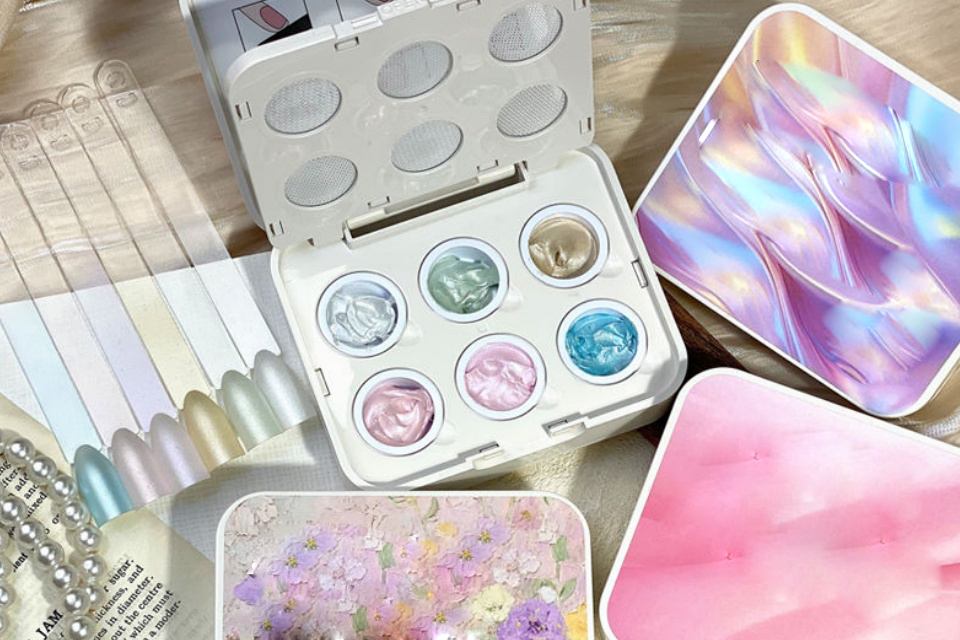
Shine sells. Texture signals taste.
That’s the quick version. The longer version is messier, because glossy and matte top coats don’t just change appearance—they change how flaws show up, how colors read, how nail art is perceived, and how customers judge “quality” even when they can’t explain what they’re noticing.
Glossy top coat is the safer commercial bet. I’ll say it. It flatters almost everything: black, cherry red, syrup nude, cat-eye, chrome underlayers, fine glitter, even boring solids that need help. It makes color look deeper and the surface look smoother than it probably is. Great for sales. Great for photos. Great for that first impression.
But it also tattles.
Every scuff. Every hairline scratch. Every dull patch from hard wear. Gloss has that problem. It’s dramatic when it’s perfect, and dramatic when it starts slipping.
Matte is different. Better at hiding some things, worse at surviving others. A good matte top coat gives you a soft-focus finish that looks expensive in a very specific way—less flash, more control. A bad matte looks chalky, streaked, or weirdly thirsty. And yes, body oil can flatten the whole effect over time. That’s not user error every single time, no matter how much brands love saying it is.
On Best Gel Polish’s category pages, the shiny line is framed around “glass like gloss” and stain resistance, while the matte line leans into velvet finish and a streak-free look. Fair positioning. Sensible, even. But I still read those pages like a cynic because category copy isn’t proof—it’s a pitch. (bestgelpolish.com)
| Need | Best top coat choice | What you gain | What you give up | My take |
|---|---|---|---|---|
| Maximum shine on dark or classic shades | Glossy top coat | Mirror reflection, stronger depth, easier retail appeal | Scratches show sooner | Best default for most users |
| Minimalist, modern, editorial nails | Matte top coat | Soft-focus finish, understated luxury, less glare | Oils can push it toward satin | Great, but only if the matte stays matte |
| Faster finishing step | No-wipe top coat | One less cleansing step, cleaner workflow | Bad lamp matching gets exposed quickly | Good for speed, not a substitute for quality |
| Light shades or frequent exposure concerns | UV protection top coat | Better hedge against yellowing and dulling claims | Marketing can outrun evidence | Worth testing, not worth blind trust |
| B2B or private label scale | Bulk base and top coat system | Cost control, repeatability, easier expansion | More due diligence | Buy documents before you buy drums |
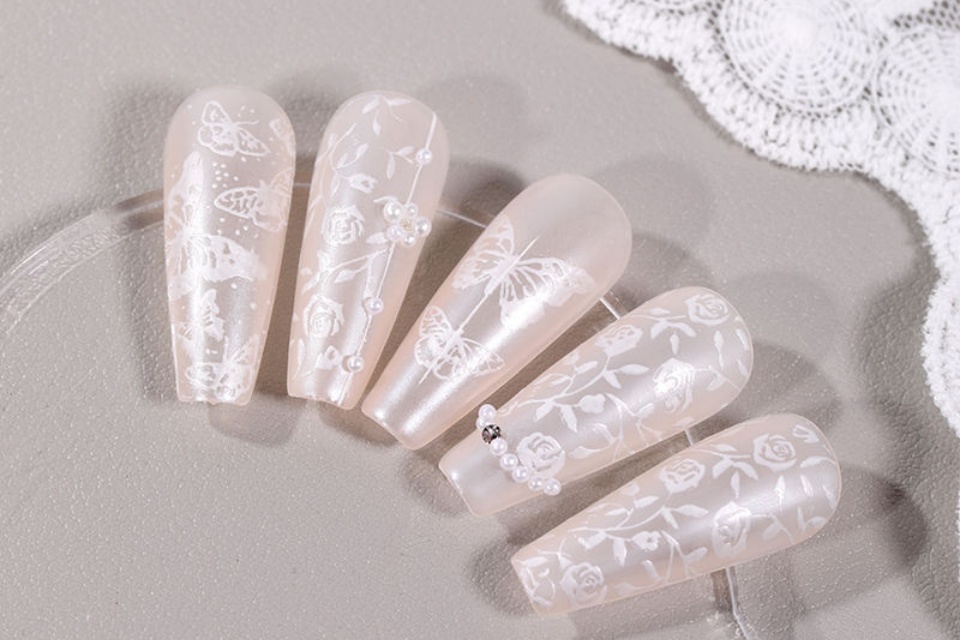
This one gets overpraised.
No-wipe top coat is useful because it skips the dispersion-layer cleanup step after cure. That’s real. It speeds up salon workflow, reduces solvent handling, and makes chrome and powder application cleaner in some systems. I get why people like it. I like it too—when it’s actually dialed in.
But here’s the thing nobody wants to say out loud: no-wipe formulas can expose a weak lamp match faster than traditional systems. If the cure window is fussy, if the layer is too thick, if the lamp output is inconsistent, if the tech is rushing, you’ll see it. Maybe not in the first hour. But later. Loss of gloss. Fine surface marking. Strange softness. That ugly “it looked good yesterday” failure.
So no, I don’t treat “no-wipe” as a quality badge. It’s a workflow feature. Useful distinction.
And there’s a broader reason I don’t like casual cure talk. The 2023 Nature Communications study on UV nail dryers found DNA damage and somatic mutations in mammalian cells exposed to radiation from UV nail polish dryers. I’m not saying that means every manicure is a crisis. I am saying the cure system matters more than brands pretend. (nature.com)
That’s why, when someone asks me how to choose the best top coat, I don’t start with “Do you like glossy or matte?” I start with annoying questions: What lamp? What wattage? What service time? What layer thickness? Where does the failure show up first—free edge, apex, sidewall, or surface?
Because that’s real-world buying. Not vibes.
This category gets fuzzy fast.
UV protection top coat can absolutely make sense, especially on milky pinks, soft whites, sheers, pale nudes, and those expensive-looking clean-girl shades that show every tiny shift in tone. If you’re dealing with color stability concerns—or you’re selling a premium finish where clarity is part of the product—fine, it deserves a look.
But let’s not pretend it’s some all-purpose miracle shield.
I’ve seen brands lean so hard on the UV-protection angle that they almost make you forget to ask the obvious questions: Does it cure clean? Does it stay clear? Does it hold gloss? Does it resist staining from makeup, dye transfer, or kitchen work? Because if the answer to those is shaky, the “UV” bit doesn’t save the formula. It just decorates the listing.
That caution isn’t me being difficult. It’s just common sense. The 2024 FDA nail care guidance keeps the legal standard grounded in safety and proper labeling, while the 2023 Nature paper reminds us that curing conversations aren’t silly side notes—they’re part of the real product context. (fda.gov)
So yes, UV protection top coat can be worth it. Especially for delicate shades and image-conscious services. But I’d never make it the lead reason to buy.
Not the bottle. The backend.
This is where the amateurs leave the room. If I’m buying for personal use, I care about stain resistance, gloss retention, cure reliability, and how ugly the wear pattern gets near the free edge. If I’m buying for salon rollout, wholesale, or private label, the checklist gets harsher—because it should.
I want batch consistency. I want cure guidance. I want documentation. I want traceability. I want to know whether the supplier can show real quality controls, not just trendy claims layered over a generic catalog. Best Gel Polish’s quality assurance and traceability standard leans into ISO 22716, CoA access, regulatory support, and supplier verification—which, frankly, is the sort of boring information I trust more than glamorous product copy. (bestgelpolish.com)
And bulk buyers? They make the same mistake again and again. They look at unit economics before they look at repeatability.
Bad move.
A bulk UV gel base and top coat system only works if batch two behaves like batch one, and batch three doesn’t suddenly shift viscosity, cure feel, or finish clarity under the same lamp. Best Gel Polish positions that product around long wear, OEM utility, and private-label scalability. Sure. But in the field, what matters is whether it behaves like a controlled system—not a lucky batch. (bestgelpolish.com)
Here it is.
If you want the safest default—the one that works for the widest range of shades, clients, and service styles—start with glossy. Not because it’s trendy. Because it’s commercially forgiving and visually strong when the formula is competent.
If you want differentiation, add matte. Not instead. Add it.
If you need speed, test no-wipe under the exact lamp and timing you’ll actually use. Don’t trust a spec sheet to do fieldwork for you.
And if you’re selling pale shades, bridal tones, milk-bath pinks, or anything where clarity drift becomes a complaint magnet, then yes, UV-protection positioning can help. But only after the basics are solid.
That’s my view. A little rude, maybe. Still true.
The best top coat for nails is the finishing layer that matches your real wear conditions—shine preference, cure setup, stain risk, scratch exposure, and formula tolerance—while staying clear, stable, and visually consistent beyond the first few days of wear, not just during the initial fresh-manicure photo window.
From my experience, buyers overrate first-day gloss and underrate day-six behavior. I care more about how a finish ages than how loudly it sparkles at checkout.
A glossy top coat is a reflective finishing gel designed to maximize shine, visual depth, and brightness, while a matte top coat is a light-diffusing finish designed to eliminate surface shine and create a softer, lower-glare, velvet-style result that changes how color and texture are perceived.
Gloss usually wins for broad appeal. Matte wins when the look needs restraint, softness, or that editorial edge people notice even if they can’t quite name it.
A no-wipe top coat is a finishing gel formulated to cure without leaving the sticky inhibition layer that traditionally requires cleansing, which makes it faster in salon workflow and more convenient for certain finishing effects, though that convenience alone does not guarantee stronger wear or better overall performance.
Better? Not automatically. Faster? Usually. More demanding of lamp compatibility? Also yes—and that part gets ignored way too often.
A UV protection top coat is a finishing layer marketed to help preserve clarity, reduce visible dulling or yellowing, and better protect lighter or more delicate shades during wear, especially in gel systems where maintaining brightness and clean color is part of the customer expectation.
Need is a strong word. For pale shades, bridal tones, and premium clean finishes, I’d say it’s worth serious testing. For everything else, it’s a bonus—not the backbone.
A salon or brand should ask for batch consistency records, cure guidance, formula documentation, traceability data, quality-system evidence, and stability information before buying bulk top coat, because price means very little when repeat orders behave differently under the same lamp, timing, and service conditions.
And yes—ask for samples. Then stress-test them. Paperwork tells you what should happen. Wear testing tells you what actually happens.
Want to stop guessing and start comparing real options? Browse the gel polish catalog and then contact the team asking for top-coat specs, QA documents, and wear-test data before you place an order.