Talk to Our Expert
Our sales and engineers are available all the time, you can ask your specific requirements to our sales, and inspiration to our engineer here.

The nail business loves lazy vocabulary. One word—“gel”—gets stretched until it covers everything from a thin color overlay to a fully built extension with a real apex, and then everyone acts surprised when clients, junior techs, and even some buyers can’t tell what they’re actually paying for.
I frankly believe that’s where half the category confusion starts. Not with chemistry. Not with curing. With language. Call three different systems by one comfortable label and, sooner or later, somebody ends up wearing the wrong product for the job. It happens. Constantly.
But let’s not pretend this confusion is accidental. “Gel manicure” sounds neat, modern, premium, and client-safe, while “soft soak-off builder overlay finished with color” sounds like something written by a lab tech with no front-desk instincts, so the industry keeps simplifying the menu until the technical differences disappear—and then techs are left doing damage control when the wear, removal, and refill cycle don’t match the original promise.
That’s the sales version. Here’s the bench version.
A lot of brands blur the lines because blur sells. If a color product can borrow the authority of a builder, it looks stronger than it is. If a flexible builder can borrow the prestige of a hard extension gel, it suddenly sounds more versatile than it really is. Same old trick. New bottle.
You can see the product split clearly on Best Gel Polish’s site if you read the catalog like a buyer, not like a browser. The Gel Polish section is built around color and finish, while the Builder Gel and Builder in a Bottle Gel sections point toward structure. Even the individual listings tell on themselves: the Clear Hard Gel Builder for Extensions is clearly about extension work, while the Self-Leveling BIAB Builder Gel sits in the soak-off builder lane.
So no, these aren’t interchangeable just because the bottle says “gel.”
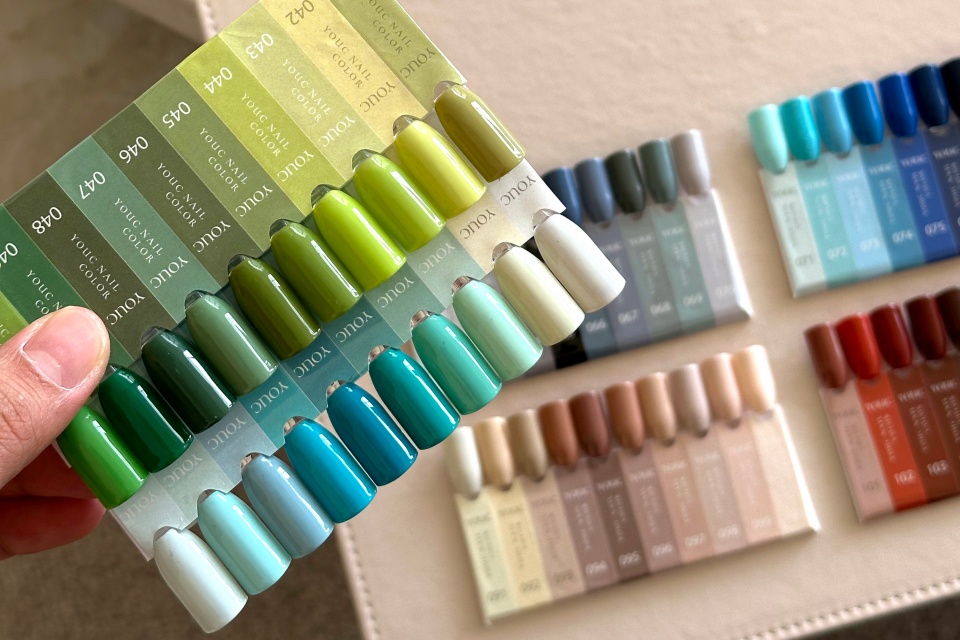
Here’s the ugly truth: hard gel is the only one in this comparison that behaves like a true structural material first and a beauty product second, which is exactly why experienced techs reach for it when the nail needs architecture, not decoration—length, sidewall support, apex control, rebalancing, stress-zone management, the whole engineering side of the service.
That’s the point.
Hard gel is usually non-soak-off. It cures rigid. It’s meant to be filed, refined, maintained, and worn as an enhancement system—not treated like a disposable coat of color. From my experience, that’s why it still wins when the client wants long extensions and actually uses their hands like a normal person instead of posing for cuticle-oil videos all day.
And yes, that rigidity matters. A proper hard gel set, built with the right apex and lower-arch balance, carries force differently than a thinner system. That’s not marketing fluff. That’s mechanics. When techs say a set “holds,” this is usually what they mean.
But there’s a trade-off, and it’s not small. Hard gel isn’t the easy-removal, low-commitment option. Clients who want frequent shade changes, soak-off convenience, or minimal filing usually don’t want a true hard-gel relationship—they want the look of strength without the maintenance reality.
Yet soft gel has a serious edge, and I think some old-school techs still underestimate it because they remember the weaker early formulas and never updated their opinion. That’s a mistake. Modern soak-off builder systems—especially BIAB-style products—can perform extremely well when the service goal is reinforcement, controlled flexibility, smoother natural-nail growth, and a less aggressive removal cycle.
This is where things get interesting.
Soft gel sits in the middle. Not weak, not rigid, not purely cosmetic. It’s the category for clients who need more than color but don’t necessarily need a sculpted hard-gel chassis. Think overlays. Think short structure. Think natural nails that need help growing out without snapping at the sidewalls every ten minutes.
And the flexibility is not a bug. It’s the feature. On some clients, especially those with naturally bendy nail plates, a slightly more forgiving builder will wear better than an overly rigid system that fights the natural movement of the nail. That nuance gets lost when people talk about “strength” like it’s only about hardness.
Still—let’s be honest—soft gel has limits. It can fake being a hard extension system up to a point, especially in short lengths, but push it too far and it shows you exactly what it is. A soak-off builder trying to behave like a long-form sculpting gel is basically being asked to do overtime every single day.
And then there’s gel polish, which is where most of the public confusion starts because it’s the most familiar product category, the most over-requested on service menus, and the most likely to be credited for performance that actually came from the builder underneath. That happens all the time, by the way.
Gel polish is not the skeleton. It’s the jacket.
It’s a thin UV/LED-cured color system made for pigment, gloss, surface durability, and cleaner wear than traditional lacquer. That’s a valuable role. A profitable one too. But it is still a finish-driven system. It is not, on its own, a serious replacement for a builder when the nail needs an apex, extension support, correction, or meaningful reinforcement.
This is the part some brands dance around. I won’t. If a client needs structure and is sold only color, they’ve been sold the wrong service. Maybe not maliciously. Maybe just lazily. But wrong is wrong.
And that’s why the builder gel vs gel polish debate keeps resurfacing. One product class creates strength. The other mostly sits on top of strength. Mix those roles up, and the service promise breaks fast.
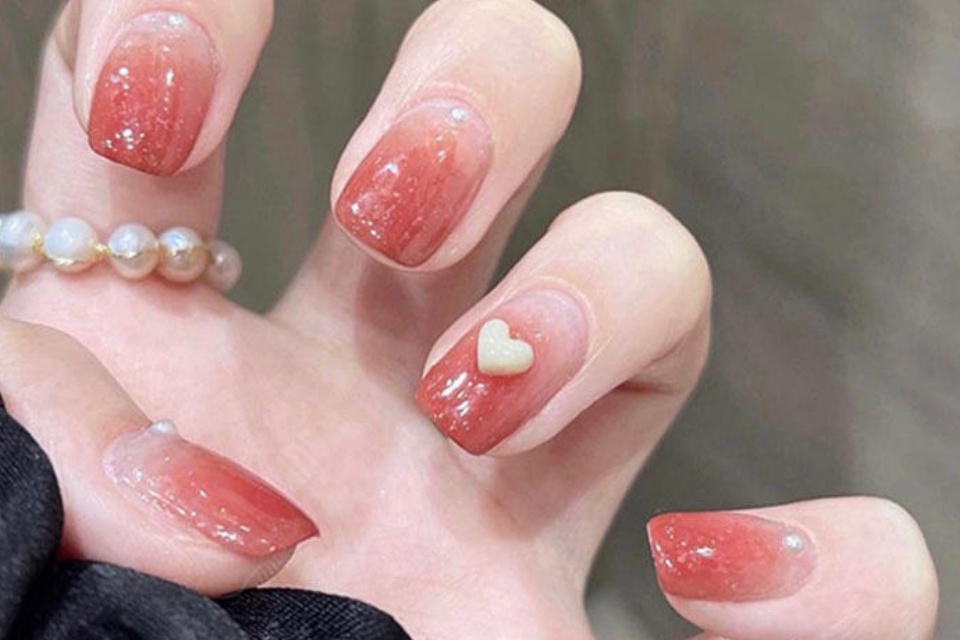
Sometimes the fastest way to cut through category fog is to stop talking like a marketer and line the systems up side by side, because once you compare them by job, removal style, and wear behavior, the overlap shrinks and the practical differences become a lot harder to ignore.
| System | Main Function | Removal Method | Structural Strength | Flexibility | Best Use Case | Main Limitation |
|---|---|---|---|---|---|---|
| Hard Gel | Build apex, overlays, and long extensions | Usually file-off | High | Lower | Sculpted extensions, durable overlays, shape correction | Less convenient removal |
| Soft Gel / Soak-Off Builder / BIAB | Reinforce natural nails and support short enhancements | Usually soak-off | Medium | Medium to high | Natural nail strengthening, overlays, short extensions | Less suitable for very long structure |
| Gel Polish | Deliver color, gloss, and surface wear | Soak-off | Low | High | Color services, finish layers, routine gel manicures | Not designed for real architecture |
Simple table. Messy reality.
Because in practice, product choice also depends on nail condition, client habits, refill schedule, lamp compatibility, thickness control, and whether the person wearing the set treats their nails like jewelry or like built-in screwdrivers. You know the type.
But performance isn’t the whole story. Never was. The chemistry side matters more than the average sales page admits, especially once you start talking about repeated exposure, under-curing, skin flooding, DIY misuse, and ingredient systems that are treated like background details when they should be front-and-center in any serious buying conversation.
The official guidance is not subtle. According to the FDA’s nail care products guidance, nail cosmetics generally do not need FDA premarket approval, but they still must be safe when used as directed, and artificial nail products can cause allergic reactions and other adverse effects in sensitized users.
That should already be enough to make professionals pay attention. But the newer evidence is even less comfortable.
A 2024 Amsterdam UMC study reported 67 women diagnosed with allergic contact dermatitis linked to acrylate-containing nail cosmetics; 97% had a positive patch test to 2-hydroxyethyl methacrylate (HEMA), and 73% were consumers rather than professionals. Read that again. Consumers. Not just salon staff with years of exposure, but everyday users getting into trouble with reactive chemistry they didn’t fully understand.
And the home-kit pattern is hard to ignore. A 2024 survey on skin reactions associated with acrylic nail cosmetics found that 78% of respondents used home kits, 68% learned through social media, and 74% relied on online tutorials or websites for training. That tracks with what a lot of us have already seen: more access, less technical knowledge, worse application habits.
Salon operations matter too—more than some people want to admit. The Occupational Safety and Health Administration (OSHA) guidance for nail salon chemical hazards states that ventilation is the best way to reduce chemical levels in salons, and NIOSH testing cited by OSHA found that exhaust ventilation can reduce worker exposure by at least 50%. Good airflow isn’t aesthetic. It’s operational hygiene.
And yes, ingredient scrutiny keeps tightening. The European Commission’s TPO in Nail Products – Questions & Answers outlines the regulatory action affecting Trimethylbenzoyl Diphenylphosphine Oxide (TPO) in cosmetic products, which is another reminder that buyers shouldn’t treat compliance talk like optional brochure filler.
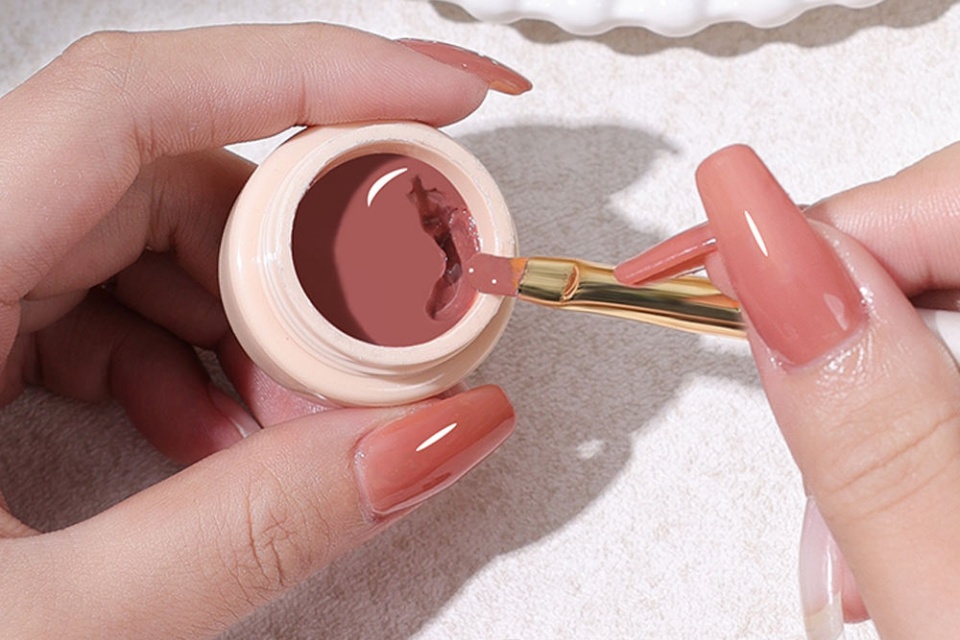
So what do I actually recommend? I start with the service goal, not the buzzword, because once you strip away the branding, the decision is usually less mysterious than people make it sound.
If the client wants length—real length, not “maybe we can stretch this bottle builder a bit and hope”—hard gel is usually the cleanest answer. It’s built for structure. It behaves like structure. And when a set needs to hold shape for weeks, that matters more than a trendy label.
If the client wants stronger natural nails, a cleaner grow-out phase, and a removal cycle that doesn’t feel like a long-term contract, soft gel usually makes more sense. That’s where the flexible builder category earns its keep. Not flashy. Just useful.
If the client wants mostly color, shine, and decent wear, gel polish is still the right call. There’s nothing inferior about that. It’s just a different job. The problem only starts when people ask it to act like a builder and then blame the product when it behaves like a finish.
Here’s how I think about it: builder creates the framework, gel polish finishes the look. Separate those roles and service design gets easier. Blur them and everything gets noisy.
And for sourcing? Don’t stop at shade charts and nice packaging. Compare the Builder Gel collection with the Gel Polish range, then check the supplier’s Quality Assurance and OEM / ODM Services before making a decision. That’s not glamorous advice. It’s better.
What is the difference between hard gel and soft gel? Hard gel is a non-soak-off structural builder that cures into a more rigid enhancement for overlays and extensions, while soft gel is a soak-off builder that remains more flexible and is generally used for natural-nail reinforcement, overlays, and easier-to-remove enhancement services. In plain terms, hard gel is better for longer, more demanding structure, while soft gel is easier to wear and remove for everyday builder services.
Is builder gel the same as gel polish? Builder gel is a thicker structural product designed to create strength, apex, and sometimes extension support, while gel polish is a thinner color-and-finish system intended to provide pigment, shine, and extended wear over an already stable nail surface. They often work together, but no, they are not the same product class and they should not be sold as if they are.
Which is the best gel for nail extensions? Hard gel is usually the best gel for nail extensions because it provides the most reliable structural support for sculpted length, while soft gel builders are more suitable for shorter enhancements and gel polish is best used as a finish layer rather than a true extension material. For short, low-stress enhancements, soft gel may work well, but once length and load go up, hard gel usually makes more sense.
How do I choose between hard gel and gel polish? Choose hard gel when the nail needs architecture such as apex, correction, reinforcement, or extension, and choose gel polish when the nail already has enough structure and the main goal is color, shine, and wear. A lot of professional services use both—builder underneath, gel polish on top—because that split matches how the products actually perform.