Talk to Our Expert
Our sales and engineers are available all the time, you can ask your specific requirements to our sales, and inspiration to our engineer here.

It hits hard.
Every December, Pantone drops its annual color pick, and within days you can almost hear the beauty supply chain creak into motion: product teams start tweaking shade boards, private-label buyers reopen old sample decks, salon brands refresh campaign concepts, and suddenly one little color story is getting treated like a market signal worth money. That’s because it is. Sometimes a lot of money.
But not in the way people think.
I frankly believe the industry still talks about Pantone Color of the Year too politely, like it’s some refined design ritual floating above the mess of manufacturing, merch planning, reorder timing, and sales pressure. It isn’t. It’s a trigger. A hype trigger, yes — but also a coordination trigger. It gives beauty brands, nail suppliers, packaging teams, and marketing departments a shared excuse to move in the same direction at the same time.
That matters.
And here’s the ugly truth: most nail brands don’t need Pantone because they’re creatively lost. They need Pantone because synchronized stories are easier to sell than isolated SKUs, especially when buyers are overloaded, launch calendars are cramped, and no one wants to gamble on a random color family without some cultural cover behind it.
So when Pantone named Peach Fuzz, PANTONE 13-1023, for 2024, it wasn’t just another design-world press blip. Pantone itself framed the shade as a cross-category emotional cue with direct relevance to beauty, packaging, and nail design in Pantone’s official 2024 press release, and that landed in a market where prestige beauty was still expanding, as shown in Circana’s first-half 2024 beauty report. You don’t need a PhD in trend forecasting to read that combo. Consumer appetite plus a globally repeated color narrative? That’s launch bait.
Funny thing is, the brands that benefit most from Pantone Color of the Year are rarely the ones trying to look the most “faithful” to the chip.
That sounds backwards. It isn’t.
A nail bottle isn’t a paint swatch. It sits on different skin tones, under different salon lights, in different finishes, with different opacity levels, and with different buyer expectations depending on whether it’s sold as a gel, builder, rubber base, cat-eye, shimmer topper, or full boxed set. So the smart play is not robotic color matching. It’s translation.
And yes, I’m using that word on purpose.
Pantone’s beauty relevance became unusually explicit in the Peach Fuzz cycle. The company didn’t just talk about interiors or apparel. It pointed directly to use across eyes, lips, cheeks, and nails. That matters because it nudges beauty brands to think beyond a single “hero shade” and start building a tonal system — something manufacturers already understand if they’ve spent enough time dealing with catalog logic, fill lines, MOQ pressure, and shade-family segmentation. For brands working through OEM/ODM services, this is exactly where the business case starts: one cultural signal, multiple sellable interpretations.
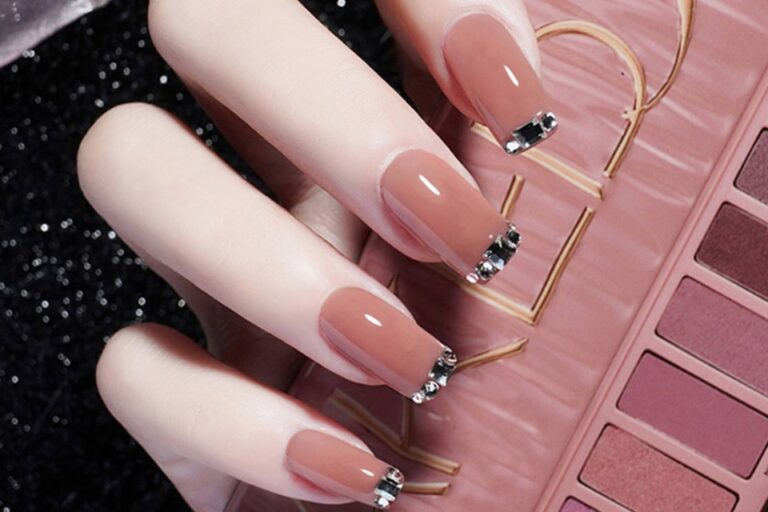
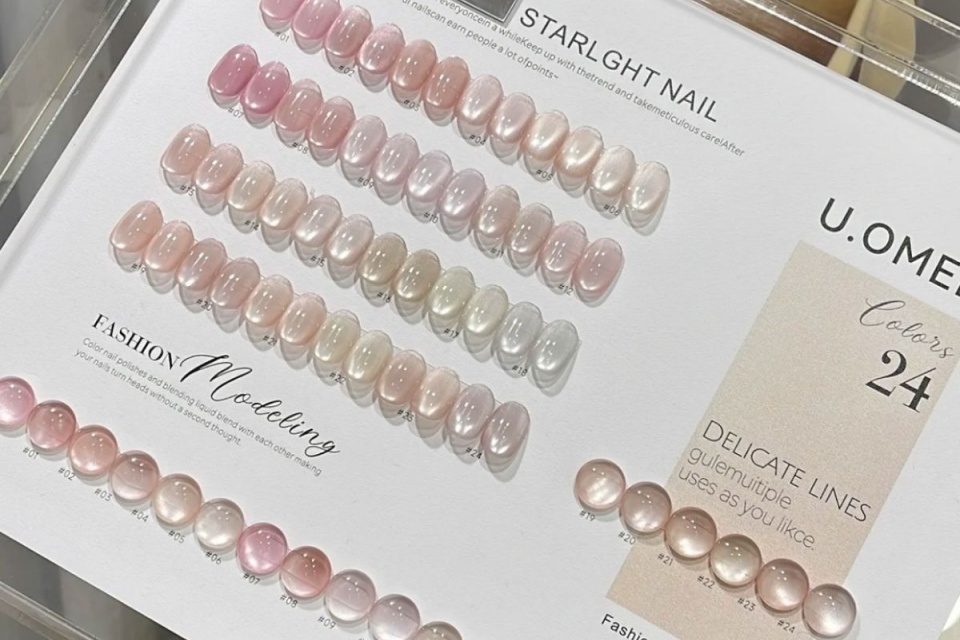
What does that mean in practice? A peach isn’t just a peach. It can become a syrupy jelly, a muted nude-peach builder, a warm shimmer overlay, a soft coral rubber base, or a glittered topper that photographs better than the original trend reference ever did. That’s the real work. Not copying. Adapting.
And this part was revealing.
OPI’s response to Peach Fuzz didn’t scream, “Behold, our lab made the perfect Pantone duplicate.” Instead, the brand used OPI’s Peach Fuzz feature to steer shoppers toward shades already sitting in a workable peach-adjacent zone, including Sanding in Stilettos as a bestseller. That’s not lazy. That’s retail intelligence.
Because here’s what beauty insiders know and outsiders often miss: the fastest money often comes from reframing existing inventory, not inventing an entirely new shade under deadline just to look trend-reactive on social. Existing fill. Existing compliance trail. Existing photography pipeline. Smaller headache.
Then media amplified the commercial angle. Allure’s spring 2024 nail color roundup basically signaled that Peach Fuzz-adjacent manicures were going to be everywhere, which meant any brand with even half-decent timing could use the color family as a springboard. And once that happens, the game changes. You are no longer selling a single bottle. You are selling recognizability.
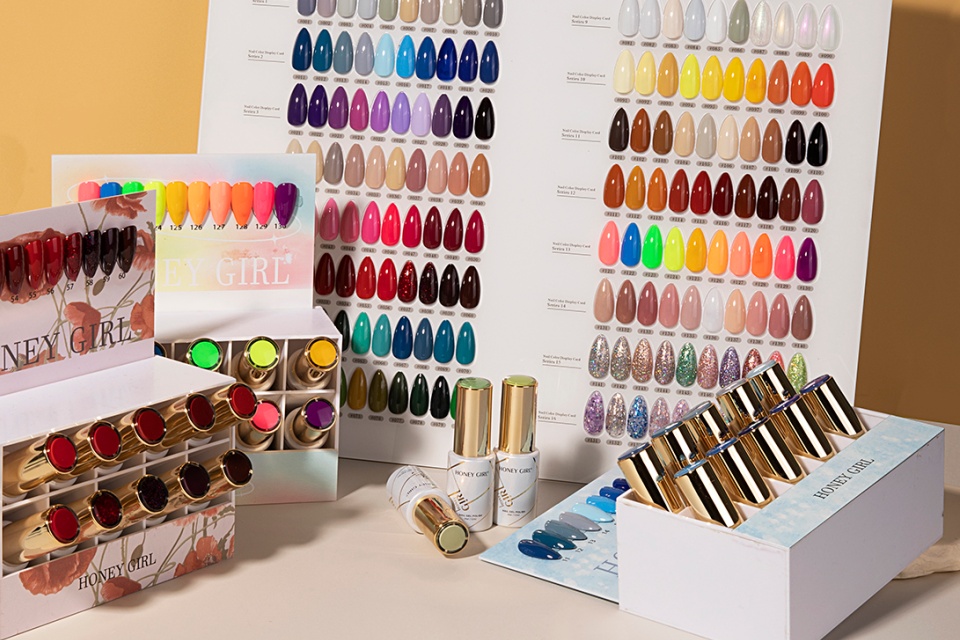
That’s why I keep coming back to assortment design. A good brand doesn’t stop at one trend color. It looks across a solid color gel range, some glitter color gel options, and maybe a few cat-eye gel effects and asks a harder question: which combination feels current without feeling cheap, copied, or too editorial for actual salon clients?
Because salon clients — bless them — do not order “design theory.” They order what looks expensive on the hand.
Here’s the ugly truth.
Too many brands still chase Pantone Color of the Year like it’s an exam question with one correct answer. It isn’t. And I’d argue that this obsession with accuracy is one of the dumber habits in trend-led nail development.
What wins instead? Cohesion.
Not sterile accuracy. Not swatch worship. Cohesion.
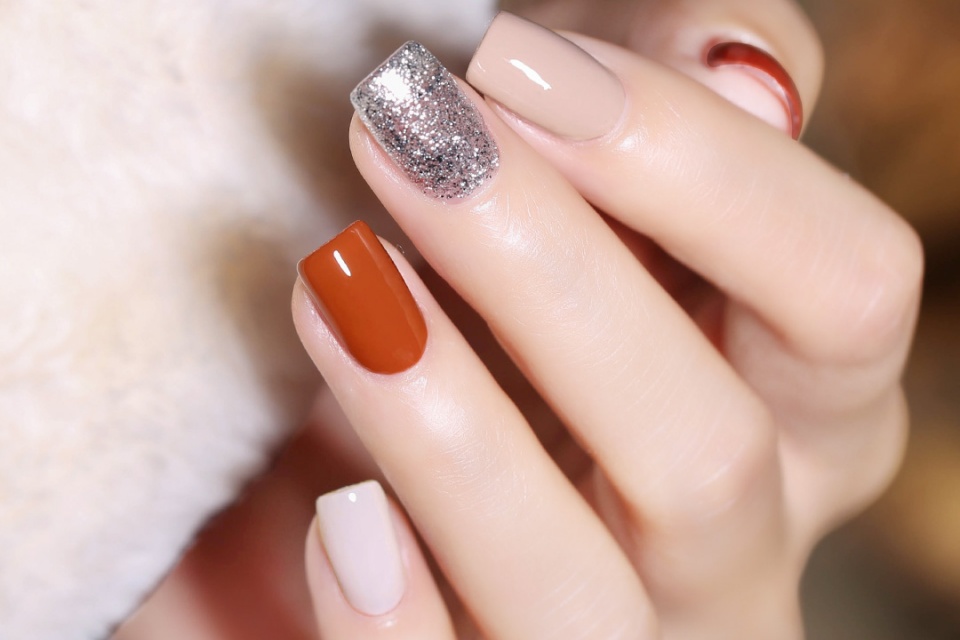
You need the anchor shade, yes. But you also need the support cast — the commercial shades that make the collection wearable, upsellable, and stable past the first burst of trend chatter. A peach family, for example, might need a translucent nude, a glossy warm pink, a champagne-pearl accent, maybe a soft mocha bridge shade, maybe one shimmer-flecked effect so the collection doesn’t die on Instagram. One headline color won’t carry the whole box. It never really did.
And that same behavior showed up again when Pantone named Mocha Mousse for 2025. Essie didn’t behave like a lab technician trying to clone one official brown. It built an edit around several brown-leaning manicure ideas in Essie’s 2025 Color of the Year edit. That’s mature trend handling. Same cue. Broader wearability. Better shelf logic.
| Response model | What the brand does | Upside | Risk |
|---|---|---|---|
| Exact-match hero shade | Launches one bottle meant to mimic the Pantone announcement | Fast message, easy marketing headline | Can feel flat, narrow, and hard to wear |
| Tonal family approach | Builds 4-8 shades around the announced color family | Better skin-tone reach, stronger basket size | Needs better merchandising discipline |
| Full collection system | Aligns shades, finishes, names, visuals, and salon content | Strongest sell-through potential and brand memory | More planning, more execution pressure |
I still think the middle column is where most brands should live. Not because it’s safer — though it is — but because it gives the buyer more reasons to say yes. One shade gets attention. A family gets orders.
So let’s talk numbers.
Beauty was not limping through 2024. It was moving. Circana reported that U.S. prestige beauty sales rose 8% in the first half of 2024 to $15.3 billion in Circana’s first-half 2024 beauty report. That does not mean every Pantone-inspired launch made money, obviously. But it does mean the category had enough consumer appetite for trend stories to convert into actual purchasing — which is what matters when brands are deciding whether to build a themed mini-collection or just keep selling safe pinks forever.
And honestly? Some brands overbuild. Badly.
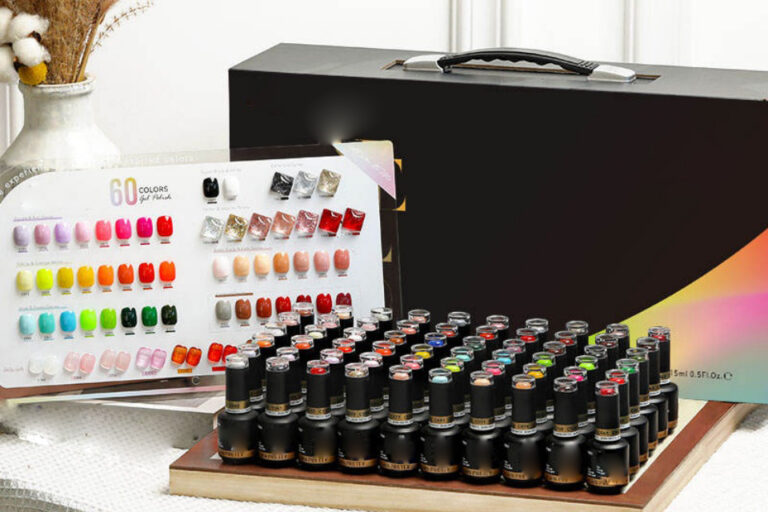
They stuff a trend collection with too many SKUs, muddy the story, and end up with a box that feels like a warehouse clean-out wearing a trend label. From my experience, the sharper move is tighter: one lead shade, two or three adjacent wearables, one texture/effect wildcard, one merch angle strong enough to survive thumbnails and distributor line sheets. That’s where a clean gel polish catalog or a focused set of custom logo gel polish colors starts doing real work.
Not glamour. Work.
This part gets ignored all the time.
Salon demand is brutally practical. The technician wants shades that apply well, cure consistently, photograph cleanly, and don’t require a five-minute speech to justify why they belong in the service menu. That’s it. Everything else is garnish.
And the market footprint is real. The BLS data on manicurists and pedicurists projects 7% employment growth from 2024 to 2034, with around 24,800 openings per year on average. More technicians. More chairs. More service moments. More chances for trend-driven colors to become practical purchase decisions instead of editorial noise.
But here’s the catch — and I’ve seen this mistake more than once — salon buyers don’t usually want an abstract “Color of the Year” pitch. They want something they can explain in one breath. “Soft peach nude.” “Creamy mocha.” “Glazed neutral.” “Magnetic brown shimmer.” That’s how the sell happens in the wild.
Which is also why formula positioning matters. If the market segment is asking cleaner questions, then a collection wrapped around HEMA- and TPO-free gel polish options may convert better than a trend story alone. Story gets attention. Formula closes doubt.
They move. But selectively.
Not with panic. Not with twenty rushed SKUs and clumsy shade names. Just with intent.
Week one is interpretation. What is the undertone really doing? Is it warm, dusty, chalky, edible, glowy, wearable? Week two is inventory reality. What already exists that can be repositioned without looking dishonest? Week three is structure: hero shade, support shades, effect layer, content angle, packaging rhythm, launch photography. Then you go.
And that timing piece matters more than people admit. The winning brands are not always the first ones to post a mood board after Pantone speaks. They’re the first ones to convert a cultural cue into a collection that feels inevitable rather than opportunistic. There’s a difference. A big one.
So no, Pantone Color of the Year does not “control” nail polish collections. That’s too simplistic. But it absolutely changes how collections get framed, grouped, pitched, and accelerated. It gives the industry a shared storyline. And in beauty, shared storylines have a habit of becoming purchase behavior.
That’s the real effect.
Pantone Color of the Year in nail polish is a trend signal that brands use to shape shade direction, finish selection, collection storytelling, packaging mood, and launch timing across salon and retail lines, usually through interpretation rather than exact duplication of the official Pantone reference. In plain English, it’s a commercial cue dressed up as a design event. Brands use it to tighten decision-making and make a collection feel culturally current.
Pantone Color of the Year affects nail polish collections by pushing brands to organize hero shades, support tones, texture choices, naming, and campaign visuals around one widely recognized color narrative, which helps convert a single announcement into multiple coordinated products. What changes isn’t just the bottle color. It’s the whole merch stack. The 2024 Peach Fuzz cycle made that pretty obvious through OPI’s Peach Fuzz feature and the way beauty media echoed the trend.
Nail brands should not automatically copy the exact Pantone shade because real-world buyers choose flattering, wearable, finish-specific colors far more often than they reward technical color fidelity, so a broader tonal family usually sells better than a strict one-to-one match. I’d go further: exact matching is often the less intelligent move. OPI’s Peach Fuzz handling and the assortment logic in Essie’s 2025 Color of the Year edit both show why translation beats rigid imitation.
Private-label nail brands can use Pantone without looking late by auditing existing shades first, selecting one hero color and a few adjacent support tones, then aligning visuals, naming, packaging, and formula positioning so the collection feels deliberate instead of reactionary. Speed helps, sure. But coherence helps more. The smarter route is usually a tight, wearable capsule built from assets you can actually launch cleanly.
If you’re planning the next launch cycle, don’t chase the Pantone chip like it’s sacred text. Build a collection people will actually wear. Start with the gel polish catalog, review the OEM/ODM services, or contact the team if you want to turn a Pantone headline into a collection that looks good in a deck and sells in real life.