Talk to Our Expert
Our sales and engineers are available all the time, you can ask your specific requirements to our sales, and inspiration to our engineer here.

A few years back, most gel conversations were painfully predictable: shade range, gloss, bottle design, soak-off time, self-leveling, maybe viscosity if the person across the table had actually touched product in a salon. Safety sat off to the side like a compliance footnote. Not anymore.
And I’ll be blunt about it. I frankly believe the shift wasn’t driven by sudden virtue. It was driven by pressure—clinical allergy data, messy home use, louder regulator scrutiny, and a growing realization that once customers start talking about swollen fingers, periungual dermatitis, or lifelong acrylate sensitivity, the usual marketing fluff stops working.
But here’s the ugly truth: “safe” is still one of the most abused words in the category, because it gets stretched to cover everything from HEMA-free gel polish to acid-free gel polish to vague “clean beauty” fluff, even though those aren’t the same claim, the same chemistry, or the same risk profile at all. That matters.
Too many brands still speak in soft-focus language. “Non-toxic.” “Gentle.” “Hypoallergenic.” “Sensitive-skin friendly.” Sounds nice. Means very little on its own. In gel, safety is a systems question, not a sticker. You’ve got monomer choice, impurity control, cure response, lamp matching, warning language, handling discipline, and one big operational issue nobody should underestimate: uncured product on skin.
That last part? It’s where the trouble starts.
The FDA’s nail product safety guidance makes clear that allergic reactions can occur with nail products, and that reactive methacrylate traces can trigger redness, swelling, and pain in sensitized users. OSHA says daily salon exposure adds up, especially when ventilation is poor. So when I hear “safe gel polish for sensitive skin,” my first reaction isn’t trust. It’s questions.
There’s a reason HEMA-free gel polish became the banner phrase. The market didn’t pull that out of thin air.
A 2024 Amsterdam UMC study published in Contact Dermatitis looked at women diagnosed with allergic contact dermatitis from nail cosmetics between 2015 and 2023 and found 67 cases, with 97% testing positive to HEMA. When patients avoided acrylate-containing nail products, 80% cleared completely. Those aren’t throwaway numbers. They explain why product developers, educators, and buyers suddenly started treating HEMA as more than a technical detail buried in the back end of the formula sheet.
And from my experience, once one ingredient becomes the lightning rod, the market organizes around it fast. That’s exactly what happened here. HEMA-free moved from niche technical descriptor to lead commercial hook because it was easy to understand, easy to print on packaging, and backed by enough dermatology evidence to sound serious in front of distributors and salon accounts.
Still, that’s only half the story.
Yet this is where the category starts lying to itself.
A 2024 case report in PubMed described angioedema-like allergic contact dermatitis from a vegan HEMA-free gel nail polish that still contained other acrylates and isocyanates. So yes, removing 2-hydroxyethyl methacrylate can reduce one major sensitization issue. No, it does not turn the rest of the bottle into a harmless little miracle.
That distinction matters a lot more than most product pages admit. Other acrylates can still sensitize. Photoinitiator choices still matter. Under-cure still matters. Skin exposure still matters. A cuticle flood is still a cuticle flood, whether the bottle says HEMA-free or not. I’ve seen this part get flattened into a lazy binary—bad old gels versus good new gels—and that’s just not how the chemistry behaves in the real world.
And “hypoallergenic gel nails”? I’d use that phrase carefully, if at all. It sounds definitive. The evidence isn’t.
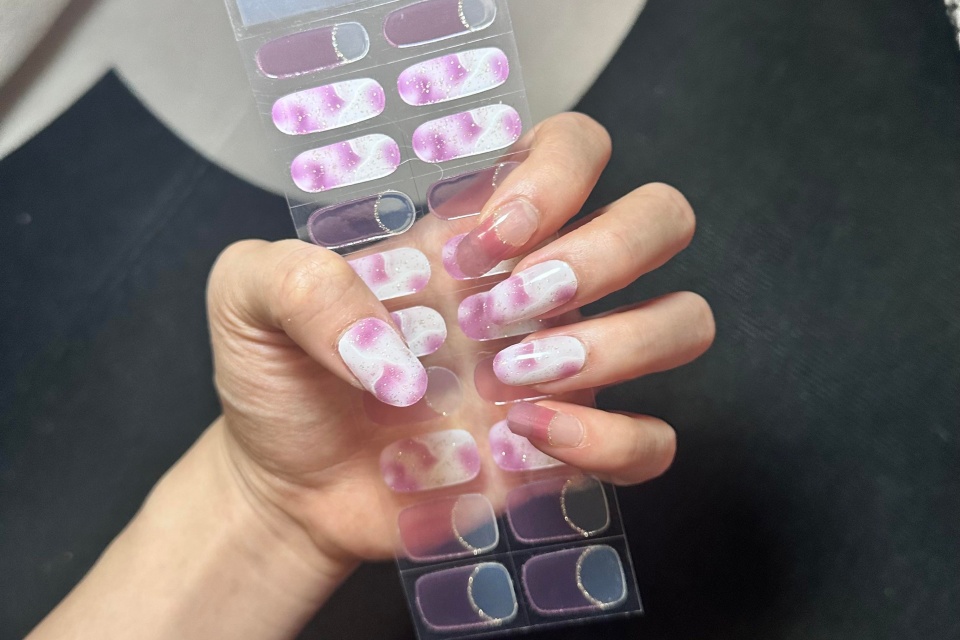
Here’s where outsiders usually miss the plot: the formula is only one piece. Application conditions do a lot of damage.
A 2024 Dermatitis journal survey found that 78% of respondents with skin reactions had used home acrylic kits, 74% learned through websites or videos, and 83% of home users first developed reactions after starting home-kit use. Another 2024 paper in the Journal of the American Academy of Dermatology found that none of the 66 at-home acrylic manicure products reviewed carried sensitization warnings about improper handling or incomplete curing.
None did. Think about that.
So the real risk picture isn’t just about whether a label says low-allergen gel nail products. It’s also about who is applying the system, what lamp they’re using, whether the product is pooling into sidewalls, whether they’re mixing brands, whether they understand cure windows, and whether they even know what uncured residue can do over repeated exposure. Salon people know this. The average home user usually doesn’t.
And once DIY culture collided with pro chemistry, the mess got predictable. The UK’s Chartered Trading Standards Institute warned in April 2024 that professional-use UV gel nail and liquid-and-powder systems were being used by consumers at home, noting that acrylates such as HEMA and Di-HEMA can cause allergies with lifelong side effects. That’s not a small warning. That’s a sector-level red flag.
However polished the branding may be, regulation has a way of cutting through nonsense.
The European Commission explains that TPO, a photoinitiator used in some gel systems, was classified as a category 1B reproductive toxicant under Commission Delegated Regulation (EU) 2024/197, which triggered its prohibition in cosmetics from 1 September 2025 under Regulation (EU) 2025/877. That’s not just chemistry trivia for the lab team. It affects product architecture, export planning, distributor risk, inventory strategy, and private-label timelines.
This is why the shift toward HEMA-free, TPO-free, and lower-allergen positioning feels different now. It isn’t just a trend deck. It’s a market-access issue. A supplier can’t simply keep shipping legacy formulas forever and hope no one notices.
And acid-free gel polish deserves its own reality check. The term can describe a useful formulation choice—often the absence of stronger acid components such as methacrylic acid in certain primers—but it does not mean the whole system is automatically suitable for reactive clients. It definitely doesn’t guarantee hypoallergenic gel nails. That leap is where marketing usually outruns technical honesty.
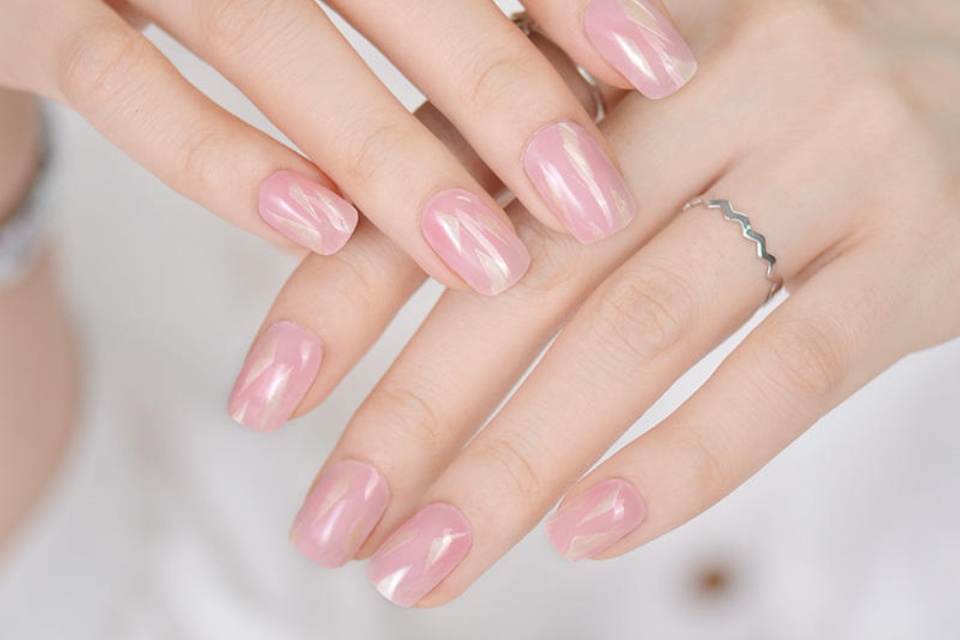
I’ve always thought the first buyer question is wrong. “Do you have HEMA-free?” is fine, but it’s entry-level. The better question is, “What replaced it, what’s the cure behavior, what warnings do you provide, and can you prove consistency batch after batch when this scales?”
That’s the difference between sourcing and browsing.
This is exactly why pages like Quality Assurance and OEM and ODM Services matter more than vague brand promises. If a supplier can’t speak clearly about traceability, documentation, SDS support, and process control, then the “safe” language is just front-label theater.
Here’s the signal buried under all the pretty packaging and nice claims.
| Signal | What the data says | Why professionals should care |
|---|---|---|
| Clinical allergy burden | Amsterdam UMC reported 67 women with nail-cosmetic allergic contact dermatitis; 97% were HEMA-positive; 80% cleared after avoidance | HEMA-free reformulation is not random trend-chasing; it targets the allergen most consistently flagged in clinics |
| Home-kit risk | In a 2024 survey, 78% used home kits, 74% learned from videos or websites, and 83% first reacted after starting home use | Education and application control matter almost as much as the bottle formula |
| Warning-label failure | A 2024 JAAD analysis found 0 of 66 at-home acrylic products carried sensitization warnings about improper handling or incomplete curing | “Safe” claims without warnings and instructions are compliance theater |
| Ingredient prevalence | A 2024 market survey found HEMA in nearly 60% of 394 nail cosmetics and Di-HEMA TMHDC in 34% | The market still contains many sensitization exposure points |
| Regulatory squeeze | TPO’s 2024 classification led to an EU cosmetics ban from 1 September 2025 | Reformulation is becoming mandatory, not optional, for serious exporters |
When I assess the best HEMA-free gel polish options, I’m not looking at the bottle first. I’m looking at the replacement acrylates, the photoinitiator package, the lamp compatibility data, the warning language, and whether the formula seems built for real service conditions rather than showroom copy. If that foundation holds, then product selection becomes meaningful.
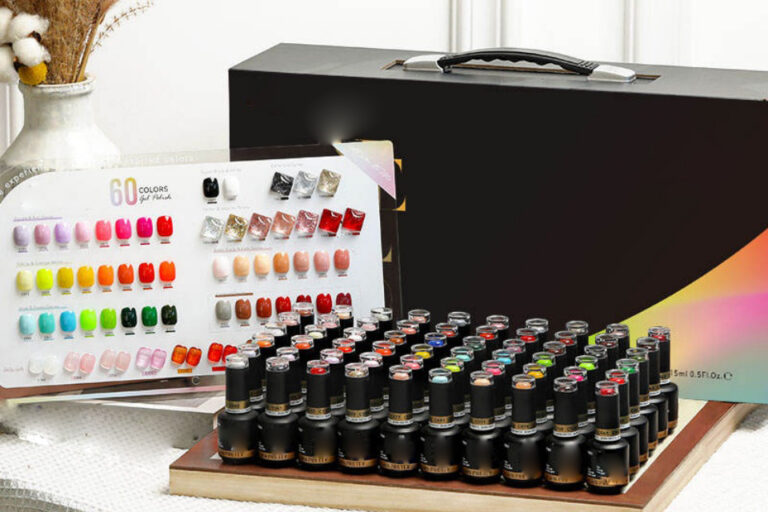
That’s where a HEMA and TPO-free Base Coat might fit one line strategy, while a 42-Color HEMA and TPO-free Gel Polish Set fits another. In some cases, the smarter move is to look across the whole Gel Polish Catalog and ask whether the safety logic is consistent across the range—or whether there’s one “hero” safe SKU sitting next to a bunch of legacy chemistry nobody wants to discuss.
But in the field, none of this works unless the basics are tight.
Keep uncured product off skin. Use the correct lamp for the system. Replace aging lamps before output drops into under-cure territory. Vent the table. Train new staff properly. Don’t improvise cure times because the salon is busy. Don’t treat sidewall flooding like a cosmetic nuisance. Those are boring controls, yes—but they’re the controls that keep low-level exposure from turning into a bigger problem later.
OSHA says local exhaust ventilation can reduce worker chemical exposure by at least 50%, and it reminds salons that labels, warnings, and safety data sheet access are part of basic hazard communication. Dry language. Real consequences.
From my experience, nail technician gel safety lives or dies in the unglamorous stuff—the bench habits, the brush control, the lamp discipline, the refusal to get sloppy when the appointment book stacks up. That’s also where gel allergy prevention becomes real rather than theoretical.
What is HEMA-free gel polish?
HEMA-free gel polish is a UV or LED-curable nail coating formulated without 2-hydroxyethyl methacrylate, a well-known nail allergen strongly associated with allergic contact dermatitis in both consumers and professionals, especially when uncured or partially cured product touches the surrounding skin during application or removal. In practical terms, it removes one major sensitizer from the formula, but it does not eliminate all allergy risk because other acrylates, cure problems, and handling mistakes can still trigger reactions.
Is HEMA-free gel polish safe for sensitive skin?
HEMA-free gel polish for sensitive skin is a lower-risk option, not a zero-risk option, because other acrylates, impurities, photoinitiators, or poor technique can still trigger irritation or allergic contact dermatitis even when HEMA itself has been removed from the formula. That’s the honest version. It may reduce one major exposure issue, but it should not be sold as a blanket guarantee for reactive users.
Does acid-free gel polish mean hypoallergenic gel nails?
Acid-free gel polish usually means the formula or primer avoids stronger acid components such as methacrylic acid, but it does not certify the full gel system as hypoallergenic, low-allergen, or suitable for every user with sensitivity concerns. Put simply, acid-free may describe one useful formulation choice, while the wider acrylate chemistry and cure behavior still determine the broader risk profile.
How should brands choose safe gel nail products?
Safe gel nail products should be chosen by verifying full ingredient disclosure, warning-label compliance, lamp-curing compatibility, safety data sheet documentation, batch traceability, and evidence that the formula avoids known high-risk ingredients without introducing poorly disclosed substitutes that recreate the same problem under a newer label. I’d also push hard on process control, because a nice sample bottle means very little if production consistency falls apart later.
What matters most for nail technician gel safety?
Nail technician gel safety is the disciplined control of exposure during service, including keeping uncured gel off skin, using the correct lamp for the system, maintaining ventilation, reading safety data sheets, and training staff to avoid under-curing, over-filing, and careless product flooding. In salon terms, it’s the ordinary technical discipline that prevents a lot of avoidable trouble.
If you’re building a safer line, the smartest move isn’t softer branding. It’s harder verification. Review the Quality Assurance page, explore OEM and ODM Services, or Contact the Team and ask the questions a regulator, serious distributor, or experienced salon buyer would ask.