Talk to Our Expert
Our sales and engineers are available all the time, you can ask your specific requirements to our sales, and inspiration to our engineer here.

International sourcing looks clean on a spreadsheet until you meet the factory calendar. Your team wants speed, clean claims, and cost control. The factory sees minimum batch size, changeovers, component availability, and scrap risk.
This guide compares Chinese, Korean, and European suppliers through a factory lens, with gel and color cosmetics as the running example.
Before you compare countries, map your scenario to three numbers. These numbers drive factory behavior more than a capability brochure.
Unit price is only one lever. Add freight, duty, labeling, testing, and the cost of rework, chargebacks, and lost shelf space. A 25 cent saving disappears fast if you need a second round of stability work or you end up air shipping a late order.
A typical pattern for a 15 ml gel SKU is roughly 0.80 to 1.20 USD ex works in China at volume, 1.30 to 2.20 USD in Korea, and 2.80 to 4.50 USD in Europe. These ranges are directional, but they signal how factories prioritize orders when capacity is tight.
Factories plan in batches and changeovers. A 12,000 unit order can be easy on output but painful on cleanouts, component kitting, label checks, and shade release. If your calendar is tight, prioritize suppliers who routinely run short to mid batches.
Ask what happens when a defect shows up in market. If a top coat turns hazy after eight weeks on shelf, can your channel quarantine, or will it sell through and turn into refund requests?
From the factory side, the question is CAPA speed. How fast can they trace a lot, isolate root cause, and ship replacement goods that match the same shade and viscosity spec.
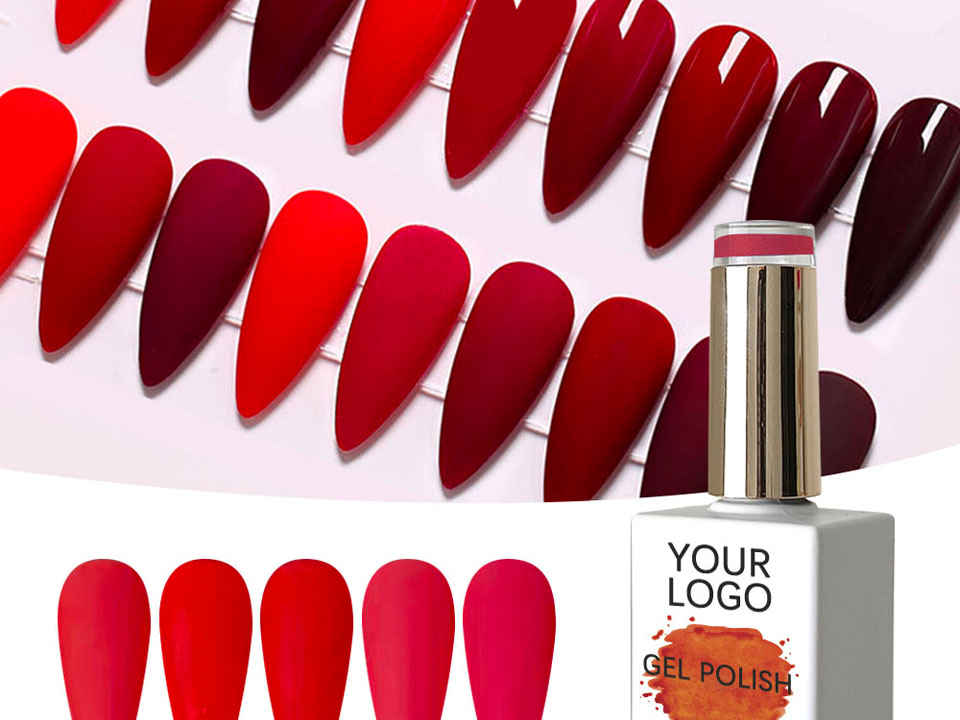
China is the default answer for many importers because the ecosystem is deep. Bottles, brushes, cartons, pigments, and contract manufacturing can sit inside one industrial cluster. That density brings cost and speed advantages, but it also creates wide variation between factories.
Most Chinese cosmetics lines are optimized for throughput. Typical MOQs for private label gel products land around 3,000 to 5,000 units per color per formula, higher when you add custom bottles or specialty brushes. The driver is setup time.
A realistic view of one color on a gel line: 2 to 4 hours for dispersion and viscosity tuning, then about 2 to 3 hours total for wash, purge, label validation, and changeover.
If your order is small, those fixed hours push cost up. If your order is large, China becomes very competitive because the fixed hours get diluted across volume.
If you are building a wide shade assortment, China is strong at parallel development. You can run lab samples Monday, tweak pigments Tuesday, and ship strike offs Friday. That pace is why many buyers start in China for assortment building.
China also tends to have broader access to effect materials. If your roadmap includes magnetic formulas, reflective glitters, or builder textures, it helps when a factory already runs similar batches and understands magnet response, particle size, and pigment wetting. A buyer can start from a proven baseline like private label cat eye gel polish kit and then customize shades and packaging.
The most common issue is not catastrophic quality. It is batch to batch drift caused by loose specs. If your PO says nude pink, the lab can match it today. Six months later a pigment vendor tweaks a toner and the shade shifts slightly. If you did not define delta E tolerance, viscosity range, and cure test specs, the factory may not treat the shift as a nonconformance.
Compliance also needs a destination market view. If you sell into the EU, you operate under EU Cosmetics Regulation 1223/2009 and you will need a product information file and CPNP notification, plus GMP evidence that many buyers map to ISO 22716.
For glitter and effect products, the EU microplastics restriction under Regulation EU 2023/2055 can affect material choices and timelines.
From a factory perspective, the cleanest purchase orders include:
If you are buying tone sensitive items, shade tolerance is where disputes show up. Build it into the agreement, not into a long email thread after production. A SKU such as nude camouflage rubber base gel makes this obvious because a small toner shift reads as a different undertone on nail.
Korea is often grouped with innovation, but the factory value for B2B buyers is more concrete: tighter formulation controls, cleaner documentation, and better alignment between claims and what the lab can support.
Many Korean OEM and ODM factories are set up for repeatability. Batch sizes can be smaller than high throughput plants, which helps if you have frequent refresh cycles and you are not ready to commit to very large MOQs.
A typical MOQ for a premium gel or color cosmetic SKU can sit around 1,000 to 3,000 units per color when you use standard packaging. Unit price is higher than China, but the document package can be more complete out of the gate.
On regulation, South Korea’s cosmetics oversight runs through the Ministry of Food and Drug Safety, with ingredient and labeling requirements that can be strict depending on category.
If your positioning depends on monomer restrictions, allergen profile, or specific clean claims, Korea often performs well because many factories already have internal guardrails. In gel categories, buyers increasingly request HEMA free and TPO free systems and want stability data to back the claim.
A practical approach is to start from a benchmark range like OEM 56 colors HEMA and TPO free gel polish, then narrow to the shades that match your channel and pricing.
Korean factories can be less flexible on component mixing. If they do not already buy your bottle, they may ask you to source and deliver it. That adds time and increases the risk of brush and wiper mismatch.
Also, some suppliers protect base formulas and treat deep customization as a paid development project. If your strategy depends on formula ownership, negotiate IP access early, then confirm what happens if you switch to a different filler later.
Europe is rarely the cheapest region. It is often the lowest drama option when your market is regulated, your distribution is premium, and your risk tolerance is low.
European factories typically run strong traceability systems. Lot coding, raw material trace, and deviation management are normal because audits are frequent.
EU Cosmetics Regulation 1223/2009 puts obligations on the responsible person and requires robust documentation, including the product information file and safety assessment.
For B2B buyers, that usually translates into fewer surprises during retailer onboarding and fewer gaps during due diligence.
European suppliers often quote higher but may accept lower MOQs, sometimes 500 to 2,000 units per color for a specialized gel SKU. The tradeoff is lead time: 6 to 10 weeks planning is common, plus testing and batch release.
If you need a fast turnaround on trend effects, Europe can feel slow. Raw material options can be narrower and compliance screening can stretch sampling.
This is also where the microplastics restriction matters for glitter heavy concepts. If your SKU relies on loose glitter, ask how the supplier interprets allowed uses and transitional timelines, then lock the plan into your spec and artwork process.
Choosing a region gets easier when you anchor it to product type and commercial goal.
If you are launching a broad assortment with aggressive price points, China is often the best base. It can support high SKU counts and scale with distributor demand.
If you are launching a curated range with clean claims, Korea can be a better match because you are paying for tighter controls and documentation.
If you are selling into EU retail channels with strict onboarding, a European supplier can reduce compliance friction and protect brand equity.
For buyers who want a stable baseline to compare specs across regions, start from a core catalog such as the gel polish homepage. These internal links are selected from Gel Polish.json.
Professional channels care about consistency, viscosity, and supply continuity. Base and top coats are where a small defect becomes a big support problem because the coat touches every manicure.
If you sell to salons, bulk formats can improve margin, but they demand tight fill weight control and stable viscosity. A bulk format like HEMA and TPO free base and top coat gel 1 kg is a good test of process discipline.
For glossy finishes, a clear coat such as no wipe diamond top coat is another smart benchmark. If a factory can run a clear coat with zero haze and stable shine across lots, their filtration, mixing, and cleaning controls are usually solid.
Builder products are a different animal. Buyers often underestimate how hard it is to hit the same self leveling feel from batch to batch. Minor resin variation changes flow, which changes nail tech feedback and returns.
When you source builder products, ask for:
A reference SKU like 15 ml self leveling UV gel builder helps you compare how each region controls rheology.
Effect products sell, but they create risk. Glitter particle size distribution, solvent resistance, and microplastics rules all matter. If you use biodegradable glitter for a marketing claim, confirm the supply chain and the test method, then lock the raw material source in the contract to avoid unapproved substitutions.
A conversation that starts with biodegradable shimmer glitter powder should quickly move to particle composition, migration, and compliance screening for your destination market.
Most sourcing failures come from misaligned incentives. Structure the deal so the factory makes money by doing the right thing.
Define defects in factory language. AQL is not enough unless you define what counts as critical, major, and minor defects. For gel products, critical defects include contamination, wrong shade, missing batch code, and underfilled units. Major defects include brush deformation, label misalignment, and cap cracking.
Also define corrective action timelines: response time, root cause report format, and replacement or credit terms.
Sampling is where many buyers get fooled by a perfect lab batch. Lab batches are 1 to 5 kg. Production batches are 50 to 300 kg. Pigment wetting and shear are different, so the same formula can land off in production.
A strong supplier will run a pilot batch and provide retains from pilot and first production.
Here is the factory view boiled down to one question: what problem are you paying the supplier to solve.
China fits when you need large shade catalogs, fast sampling cycles, aggressive unit economics, and flexible component sourcing. The price advantage is real when you write tight specs and you verify quality with pre shipment inspection and retained samples.
Korea fits when you need premium claims, mid size runs, strong documentation for distributors, and better alignment between claims and lab reality. Budget for development fees if you need deep customization.
Europe fits when you need low tolerance for deviation, smooth EU onboarding, lower MOQs with premium positioning, and audit readiness. Accept longer lead times and plan effect materials carefully.
The best sourcing strategy is usually a portfolio, not a single bet. Use China for breadth and cost, Korea for disciplined execution on claim driven lines, and Europe for compliance sensitive products and premium channels.
Pick one benchmark SKU and run the same sourcing package across regions, same spec sheet, same defect catalog, same testing plan. The clearest process usually beats the lowest quote.