Talk to Our Expert
Our sales and engineers are available all the time, you can ask your specific requirements to our sales, and inspiration to our engineer here.

Last year, at a trade booth packed with swatch sticks, chrome powders, and too many reps saying “salon quality” like it meant anything, I watched three buyers argue over a pot gel and a bottle gel as if the jar itself made one formula better, even though what they were really fighting about was control, leveling speed, pigment drag, and how forgiving the product would be once it hit the cuticle line. That’s the trap.
I frankly believe this whole color gel vs solid cream gel conversation gets butchered by lazy marketing. People flatten it into a packaging debate because packaging is easy to photograph. Formula behavior isn’t. But once you’re actually at the table—brush loaded, client fidgeting, timer running—the difference gets very real, very fast.
And messy too.
A bottled color gel collection and a jar-based solid color gel range can look almost interchangeable in a catalog grid, especially when every swatch is glossy and every brand copywriter is pretending texture equals prestige, but on the nail they don’t move the same, don’t recover the same, and definitely don’t suit the same kind of technician. Not even a little.
So let me strip the varnish off it. Bottle gel usually sells speed. Pot gel usually sells control. Everything else—the hype, the “premium feel,” the vague salon buzzwords—is just decoration on top of that basic truth.
A salon owner once told me her new “cream gel line” was terrible because it felt slow, stiff, and “annoying.” I asked one question: what kind of services was her team actually doing? Turned out they were trying to use a thick potted formula like a standard bottle color for fast full sets on a packed weekend roster. Wrong lane.
That’s what a lot of this comes down to. Not quality. Fit.
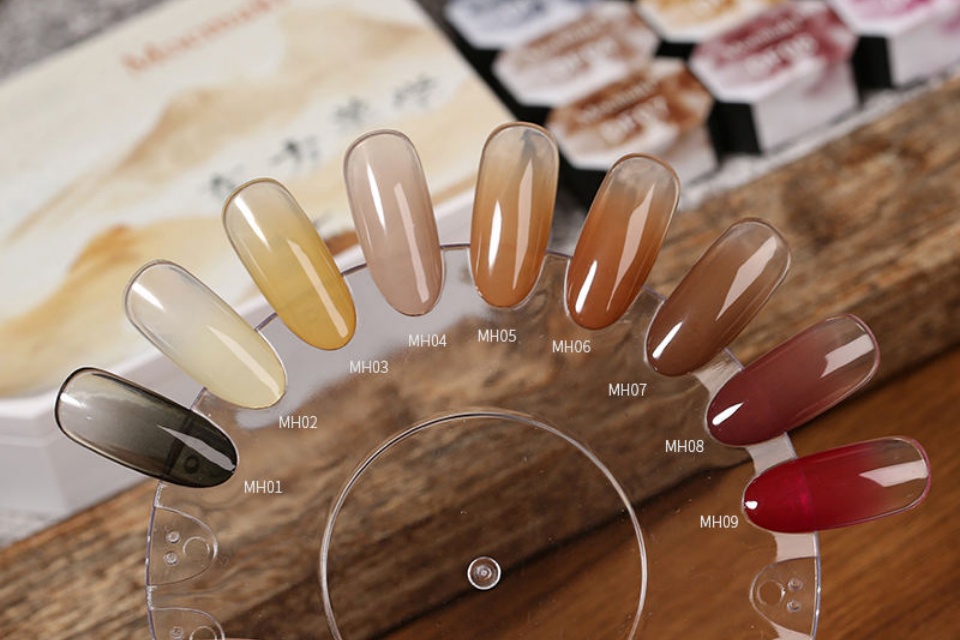
Color gel for nails—especially in the bottle format—is usually thinner, easier to float, quicker to self-level, and a lot friendlier for bread-and-butter salon work where you’re doing full coverage, repeat shades, maybe a simple accent nail, and you do not want to swap tools every thirty seconds. The built-in brush helps. More than brands admit. Less fumbling. Less wipe-off. Less bench clutter.
Solid cream gel for nails is different. Denser. Heavier. More stubborn, in a good way—assuming you wanted stubborn. It tends to stay where you park it. That makes it useful for smile lines, sidewall control, gradient work, isolated color placement, and detail where a runny formula will instantly turn your clean work into a mop-up job.
Here’s the ugly truth: some people buy pot gel because it feels “pro.” That’s not a buying strategy. That’s costume design.
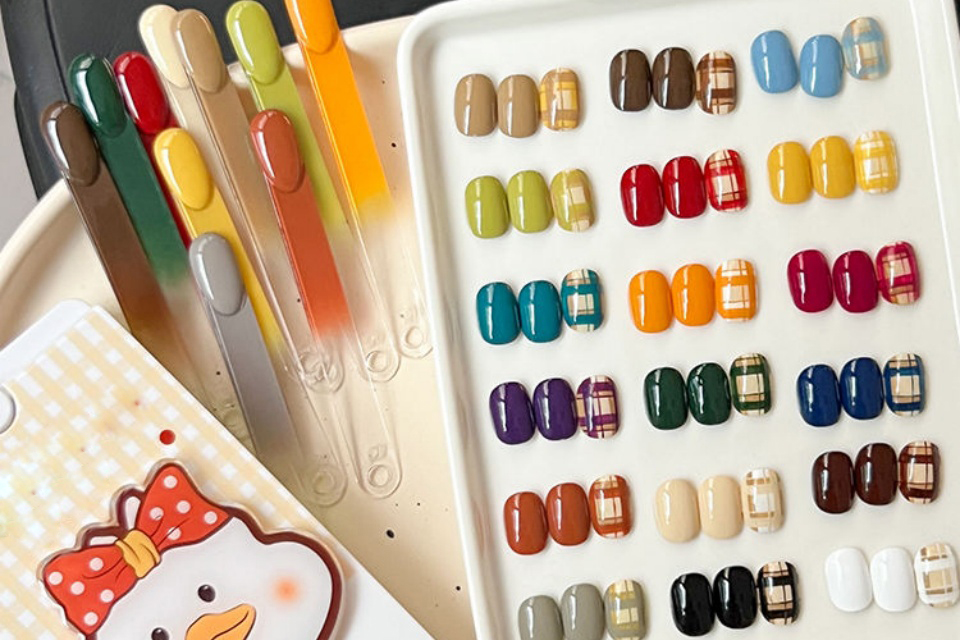
Forget the pretty branding for a second. Solid cream gel is a high-viscosity UV/LED-cured color gel, usually sold in a pot instead of a bottle, and it’s designed to hold its shape longer on the nail so the tech can place, nudge, and refine color without the product drifting all over the place before cure. That’s the clean version.
But real life is messier than definitions.
A lot of buyers hear “solid” and instantly think “best gel for nail art.” Sometimes, yes. Sometimes, not really. If the work is ultra-fine line art, micro-detail, or razor-clean illustration stuff, a true painting gel can still outclass both standard bottled color and generic cream gel because it’s tuned for line control and pigment hit, not just thickness. That’s why I always push back when someone treats potted cream gel vs bottled color gel like a one-question quiz.
It isn’t one question. It’s at least three.
Are you doing full coverage? Art-heavy sets? French? Character work? Fast salon traffic? High-ticket design menus? Those answers change the recommendation more than the jar ever will.
From my experience, the easiest way to explain the difference between color gel and solid cream gel is this: bottled gel gives you momentum, while cream gel gives you braking power. One wants to move. The other lets you pause.
That sounds simple. It is. And it isn’t.
Because not every bottle gel is thin, and not every pot gel is brilliantly controlled. Some bottle formulas are surprisingly cushy and pigmented. Some pot formulas are weirdly mushy, or they drag, or they clump if the room temp shifts. So format matters—but formula quality still matters more.
Still, there’s a pattern. A strong one.
Bottle gel polish vs cream gel, in day-to-day shop reality, usually breaks down like this:
And yes, I know somebody will say, “But my bottle gel does nail art fine.” Great. Mine too, sometimes. That doesn’t erase the broader pattern. It just means skilled hands can push a product past its ideal lane.
That happens. Pros do that.
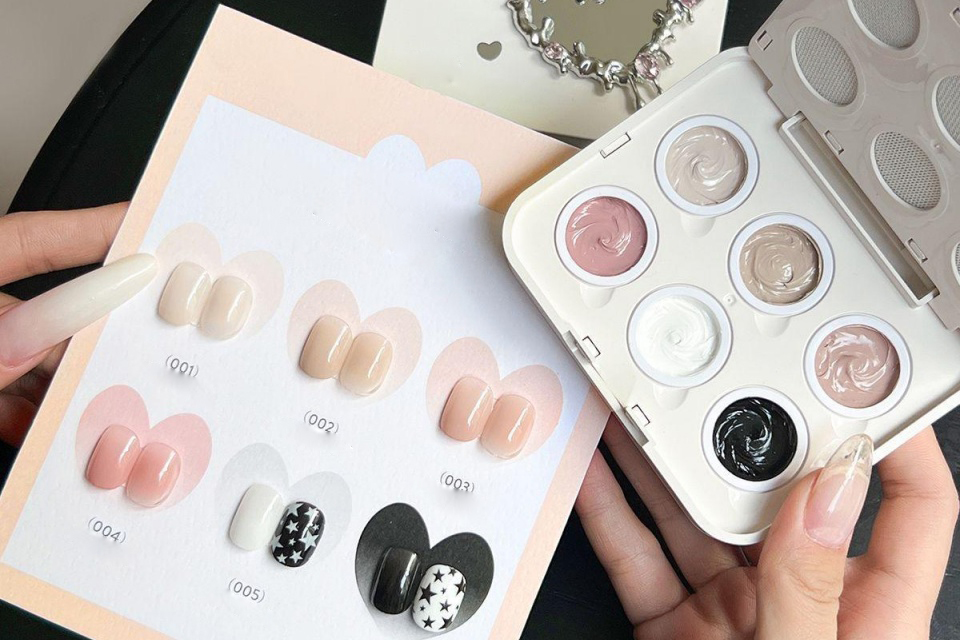
I think buyers get seduced by texture because texture feels tangible. You can scoop it, poke it, swatch it, post it. Workflow is less sexy. But workflow is where the money is. If your salon is booking basic overlays, one-tone manicures, and quick refills from morning to close, using a thick potted formula as the main color system can slow everything down for no real gain.
On the other hand, if your studio makes its margin on custom art—dense gradients, micro-French, layered design work, texture, placement-heavy looks—then relying only on bottle gel is its own kind of bad decision. You’ll get there, sure. Slower. Dirtier. With more correction.
I’ve watched both mistakes happen. More than once.
The smartest operators don’t ask which one is “better.” They ask which one earns its keep in a specific service menu. That’s a much better question.
But here’s where the conversation usually goes off the rails: people start talking as if a bottle is safer than a pot, or a pot is cleaner than a bottle, or thick gel somehow lowers exposure risk by magic. No. It doesn’t work like that.
In the U.S., nail products are generally regulated as cosmetics, and under MoCRA the FDA now has broader authority, including mandatory recall power and serious adverse event reporting requirements; FDA also notes that nail products generally do not require premarket approval, except for most color additives. (fda.gov)
That’s not trivia. That matters when you’re sourcing at scale, private labeling, or trying to decide whether a supplier is serious or just good at making sample kits look expensive.
Personally, I’d rather inspect an ISO 22716 quality assurance system than read another fluffy product page full of words like “luxury” and “advanced.” The supplier’s QA page leans on ISO 22716, traceability, and rapid recall capability. Boring? Sure. Useful? Absolutely. That’s the stuff real buyers should obsess over.
And allergy data aren’t exactly giving the industry a free pass. A 2024/2025 European audit covering 26,297 patients across 7 centers found nail-related HEMA allergy rising from 0.91% in 2016 to 1.98% in 2023, with nail-cosmetic exposure accounting for 3.4% of all occupational skin disease; the authors said EU legislation had not delivered the intended control effect. Read the EECDRG audit published in Contact Dermatitis. (researchgate.net)
That’s not tiny. That’s a flare gun.
And the clinic side isn’t prettier. Amsterdam UMC’s 2024 report says acrylate allergy cases are steadily rising, and that 4% of patients tested at its allergy department now show sensitivity, roughly double the rate of a decade ago. Their warning is especially sharp around cuticle damage and skin exposure—which, if we’re being honest, still happens far too often in rushed services and DIY-adjacent salon habits. (amsterdamumc.org)
So no, I don’t reduce safety to bottle vs pot. That’s oversimplified nonsense. I look at formula profile, skin contact risk, cure reliability, and whether the manufacturer can prove they know what they’re doing.
Here’s another thing that gets glossed over: lamps. Pigment load, viscosity, cure time, application thickness—they all start arguing with each other the second the hand goes under the light.
A 2023 UC San Diego study found that one 20-minute exposure to UV nail dryers caused 20% to 30% cell death in tested cells, while three consecutive 20-minute exposures caused 65% to 70% cell death. Heavy result. But Australia’s radiation authority, ARPANSA, noted those exposure times were longer than ordinary curing windows, which are usually much shorter, and said the lab findings shouldn’t be lazily converted into real-world cancer claims without epidemiological data. (today.ucsd.edu)
That’s the part I wish more people would say out loud. You can take lab findings seriously without turning them into melodrama. You can also appreciate that thicker, denser products sometimes behave differently under imperfect lamps or rushed cure routines. Which means, again, this category is not just about texture. It’s about system fit.
And that word matters—system.
| Factor | Bottled Color Gel | Solid Cream Gel / Potted Cream Gel |
|---|---|---|
| Typical format | Bottle with built-in brush | Pot or jar with separate brush |
| Viscosity | Lower to medium | Medium-high to very high |
| Self-leveling | Faster | Slower |
| Flooding risk | Higher if overworked or overloaded | Lower if product is truly dense |
| Full-color speed | Usually faster | Usually slower |
| Detail control | Good, but limited on intricate work | Better for precise placement |
| Art suitability | Fine for simple sets and basic accents | Better for French, line work, gradients, embossed looks |
| Learning curve | Easier for average salon techs | Higher; more brush discipline required |
| Workflow mess | Fewer tools, simpler process | More tools, more setup, more brush cleaning |
| Best fit | High-volume salon color services | Premium art menus and correction-heavy work |
| Biggest misconception | “Easy” means lower quality | “Thick” means automatically better |
If I were building a working salon menu tomorrow—not a fantasy menu, a real one—I’d start with a bottled HEMA-free gel polish system for volume services, because speed matters and the average tech benefits from cleaner flow, fewer tool changes, and easier full-plate coverage. That’s just practical.
But if the business model leans into design upgrades, premium art tickets, or placement-sensitive work, I’d add pots fast. Not because they’re trendy. Because they behave better for that job. You feel it in the brush. You feel it in the correction time. You feel it when your smile line doesn’t wander.
And if I were sourcing wholesale, I wouldn’t stop at category pages and call it research. I’d compare a broad catalog, a pot-based set, and an art-specific format side by side. In other words: start with the bottled overview, check this solid pink nude UV gel set for salons, then look at a detail-oriented painting gel palette. That mix tells you how the line is actually built—not just how it wants to be perceived.
My take? Don’t marry one texture.
Bottle gel for speed. Solid cream gel for control. Painting gel for precision work that actually deserves its own tool.
That’s how professionals build a smarter shelf. Or should.
Solid cream gel is a high-viscosity UV/LED-cured color gel, usually sold in a pot rather than a bottle, formulated to stay where the brush places it, deliver dense coverage, and give nail technicians tighter control for French lines, gradients, overlays, and detailed nail art. In plain salon terms, it’s the stuff you reach for when you don’t want product drifting while you’re still placing it.
Color gel is usually a more fluid bottle format optimized for fast, even full coverage, while solid cream gel is a thicker pot format built for slower, more precise placement with less running, less flooding, and better control when the design demands structure rather than speed. That’s the real answer to how to choose between color gel and cream gel—pick based on workflow, not hype.
Solid cream gel is usually better for nail art because its thicker body stays put, carries heavy pigment without spreading, and lets a technician place fine lines, isolated chrome bases, smile lines, and textured details with less correction than a thinner bottled color gel. But—and this matters—for ultra-fine detailing, a dedicated painting gel can still be the sharper tool.
Bottle gel polish is not the same as cream gel, because the bottle format usually combines lower viscosity with a built-in brush for faster salon application, whereas cream gel is generally denser, pot-packed, and designed to be picked up with a separate brush for precision work. They may look similar after cure, but before cure they behave like different animals.
Bottled color gel is usually better for high-volume salon color services, because it speeds up full-nail coverage, reduces brush switching, and favors predictable timing, while solid cream gel is better as a specialist tool for art menus, correction work, and premium detail services. So the better choice depends on what the salon actually sells—fast repeat color, or design-heavy work that needs more control.
If you’re building an assortment that has to perform in the real world, start with the gel polish catalog, narrow the mix around your actual service menu, then use the contact page to ask the questions that separate serious suppliers from slick marketers—ingredient transparency, viscosity range, curing guidance, batch consistency, and QA paperwork. That’s how I’d buy.