Talk to Our Expert
Our sales and engineers are available all the time, you can ask your specific requirements to our sales, and inspiration to our engineer here.

A funny thing happens in beauty when the market gets tired: the loudest look keeps dominating the feed, editors keep pretending volume equals demand, and then the actual money slides—quietly, almost rudely—toward the option clients can wear for two and a half weeks without feeling like their hands are cosplaying a trend report. That’s the split.
I’ve seen it before. Different decade, same mechanics. The “wow” sets pull the saves; the wearable sets pull the rebooks. And right now, minimalist nails are sitting in that sweet spot where style, maintenance, and status all line up. Not by accident. By design.
But here’s the ugly truth: a lot of maximalist work looks richer in a close-up than it does in daylight, three coffees later, with a bit of regrowth showing and the charm placement catching on knitwear, which is exactly when clients start deciding whether a manicure felt chic or just high-maintenance in disguise. They decide fast.
Three seconds. Maybe.
I frankly believe that’s why minimalist nails feel more expensive now. Not because they’re “simpler,” which is the lazy read, but because they look controlled. Calm. Deliberate. The clean girl nails effect—sheer pink nails, milky white nails, soap-nude overlays, tiny detailing if any—signals polish without visual noise. Vogue picked up on that when it framed the look as part of the clean-girl code, and, honestly, that call held up better than most trend pieces do. (vogue.com)
And no, I’m not saying maximalism is dead. It isn’t. It still kills on camera. It still matters for editorial, events, content shoots. But day-to-day salon economics? Different animal. The rebook cycle rewards wearability, not spectacle.
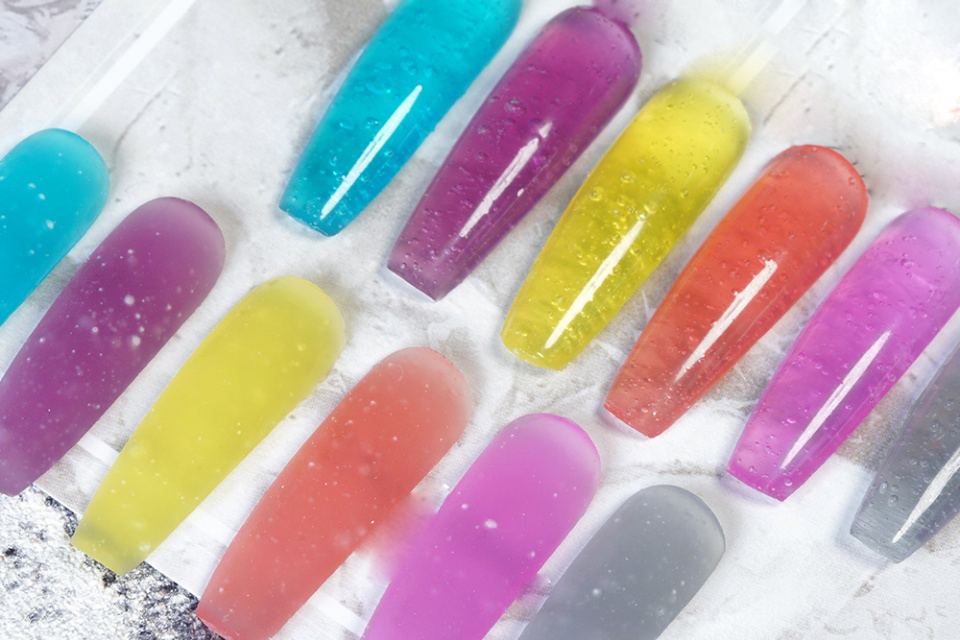
Yet people keep calling this “natural nails,” and that bugs me, because a proper minimalist set isn’t raw or accidental at all—it’s usually more exacting than a louder design, since jelly tones, milk-bath whites, and sheer pink veils leave nowhere to hide flooded cuticles, wonky sidewalls, streaky cure, or a bulky apex. Brutal stuff.
No camouflage.
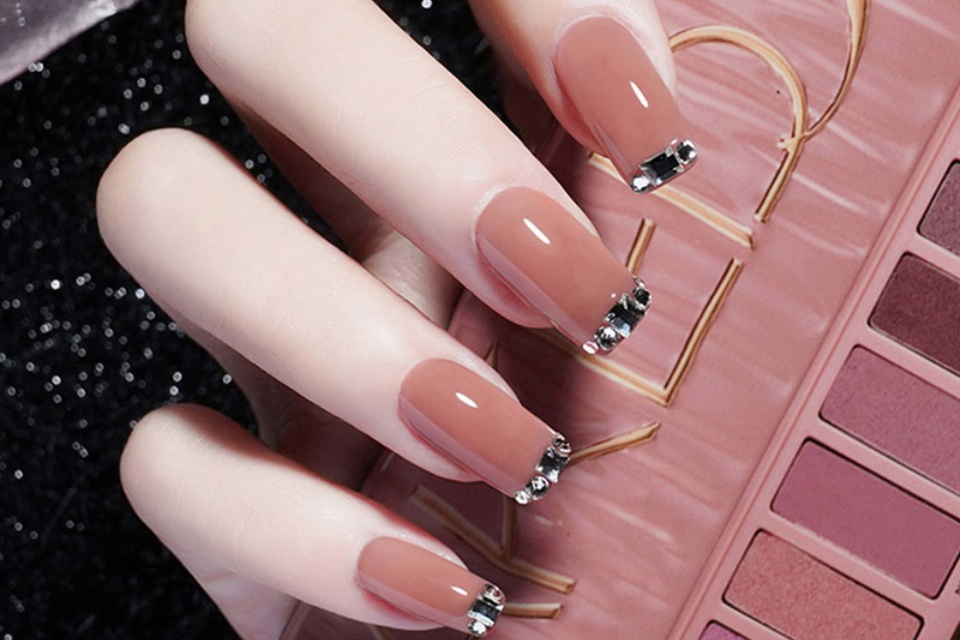
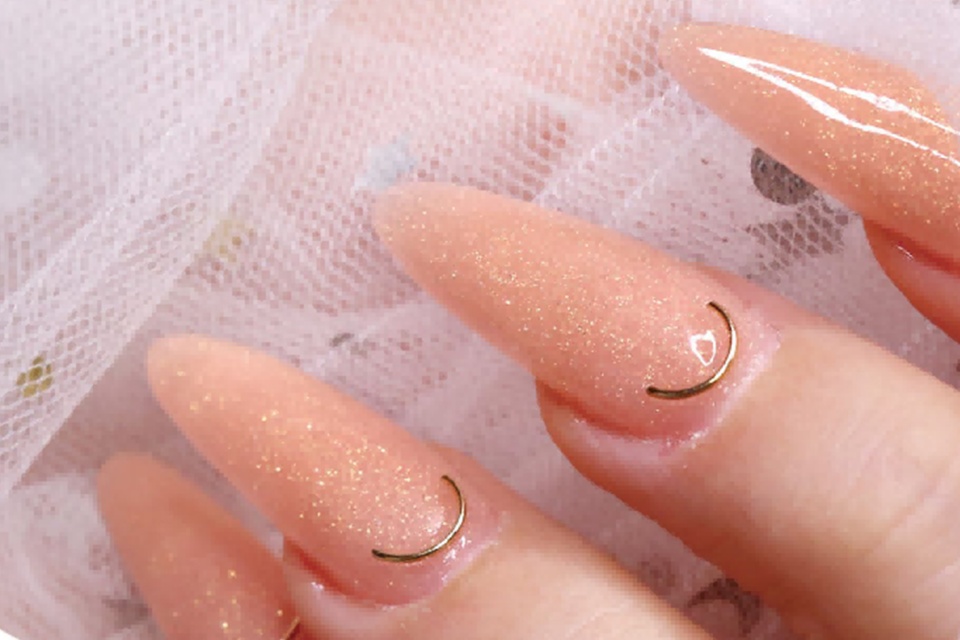
The real look is tighter than most people think. Sheer pink nails. Milky white nails. Clean nude jellies. Maybe a micro-French so thin it’s basically a rumor. Maybe one chrome pin-dot near the lunula if the client wants a little personality without tipping the whole set into “try-hard.” That’s simple nail art when it’s done well—edited, not empty.
From my experience, this is where bad product selection gets exposed. Bottle color lies all the time. A pink that looks delicious in the swatch stick can go corpse-cool after cure. A milky white can turn chalky and dead. A top coat can flatten the whole finish. And then everyone blames the trend when it was the system all along.
I’ve sat through enough buyer meetings to know when a category is being oversold, and minimalist nails are one of the few current trends that don’t really need the sales pitch because the business logic is already sitting there in plain sight: low-regret color, cleaner grow-out, broader wearability, faster service flow, stronger repeat potential. That’s not hype. That’s menu math.
It adds up.
In April 2024, Reuters reported that L’Oréal’s first-quarter sales rose 9.4%, with the consumer products division up 11.1% and dermatological beauty up 21.9%, while the U.S. Bureau of Labor Statistics projects 7% employment growth for manicurists and pedicurists from 2024 to 2034, with about 24,800 openings a year. Those figures don’t tell us “buy glitter.” They tell us beauty spend is still alive, but it’s being edited with a colder eye. (reuters.com)
So what survives that edit? Usually the thing that feels premium without becoming a nuisance. That’s minimalist nails in one line.
If I were building an assortment around this—and I’d do it ruthlessly—I wouldn’t chase every novelty finish with a pulse. I’d keep the backbone clean: dependable gel polish formulas, flexible colored rubber base options, a reliable builder in a bottle gel for soft structure, and a glassy shiny top coat that keeps the nail looking hydrated instead of plastic. Fancy launch decks are cute. Systems make money.
However much brands want to keep this trend wrapped in soft-focus language, ingredient anxiety is now part of the manicure conversation whether marketers like it or not, because clients don’t separate “how it looks” from “how safe it feels” once enough reaction stories start circulating in public. That wall is gone.
People talk.
In January 2024, a Weill Cornell-led study in SKIN looked at TikTok content tied to #gelallergy and found 214 relevant videos with 100,293,657 views; 94 personal accounts explicitly described allergic contact dermatitis associated with at-home gel nail kits. That is not a fringe signal. That is mass exposure, and it changes buying behavior even when the average consumer can’t explain acrylates from memory. (journals.sagepub.com)
Then the clinical side got even less comfortable. A 2024 study from Amsterdam University Medical Centers reviewed allergic contact dermatitis linked to acrylate-containing nail cosmetics and identified 67 patients between January 2015 and August 2023; 97% tested positive to 2-hydroxyethyl methacrylate, or 2-HEMA. Another 2024 paper found HEMA present in nearly 60% of nail cosmetic products examined, with EU-legislation violations in more than 30% of them. Those are not “bad optics” numbers. They’re operational warnings. (pubmed.ncbi.nlm.nih.gov)
And this feeds directly back into the clean-girl manicure. Soft, sheer, healthy-looking nails now carry a second message in the consumer mind: gentler, safer, less aggressive. Is that always chemically accurate? Not necessarily. I’m not going to pretend every “clean” claim in beauty is honest. But the perception is there, and perception moves product.
Here’s where I think a lot of suppliers get sloppy: they treat compliance language as packaging filler, when in reality the minute consumers start asking sharper questions about gels, allergies, or curing systems, weak labeling starts looking less like oversight and more like a trust problem waiting to happen. That’s a bad look.
And expensive.
The FDA’s guidance is pretty plain. Nail products sold in the United States must be safe when used as directed and must carry ingredient information and warnings where needed; at the same time, most cosmetic ingredients, other than most color additives, do not require FDA premarket approval before sale. That mix creates a weird tension—speed to market on one side, responsibility on the other. (fda.gov)
So yes, safer-positioned foundational products matter more now than they did a few years ago. Not because every buyer is suddenly reading INCI decks for fun, but because one bad story can torch trust across a whole category. That’s exactly why HEMA- and TPO-free base coat systems have moved from niche spec-sheet detail to actual buying language.
Not glamorous. Still vital.
If a salon or private-label brand is still stocking like the market revolves around effect gels, cat-eye side quests, and novelty color drops every other Tuesday, I’d argue it’s reading the algorithm instead of reading demand, and those two things drift apart more often than people in beauty care to admit. It happens constantly.
Trim the clutter.
Minimalist nails need a tighter bench. Three core lanes do most of the work: sheer pink nails, milky white nails, and neutral overlays that make the nail bed look smoother, brighter, and more even without tipping into heavy opacity. After that, simple nail art becomes an upsell—not the foundation. That order matters.
And let’s be specific. Neutral isn’t one shade family. Warm pink-beige, cool blush jelly, peach-nude milk, soap white, translucent beige—these all cure differently, wear differently, and flatter different skin tones differently. Outsiders miss that. Techs don’t. You can’t build a strong minimalist nails 2026 assortment with random “nudes” and a prayer.
| Format | Visual effect | Client benefit | Operational benefit |
|---|---|---|---|
| Minimalist nails | Sheer pink, milky white, nude jelly, tiny accent | Lower regret, cleaner grow-out, wider wearability | Faster service flow, stronger repeat bookings |
| Clean girl nails | Short, even shape, transparent neutral, high gloss | Professional, bridal, and everyday safe | Easier standardization across salons |
| 3D or maximalist nails | Raised art, charms, chrome texture, sculpted detail | High statement value, event-specific appeal | Better for content than for high-frequency rebooking |
| Simple nail art | Micro-French, dot detail, thin lines | Personalization without visual overload | Add-on revenue without full complexity |
What are minimalist nails? Minimalist nails are manicures built around short or medium lengths, refined shaping, sheer or softly milky color, and little to no decoration, with the goal of making the natural nail look healthier, more even, and more polished rather than heavily designed or visually loud. In chair talk, they’re the sets where prep, structure, and finish do the heavy lifting.
How to get minimalist nails? To get minimalist nails, ask for precise cuticle work, a balanced natural shape, a sheer pink, nude, or milky overlay, and a high-gloss finish, while keeping structure thin and decoration minimal so the manicure reads clean rather than sparse or unfinished. Don’t overbuild it. A tidy cuticle pocket and a clean apex will beat extra detailing almost every time.
What shades define clean girl nails? Clean girl nails are usually defined by low-contrast, translucent shades such as naked pink, beige nude, soap-toned neutrals, and soft milky white, all chosen to let the natural nail remain slightly visible while still looking brighter, smoother, and more expensive. Think wash, not wall. The free edge should still feel believable.
What is the best sheer nail polish for clean girl nails? The best sheer nail polish for clean girl nails is a formula that levels evenly, stays translucent after cure, matches the wearer’s undertone, and finishes glossy rather than streaky, cloudy, or chalk-like, because the entire look depends on clarity and believable softness. From my experience, undertone mismatch wrecks more “clean girl” sets than poor nail art ever does.
Minimalist nails aren’t the quiet alternative anymore. They’re the commercially smart center of the category—the kind of look that fits real schedules, real budgets, and real hands without losing its aspirational edge. And if a brand wants to build around that demand instead of just talking about it, the work starts with better foundational systems and fewer filler SKUs. For manufacturers planning that next neutral-heavy launch, OEM/ODM services are where the commercial work actually starts.