Talk to Our Expert
Our sales and engineers are available all the time, you can ask your specific requirements to our sales, and inspiration to our engineer here.

This season fights back.
One minute you’re looking at softness, calm, and those polished “easy luxury” shades buyers swear they want all year, and the next minute the data snaps in another direction—clean brights, synthetic-looking color pops, and sharper contrast—which is exactly why Pantone’s New York Fashion Week Spring/Summer 2026 report and Coloro x WGSN’s S/S 26 Key Colors make more sense together than apart. Weird combo, right?
I frankly believe too many nail brands still read trend reports like children reading a candy menu. They grab the loudest swatch, slap it into a stock bottle, shoot a nice campaign image, and then wonder why the thing turns into a shelf-sitter once real salons test it on real hands under real lamps. That’s the problem. Not color itself. Translation.
Because runway color is cheap to announce. Gel polish colors aren’t. They have to self-level. They have to cure cleanly. They have to survive skin-tone mismatch, opacity drift, pigment load problems, and that ugly moment when a “trend shade” looks amazing on a digital forecast board but muddy as hell after two coats.
That part hurts.
And the money side still says beauty buyers have room for novelty, just not nonsense. Circana said U.S. prestige beauty sales rose 7% to $33.9 billion in 2024, while Reuters reported that L’Oréal’s first-quarter 2024 sales reached €11.24 billion, up 9.4% like-for-like, led by mass-market and dermatological beauty demand. So, yes, people are still buying beauty. But they’re not paying forever for lazy color maps and me-too launches. That era feels tired now.
But here’s where I think a lot of brands misread the season: they treat it like a pastel forecast with a couple of brights thrown in for social media. I don’t buy that at all. The signal is more fractured than that—more interesting, too. Pantone talks about personal expression, honesty, and individuality. Coloro gets more specific, more commercial, more useful: Transformative Teal 092-37-14, Electric Fuchsia 144-57-41, Blue Aura 177-77-06, Amber Haze 043-65-31, and Jelly Mint 078-80-22. That’s not random. It’s a market split.
Softness still matters. So does voltage.
And if you’re pulling seasonal options from a broad gel polish catalog, you can’t just think in shade names anymore. You have to think in systems. Jellys. Milks. Magnetics. Rubber bases. Syrup translucency. Micro-shimmer. Matte contrast. That’s where collections either come alive or die flat on the swatch card.
From my experience, the best seasonal launches are not the ones with the biggest palettes. They’re the ones with the cleanest edit. One anchor nude. Two commercial light shades. One aggressive hero color. One finish-led effect shade. One texture story. Done. That is enough. More than enough, actually. The rest is usually noise.
And, yes, the backend matters. More than marketing teams like to admit. If a factory talks trend but can’t talk suspension stability, pigment settling, cold-weather viscosity shift, or batch repeat, I tune out fast. That’s why real OEM/ODM services matter here. Not as brochure fluff. As insurance against embarrassing launches.
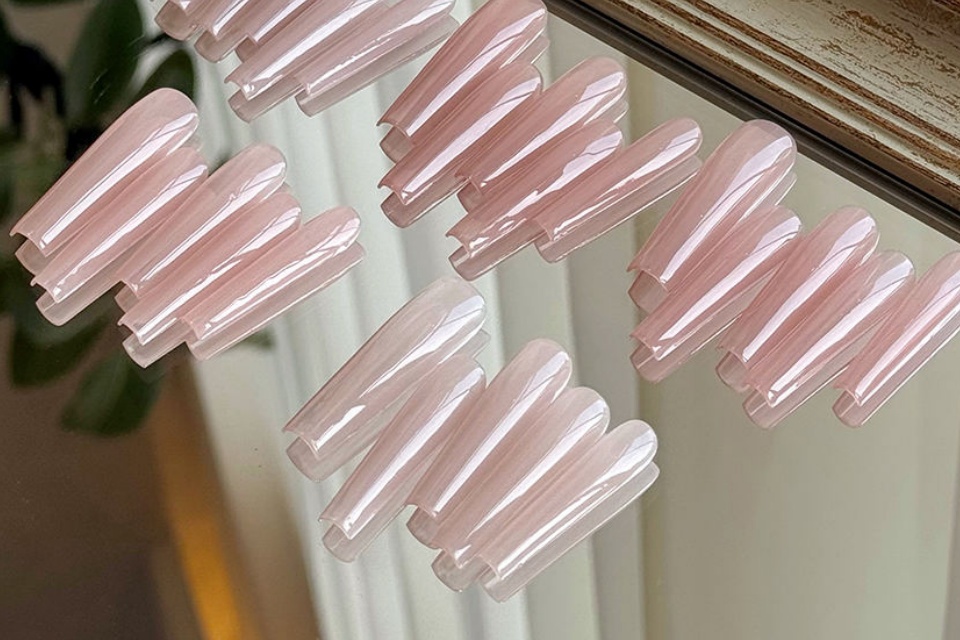
Yet the bigger mistake would be treating all six shades like they do the same commercial job, because they don’t, and anyone who has watched salon reorder sheets for more than five minutes knows that immediately.
| Shade | Reference | Best gel translation | Best finish | Commercial read |
|---|---|---|---|---|
| Transformative Teal | Coloro 092-37-14 | blue-green glass teal | magnetic cat-eye, jelly crystal | strongest hero shade |
| Jelly Mint | Coloro 078-80-22 | cool translucent mint | jelly, rubber base, syrup wash | safest spring newness |
| Blue Aura | Coloro 177-77-06 | misty milk blue | semi-sheer cream, satin shimmer | clean salon shade |
| Amber Haze | Coloro 043-65-31 | honeyed amber gold | syrup gel, micro-shimmer | summer heat shade |
| Electric Fuchsia | Coloro 144-57-41 | sharp pink-purple | cream, reflective shimmer | promo and social driver |
| Mocha Nude | Pantone 17-1230 carryover influence | milk-tea beige brown | BIAB, nude rubber base, sheer nude | reorder anchor |
Transformative Teal is the big one. Not the easiest one. The big one.
If I had to place one commercial bet for Spring/Summer 2026, it would be here, because teal sits in that sweet spot where it can still feel editorial and directional, yet—if the finish is right—it doesn’t become alien on the hand, which is why I would push it through a cat eye gel category or a custom magnetic format instead of wasting it on a dead-flat cream that strips out all the depth.
That depth matters. Teal without movement can look cold and bargain-bin fast. Teal with internal shimmer, magnetic pull, or jelly clarity? Completely different animal.
Jelly Mint is sneakier. That’s why I like it.
A lot of brands will overbuild it. They always do. They’ll force too much pigment into the bottle, push it toward toothpaste green, and wreck the airy, clean mood that makes mint wearable in the first place. I’d rather see this shade handled through a colored rubber base format—something cool-toned, softly translucent, and self-leveling—than through an old-school opaque block color. The latter feels dated already.
Blue Aura is where factories get exposed. Fast.
Pale blues are unforgiving because every flaw shows up: chalkiness, weak dispersion, uneven opacity, undertone contamination, patchy first coat payoff. I’ve seen brands act surprised by this. They shouldn’t be. Blue Aura only works when it stays misty and controlled, and that means the boring stuff has to be solid—your lab work, your fill consistency, your pigment grind, your cure behavior, all of it. That’s exactly why a visible quality assurance process is not optional on shades like this.
Amber Haze, though, is the smarter summer play than plain yellow. I’ll die on that hill.
Yellow polish always sounds good in brainstorm meetings. Then it reaches the salon wall and starts scaring people. Too pastel and it looks washed out. Too acidic and it looks novelty-grade. Amber gets around that trap by borrowing from resin, honey, old gold, even a little sun-faded marmalade. It feels warmer. Richer. More grown-up. I’d sell it as syrup, shimmer, or stained-glass warmth—not a thick opaque cream pretending to be fun.
Electric Fuchsia is not subtle, and it shouldn’t be. That’s the point.
Still, I wouldn’t overfeed it. One sharp fuchsia can carry your promo images, summer kits, social assets, and display moments. Six hot pinks in slightly different tones? That’s dead weight. Here’s the ugly truth: many brands confuse “more options” with “more demand.” Buyers don’t. Buyers see duplication instantly. A disciplined range beats a bloated one every time.
And then there’s Mocha Nude. Quiet winner. Every season needs one.
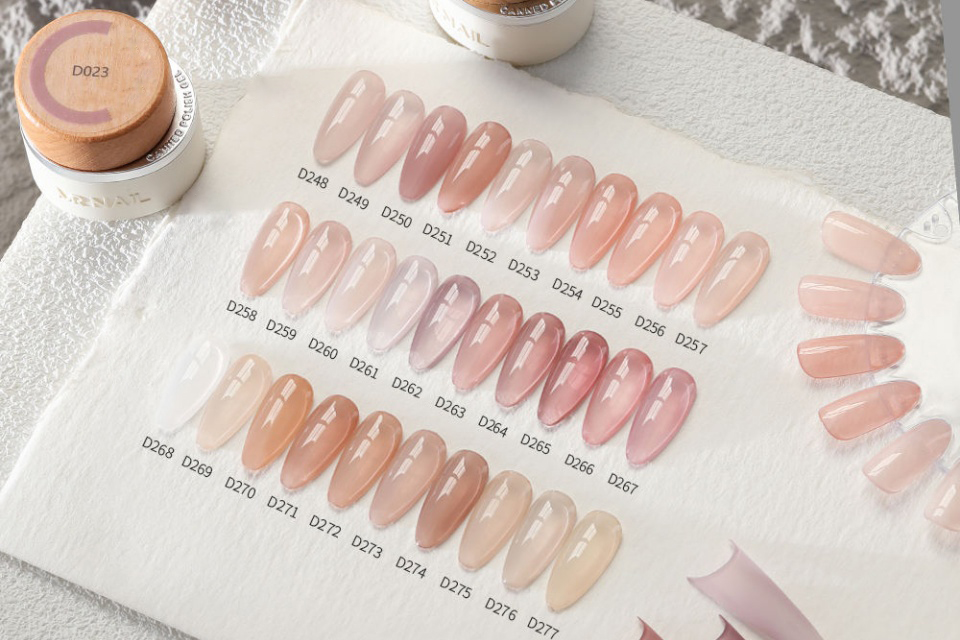
People love to act like brown-based nudes are boring, but commercial beauty is built on shades clients can live with for three weeks without getting sick of their own hands. That’s why Mocha Nude matters. Pantone’s 2025 brown story still has legs, and in nails it translates beautifully into cocoa pinks, milk-tea beige, toasted nude BIAB, and soft builder shades. I would absolutely keep a mocha-series HEMA-free gel polish option sitting beside the brighter trend colors, because that is how real assortments work: one shade gets attention, another gets reorders, and both are necessary.
So what actually sells? Not everything trendy. Just the right mix.
I would break Spring/Summer 2026 into three layers. Cash shades. Image shades. Finish shades. Cash shades are your mocha nude, your jelly pink-beige, your mint rubber base. Image shades are Transformative Teal, Electric Fuchsia, and maybe one perfect Blue Aura. Finish shades are where the collection breathes: magnetic pull, reflective shimmer, glassy top effects, maybe one refined matte. That’s the commercial architecture. Not sexy. Very effective.
And here’s a harder truth the industry keeps circling without saying plainly: formula risk is now part of color strategy whether brands like it or not. The FDA’s nail care products page makes it clear that reactive methacrylate residues can trigger redness, swelling, and pain in sensitized users, and that history matters because buyers—especially serious buyers—are asking sharper questions now. They should.
That’s why I don’t see safer-formula positioning as a side note anymore. I see it as part of the sales pitch. If I were building a 2026 line, I would want at least one credible HEMA- and TPO-free gel polish range in the discussion, not because that solves every safety question, but because the market has moved and the paperwork conversation is real. Also, let’s be honest, it sounds a lot more serious than fluffy “clean beauty” filler copy.
The finish conversation is shifting too. Glitter isn’t dead. Bad glitter is. Cheap-looking, chunky, messy sparkle already feels behind the curve, and regulatory pressure in Europe isn’t helping that style age gracefully. So when I think 2026 effects, I’m thinking refined reflective particles, magnetic depth, fine shimmer, controlled flash—not craft-bin chaos.
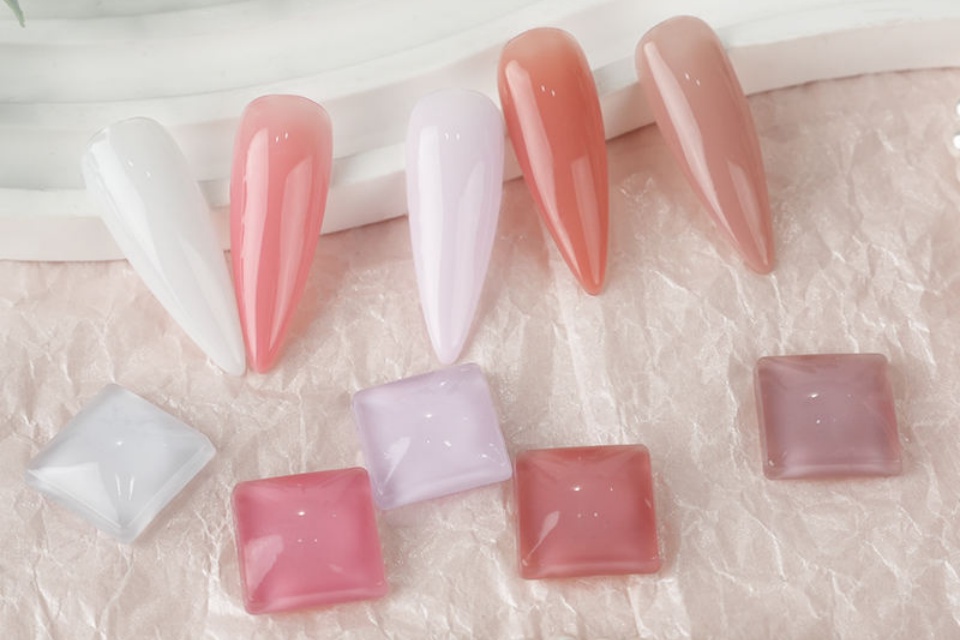
Spring/Summer 2026 gel polish colors are a split palette of blue-green teal, translucent mint, misty milk blue, warm amber, electric fuchsia, and soft mocha-based neutrals, because the season is balancing emotional calm with sharper, high-energy contrast rather than following a single pastel-only direction. That’s why the smartest collections won’t look one-note. They’ll move between comfort shades and statement shades without losing commercial discipline.
A smart Spring/Summer gel polish assortment should combine one anchor nude, two easy wearable lights, one statement shade, and one finish-driven effect, so the collection can satisfy salon reorders, visual marketing, and private-label differentiation at the same time. I’d choose based on finish behavior as much as color family, because a pretty swatch means nothing if the bottle shot lies and the salon wheel tells the truth.
Pantone inspired gel polish shades are useful directional cues, but they are not enough to drive sales unless the shades are translated into nail-friendly undertones, stable formulas, and commercially sensible finishes that work on real hands under real salon conditions. In other words, inspiration is cheap. Execution is expensive. And buyers can tell the difference faster than most brand decks admit.
Formula claims and glitter rules will affect 2026 buying decisions because buyers are paying closer attention to ingredient risk, professional-use positioning, and finish formats that will still look commercially and legally sensible in export markets over the next few years. I’d expect more scrutiny, not less, especially from buyers who have already been burned by weak compliance language and trend-first product planning.
If I were building this range for real, I would start with the gel polish collection, cut at least a third of the shades I thought I wanted, and then spend more time on undertone, finish, and repeatability than on trend naming. That is usually where the money is. Not in more bottles. In better judgment. And if the goal is a custom seasonal line, the sensible next step is still the same: narrow the palette, lock the finish logic, and discuss specs through the contact page.