Talk to Our Expert
Our sales and engineers are available all the time, you can ask your specific requirements to our sales, and inspiration to our engineer here.

Tokyo doesn’t “do nails.” Tokyo does systems.
And I don’t mean vibes. I mean a tight loop where salon menus, product chemistry, and trend releases push each other forward, week after week, until the rest of the world copies the look and forgets the hidden part: time, pricing, and the stuff inside the bottle.
Want the blunt version? Most global “Japanese nail art ideas 2026” posts are just Pinterest with better lighting. That’s not strategy. That’s recycling.
So let’s talk like adults. What’s hot in Tokyo’s nail salons right now, why it’s hot, and what you can actually use if you’re a nail pro outside Japan who has to hit a schedule, keep clients safe, and still make margin.
Tokyo’s nail calendar runs like an industry, not a hobby. The Japan Nailist Association (JNA) publishes and promotes trends, holds major events, and ties education and exams into the same ecosystem. You can literally see the rhythm in their public schedule (trend announcements, Tokyo Nail Forum, Tokyo Nail Expo, exams). (nail.or.jp)
That matters because the trends you see in salons aren’t just “cute ideas.” They’re also training targets, demo sets, and product sell-through plans.
Now the money part.
JNA’s nail market reporting puts hard numbers behind the scale: in 2023, they cite a nail service market of 1,531億円 (about ¥153.1B) and a consumer nail products market of 454億円 (about ¥45.4B), with services taking the majority share. (nail.or.jp)
Big market. Tight competition. Fast iteration.
This is the look tourists point at. Raised bows, pearls, plush textures, gel “piping,” mini characters, layered charms. It’s not subtle. It’s also not cheap in labor.
Three words: Time kills profit.
Tokyo salons survive it by treating 3D as an add-on ladder. The base set stays predictable. The art gets priced like an upgrade menu: 10 minutes here, 20 minutes there, ¥1,000–¥8,000+ depending on complexity.
You can see the logic in real menus. For example, Top Coat Tokyo lists a one-color gel manicure price and then prices nail art as time-based add-ons (mini/medium/more). (Top Coat)
If you’re building 3D sets for clients (or content), don’t start with “What design is viral?” Start with: What medium keeps shape, cures clean, and doesn’t slump?
That’s where sculpting gels and thick art pastes win. If you’re doing raised anime lines, embossing, or hard-edged details, a paste-style art gel is the workhorse. One practical option for that style is a thick, no-wipe art paste like this 3D no-wipe UV/LED painting paste gel (built for texture and line control).
And yes, I’m going to say it: a lot of “3D” sets online are just thick top coat with glitter piled on. Looks fine. Wears badly.
Anime nail art designs in Tokyo aren’t just “put a decal on it.” The higher-end sets look more like a tiny storyboard: crisp linework, layered color blocking, and controlled negative space so it doesn’t read as clutter from two meters away.
Here’s the hard truth I see repeated across markets: most techs copy the character, but they don’t copy the composition. Tokyo sets often balance one “loud” nail with several “quiet” nails. That’s how a full set stays wearable.
If you want to do this cleanly without burning time, build a workflow:
For the “support nails,” you want stable pigment and predictable brush feel. That’s why many pros keep separate “art gels” for drawing and “color gels” for coverage. If you’re stocking, your simplest hub is a curated catalog you can pull from fast, like a gel polish catalog for salon sets.
And if you sell to pros, anime doesn’t mean “kids.” It means high repeat business. Fans come back for the next drop. That’s the commercial angle most people miss.
Not every Tokyo trend screams.
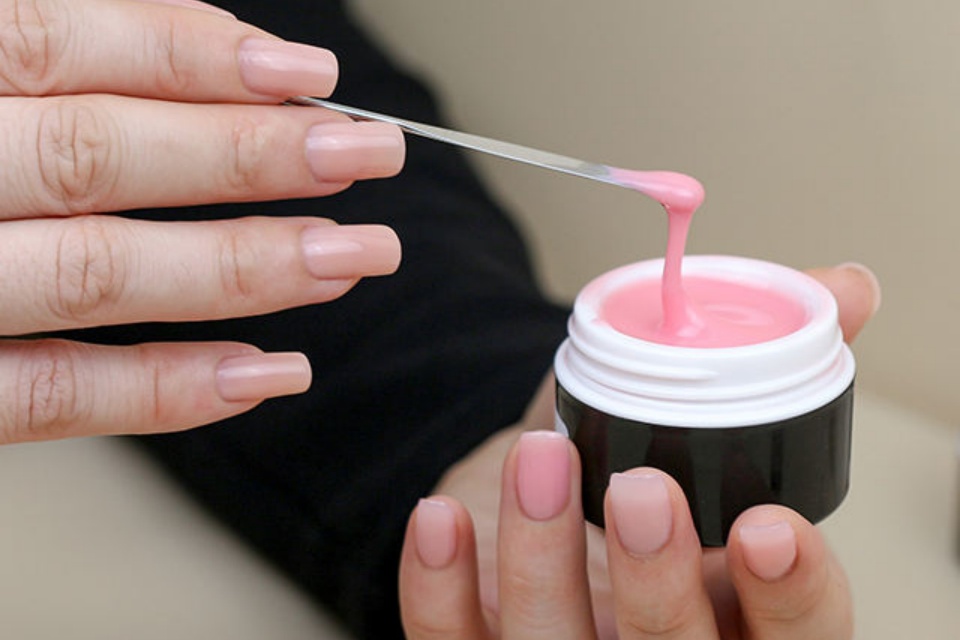
A quieter trend that keeps spreading is structure-first gel work: reinforcing weak nails, building a smooth apex, and using “simple” looks that still feel expensive up close. That’s where BIAB-style builders and rubber bases sit. They make thin nails look better, and they make retention less of a gamble.
If you need a practical product route for this, think in layers:
For a ready-made structure lane, something like self-leveling BIAB builder gel extensions fits the Tokyo-style “clean but engineered” look.
Short sentence. Retention matters.
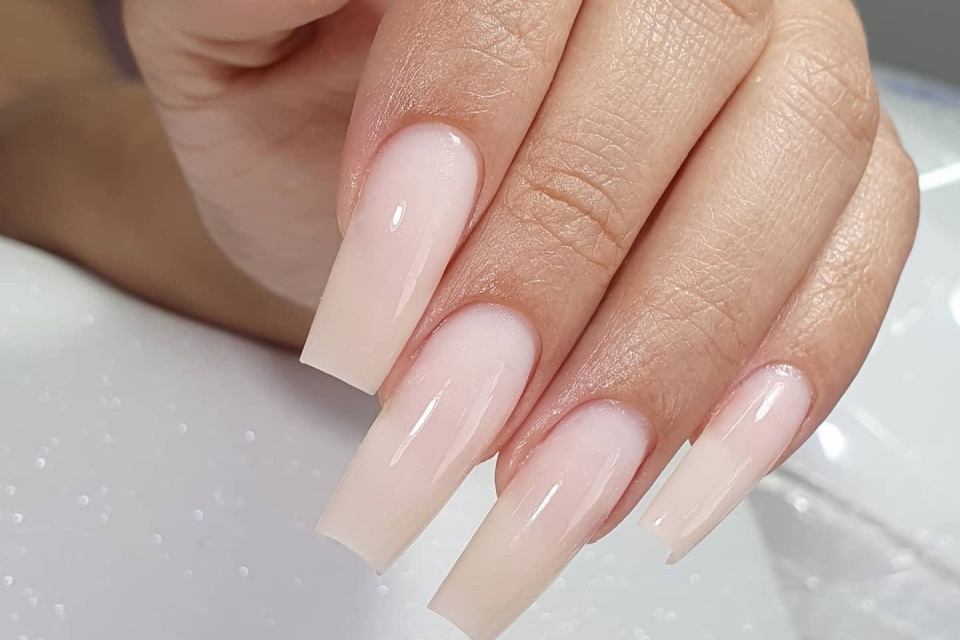
Cat-eye gel isn’t new. Tokyo’s current version often looks more “glass” and less “disco.” The line stays tight. The base tone stays translucent. The effect reads like depth, not sparkle paste.
If you’re trying to match that look, avoid the rookie move: too much pigment + sloppy magnet timing = muddy stripe.
Also, cat-eye sells because it’s fast. Fast designs keep salons alive.
A product hook that aligns with this trend is a curated magnetic set like moonlight cat-eye magnetic gel, especially when clients want that “Tokyo shimmer” without heavy art time.
Tokyo nail salons love controlled drama: reflective glitter on one or two nails, chrome powder edges, micro-shards in jelly bases. It photographs well. It also upsells without adding an hour.
If you want a clean supply pick, the simplest building block is a high-sparkle powder you can dose precisely, like reflective diamond nail glitter powder colors.
One warning: reflective pigments can make a set feel thick fast. Keep the layers thin. Cure properly. File smart.
Let’s not pretend the “hot” trends live in a vacuum.
Two pressure points are shaping what Tokyo (and everyone else) can safely scale:
This is why “HEMA-free” and “TPO-free” claims keep showing up in B2B. Clients ask. Distributors ask. Insurance people ask.
If you’re building a salon-range color wall around that reality, a relevant option is a HEMA/TPO-free UV gel nail polish line for salon use. Not because labels fix everything, but because the market moved.
Tokyo salons price with discipline. They separate:
Removal fees alone can be a profit leak if you don’t control them. Nail Quick’s English menu shows different removal prices by product type (soft gel, hard gel, acrylic) and notes extra time charges depending on what’s coming off. (nailquick.co.jp)
If you’re still bundling everything into one “gel set price,” you’re donating your time. Stop.
| Trend in Tokyo salons | What it looks like | Typical material behavior | Time impact (relative) | What usually goes wrong |
|---|---|---|---|---|
| 3D sculpted gel | raised bows, charms, “piping” | high viscosity, holds peaks | High | bulky layers, poor curing under thick art |
| Anime / ita-nail accents | character panels, crisp linework | thin layers + sharp pigment | Medium–High | muddy outlines, crowded composition |
| Structure-first overlays | clean, glossy, “expensive simple” | self-leveling builder / rubber base | Medium | flat apex, lifting from weak prep |
| Magnetic cat-eye | tight shimmer line, jelly depth | magnet-sensitive particles | Low–Medium | blurred stripe, heavy pigment |
| Reflective glitter optics | flash sparkle, micro-shards | particulate load in thin layers | Low–Medium | thickness, rough edges, top coat shrink |
What are Japanese nail art trends (and how are they different from “normal” nail trends)? Japanese nail art trends are a fast-moving set of salon styles shaped by Tokyo’s pro education, trend announcements, and high-skill gel techniques, which prioritise controlled layering, texture (like 3D gel), and finish quality over quick decals. The “difference” is the system: technique + menu pricing + product design all move together. If you copy only the photo, you miss the method. Tokyo salons often build trends around what techs can repeat safely: stable gels, predictable cure, and add-on pricing that keeps labor profitable.
What are the hottest nail trends in Tokyo right now? The hottest nail trends in Tokyo right now are texture-forward 3D gel details, anime-inspired accent nails with clean composition, structure-first overlays (BIAB/rubber base looks), refined magnetic cat-eye finishes, and reflective glitter “night optics,” all packaged as menu add-ons that let salons scale creativity without collapsing their schedule. If you want one sentence of guidance: Tokyo sells repeatable artistry, not one-off chaos.
What is 3D nail art in Japan, exactly? 3D nail art in Japan is a raised, sculptural style built with thick gels and art pastes that cure into physical texture—bows, pearls, embossed lines, and mini forms—so the design has real height and shadow instead of just painted illusion. It’s usually priced as timed add-ons because the labor (and curing control) scales fast. If you’re doing it at pro level, you need materials that keep shape, plus curing discipline so thick sections don’t stay soft underneath.
How do anime nail art designs stay sharp instead of looking messy? Anime nail art designs stay sharp when you treat them like graphic design: one focal nail, controlled color blocking, and thin, fully cured layers so outlines don’t bleed or swell. Tokyo sets often limit the “loud” work to 1–2 nails per hand and use quieter support nails so the whole set reads clean at a glance. Use a dedicated art gel for lines, and don’t overbuild thickness trying to “fix” shaky drawing.
How can I do Japanese nail art at home without ruining my nails? Doing Japanese nail art at home means using thin, controlled layers of gel, curing to the lamp’s real output, and keeping gel off skin to reduce allergy risk, because the style relies on precision and clean structure more than brute-force thickness. Start with simple jelly color + one accent nail, then add texture only after you can cure and seal cleanly. Also, wear finger protection around curing if you’re doing frequent sets, because UV exposure concerns aren’t imaginary in the research. (Nature)
Are “HEMA-free” and “TPO-free” claims becoming a real requirement for salons? HEMA-free and TPO-free claims are becoming a practical filter in many markets because regulation and risk perception are tightening, and ingredient classification updates under EU chemical rules have pushed brands toward reformulation and clearer labeling, even outside Europe. It doesn’t mean every product without those claims is “bad,” but it does change procurement and client trust. (EUR-Lex) If you sell B2B, expect buyers to ask for documentation, not just marketing text.
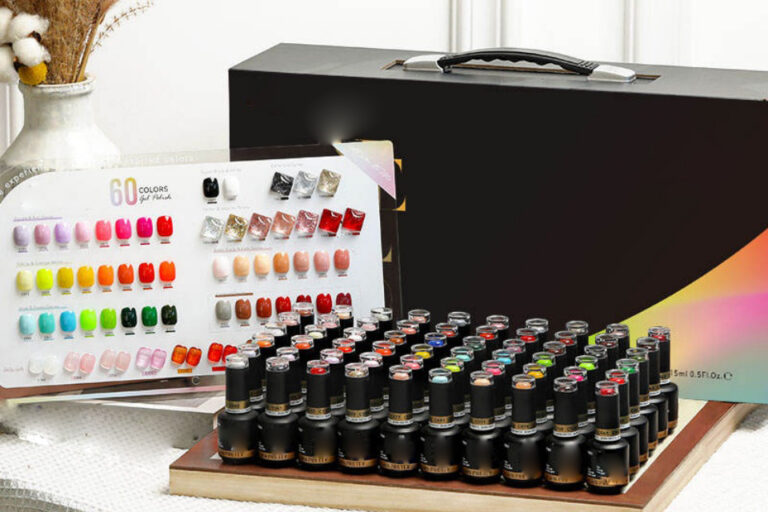
If you’re trying to turn “Japanese nail art trends” into a product line (not just a mood board), build it like Tokyo does: a repeatable system with clear menus, consistent gels, and compliance-ready documentation. Start by mapping your range from core colors to trend add-ons, then talk to a supplier that can private-label and scale. Here’s the direct path: OEM/ODM gel polish and nail systems and a fast browse of the gel polish catalog.