Talk to Our Expert
Our sales and engineers are available all the time, you can ask your specific requirements to our sales, and inspiration to our engineer here.

But let me guess—you did everything “right,” and it still peeled like a sticker.
I’ve watched this play out a hundred times. Same story. Someone sits down, grabs a cute color, slaps it on like regular polish, and then acts shocked when the whole thing pops off in one perfect sheet on day three (bonus points if it lifts from the cuticle first). It happens.
Here’s the ugly truth: gel isn’t paint. It’s a cured plastic film made from reactive ingredients that need the right layer order, the right thickness, and the right cure energy—otherwise you don’t get a “gel manicure,” you get a brittle, under-cured laminate that fails where stress concentrates. So. Yeah.
And before anyone yells “brand problem,” no. Most of the time it’s process.
I frankly believe “base coat” is the most misunderstood bottle on the table. People treat it like an optional primer. Like a vibe. Like it exists to sell you one more step.
Wrong.
A gel nail base coat is the interface layer that’s built to bite into the nail plate (properly prepped, of course) and also flex with it, because your natural nail bends every time you type, wash dishes, open a can, or slam a drawer, and the rest of your gel stack would rather crack than negotiate. Tiny sentence: It bonds. Big problem: It fails when you get lazy.
Skip base and you’re basically telling pigment-heavy gel to play adhesive. Pigment-heavy gel doesn’t want that job. It wants to look pretty.
If you want to see how brands separate this on purpose, compare what they put under “base” versus everything else in a catalog like gel base coat products and you’ll notice the positioning stays consistent: bond first, pretty later.
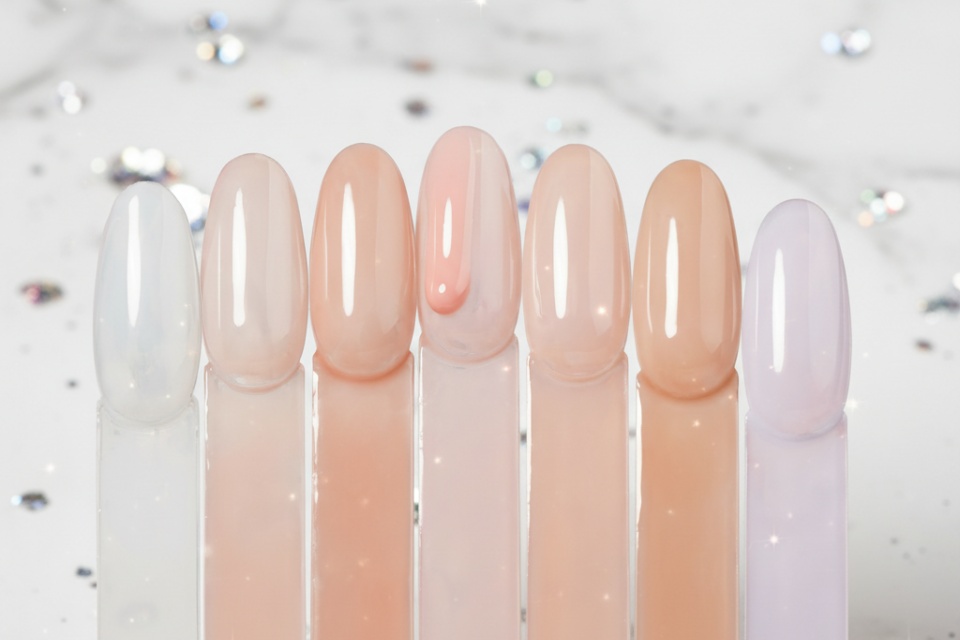
Yet color gel is where people get cocky.
Pigment changes cure. It changes flow. It changes shrink. It changes everything. You can’t treat a high-pigment black the same way you treat a sheer nude and expect the same result, because pigment load can block light, and thick coats can trap uncured product underneath, and then you’re wearing a soft layer under a hard shell. Bad sandwich. Smells fine. Fails anyway.
And yeah—this is where the real-world mess starts: flooded sidewalls, skin contact, sloppy cleanup, “flash cure” habits, bargain lamps that don’t hit the wavelength they claim. That’s how you get lifting and irritation in the same week. Cute.
If you’re choosing shades as a product category, this is where color gel options sit in the system.
So people ask, “Do I really need top?”
If you want your manicure to look good past day two, yes.
Top coat is the wear surface. It’s the scratch shield. It’s the stain block. It’s also the layer that decides whether you’re dealing with an inhibition layer (wipe needed) or a no-wipe finish.
Three words: It takes abuse.
Long sentence: When you skip top coat, you leave pigment exposed to friction, oils, sanitizer, dye transfer, tiny micro-scratches, and daily grime, so the manicure dulls fast, looks “dirty” fast, and chips or erodes at the free edge because you removed the layer designed to absorb that damage.
If you’re building a full system, this is why brands keep top coat lines separate from color.
However, the bigger pressure isn’t your Instagram comments. It’s compliance risk.
Want a reality check? Look at enforcement data, not influencer reviews.
In the EU Safety Gate system, 2023 recorded 3,412 alerts and 4,287 follow-up actions, and the Commission said cosmetics were the most frequent product type flagged as posing a health risk, with chemical risks heavily represented. That doesn’t happen because regulators are bored. It happens because supply chains leak non-compliant ingredients into consumer products. See the Commission’s 14 March 2024 press release: Cosmetics top the list of products notified in Safety Gate in 2023.
And if you manufacture or private-label gel, you already know the ugly math: one bad batch doesn’t just cost refunds—it costs distributor trust.
That’s also why “HEMA-free” and “TPO-free” claims are exploding. Not because everyone suddenly got virtuous. Because compliance risk got louder.
Example: the EU Commission explains how TPO (trimethylbenzoyl diphenylphosphine oxide) got classified as a CMR 1B reproductive toxicant via Commission Delegated Regulation (EU) 2024/197, and how that classification triggers cosmetics restrictions tied to the same effective date. Their Q&A is blunt and very worth reading: TPO in Nail Products – Questions & Answers.
So when someone asks, “Do I really need base, color, and top?” I hear the subtext: “Can I cut steps without buying problems later?”
Sometimes you can. But not by guessing.
And here’s where people get weirdly defensive.
They’ll argue formulas for 20 minutes, then cure everything under a lamp that’s basically a desk toy. Under-cure is the silent killer—especially with thick coats, dark pigments, and inconsistent lamp output.
A 2023 paper in Nature Communications tested UV nail dryer exposure (UVA range noted around 365–395 nm) and reported DNA damage markers and mutation patterns in mammalian cells under the study’s conditions. Read it directly here: DNA damage and somatic mutations… after irradiation with a nail polish dryer.
Do I think every gel set equals disaster? No.
Do I think sloppy curing, skin contact, and “Amazon lamp roulette” are a real problem? Yes—because the failure pattern is predictable. Lift at the cuticle. Peel at the sidewall. Brittleness at the free edge. Same movie, different cast.
Yet I’m not going to pretend every manicure needs three separate bottles every single time. That’s not real life.
You can cut steps in controlled ways:
If you’re sourcing for salons or brands, this is where you start looking at spec-driven options—like HEMA/TPO-free base coat choices or bulk system products such as 1kg UV gel base + top coat for production—because factories care about repeatable cure and consistent viscosity, not vibes.
| What you’re trying to do | What you skip | What usually happens | When it can work | My “don’t do it” line |
|---|---|---|---|---|
| Save 2–3 minutes | Base coat | Lifting at cuticle, peeling sheets | Very short nails, perfect prep, thin color | If you touch skin or flood edges, forget it |
| Save shine step | Top coat | Dull finish, staining, faster wear | Almost never (unless color has built-in top layer, rare) | If it’s a light shade, it’ll discolor |
| Use fewer bottles | Separate base + color | Wear depends on formula (rubber base shades do well) | Tinted rubber base + top | If the “all-in-one” feels thick and gummy, watch under-cure |
| Reduce allergy risk | High-sensitizer formulas | Fewer reactions if you avoid skin contact | HEMA/TPO-free systems + clean technique | If you keep getting itchy cuticles, stop and reassess your process |
A gel nail base coat is an adhesion-focused gel layer formulated to bond to the nail plate and create a flexible interface that reduces lifting, peeling, and edge stress when thicker, pigment-heavy color gel cures on top. It’s the “bond” step in the gel manicure stack. If you skip it, you’re betting your wear time on nail prep perfection. That’s a bad bet for most people.
A gel top coat is a protective finishing gel designed to seal color, resist scratching, reduce staining, and control surface texture (gloss or matte) while helping the manicure look even and stable through daily abrasion. It’s the barrier layer, not just a shine layer. If your color looks dull, chalky, or “dirty” after a few days, top coat usually fixes the root cause.
Base coat vs top coat comes down to function: base is engineered to bond and flex against the nail plate, while top is engineered to seal and resist wear at the surface, so their resin balance, additives, and curing behavior differ even if both feel like “clear gel.” They’re not interchangeable. If a product claims it’s both, test it like both—bond and abrasion. Most only excel at one.
“All-in-one” gel products are formulas that combine some roles (often base + color) by using adhesion-friendly resins with pigment, but they still rely on correct curing and usually still need a true top coat to seal the surface against abrasion and staining. They simplify the stack, not the physics. If you want the shortcut that tends to work, combine a tinted rubber base with a solid top coat.
The standard gel manicure steps—base coat, color gel, then top coat—work because each layer solves a different technical problem (bonding, pigmentation, surface protection) and because stacking thin, fully cured films reduces under-cure risk and edge lifting compared to fewer, thicker coats. It’s process control. Prep and application discipline still decide most outcomes: thin layers, clean edges, no skin contact.
If you’re building a gel system for a salon chain or a private-label line, I’d treat “base, color, top” like a spec sheet—not a ritual. Pick a bonding base, a stable pigment line, and a top coat that survives real abrasion. Then lock the cure process.
If you want help structuring a compliant product lineup (including bulk production formats and clean-claim directions), start here: OEM/ODM gel polish services.