Talk to Our Expert
Our sales and engineers are available all the time, you can ask your specific requirements to our sales, and inspiration to our engineer here.

But let me guess—you bought a “no-wipe” top coat, cured it, touched it, and it still felt weirdly grabby, so now you’re side-eyeing the brand, your lamp, and maybe your life choices, because gel is supposed to be simple, right? Not always.
I’ve watched this exact argument happen at a nail table more times than I can count. Someone says “No-wipe is better.” Another tech says “Wipe gives better adhesion.” Then a third person shows up with chrome powder and everyone pretends they weren’t just fighting.
Here’s the ugly truth: no-wipe vs wipe is mostly about surface chemistry + cure behavior, not about who paid for the nicer bottle. And if your lamp is underpowered (or your timing is sloppy), both types can look like trash—just in different ways.
So what’s the real difference?
Yet this is the part brands keep fuzzy because “top coat” sounds like one thing, when it’s really a whole family of formulas with different photoinitiator packages and surface behavior.
A wipe top coat intentionally leaves a tacky inhibition layer. You remove it with cleanser after curing. A no-wipe top coat is built to cure with a harder, non-tacky surface so you skip the cleanse step and move on.
Three words. Big impact.
Because the moment you introduce wiping, you introduce chaos: cleanser strength, lint bombs, tech pressure, timing, and that one person who scrubs like they’re polishing a car hood. (You’ve seen it. Don’t lie.)
If you want to see how many “top coats” are hiding under one label, scroll a clean catalog like this gel top coat collection. It’s not one product category. It’s a pile of decisions.
Also, the tacky layer has a boring scientific reason: oxygen interferes with free-radical polymerization at the surface, leaving a thin film that feels sticky even when the layer underneath is fully cured and hard. Normal. Sometimes.
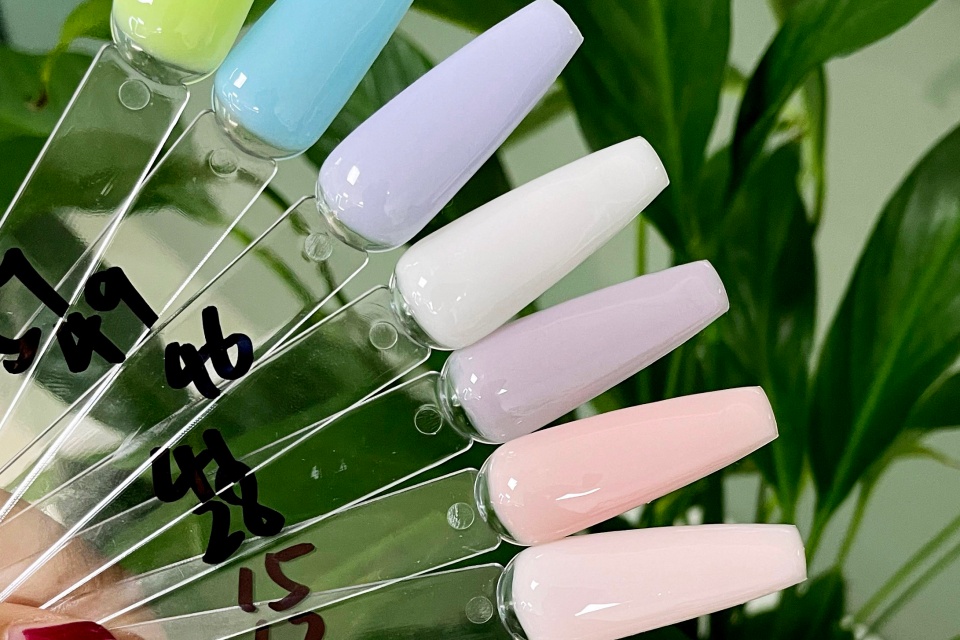
However… if I’m doing chrome, I’m not debating. I’m grabbing no-wipe.
Chrome powders and mirror pigments hate tack. They don’t “glide.” They snag. They clump. They leave that gritty, uneven “dirty sparkle” look you can’t fix with a ring light and good vibes, because the surface is literally misbehaving at a microscopic level.
It looks fine. Until photos.
From my experience, the simplest chrome workflow is still this: cure a no-wipe top coat, do a short cure if your system likes that (many do), rub chrome, then fully cure and seal again. It’s not a hack. It’s just controlling the surface energy so pigment grabs evenly instead of patching.
That’s exactly why something positioned like a no-wipe diamond top coat exists: quick finish, high shine, and a surface that plays nice with powders.
And I’ll say the quiet part out loud: skipping the wipe step can also reduce the chance you smear half-cured residue around the nail folds. Less wiping, fewer sloppy exposures. Not zero risk. Just fewer chances to mess it up.
If you think allergy talk is “online panic,” nah. A 2024 retrospective study from Amsterdam UMC looked at 67 women diagnosed with allergic contact dermatitis from acrylate-containing nail cosmetics; 97% tested positive to 2-hydroxyethyl methacrylate (HEMA), and avoidance cleared dermatitis in 80% of patients. That’s not a small signal. See it here: Contact allergy to acrylate-containing nail cosmetics (2024). (pubmed.ncbi.nlm.nih.gov)
So why would anyone choose wipe? Control. Grip. Layering options.
A wipe top coat’s inhibition layer can help when you’re stacking art steps fast—paint gel lines, decals, certain sticker systems, quick encapsulation moves—because that tack gives the next layer something to bite into without buffing (assuming you’re working immediately, not three days later).
And yes, wipe top coats can look insanely glossy. But the gloss lives and dies on the wipe step. Use the wrong cleanser. Over-wipe. Re-wipe again because you got lint. Boom—haze city. Then the tech blames the top coat. I frankly believe half the “bad top coat” complaints are just bad wiping technique.
If you’re running a salon chain or training program, this is why QC beats hype. A good manufacturer tests tack level, cure depth, viscosity drift, rub resistance, and lamp compatibility (because lamp arrays vary wildly, even when the box claims “48W” or “60W”). If you want the boring stuff that prevents chaos, skim quality assurance for gel products. That’s where “sticky complaints” go to die.
| Decision Point | No-Wipe Top Coat | Wipe Top Coat |
|---|---|---|
| Final surface feel | Hard, non-tacky when cured correctly | Tacky inhibition layer by design |
| Best for chrome powder | Usually best (even, clean rub-in) | Often patchy/grainy unless technique is perfect |
| Speed in salon | Faster (no cleanse step) | Slower (cleanse step + lint risk) |
| Layering later (after hours/days) | May need buffing for strong adhesion | Often layers more easily due to residual tack (right after cure) |
| “Sticky after curing” complaints | Often means undercure or lamp mismatch | Often normal—needs cleansing |
| Training error rate | Lower (fewer steps) | Higher (wipe pressure, cleanser, lint, timing) |
But don’t jump straight to blaming the formula. First, figure out what kind of “sticky” you have.
And here’s the one nobody wants to hear: “60W” printed on a lamp box doesn’t tell you what energy hits the nail plate. Marketing watts aren’t cure watts. Different thing.
Also, UV exposure is not some cute footnote if you cure nails all day. UC San Diego researchers reported that one 20-minute exposure with a UV nail dryer led to 20–30% cell death, and three consecutive 20-minute exposures led to 65–70% cell death in tested cell lines, with DNA damage and mutation patterns linked to skin cancer signatures. Read their write-up: UC San Diego report (Jan 17, 2023). (today.ucsd.edu) If you want the paper itself: Nature Communications (2023). (nature.com)
That matters because “sticky” can mean more than a finish problem. If you undercure, you can leave more reactive material at the surface—and that’s where skin contact happens.
Yet most people overcomplicate this.
Lint-free wipe + proper gel cleanser (often IPA-based). One firm pass. Maybe two. Stop there. If you scrub back and forth, you can haze the finish and drag residue into the sidewalls (that’s how you get that gross “smeared shine” look).
If you’re building a “safer” menu (HEMA-free, TPO-free), be careful with claims and sourcing. Some products labeled “HEMA-free” still contain other acrylates that can trigger reactions. Labels don’t patch test themselves. And customers don’t care what your SDS says once their skin is angry.
For a product-style reference point, options like a HEMA-free, TPO-free matte top coat are built for that compliance-driven demand while still aiming for a consistent finish.
Is a no-wipe top coat always better than a wipe top coat? A no-wipe top coat is a gel top coat formulated to cure with a non-tacky surface, while a wipe top coat cures with a tacky inhibition layer you remove with cleanser; neither is “better,” because the right choice depends on chrome powders, layering needs, salon speed, and how consistent your lamp curing is. I’d still pick no-wipe for chrome most days. But if you’re layering art fast, wipe can feel easier (in the moment).
What is the top coat tacky layer (inhibition layer)? The inhibition layer is a thin, sticky film of partially unreacted gel at the surface caused by oxygen interfering with free-radical curing during UV/LED polymerization, which is why many gel systems feel tacky after curing even when the lower layers are hard and properly cured. People call it “sticky top.” Same thing. If it wipes clean, it’s probably normal.
When should I use a no-wipe top coat? You should use a no-wipe top coat when you want a clean, non-tacky finish right after curing—especially for chrome powder, mirror pigments, fast salon turnover, or packaging—because it reduces wipe-step variability and usually gives a smoother surface for powder adhesion. If your lamp runs weak, though, no-wipe can expose that fast (sticky “no-wipe” is a classic undercure tell).
When should I use a wipe top coat? You should use a wipe top coat when you want the inhibition layer to help immediate layering—like nail art steps, some decal/foil workflows, or quick add-on layers—because the tacky surface can improve intercoat bonding without buffing (as long as you cleanse correctly at the end). It’s also forgiving in training… until the wiping starts. Then it’s chaos again.
Why is my gel top coat sticky after curing? A sticky gel top coat is either the normal inhibition layer (if it’s a wipe top coat) or a sign of undercuring from lamp mismatch, thick application, pigment interference, or insufficient exposure time; if wiping doesn’t remove it, treat it as a cure problem, not a “cleaning” problem. I know it’s annoying. But it’s usually fixable with lamp/time/thickness discipline.
How do I cleanse gel top coat after curing without losing shine? To cleanse a wipe top coat without dulling it, use a lint-free wipe and a proper gel cleanser (often IPA-based), wipe in one or two firm passes, avoid back-and-forth scrubbing, and make sure the top coat fully cured first—because over-wiping can haze the surface and redeposit residue. If you keep killing shine, it’s usually your cleanser strength or your wiping pressure (not the top coat).
If you’re choosing a top coat for a brand or salon menu, don’t guess. Match the formula to your lamp profiles, chrome workflow, and compliance needs—then lock it down with consistent QC.
Browse the full gel polish catalog and the top coat lineup to compare finishes, then talk to a manufacturer about specs, not vibes: OEM/ODM services and a direct line via contact.