Talk to Our Expert
Our sales and engineers are available all the time, you can ask your specific requirements to our sales, and inspiration to our engineer here.

color isn’t magic.
It’s a controlled fight between pigment dispersion, base resin tone, lamp wavelength (365/405 nm), and the ugly fact that your “perfect” shade can shift in the bottle, shift under LED, and shift again after three months in a hot container—so the only brands that win here build a system, not a mood board. Want the insider truth? Most “custom” colors fail because brands chase a screenshot, not a spec.
So let’s talk specs. Not vibes.
I keep seeing the same mistake: a brand sends one photo, one swatch, and one sentence—“make it like this, but richer.” That’s not a brief. That’s a wish.
Real custom gel polish colors start with a measurable target. Labs use color spaces like CIELAB and track tolerances (you’ll hear ΔE, sometimes ΔE*00) because “looks close” becomes “chargeback” once 5,000 bottles hit salons and half the techs post side-by-side comparisons on TikTok.
And yes, the base matters. A sheer jelly base, a creamy opaque base, and a rubber base system can all pull the same pigment package in different directions. Even the same pigment can look warmer or cooler depending on the oligomer blend and photoinitiator package.
Annoying? Yep. Normal? Also yep.
If you want a shortcut, you’re in the wrong business.
Fast sentence. Slow reality.
Most factories run “lab dips” (iterative samples) until the target locks, then they scale the winning formula and pray it behaves the same when mixed in bigger kettles with different shear forces, different milling energy, and different raw-material lots.
Here’s the flow brands don’t see:
But the real work starts after the shade “matches.”
You test viscosity (self-leveling vs. flooding), pigment settlement (ringing at the bottom), brush drag, cure hardness, and yellowing after exposure because some photoinitiators and resins shift tone over time. You also test batch-to-batch drift, because pigments don’t show up identical forever—especially carbon black, iron oxides, and some effect pigments.
And then there’s metamerism. The shade matches in the lab. It looks off under salon LEDs. Consumers blame you anyway.
Want a safer path? Start with a proven base system from a supplier’s range, then customize within known boundaries. If you need examples of base families and finishes, skim a supplier’s gel polish catalog and map your shade plan to what’s already stable at scale.
Short version: acrylates don’t care about your branding.
One 2024 paper found HEMA showing up in roughly 60% of tested nail cosmetic products, and reported EU-legislation violations in more than 30% of products reviewed—labeling and compliance issues that become a brand problem the second your logo sits on the bottle. That’s not theory. That’s published data in Contact Dermatitis. Presence of HEMA and violations in nail cosmetics (2024)
So if you’re doing private label gel polish colors, you don’t get to “trust the factory.” You verify. You document. You keep a paper trail.
This is where brands either look grown-up or get exposed.
If you’re building a real program, you route shades through a testing plan and supplier controls like the ones outlined in a manufacturer’s quality assurance process. Not because it sounds nice. Because you want fewer surprises.
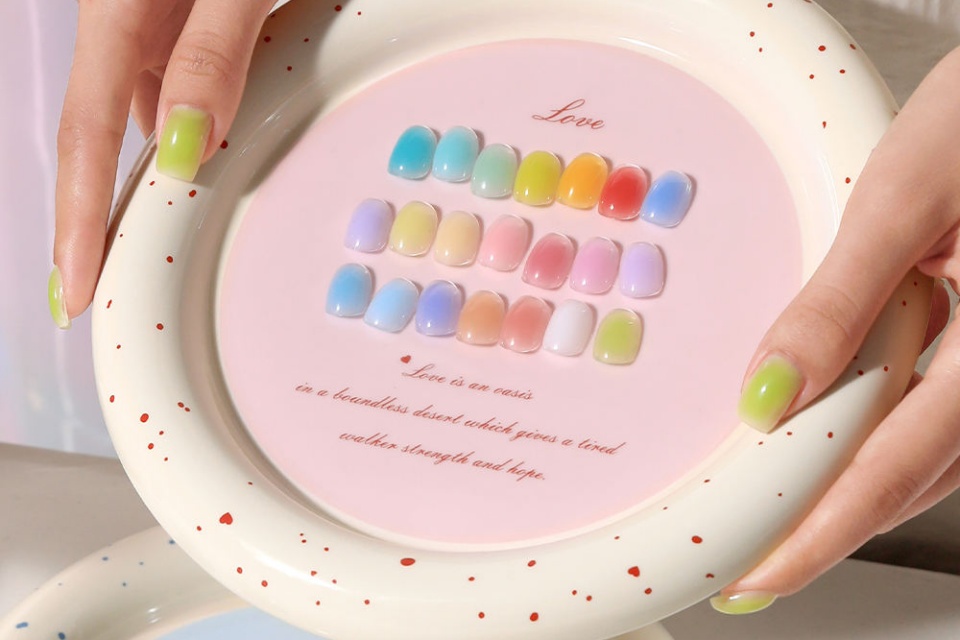
Glitter sells. Regulators noticed.
The EU’s microplastics restriction under Commission Regulation (EU) 2023/2055 triggered bans for certain “loose glitter” uses starting October 17, 2023, with specific scope and exemptions depending on end use and containment in a solid matrix. Translation: the words “glitter” and “microplastic” now belong in your sourcing checklist, not just your marketing copy. EU REACH restriction on microplastics (Regulation 2023/2055)
If your signature shade depends on an effect pigment that gets harder to source, you don’t have a signature shade. You have a supply-chain gamble.
Can you trademark a color? Sometimes.
Can you actually win with it, across markets, under pressure, with enough evidence to satisfy examiners and courts? That’s the part brand founders don’t budget for.
The EU General Court’s March 6, 2024 judgment in Case T-652/22 (the Veuve Clicquot “orange” fight) is a clean reminder that color marks aren’t cute IP trophies; they’re evidence-heavy, jurisdiction-wide arguments about distinctiveness, proof, and timing. EUR-Lex: Case T-652/22, judgment of 6 March 2024
So what do smart nail brands do instead?
They treat the formula like a trade secret, lock the supply chain, limit who gets the full pigment package, and set QC gates that make “close enough” unacceptable.
That’s how you keep a “signature” shade from becoming everyone’s “similar.”
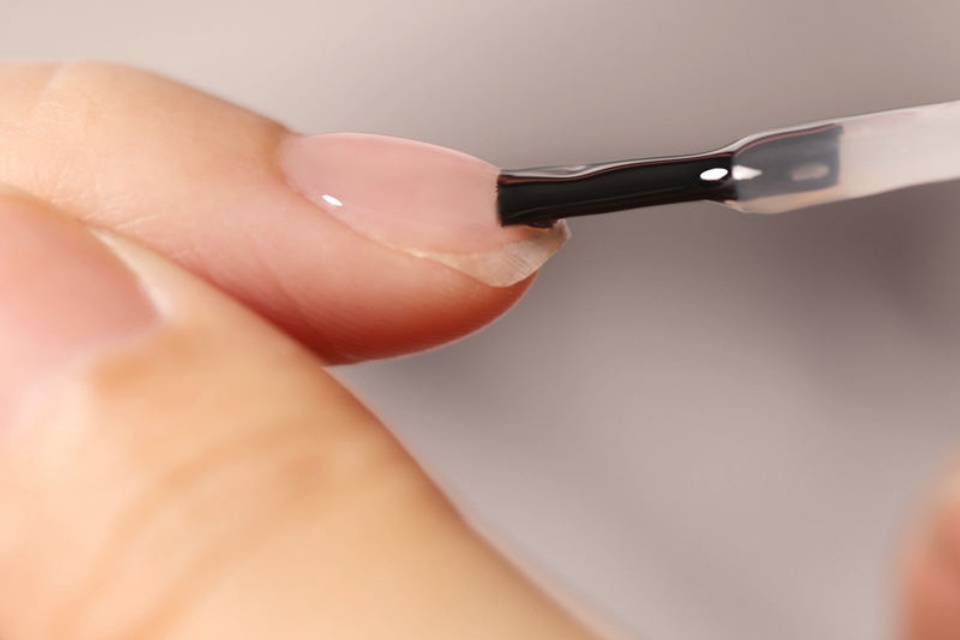
A tiny drift becomes a big mess.
To keep this grounded, here’s a practical view of where problems show up and what pros test first.
| Shade Type | Common Color System | What Goes Wrong (Realistic) | QC Check That Catches It | Typical Customer Complaint |
|---|---|---|---|---|
| Cream/Opaque | TiO₂ + iron oxides + dyes | Muddy undertone, poor coverage, chalky feel | Opacity drawdown, viscosity (mPa·s), cure hardness | “Streaky” / “looks gray” |
| Sheer/Jelly | Dyes + low pigment load | Color shifts under different lighting (metamerism) | CIELAB check under multiple light sources | “Not the same as photos” |
| Shimmer/Pearl | Mica / pearlescent pigments | Particle settling, uneven sparkle | Sedimentation stability, agitation tolerance | “Sparkle sinks” |
| Glitter | PET glitter / alternatives + binders | Clumping, poor suspension, texture spikes | Particle dispersion scan, shelf stability at 40°C | “Lumpy” / “thick” |
| Cat-eye/Magnetic | Iron powder + transparent base | Weak line, inconsistent pull, separation | Magnetic response test + viscosity window | “Cat-eye won’t pop” |
| Rubber base colors | Pigments in elastic base | Shade looks “milky,” cures soft if overloaded | Cure depth, flexibility, adhesion tests | “Peels early” |
If you read this table and think “we can skip most of that,” you’re about to pay for learning.
If you’re building a brand program (not a one-off shade), tie your content to real steps:
So you start with a baseline: learn the manufacturer story and capabilities and confirm they can support OEM/ODM gel polish color creation. Then you anchor shade planning in a real reference set via the gel polish catalog. For product architecture, you decide whether shades sit in standard bottles or special systems like color gel formats (thicker art gels behave differently). And when you’re ready to move, you don’t “DM for price,” you contact the formulation team with a spec and a target.
That’s the grown-up version.
Brands create custom gel polish shades by defining a measurable color target, then iterating lab samples (“lab dips”) in a specific gel base until the shade matches within a tolerance and stays stable through viscosity, settling, and cure tests, followed by scale-up trials to confirm the same look at production volume.
After that, the brand should lock a master standard, write acceptance limits (including lighting conditions), and demand batch-to-batch verification. If you skip the standard, you’re basically approving future inconsistency.
Custom color matching for gel polish is the process of reproducing a target shade in a gel system using pigments and dyes while controlling undertone, opacity, and appearance under multiple light sources, then confirming the match remains consistent after curing, aging, and storage across production batches.
Color matching is not just “mix until it looks right.” The base resin, photoinitiators, and pigment dispersion all change what the eye sees.
Private label gel polish colors are typically pre-existing shades where you brand the packaging, while true custom shades involve developing or materially modifying the pigment package and base behavior to meet a brand-owned spec for undertone, finish, stability, and repeatability across batches.
Here’s the hard truth: many “custom” launches are lightly tweaked stock colors. If you want exclusivity, you need a spec and supplier controls.
Gel polish shades change between the bottle and the cured nail because curing chemistry and film thickness alter light absorption and scattering, and some systems also shift due to resin tone, photoinitiator interactions, pigment loading, or yellowing effects that show more clearly after polymerization under 365/405 nm lamps.
If your brief doesn’t specify cured appearance, you’ll chase your tail. Always approve on cured swatches, not liquid in a bottle.
A brand can sometimes protect a color through trademark or trade dress, but color rights usually require heavy proof that consumers associate that exact shade with one source across relevant markets, and courts can demand strict evidence and timing—seen in high-profile EU color-mark disputes like Case T-652/22 decided on March 6, 2024.
Most nail brands do better with trade secrets plus tight supplier agreements. Less courtroom drama. More control.
The most important compliance checks for custom gel polish colors include ingredient and labeling verification, restricted-substance screening where applicable, and documentation that the finished formula matches legal requirements in target markets, because published research has found frequent ingredient presence and significant rates of regulatory violations in nail cosmetic products.
If you want fewer surprises, treat compliance like a gate, not a checkbox. Use QA documentation, keep COAs, and don’t ship “mystery” reformulations.
If you want custom gel polish colors that stay consistent in the real world, don’t start with a “cute shade idea.” Start with a spec, a master standard, and a test plan. When you’re ready, use the OEM/ODM services page to frame your request, then contact the team with your target references and finish requirements.