Talk to Our Expert
Our sales and engineers are available all the time, you can ask your specific requirements to our sales, and inspiration to our engineer here.

Builder gel is one of those categories where the end user blames the brand, but the root cause often starts earlier in the supply chain. If the gel goes on too thin, clients see flex, cracks, and short wear. Too thick, and they get heat spikes, wrinkling, under-cure, and lifting that shows up right at the stress point.
For importers, brands, and distributors, “perfect thickness” is not a vague salon skill. It’s a controllable outcome driven by viscosity, self-leveling speed, pigment load, packaging, and curing guidance that you can standardize before the product ever ships. This post breaks down how thickness is built on the nail, what can go wrong, and what you can specify at the factory level so your customers get repeatable results.
If you’re browsing the broader gel range first, start from the Best Gel Polish homepage for context on related systems.
Thickness is not one number. In production we look at thickness as a profile: thin at the cuticle, reinforced at the apex, supported at the free edge.
Here are practical targets many pro techs use, and that we design formulas to support.
For a natural nail overlay, most technicians aim for a finished thickness around 0.6 to 0.9 mm at the apex, tapering to about 0.2 to 0.3 mm near the cuticle. If you’re building strength for weak nails, you might push the apex toward 1.0 mm, but only if cure performance is proven at that depth.
Why it matters for buyers: if a builder gel is marketed as “self-leveling” but can’t hold an apex above 0.7 mm without slumping, users compensate by adding layers. That increases cure risk and service time, and your reviews suffer.
For short extensions, many salons target about 0.9 to 1.2 mm at the apex and 0.5 to 0.7 mm at the stress area. Medium lengths can move closer to 1.2 to 1.5 mm at the apex depending on the client’s lifestyle.
From a factory perspective, this is where “super hard” claims get tested. A product like a hard extension system should be engineered to build a stable apex without collapsing while also curing reliably through that mass. If you’re sourcing a high-strength system, look at a formula positioned as a hard extension gel, such as HEMA-free, TPO-free super hard extension gel for markets that prioritize allergen and photoinitiator restrictions.
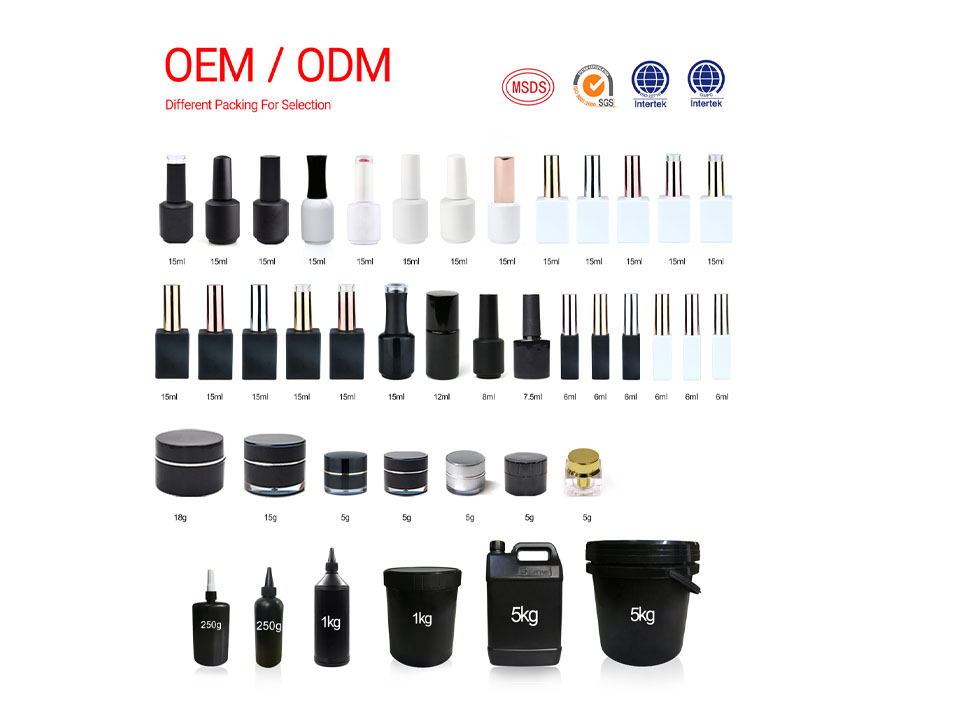
Builder-in-a-bottle services usually succeed when techs can do one structured layer and be done. Typical finished apex thickness is around 0.7 to 1.0 mm, with a crisp taper and minimal filing.
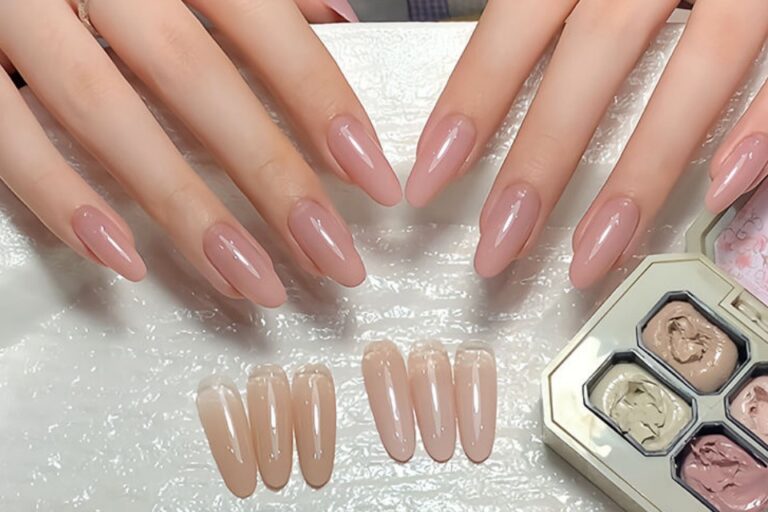
If you’re building a BIAB line, the viscosity window is narrower. Too thin and it floods. Too thick and it drags, trapping air and leaving texture. A reference style is a jelly builder positioned for BIAB, like custom BIAB clear nude pink jelly builder where the product concept is about controlled leveling and clean structure.
Technicians talk about “thick” or “runny.” In manufacturing we translate that into measurable behavior.
Most builder gels sit broadly in the tens of thousands to hundreds of thousands of mPa·s, depending on temperature and spindle method. That range sounds huge, but small shifts matter.
A gel that feels stable at 22°C may flood at 28°C in summer shipping containers or warm salons. If your distribution markets include hot climates, you want to request stability data across a temperature band, not a single room-temperature reading.
What to ask a factory for:
Those three together predict whether users can build a clean apex in one pass.
Perfect thickness is usually created with one controlled bead, not three patchy coats. For self-leveling builders, the bead should “relax” into the surface within about 10 to 20 seconds but not run into the cuticle in the same window.
If the gel levels too fast, techs chase it with the brush and end up overworking, introducing bubbles and uneven thickness. If it levels too slowly, they keep adding product, which increases thickness without shape.
If your product is positioned as a fast salon system, a SKU similar to a 15 ml self-leveling UV gel builder should be benchmarked not just on “levels well” but on how long it holds structure before gravity wins.
Clear builders usually cure deeper than heavily pigmented or filled gels. The moment you add shimmer, flakes, or dense nude pigment, you change light transmission, and thickness tolerance shrinks.
That’s why many factories recommend clear structure layers and tinted overlay layers. If your assortment includes high-coverage nudes, consider positioning a clear construction gel as the structural base, like a high-transparency nail extension construction gel, then add color systems over it.
Thickness failures often look like formula issues, but in the field they’re commonly prep or base compatibility issues.
When a tech skips proper dehydration and leaves cuticle residue, they unconsciously compensate by applying builder thicker to “lock it down.” That creates a bulky cuticle area that lifts first.
A good brand education move is to teach thin base strategy:
This approach keeps the cuticle zone thin while still building strength where needed.
For distributors supplying salons, base coat availability and consistency matter. If a salon mixes random base coats with your builder, your builder gets blamed for lifting.
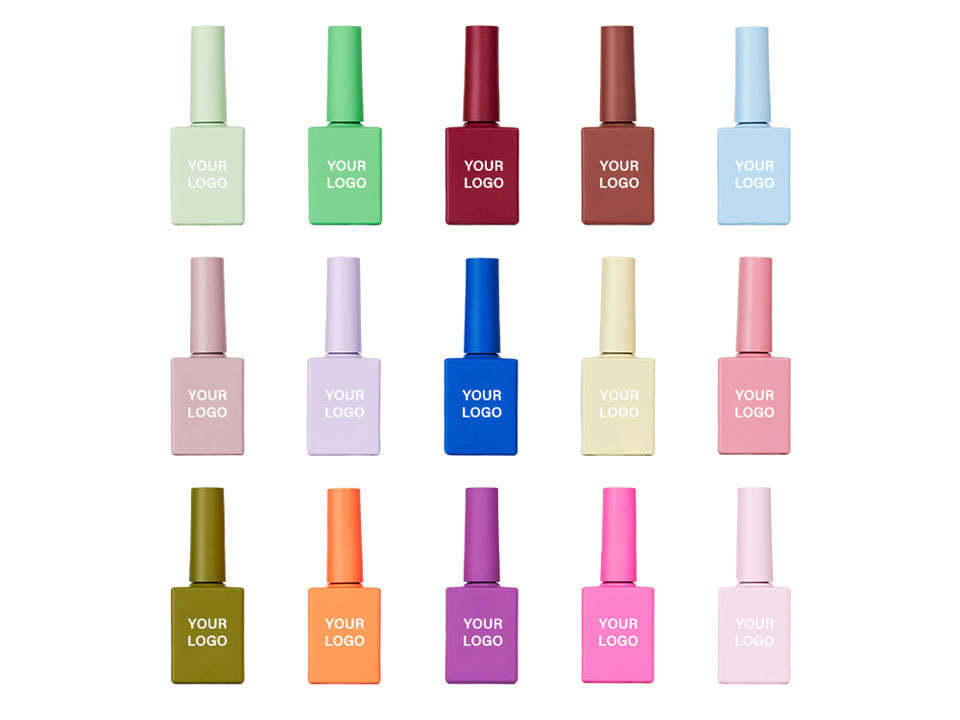
One practical B2B tactic is to offer a matching base and top in bulk for salons and academies, such as a HEMA-free, TPO-free base and top coat gel in 1 kg. Bulk formats also reduce unit cost and improve consistency across franchise networks.
Perfect thickness is less about adding more gel and more about moving one bead efficiently.
A thin slip layer acts like a wet track. Techs place a medium bead and guide it, letting surface tension do the smoothing. This method reduces brush marks and avoids “double thickness” where layers stack unevenly.
From a formula standpoint, the slip layer only works if the gel has predictable thixotropy, meaning it becomes easier to move under brush force but holds shape when left alone. If your gel strings or breaks, techs over-stroke. If it collapses, techs over-build.
Apex position is not fixed. Factory training content should reflect real-use scenarios.
Examples:
When brands teach this clearly, salons stop using thickness as a safety blanket and start using shape.
Over-thickness near the cuticle is the fastest way to create lifting. The gel looks strong, but the edge is thick enough to catch hair, cleaning gloves, and daily friction.
A practical spec for training is “paper-thin taper.” That’s not marketing language, it’s a functional requirement. A well-designed builder should allow product placement close to the cuticle without flooding while still permitting a thin edge after leveling.
If your portfolio includes repair-oriented base systems, a reinforcing layer like a fiberglass rubber base repair builder can help salons strengthen weak sidewalls without resorting to thick builder everywhere.
Thickness is only “perfect” if it cures fully.
Brands often list “60 seconds LED” as if it’s universal. It’s not. Lamp irradiance varies wildly. Two 48W lamps can deliver very different energy to the nail surface.
From a factory perspective, cure claims should be tested with:
If you sell into pro channels, your technical sheet should include recommended lamp specifications, not just time.
Heat spikes come from rapid polymerization. Thicker beads trap heat. A high-reactivity initiator blend can feel great for speed but punishes thicker structure layers.
You can reduce complaints by giving users a realistic thickness guide and suggesting a quick flash cure before full cure for sensitive clients. This is also where formula choices matter. A builder designed for thicker structure can be tuned for lower exotherm while still reaching hardness.
If your brand wants a harder finish without excessive filing, consider a product positioned around reinforced hardness, such as a hardness-upgraded builder UV gel and validate exotherm behavior during development.
Under-cure often passes day-one checks. It shows up later as:
If returns are coming back as “bad adhesion,” ask for details about lamp type and whether salons are building thickness beyond your cure capability.
When distributors report high complaint rates, it helps to triage by symptom, not by guesswork.
Likely causes:
Factory actions:
Likely causes:
Factory actions:
Likely causes:
Factory actions:
Likely causes:
Factory actions:
B2B buyers sometimes miss that the product used in the salon is not the same as what left the factory if it was mishandled.
Repeated warming and cooling can change viscosity perception. Some gels also separate slightly, especially if heavy fillers are used. When the end user opens the bottle, they stir with the brush, which introduces air and alters bead control.
If you distribute globally, ask your supplier for:
A jar builder supports larger beads and slower workflow. A bottle builder supports speed but requires precise brush wipe design. If your builder is BIAB style, brush pickup must be consistent. Too much pickup creates thickness errors even with a good formula.
When you private label, request physical samples of multiple brush options and test them with the same gel. Many brands solve thickness complaints by changing the brush, not the chemistry.
If you’re selecting a builder gel line, here’s a practical spec checklist that reduces downstream issues.
Split your range by workflow:
Trying to force one “universal” builder often leads to thickness compromises.
Ask your factory to test:
You don’t need lab-level complexity to get useful data. You need consistent methods and honest reporting.
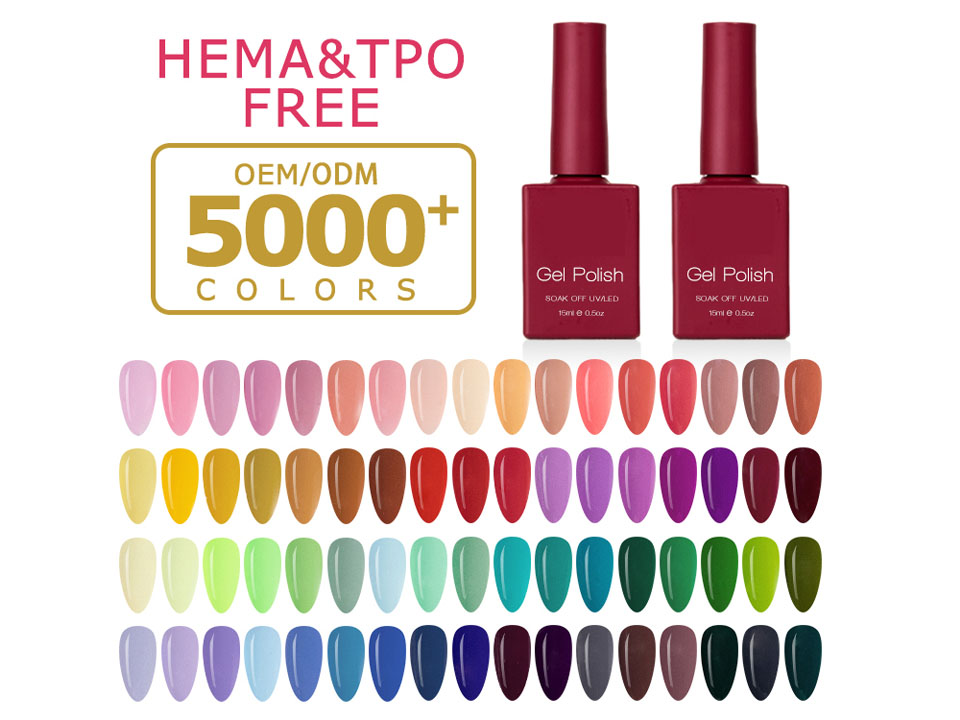
Many markets are asking for allergen-conscious systems. If you plan to position around safer chemistry, make sure it’s real and consistent across base, builder, and top. Products positioned as HEMA-free and TPO-free should be validated across batches, and your documentation should match your market’s compliance needs.
Salons that buy bulk and use matching systems get better results and fewer complaints. Bulk also helps you defend margin while offering value.
Pairing builder systems with matching base and top in professional formats helps standardize the service and reduces the random-mix problem that triggers thickness failures.
Perfect thickness is not about telling technicians to “apply less” or “build more.” It’s the result of a tuned formula, predictable self-leveling behavior, compatible base layers, and curing guidance that matches real lamps and real workflows.
From a factory perspective, the best B2B outcomes happen when buyers treat thickness as a product specification. Define the target nail scenarios, validate thickness tolerance during development, and support the field with instructions that reflect how salons actually work. When you do that, your builder gel stops being a source of returns and becomes a repeat-order category.
Internal link selections were drawn from the provided site URL list.