Talk to Our Expert
Our sales and engineers are available all the time, you can ask your specific requirements to our sales, and inspiration to our engineer here.

If you price gel polish by “cheap wholesale bottle = high profit,” you’ll get burned. Fast. You’ll sell more, ship more, and still feel cash-tight. That’s the classic trap: you’re tracking unit price, but your business lives and dies on true cost per service.
At Best Gel Polish Manufacturer in Guangzhou, most buyers we work with don’t just want a low ex-factory quote. They want a clean pricing model for OEM/ODM, bulk wholesale, and private label growth, especially when they’re juggling platform fees, distributor margins, and compliance asks like HEMA-free options.
Below is a practical framework you can use. It stays flexible, so it works whether you’re a brand owner, cross-border seller, wholesaler, or a training academy.
A low wholesale number can look sexy on a spreadsheet. Then reality hits:
So yes, wholesale price matters. But the number you should optimize is true cost per service, because that’s the cost that shows up when someone actually uses the product, sells it, and supports it.
Use this as your baseline:
True Cost Per Service = Direct Product Cost + Labor Time Cost + Overhead Allocation + Waste/Rework Buffer + Compliance/Packaging Add-ons
Keep it boring. Keep it honest. This is the math that prevents “high revenue, low profit” pain.
This is not “price per bottle.” It’s cost per ml/g × average usage per service.
You’ll see this problem a lot with:
If you sell a broad range of SKUs, anchor your baseline using a core catalog like gel polish and then adjust by product type.
Time is money, even if you don’t “pay yourself hourly.” Every extra minute shows up somewhere:
If your product reduces steps (self-leveling builder, smoother top coat, fewer touch-ups), that time saving is real margin.
Overhead doesn’t disappear because you didn’t write it on your quote sheet.
Overhead can include:
The clean approach: allocate overhead by service count or units sold, depending on your model.
This is the silent killer. Waste isn’t just “spilled product.” In nail B2B, waste often means:
If you don’t budget a buffer, you’ll keep “winning” orders and still losing money.
Once you know your true cost per service, set a margin target that matches your channel:
Use a margin target to back into your price. That’s how you stay profitable without guessing.
Ex-factory is only one piece. Landed cost can include:
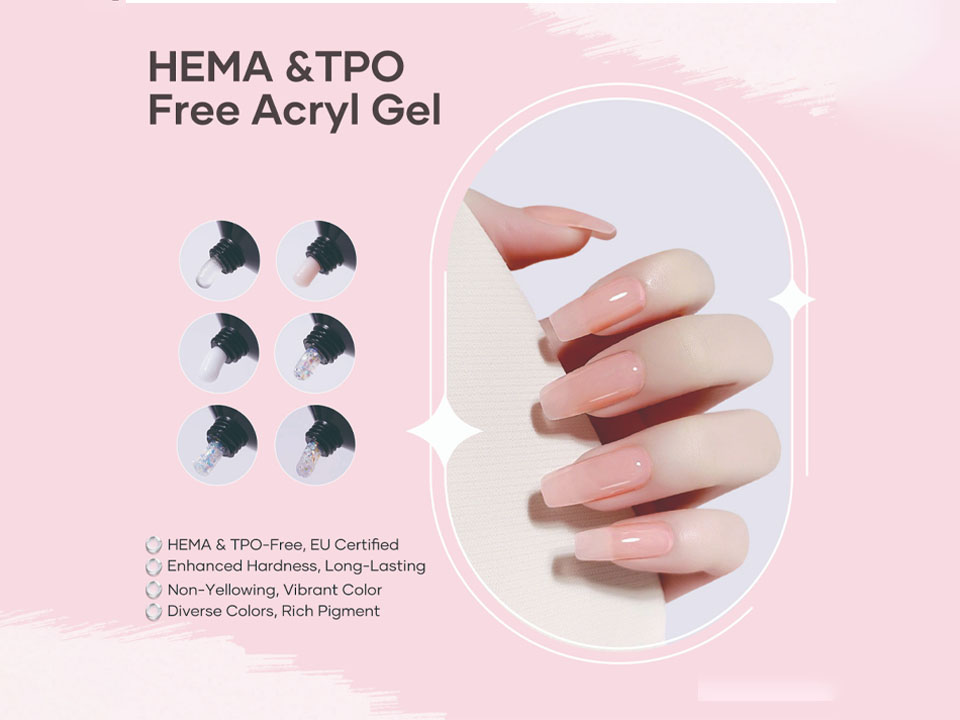
This matters a lot if you sell into global markets and need specific claims like HEMA-free positioning or restricted substance limits. A bulk system like OEM 56 colors HEMA/TPO-free nail gel polish can lower complexity, but you still need to cost the whole pipeline.
You asked for “specific arguments + table + sources” without linking out to other websites. Here’s a citation-style table you can use inside your content. It reads professional, and it stays clean.
| Argument (ready-to-use claim) | What it means in real operations | Source type (no external links) |
|---|---|---|
| Low wholesale price doesn’t guarantee higher profit | Pricing off bottle cost alone ignores time, overhead, and rework | Cost accounting practice (COGS + overhead allocation) |
| True cost per service must include product, labor, overhead, and waste buffer | You prevent “busy but broke” by modeling the full cost stack | Wholesale quoting framework used in OEM/ODM planning |
| Cost per ml/g + average usage is more reliable than price per bottle | It normalizes different viscosities, pigments, and application styles | Product usage benchmarking (salon/service workflow) |
| Landed cost matters more than ex-factory cost for cross-border | Freight, duties, packaging, and compliance can swing margins | Import/export operations costing |
| Reducing rework beats squeezing factory price | Quality stability cuts refunds, support load, and churn | Quality control + returns management |
This table gives you a plug-and-play structure. Drop your own values in a sheet. Don’t publish the numbers if you don’t want competitors to reverse-engineer you.
| Cost element | How to calculate (template) | Notes for gel polish brands |
|---|---|---|
| Direct product cost | (Bulk cost per ml/g) × (average usage per service) | Track by type: color, glitter, cat eye, base/top, builder |
| Labor time cost | (minutes per service) × (cost per minute) | Include packing/CS time for e-commerce models |
| Overhead allocation | (monthly overhead) ÷ (monthly services or units) | Separate marketing overhead if you want cleaner COGS |
| Waste/rework buffer | (return rate + defect rate + shrink) × (cost impact) | Include shade drift, cure issues, and dead stock |
| Compliance/packaging add-ons | (required packaging + docs + testing) ÷ (units) | Big for EU/UK/US channels and large retailers |
If you’re building a private label line, your pain points usually look like this:
In that case, split costing into “core system” and “special effects.” For example:
Distributors live on spread, speed, and stability. Your true cost per service model helps you answer two questions without drama:
A smart move here is to keep your reorder drivers simple:
Platform fees and returns can chew through margin like a termite. So you’ll want to model:
Kits can help AOV, but they can also inflate “touch time” in the warehouse. If you run sets like private label 18-color cat eye gel polish kit, treat kitting and defect handling as real line items.
Academies care about repeatable results. Techs care about speed, retention, and fewer fix-ups.
Builder systems are a perfect example. A product might look “more expensive,” but if it self-levels and reduces rework, it can lower true cost per service. That’s why formulas matter more than sticker price, especially for products like custom BIAB clear/nude/pink jelly builder.
When you treat pricing as a cost system (not a guess), you stop chasing random SKUs. You build a tighter lineup, you cut rework, and you scale faster.
That’s also where YY DEL POLISH makes sense as a commercial play: keep your core shades and systems consistent, control your landed cost, and use OEM/ODM flexibility to build a catalog that sells in bulk without turning support into a mess.
If you want, I can turn the tables above into a one-page internal calculator layout (still no public numbers), so your sales team can quote faster and your buyers can compare SKUs with the same “true cost per service” rules.