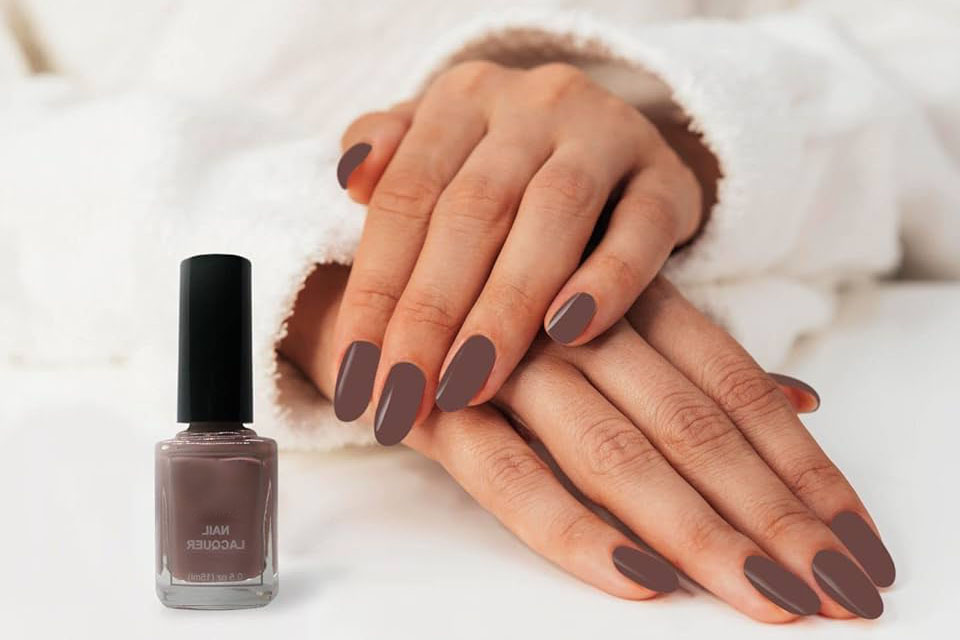
Picture this: you sit down at the nail table after a long week, and the tech asks that familiar question:
“Gel or regular polish?”
You nod, but in the back of your mind there’s a little voice: “I know gel lasts longer… but what actually makes it different?”
Most blog posts answer that with one sentence: “Gel is cured under a lamp and lasts longer than regular polish.” Technically true, but it doesn’t really explain what’s happening on your nails, or why some people swear by gel while others go back to classic lacquer.
Let’s slow down and walk through this properly—how each formula is built, how it behaves on real nails, and how to choose between them without guessing.
1. Start with the Familiar: How Regular Nail Polish Works
Before we talk about gel, it helps to understand the old-school product almost everyone has used.
1.1 What’s in a bottle of regular polish?
If you looked at a typical ingredients list for classic lacquer, you’d find four main groups:
- Solvents – liquids that keep everything fluid in the bottle.
- Film-forming resins – the part that actually becomes the colored coating on your nail.
- Plasticisers – ingredients that stop that coating from becoming so brittle it shatters off.
- Pigments and effect powders – they add color, shimmer, glitter or pearl.
In simple terms, regular polish is a colored solution: resins and pigments dissolved or dispersed in fast-evaporating liquid.
1.2 What happens when it “dries”?
When you paint your nails with classic lacquer:
- You lay down a wet film full of solvent.
- The solvent starts to evaporate into the air.
- As it leaves, the resins get closer together and harden into a thin film.
That’s drying—not a chemical transformation, just the wet part leaving the scene.
It’s why:
- you can still dent the polish if you press too hard in the first hour, and
- the film stays slightly permeable and relatively thin compared with gel.
Regular polish is basically a tiny coat of colored varnish glued to your nail by adhesion and surface tension.
2. What Exactly Is Gel Polish?
Now, gel polish looks like regular polish in the bottle. It even uses a similar brush. But on a chemistry level it plays a different game.
2.1 A “liquid plastic” that needs light
Inside gel polish you’ll find:
- Oligomers and monomers – short and tiny resin molecules, a bit like uncooked spaghetti pieces floating in syrup.
- Photoinitiators – molecules that wake up when they’re hit by UV/LED light.
- Pigments and effect powders – for color and effects.
- Additives – to control thickness, flow, and shine.
Gel polish doesn’t wait for anything to evaporate. It stays more or less the same thickness until you put it under a lamp. Only then does the real magic happen.
2.2 From liquid to solid: curing, not drying
When your hand goes into the lamp:
- Photoinitiators absorb light at specific wavelengths.
- They break apart and create reactive sites (radicals).
- Those reactive sites trigger polymerisation—all those little resin pieces grab onto each other and link up.
- The whole layer becomes one interconnected network: a thin, flexible, cross-linked plastic coating anchored to your nail.
That’s why a properly cured gel layer:
- doesn’t dent when you press it,
- keeps its shape and shine, and
- holds together even when your nails flex.
It hasn’t just “dried”. It has turned into a different material.
3. Gel Polish vs “Hard Gel” and Builder Gel
A quick clarification, because the word “gel” gets thrown around a lot.
- Gel polish (soak-off gel) – usually comes in a polish-style bottle, forms a thinner, more flexible layer, and can be soaked off with remover or acetone.
- Builder gel / hard gel – thicker, usually in a pot or special bottle, designed for building length or structure. Some types can’t be soaked off easily; they’re filed down instead.
They share the same basic curing mechanism, but:
- gel polish is designed to behave like color and thin overlay,
- builder gels are designed as architecture for the nail.
For beginners, “gel polish” usually refers to the soak-off color system: base, color, top.
4. How Application Differs in Practice
From a distance, both services look like “prep, base, color, top”. The rhythm and attention to detail feel different when you’re actually in the chair.
4.1 Step-by-step gel manicure
A careful gel application typically includes:
- Detailed prep
- Nails are filed to shape.
- Cuticle on the nail plate is gently removed (so the gel doesn’t sit on dead skin).
- The surface is very lightly buffed to remove the natural shine.
- Dust and oils are removed with cleanser or dehydrator.
- Optional bonder or primer On very oily or tricky nails, a thin layer of bonder is sometimes used to help adhesion.
- Gel base coat
- Brushed on in a thin, even layer.
- Cured under UV/LED for the time recommended by the system (often 30–60 seconds).
- This layer is the “grip” between nail and color.
- Gel color coats
- Two or three thin layers, each one cured separately.
- Thin is important; thick layers may wrinkle or under-cure.
- Gel top coat
- Adds shine and scratch resistance.
- Cured once more.
- Finishing
- If the top coat leaves a sticky layer, it’s wiped off.
- Cuticle oil is massaged in.
- You can immediately tie your shoes or dig through your handbag.
Because the product is only “locked” once it sees the lamp, the timing and lamp quality matter a lot. Under-curing leaves pockets of uncured material; over-curing or using the wrong lamp may cause discoloration or premature breakdown.
4.2 Step-by-step regular polish manicure
A regular manicure looks simpler:
- Prep – shaping and basic cuticle work, sometimes less detailed than for gel.
- Base coat – air-dry.
- Color coats – usually two or three, with some waiting time between layers.
- Top coat – adds shine and helps delay chipping.
- Drying – the critical part, where the solvents continue to evaporate and the film firms up.
Some salons use fans or drying drops to speed up the process, but you still need a non-zero chunk of time where you’re careful about zippers, keys, and car seatbelts.
Now we can link the chemistry to what you actually see on your hands.
5.1 Gel: flexible armour
Because gel cures into a cross-linked network:
- It resists mechanical stress better; the coating can flex slightly without cracking.
- There’s less water absorption and swelling compared with some regular polishes, so the film doesn’t expand and contract as dramatically when your hands are in and out of water all day.
- The color and pigments are trapped in a stable structure, so gloss and intensity stay consistent for longer.
Result: on most people, a well-applied gel manicure easily runs 14–21 days before it looks grown out rather than damaged.
5.2 Regular polish: lighter but more fragile
The film from regular polish is:
- thinner,
- more influenced by daily water and solvent exposure, and
- only loosely held together by physical forces and simpler bonds.
That’s why you often see:
- tip wear after a few days,
- chips starting where the nail flexes most (corners, dominant hand),
- shine fading as the surface gets micro-scratched and worn.
It’s not a “bad” product; it’s designed for flexibility and easy removal rather than industrial-level durability.
6. Removal: The Part That Decides How Your Nails Feel Long-Term
People often blame the product for damage when the real culprit is how it was removed.
6.1 Gel removal done well
For soak-off gel, safe removal usually looks like:
- Breaking the seal The top coat is lightly filed to let remover penetrate.
- Soaking Cotton pads soaked in remover or pure acetone are wrapped around the nails, or fingers are placed in a soak tray. Time: usually 10–20 minutes depending on the system.
- Gentle nudging The softened gel is coaxed off with a wooden stick or a gentle metal pusher. Any stubborn flecks are encouraged, not scraped aggressively.
- Buffing and nourishing A very light buff to smooth the nail, followed by oil or treatment.
If you looked at the nails after a careful removal, they’d still have a smooth, intact surface. They might feel a bit dry from the acetone, but the actual nail plate isn’t supposed to be filed away.
6.2 Gel removal done badly
Damage usually comes from shortcuts:
- drilling into the natural nail instead of just the product,
- using a coarse file on bare nail plate,
- or the classic: peeling the gel off like a sticker because it’s satisfying.
When gel is ripped off, it often takes the top layers of the natural nail with it. Do that a few times, and nails become thin, bendy, and sensitive to temperature.
6.3 Removing regular polish
Regular polish removal is less dramatic:
- cotton + remover + a bit of rubbing = clean nails.
- there’s no need for soaking or filing if the product is a standard cream polish.
However, very frequent use of strong removers without any care can still dry the nails and surrounding skin.
7. Comfort, Safety and Common Myths
Depth isn’t just about describing layers; it’s also about addressing the questions people quietly Google at midnight.
7.1 “Do my nails need to breathe?”
Nails are made of keratin, similar to hair. They don’t have lungs; they don’t inhale or exhale through polish.
What helps nails stay healthy is not “breathing” but:
- avoiding repeated heavy filing on the natural plate,
- not picking or peeling coatings off,
- protecting your hands from aggressive chemicals and constant water exposure,
- giving nails a less demanding routine if they feel thin or sore.
A well-formulated gel or polish applied and removed correctly doesn’t suffocate the nail; bad technique does the damage.
7.2 “Is gel automatically more dangerous than regular polish?”
Both systems use chemicals. The risk isn’t really about the format; it’s about:
- which ingredients are used, and
- how much uncured product touches the skin.
With gel, extra attention is needed because:
- uncured monomers can irritate skin or, with repeated exposure, contribute to allergy,
- under-curing (wrong lamp, wrong time) leaves more uncured material in the coating,
- people sometimes let product flood the cuticles and sidewalls.
That’s why professionals emphasise:
- thin layers,
- no product on skin,
- correct lamp and timing,
- and avoiding DIY removal by force.
Regular polish can cause irritation too (for example, with certain solvents or resins), but the general exposure to highly reactive monomers is lower because it’s not a UV-curing system.
8. Lifestyle Scenarios: When Each Option Makes Sense
Sometimes the easiest way to choose is to imagine real situations.
8.1 The “always on the go” person
You’re typing all week, cleaning at home, running errands, maybe caring for kids or pets. Your hands are in and out of water constantly.
- Gel gives you a realistic chance of having tidy nails for two weeks straight.
- Regular polish will probably look tired after a few days, unless you’re very gentle.
8.2 The color chameleon
You get bored easily and think nothing of painting your nails at 11 p.m. just for fun.
- Regular polish makes more sense: easy to change, no equipment, quick removal.
- Gel will feel like too much commitment unless you’re happy to soak and re-do frequently.
8.3 The special-occasion wearer
You mostly keep your nails bare, but you want them perfect for weddings, holidays, or photos.
- If the event is short and you’re patient, regular polish is enough.
- If it’s a big trip, busy travel, or a honeymoon where you don’t want to worry, gel is often worth it.
8.4 The nail professional or serious DIYer
If you’re a nail tech or a dedicated home user:
- gel opens a huge toolbox for structured manicures, long-wear designs, gradients, and detailed art,
- regular polish still has a place for pedicures, quick swatches, or simple color services,
- many professionals use both: gel for reliability, regular polish when clients want low-commitment color.
9. Hybrids and “Gel-Like” Products
To make things more confusing, there are also:
- gel-effect polishes – regular polishes designed to mimic gel shine without a lamp,
- hybrid systems – products that combine some gel technology with solvent evaporation,
- brand names often used casually as if they were generic terms.
The key is this: if you don’t need a lamp, you’re in the world of air-dry systems. If you do need a lamp, you’re in the world of curing systems.
Performance, removal, and nail care rules will follow that dividing line.
10. Quick Recap: If You Remember Only Three Things
If all the chemistry details start to blur, keep these three ideas:
- Gel doesn’t dry, it cures. Light triggers a reaction that turns a liquid into a solid network. That’s why it’s so durable.
- Regular polish is simpler and more flexible. It dries by evaporation, chips sooner, but is effortless to remove and easy to change.
- Your habits matter more than the product. Gentle prep and removal, the right tools, and realistic expectations will do more for your nails than any marketing claim.
Final Thoughts
Gel polish and classic lacquer are two answers to the same basic wish: nails that look better than they did this morning.
One asks for more structure—lamps, curing, careful removal—and gives you longer wear and high shine in return. The other asks for a bit of patience while it dries and rewards you with flexibility and easy change.
Once you understand how each system really works, that little pause when someone asks
“Gel or regular?”
turns into a quiet moment of confidence. You’re not guessing anymore. You’re choosing the formula that fits your week, your hands, and your own way of living with color.