Talk to Our Expert
Our sales and engineers are available all the time, you can ask your specific requirements to our sales, and inspiration to our engineer here.

A client once told me she wanted “just gel, but longer”—and within two minutes it was obvious she had no idea whether she meant a polish overlay, BIAB, hard gel on a form, or a full-cover tip system, which, frankly, is how this whole category gets mangled online and inside salons. Happens daily.
But that confusion didn’t come from nowhere.
The industry did that. We did. Brands, educators, salon menus, suppliers—everybody started using “gel” like it was one neat little bucket, when it’s really a pile of totally different systems with different chemistries, different wear patterns, different refill logic, and very different failure points once the client starts living in the set.
So let’s stop pretending.
Soft gel nail extensions are pre-shaped, full-cover soft gel tips that get bonded to the natural nail with a gel adhesive, cured under a lamp, and then finished like a gel manicure. That’s the real mechanism. Gel-X nails are simply the branded version most people know, largely because Aprés marketed the category harder—and smarter—than almost everyone else. InStyle’s 2024 breakdown of gel extensions actually explains this pretty well, which is rare for mainstream beauty coverage. (instyle.com)
Not the same.
A regular gel manicure is usually just gel polish over the natural nail. No pre-built length. No manufactured apex. No full-cover tip hugging the entire nail plate. Maybe there’s a little structure if the tech floats product nicely, maybe not. With Gel-X, the architecture is already sitting there in the tip before the service even starts, which is why the set can look cleaner, more uniform, and weirdly “finished” faster than a sculpted build.
And here’s the ugly truth: “regular gel” is a junk phrase. Sometimes a salon means soak-off color. Sometimes it means BIAB. Sometimes hard gel. Sometimes it means whatever was open on the table and cured under the lamp. If you’ve ever handled builder gel systems or builder in a bottle formulas, you know this instantly—the workflow alone gives it away.
Not magic. Molded labor.
That’s the whole commercial genius of the category, honestly: the shape is manufactured upstream, so the tech isn’t scratch-building every extension from raw product while also trying to keep the cuticle line clean, the sidewalls symmetrical, and the client from checking her phone every thirty seconds because the appointment’s drifting into hour three. It saves time.
Usually.
Yet people oversimplify why it works. They say Gel-X is “easier,” and sometimes, sure, it is. But only when the fit is tight, the cuticle edge sits flush, the sidewalls aren’t pinched or floating, the gel adhesive isn’t pooling, and the flash cure actually locks the tip before it shifts. Miss those details and the whole thing goes sideways fast—lifting, bubbles, pocketing, pop-offs, hairline cracks near the stress zone. Salon people know the drill.
And yes, InStyle’s application explainer points to the same obvious trouble spots—wrong sizing, trapped air, gel on skin. (instyle.com)
That part matters.
I frankly believe Gel-X gets praised too hard by beginners and dismissed too fast by old-school techs. Both camps are half wrong. A well-fitted full-cover soft gel tip can look insanely crisp. A badly fitted one looks cheap in under a week.
Here’s where the salon chatter gets sloppy.
People keep framing this as “Gel-X vs regular gel,” which sounds tidy but tells you almost nothing useful, because you’re comparing a full-cover extension system to a vague umbrella term that might mean color gel, soak-off builder, hard gel, or some hybrid service menu nonsense that was written by marketing instead of an actual nail tech.
Those aren’t the same category. Not remotely.
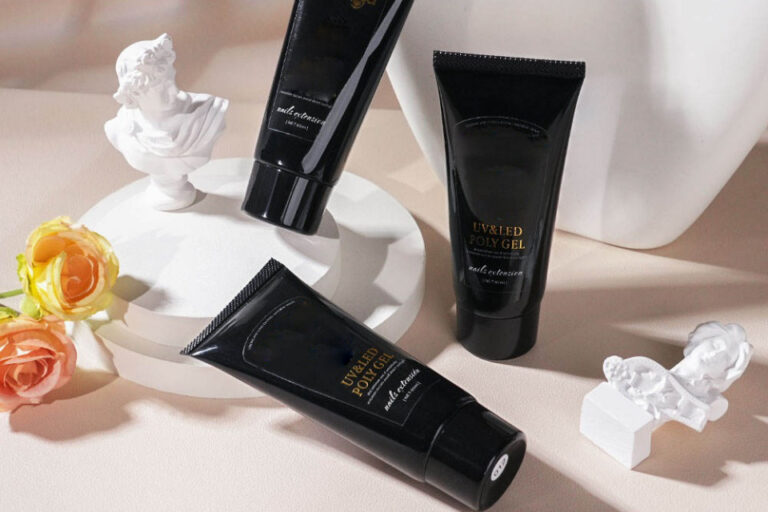
Soft gel tips are pre-built extensions. Hard gel is sculpted structure. BIAB is usually an overlay or short structured enhancement, not a real full-cover tip system. Acrylic is its own beast altogether—powder-to-liquid ratio, odor, dust, file work, all of it. That’s why smarter suppliers separate poly gel extension options, builder gel systems, and HEMA/TPO-free base coat chemistry. Different service. Different technical demand. Different risk profile.
Clients don’t always know that.
Their nails do.
| System | What it really is | Best use case | Removal / refill logic | Where it usually fails |
|---|---|---|---|---|
| Soft gel nail extensions / Gel-X | Pre-shaped full-cover soft gel tips bonded with gel adhesive | Fast length, uniform shapes, salon efficiency | Often soaked off or removed and replaced as a full set | Wrong sizing, trapped air, poor curing, skin contact |
| Regular gel manicure | Gel polish over the natural nail | Color, shine, chip resistance, no extension | Soak-off service; no structural rebuild | Chips, peeling, weak natural nail underneath |
| BIAB / builder in a bottle | Thick soak-off builder used as an overlay or short structure | Natural nail support, mild reinforcement | Usually infill-friendly depending on system | Over-flexing, under-cured bulk, poor apex |
| Hard gel | Sculpted enhancement built by hand on forms or tips | Custom architecture, stronger correction work | Commonly infilled instead of soaked off | Filing errors, imbalance, heat spikes, heavy prep |
| Acrylic | Powder + liquid monomer structure | High-impact wear, long lengths, traditional sculpting | Infill-heavy system; more filing | Over-filing, odor, dust, product ratio errors |
That table? More honest than most booking menus.
From my experience, Gel-X is usually the better choice when the client wants length fast, wants the set to photograph well, and doesn’t want to sit through a full sculpted build. But when the nail plate is flat, bitten, asymmetrical, or just awkward as hell, hard gel still gives a skilled tech way more control over balance and stress placement.
That’s the tradeoff.
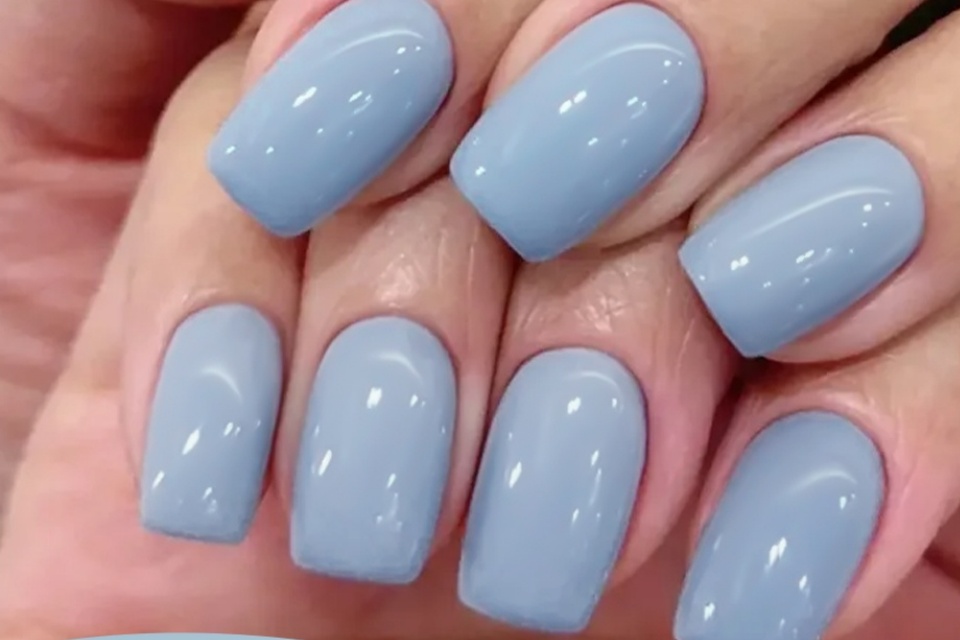
“Soft” sounds gentle. It’s not.
The FDA’s nail care guidance makes something very plain: nail cosmetics in the U.S. generally do not need FDA approval before going to market, and some nail products can cause allergic reactions or infections. That doesn’t mean all gel systems are dangerous. It means the burden falls hard on formulation, handling, curing, labeling, and salon discipline. (fda.gov)
And the allergy side of this industry? Under-discussed. Still.
A 2024 Amsterdam University Medical Centers study looked at 67 patients diagnosed with allergic contact dermatitis from acrylate-containing nail cosmetics and found 97% tested positive to HEMA (2-hydroxyethyl methacrylate); 73% were consumers, 27% were professional nail stylists. Read that again. The pros are getting hit too. (pubmed.ncbi.nlm.nih.gov)
Not great.
Here’s the ugly truth: too many brands sell beginner-friendly gel kits to people who don’t know how to avoid skin contact, don’t know what under-curing looks like, and absolutely don’t understand sensitization. Then everybody acts shocked when contact dermatitis shows up a few months later. That cycle is predictable.
Which is why I’d rather look hard at quality assurance standards than sit through another syrupy brand story about “clean beauty” and cute bottle shots. Show me cure data. Show me consistency. Show me whether the chemistry behaves the same from batch to batch.
Pretty labels won’t fix sloppy product.
Some people panic. Others shrug.
Both reactions miss the point. A 2023 Nature Communications study tested a 54-W MelodySusie UV nail dryer emitting 365–395 nm UVA and reported DNA damage, reactive oxygen species, and mutation patterns in mammalian cells after exposure; the paper estimated a 20-minute session at around 9 J/cm². Important study. But also—let’s be adults about it—the authors did not claim that a gel manicure directly proved human cancer risk in salon settings. They explicitly called for more epidemiological work. (nature.com)
That nuance matters.
I don’t buy the salon-industry denial thing, and I don’t buy social-media hysteria either. If you’re curing product all day, filing enhancement dust all day, and exposing staff to vapors and particulates across full shifts, then ventilation isn’t some optional “nice to have.” It’s operational hygiene. OSHA says nail salon products can expose workers to vapors, dusts, and mists, and notes that NIOSH testing found local exhaust ventilation may reduce chemical exposure by at least 50%. That’s not branding copy. That’s shop-floor math. (osha.gov)
So yes, product choice and work setup belong in the same conversation.
Always.
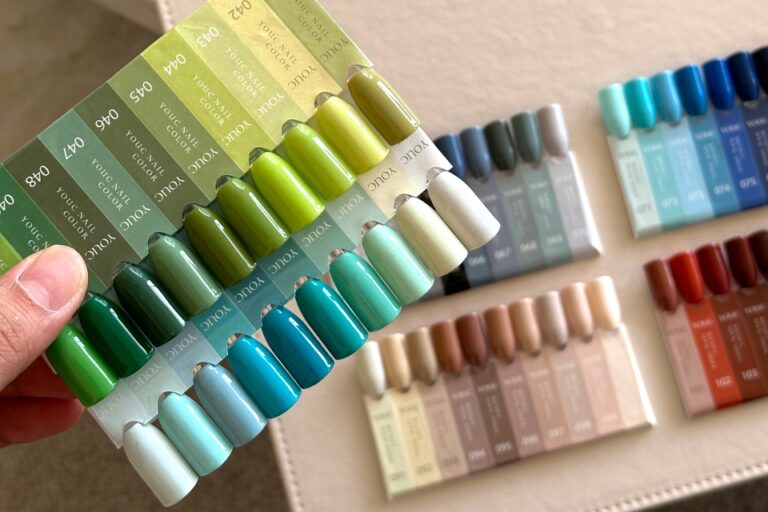
If I were auditing a salon backbar—or advising a distributor—I wouldn’t just stare at colors and finish types. I’d cross-check formula families, lamp compatibility, service sequencing, removal protocols, SDS discipline, and whether the assortment even matches the services being sold. Start with the gel polish catalog. Then ask the annoying questions nobody in sales wants to answer.
Because labor isn’t cheap. Time isn’t either.
According to the U.S. Bureau of Labor Statistics, the U.S. had about 210,100 manicurists and pedicurists in 2024, with 24,800 projected openings per year over the next decade, and a median hourly wage of $16.66. That matters because Gel-X isn’t just a beauty trend—it’s a labor-compression system. In a service category where consistency is hard, sculpting skill varies wildly, and appointment slots are finite, a pre-shaped extension format was always going to explode. (bls.gov)
It was inevitable.
And no, that doesn’t mean hard gel is dead. Not even close. It means Gel-X found the sweet spot between premium-looking results and a workflow that’s easier to standardize across staff. Salons love that. Clients usually do too.
Depends. Really.
If the goal is fast length, cleaner uniformity, and a simpler full-set replacement cycle, soft gel nail extensions make a lot of sense. If the goal is custom architecture, corrective structure, or a fill system built around long-term rebalancing, hard gel still has the edge. If the client wants brute-force durability and doesn’t care about monomer smell, acrylic is still in the room whether beauty media likes it or not. And if the client just wants glossy color on her natural nail? A regular gel manicure is enough.
No drama needed.
Gel-X isn’t “better” in some universal, absolute way. It’s better for a very specific scenario: clients who want length and shape without paying for the full labor of sculpting every nail from scratch. That’s why it sells. That’s why it keeps showing up. That’s why people confuse it with “regular gel” even though the systems really aren’t comparable.
Funny industry, right?
Soft gel nail extensions are pre-shaped, full-cover soft gel tips that are bonded to the natural nail with a gel adhesive, cured under a nail lamp, and then finished like a gel manicure, creating instant length and structure without hand-sculpting every extension from raw builder product. That’s the clean definition. In salon language, most people know the category through Aprés Gel-X because that brand turned the system into the market reference point. (instyle.com)
Gel-X nails are not the same as regular gel nails because Gel-X uses a preformed full-cover extension tip to create length and architecture, while a regular gel manicure usually means gel polish applied over the natural nail for color, shine, and chip resistance without adding true extension structure. That’s the direct answer. One is an extension system; the other is usually a surface coating service.
Soft gel tips can be gentler on the natural nail than aggressive acrylic or hard-gel services when they’re applied and removed correctly, but they are not automatically safer because uncured methacrylates, skin contact, poor curing, and repeated exposure can still lead to lifting, irritation, and allergic contact dermatitis. That’s where the risk sits. The FDA warns some nail products may cause allergic reactions, and the 2024 Amsterdam study found HEMA positivity in 97% of diagnosed nail-cosmetic allergy cases. (fda.gov)
Gel-X differs from hard gel because Gel-X relies on a ready-made full-cover tip for quick, uniform extensions, whereas hard gel is manually built and balanced by the technician over a form or tip, giving more control over apex placement, sidewall correction, and structural customization. That’s the technical distinction. Gel-X wins on speed; hard gel wins when the nail needs bespoke architecture instead of a pre-made fit.
If you’re comparing formulas for salon use, retail education, or private label development, start with the systems that actually match the service: review your builder gel options, compare builder in a bottle against poly gel, and then stress-test the chemistry through your quality assurance workflow. That’s where the serious brands separate from the shiny nonsense.