Talk to Our Expert
Our sales and engineers are available all the time, you can ask your specific requirements to our sales, and inspiration to our engineer here.

Margins lie.
I have watched buyers celebrate a “great” factory quote, then get quietly hit by artwork revisions, custom bottle upgrades, pigment tweaks, freight spikes, and customs charges that somehow never appeared in the first spreadsheet, even though everybody knew they were coming. Want the hard truth?
Gel polish pricing is not a bottle-price conversation. It is a landed-cost argument, and the brands that forget that usually end up with pretty packaging and ugly gross margins.
I do not trust fast quotes. I trust complete ones.
That is why I start with the supplier’s stated OEM/ODM Gel Polish Services, compare them against the real SKU mix in the Gel Polish Catalog, and then check whether the promised quality story matches the published Quality Assurance Process. If those three layers do not line up, the price is theater.
The first trap is formula. Buyers treat formula like a background detail; factories know it is where margin gets made or lost.
A stock formula with standard viscosity, standard pigment load, standard bottle, and standard curing profile can be priced cleanly. But the second you want cleaner chemistry positioning, stronger wear, lower odor, higher gloss retention, better self-leveling, or a salon-friendly cure profile under mixed lamp wattages, the lab stops being invisible. It starts billing you through sample rounds, stability work, raw-material minimums, and time. And yes, this is where the phrase “same quality as premium brands” usually turns into invoice poetry.
The compliance angle makes that worse. A 2024 PubMed market survey of nail cosmetics found HEMA in nearly 60% of products surveyed, with EU warning violations in more than 30% and mislabeling in 10%. I read that as a pricing lesson, not just a safety story: sloppy claims and weak document control do not disappear, they reappear as relabeling, reformulation, delayed shipment, and dead stock.
And the ingredient politics are not cooling off. The European Commission’s TPO in nail products Q&A makes plain that the 2024 classification of TPO set the industry on a reformulation clock, with application from September 1, 2025. If your gel polish pricing model ignored future reformulation risk, it was never a real model.
Here is the math buyers miss: a one-time $1,800 shade and formula development bill spread across 5,000 units adds $0.36 per bottle before freight, taxes, or rejects. Spread that same bill across 30,000 units and it falls to $0.06. Same lab. Different economics. So when somebody tells me their low-MOQ custom formula is “only a little more,” I raise an eyebrow.
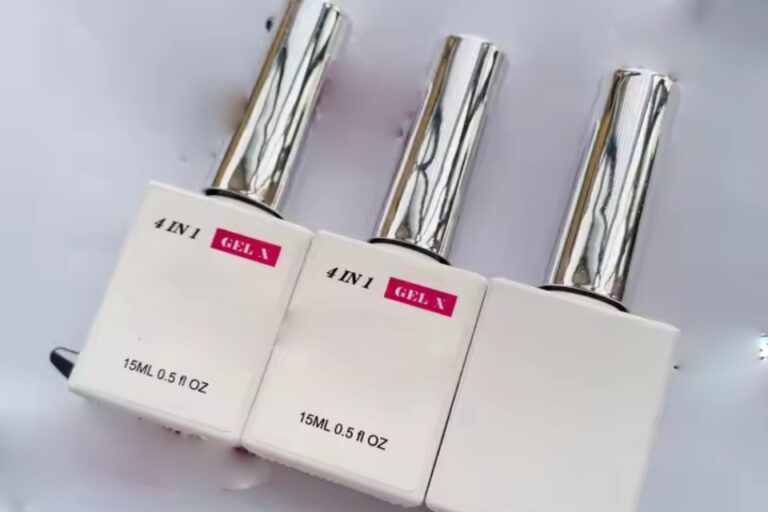
Packaging looks harmless. It is not.
Bottle weight, brush cut, wiper fit, cap torque, UV shielding, silk-screen tolerance, hot-stamp finish, label adhesive, unit carton rigidity, master carton compression strength—these are tiny decisions right up until leakage, crooked labels, brush shedding, or scuffed cartons hit your first distributor complaint. Then they become pricing decisions you should have made earlier.
A plain OEM fill and a 15ml Custom Logo Gel Polish SKU are not the same cost structure, even when the base formula is similar. Add premium decoration, secondary cartons, and lower defect tolerance, and your packaging cost can swell faster than the fill cost itself. That is why I tell buyers to stop obsessing over ex-works formula price while waving through packaging upgrades like they are cosmetic. They are not cosmetic. They are cost structure.
This gets sharper when the marketing claim drives the pack choice. If your pitch is sensitive-skin or cleaner positioning, buyers will compare you against SKUs like a HEMA and TPO Free OEM Gel Polish Line or a Private Label Rubber Base Gel Polish Range. Those claims raise the burden on labels, warnings, consistency, and document discipline. You are not just buying prettier stock. You are buying a narrower margin for error.
Freight is where lazy pricing dies.
On January 12, 2024, Reuters reported that Shanghai-Europe rates rose 8.1% to $3,103 per 20-foot container, while Shanghai to U.S. West Coast rates jumped 43.2% week on week to $3,974 per 40-foot container. By May 31, 2024, Reuters reported again that the China-to-North-Europe spot rate had hit $4,615, almost 3.5 times higher than on May 1. If your OEM nail polish production cost assumes freight is stable, you are not forecasting. You are gambling.
And this is where brands do the dumb thing: they budget ocean, miss launch timing, panic, and buy air freight. That single rescue move can erase the margin discipline of an entire purchase order. I have seen teams negotiate a supplier down by $0.08 per unit and then destroy the savings with rushed logistics that added far more than that.
So I price freight as a range, not a promise. Always.
Here is a nasty little industry truth: import taxes are often less dramatic than buyers fear, but the total landing bill is more annoying than they expect.
The U.S. Harmonized Tariff Schedule entry for manicure or pedicure preparations, HTS 3304.30.00, shows a general duty rate of Free, and CBP has issued rulings classifying nail polish there, including ruling N285765. But that does not make your product cheap to land. Brokerage, customs clearance, insurance, destination handling, domestic trucking, VAT or GST in other markets, and country-specific trade measures still sit on the invoice like barnacles. “Duty free” is not the same thing as “low landed cost.”
And then there is the paperwork burden. In the U.S., the FDA’s 2024 guidance on cosmetic facility registration and product listing turned what many smaller beauty operators treated as loose administration into a more disciplined compliance workflow under MoCRA. That does not always show up as a line item called “regulation,” but it absolutely shows up in staffing, records, revisions, and slower launches.
I prefer ugly numbers to pretty assumptions. So here is a benchmark model I would actually use to sanity-check gel polish pricing for a mid-spec 10,000-unit private-label run.
| Cost block | Typical share of landed cost | What pushes it higher | Common buyer mistake |
|---|---|---|---|
| Formula and bulk fill | 28%–40% | Higher pigment load, HEMA-free or TPO-free reformulation, better leveling, faster cure targets | Assuming stock formula pricing applies to custom claims |
| Primary packaging | 18%–30% | Better bottle, brush, cap, decoration, tighter defect tolerance | Treating packaging upgrades as cosmetic, not structural |
| Secondary packaging | 5%–12% | Unit cartons, inserts, premium print, export-strength outer cartons | Forgetting cartons until artwork is already approved |
| Quality assurance, testing, documentation | 4%–10% | Shade approvals, compatibility tests, claims review, certificate and safety data sheet administration | Pricing as if documentation were free |
| Freight and insurance | 6%–18% | Route disruption, seasonality, split shipments, emergency air freight | Using one freight quote for the whole year |
| Taxes, clearance, local delivery | 3%–12% | Brokerage, destination fees, VAT or GST, inland transport | Confusing tariff rate with total import cost |
| Rejects, rework, buffer | 2%–6% | Leakage, decoration defects, fill variance, label errors | Pricing to perfect yield |
For a stock-heavy 15ml private-label run, I usually see landed cost settle around $0.95 to $1.85 per unit. Once custom formulation, stronger compliance positioning, and upgraded packaging enter the room, $1.60 to $2.80 is not unusual. It is normal. The buyers who panic at that number are usually comparing a real landed-cost model against somebody else’s incomplete ex-works fantasy.
This part is simple. Painful, but simple.
Start with true landed cost per unit. Add a reject buffer. Add the cost of financing inventory if your cash cycle is slow. Then divide by one minus your target gross margin.
If your landed cost is $1.42 and you want a 65% gross margin, your minimum wholesale floor is $4.06. If you plan to sell through distributors or retailers that also need room for profit, your final sell-through price must climb again. This is why cheap launch pricing feels smart in month one and foolish by quarter two.
And no, the answer is not “ask the factory for a better number.” The answer is to separate stock formula from custom formula, packaging from fill, freight estimate from freight policy, and taxes from customs friction. Once those are separated, you can negotiate. Before that, you are just begging for vagueness.
OEM gel polish cost is the full landed expense of developing, filling, packaging, shipping, clearing, and delivering a private-label nail product, including one-time lab work, compliance edits, documentation, rejects, and freight volatility that many factory quotes leave out until late in the buying cycle.
In plain English, it is not just the bottle. It is the bottle plus every decision that makes the bottle sellable, legal, and on time.
Shipping affects gel polish pricing because nail products are dense, timing-sensitive, and exposed to route disruption, so even a stable ex-works quote can become unprofitable once ocean rates, fuel surcharges, customs brokerage, destination handling, and emergency air freight start stacking on top of the factory invoice.
My rule is blunt: build a freight range into your cost sheet, not a single optimistic number.
HEMA-free or TPO-free gel polish usually costs more because reformulation changes photoinitiator systems, curing behavior, stability testing, labeling, and claim substantiation, which raises both laboratory effort and the chance of additional sample rounds before the formula performs well enough for salon or retail launch.
Sometimes the chemistry works fast. Sometimes it fights you. Price for the second scenario.
To price OEM gel polish for wholesale, calculate true landed cost per unit, add a reject and delay buffer, then divide by one minus your target gross margin across the first purchase order, because pricing from ex-works cost alone almost always leaves freight, promotions, and channel margin unfunded.
That formula is boring. It is also the one that keeps brands alive.
MOQ changes gel polish pricing by spreading fixed costs such as formula work, artwork setup, carton plates, sampling, and compliance review across more units, which is why a cheap-looking 3,000-piece order can be less profitable than a better-structured 10,000-piece order with lower overhead per bottle.
Small orders do not just cost more. They expose every hidden fixed cost.
If you want a quote you can actually trust, start by comparing the supplier’s OEM/ODM Gel Polish Services, benchmark a real Custom Logo 15ml Gel Polish Product, inspect the Quality Assurance Process, and then Contact the Factory Team for a cost sheet that separates formula, packaging, freight, and import-related charges. Otherwise you are not negotiating gel polish pricing. You are negotiating ambiguity.