Talk to Our Expert
Our sales and engineers are available all the time, you can ask your specific requirements to our sales, and inspiration to our engineer here.

Stocking isn’t art. It’s math, margin, and repeat bookings, and the shade wall is where salons quietly bleed cash because “pretty” beats “profitable” in the buying decision.
I keep seeing the same pattern: owners chase whatever went viral last week, then wonder why they’re sitting on a graveyard of neon gels while the same three nude tones get scraped to the bottom of the bottle by mid-month. And now we’ve got a second pressure point—ingredient fear—because allergic contact dermatitis isn’t a niche complaint anymore; it’s showing up in dermatology datasets, in regulation, and in the vendor conversations nobody wants to have out loud. Want the hard truth? The safest inventory strategy is also the most boring one.
So what are the best gel polish colors for a salon? The ones that sell without needing an explanation. The ones that fit weddings, corporate clients, and “I just need my hands to look clean” people. The ones that don’t turn into a customer-service nightmare when a client asks, “Is this HEMA-free?”
If you want a quick way to sanity-check your shelf, open your own POS. Then open your re-order history. If those two lists don’t overlap, your color wall is a hobby.
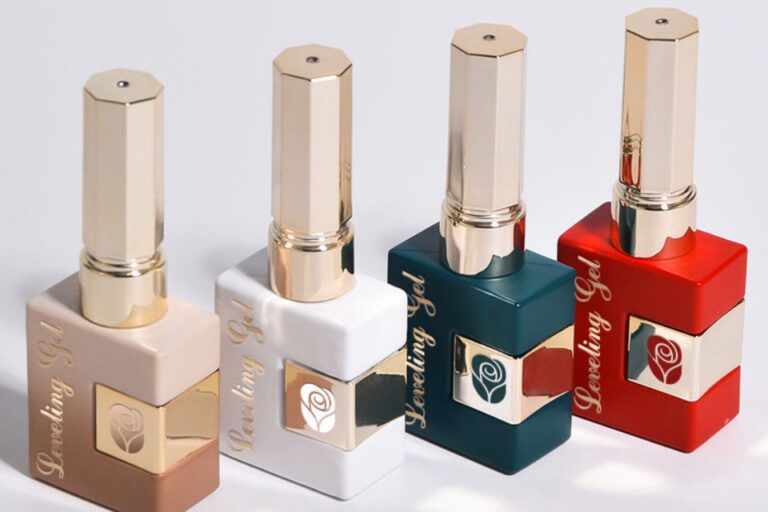
I’m giving names you can map to any brand’s swatch set. If you’re sourcing, you’ll find these families inside any serious gel polish catalog for salons—including the kind of broad palette you can scan fast in a vendor’s gel polish catalog.
This is your quiet top-seller. It hides minor nail staining, looks expensive under office lighting, and doesn’t punish imperfect prep the way opaque whites do.
Most salons under-stock undertones. Keep at least one beige that doesn’t swing orange. It wins on mature hands and winter skin tones.
When people ask for “nude but not boring,” this is what they mean. It also pairs with chrome powders and minimalist art without clashing.
This sits between nude and “color.” It sells in every season because it reads calm, not loud.
Not burgundy. Not orange-red. The blue-red is the universal “event” red. It’s a safe bet for your red gel polish shades for salon category.
This one prints money in fall and holiday season, but it still books year-round for clients who hate bright colors.
Black is not “goth only.” It’s the base for French outlines, negative-space designs, and quick fixes when someone wants “clean and sharp.”
White is a utility shade. But it’s also where curing mistakes and skin contact show up fast, so application discipline matters more here than anywhere.
Greige sells because it looks “styled” without looking like a trend. Clients who don’t want pink often land here.
Mocha exploded because it flatters more skin tones than people expect, and it photographs well without screaming for attention. If you want a ready-made “office-friendly” family, look at curated sets like a mocha series in a HEMA-free format—vendors increasingly package these as compliance-friendly palettes.
If you’re buying across many finishes, keep these families mostly in solid color gel form first, then add sparkle as a second layer. Your fastest “coverage” comes from reliable solids; you can browse a supplier’s solid color gel lineup to sanity-check whether your core neutrals and reds are actually complete.
Bad reactions cost more than refunds. They cost trust.
In a 2024 paper based on patch-tested women at Amsterdam UMC, allergic contact dermatitis linked to nail cosmetics showed up often enough to be a real clinical slice of the pie—67 women diagnosed from nail cosmetics between 2015–2023, reported as 2.3% of all women patch tested in that center. That’s not TikTok noise; that’s clinic throughput. According to the paper, HEMA reactions were extremely common in that patient group. Contact allergy to acrylate-containing nail cosmetics (Amsterdam UMC dataset). (在线图书馆)
Now the ugly compliance detail: another 2024 study checking ingredient presence in nail cosmetic products found HEMA in nearly 60% of products, and it reported violations of EU legislation in more than 30% of the products they looked at. That’s the supply-chain risk nobody wants in a salon that markets “clean” or “safe.” Presence of HEMA and compliance issues in nail cosmetics. (PubMed)
And it’s not just one city. A 2024 dermatology paper using an extended testing series reported 2-HEMA as the most prevalent allergen, found in 3.4% of all tested patients in that dataset—again, not a rounding error. Extended (meth)acrylate series findings (2024). (medicaljournalssweden.se)
So when brands advertise “HEMA-free,” it’s not only marketing. It’s also a defensive move against churn, bad reviews, and reputational drag. If you’re a salon buyer, the question isn’t “Is HEMA bad?” The question is: Do you want ingredient drama to be part of your customer experience?
If you’re sourcing, it’s worth scanning suppliers that explicitly position professional sets around these constraints—like a HEMA & TPO-free salon gel set—then verifying the paperwork through their quality assurance and batch testing process.
This is where “trend” meets law. The European Commission spells out the TPO situation in plain language: TPO was classified as a reproductive toxicant category 1B under Commission Delegated Regulation (EU) 2024/197, applying from 1 September 2025, and that classification triggers cosmetics prohibition timing through the cosmetics regulation mechanism. Translation: if you operate in or sell into Europe, your suppliers are already reformulating—or they’re about to get stuck with dead stock. European Commission TPO Q&A. (single-market-economy.ec.europa.eu)
Meanwhile, worker exposure doesn’t go away just because you picked a “nicer” brand. OSHA’s nail salon guidance still flags methacrylate-related hazards like irritation and respiratory effects in salon settings. That matters because staff are your repeat-exposure population. OSHA: Chemical hazards in nail salons. (osha.gov)
So yes, color choice matters. But chemistry is sitting right behind it, shaping what clients ask for and what suppliers can legally ship.
You don’t need 120 colors. You need coverage.
Here’s the rule I’d bet on: build a “core 10” (the list above), then add a rotating “trend rack” that never exceeds 20–25% of your color inventory. Your core drives reorder velocity. Your trend rack drives upsells and photos. Mixing those two buckets is how salons end up with dusty bottles and cashflow headaches.
And if you’re offering “allergen-aware” services, stop treating it like a sticker on the window. Make it operational: staff training, curing discipline, skin-contact rules, and sourcing that doesn’t rely on vague claims. If you private-label or want consistent batches across multiple locations, that’s where a supplier’s OEM/ODM private label services start to matter more than the color names on the bottles.
| What buyers say | What the evidence shows | What I’d do with that info |
|---|---|---|
| “Allergy talk is hype.” | Patch-test datasets show measurable acrylate/HEMA allergy signals in clinical populations (examples include Amsterdam UMC reporting nail-cosmetic ACD cases; 2-HEMA appears as a common allergen in 2024 testing data). | Add a “HEMA-free options” section to your core wall and train staff on skin-contact prevention. |
| “Ingredient lists are reliable.” | A 2024 product check found HEMA in ~60% of products and reported >30% EU legislation violations in the sample examined. | Require COA/SDS discipline from suppliers and lean on documented QA processes, not vibes. |
| “Regulation won’t affect my shelf.” | EU documentation sets TPO classification timing from 1 Sep 2025, forcing reformulation and sell-through planning. | Don’t overbuy legacy formulas; ask vendors what changed in curing chemistry and stability. |
Links for the underlying sources are in the body above. (在线图书馆)
A salon should stock gel polish colors that cover the largest set of client situations with the fewest bottles—core neutrals, two reds, black, and white—because those shades dominate repeat demand across weddings, office wear, and minimalist trends while reducing dead stock and reordering friction. After that, add a small trend rack. Keep it tight. Your shelf should reflect reorders, not mood boards.
Choosing gel polish colors for a salon means selecting shade families that maximize repeat bookings and minimize returns by balancing undertones (cool/neutral/warm), opacity needs (sheer vs solid), and seasonal demand, while also checking ingredient risk signals like HEMA/TPO status and supplier QA consistency. If you can’t explain why a shade exists on your wall, it probably shouldn’t.
Best-selling gel polish shades are typically sheer milky pinks, beige and rosy nudes, dusty mauves, classic blue-reds, deep wines, and practical utilities like black and white because they match broad client taste, flatter many skin tones, and support fast services like French, overlays, and simple art. The “best” shade is the one you reorder without thinking.
HEMA-free gel polishes are formulas that remove 2-hydroxyethyl methacrylate (HEMA), a known sensitizer in nail products, which can reduce the risk of triggering allergic contact dermatitis for some clients, but they do not eliminate all acrylates or guarantee zero reactions because cross-reactive methacrylates may still exist. So treat “HEMA-free” as a risk reducer, not a medical promise.
Gel nail polish color trends that matter operationally are the ones clients keep paying for—mocha browns, greige neutrals, soft milky sheers, and “quiet luxury” reds—because they photograph well but still wear like classics, unlike high-churn novelty shades that spike on social and die on shelves. Trends are useful when they don’t wreck your inventory turns.
Lowering gel allergy complaints means reducing skin exposure to uncured monomers through clean application, full curing, correct lamp use, and disciplined removal, while choosing suppliers who document formulation changes and compliance—especially around known sensitizers and photoinitiators—so you’re not relying on labels alone. If you’re serious, train like it’s a safety program, not a technique class.
If you want these 10 colors built into a tighter, easier-to-reorder palette—especially if you’re pushing “HEMA-free” positioning—start by mapping your current wall against a supplier’s gel polish catalog for salons and their quality assurance standards. If you need private label consistency across locations, look at OEM/ODM options and then contact the team with your core-10 list and target price points