Talk to Our Expert
Our sales and engineers are available all the time, you can ask your specific requirements to our sales, and inspiration to our engineer here.

If you spend any time around nail techs, you’ll eventually hear the same story in different versions.
A client who has loved gel manicures for years suddenly develops red, angry skin around the nails. A technician who works six days a week starts to notice tight, itchy fingers that don’t calm down between appointments. Someone switches brands and, almost overnight, their hands look and feel better.
Behind many of these stories is one small but powerful ingredient: HEMA.
This is why more and more brands are now talking about HEMA-free gel polish. It isn’t just marketing language; it’s a direct response to a growing wave of allergy concerns in the industry.
In this article, I’ll walk through what HEMA actually does, why it became a problem, and how brands are re-thinking their formulas to reduce risk without sacrificing performance.
HEMA stands for 2-Hydroxyethyl Methacrylate. It’s a small, reactive molecule that has been used for years in many nail systems:
Chemically speaking, HEMA is popular because it:
From a formulation point of view, HEMA is a bit of a “problem solver”. It makes products stick better and feel more durable, which is exactly what nail professionals want.
So where’s the downside?
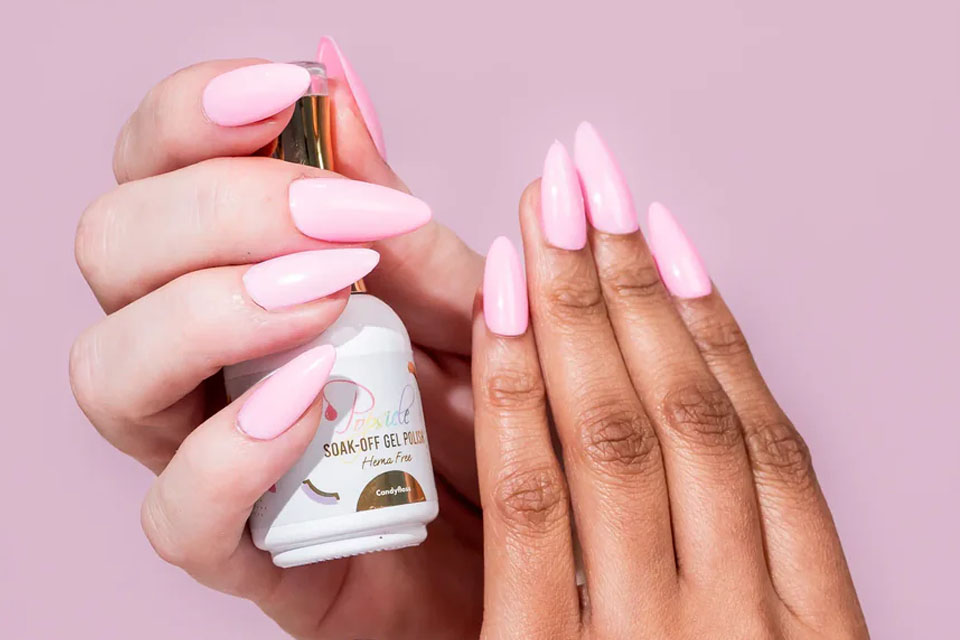
The same small size that makes HEMA so useful is also what makes it risky.
Because HEMA molecules are tiny and highly reactive, they can:
For years, these reactions were written off as “sensitive skin” or blamed on acetone, disinfectants, or generic “chemicals”. But as gel and acrylic services exploded in popularity—and as DIY kits appeared in homes—dermatologists started seeing more:
Behind many of these cases was repeated, long-term exposure to ingredients like HEMA, often combined with:
Once someone becomes truly sensitized, their immune system “remembers” HEMA. Even tiny future exposures can trigger a reaction. For a nail tech, that can mean the end of a career they love.
At some point the industry had to stop brushing this aside and ask: Can we do better?
An obvious thought might be: “Why don’t we just reduce the HEMA content?”
In fact, some early “safer” systems did exactly that—formulators tried to keep a small percentage of HEMA to maintain good adhesion but stay under specific limits.
The problem is that allergy doesn’t magically disappear below a certain percentage. For someone who is already sensitized, even trace amounts can be enough to cause a reaction.
And from a brand’s point of view, promising “low HEMA” is a fragile marketing position:
That’s why the industry conversation has shifted more and more towards “HEMA-free” rather than “low HEMA”.
On a label, “HEMA-free” usually means the product does not intentionally contain 2-Hydroxyethyl Methacrylate as a raw material.
However, there are a few important details:
In other words: “HEMA-free” is a meaningful step, but it isn’t a license to ignore application technique or safety.
Rebuilding gel systems without a key ingredient is not as simple as deleting it from the spreadsheet. Formulators have to replace what HEMA used to provide—mainly adhesion and flow—without creating new problems.
Here are the main strategies brands are using.
Chemists are exploring other small, reactive molecules that:
These alternatives might be less aggressive than HEMA, but they usually need careful balancing with:
Finding that balance can take many rounds of lab work and salon testing.
In traditional systems, the base coat is often packed with adhesive monomers. In newer HEMA-free designs, the base coat:
These products aim to distribute stress across the nail surface and reduce the chance of lifting without extra chemical “aggression”.
When one ingredient disappears, the whole curing profile can change. To keep wear time high, brands are:
A well-designed HEMA-free formula should cure completely, leaving minimal unreacted monomer on the surface—another key factor in reducing skin exposure.
HEMA changes the way a gel flows. Without it, some early HEMA-free products felt:
Brands that take reformulation seriously spend time fine-tuning:
Nail techs notice these details immediately. A “safe” formula that is unpleasant to work with will not survive in the market, no matter how good the ingredients look on paper.
One of the most important—and sometimes uncomfortable—messages brands now share is this:
“Even the best HEMA-free system can cause problems if it is used carelessly.”
Why? Because overexposure still matters.
Here’s how brands and educators are trying to change habits:
This protects both clients and technicians. Less product on skin means less chance for any monomer, HEMA or not, to cause trouble.
Under-cured gels leave more unreacted monomers near the surface, which can migrate onto skin during wiping, filing, or everyday wear.
Many techs used to work bare-handed, day after day, for years. Now more brands and educators are pushing:
HEMA-free systems lower one important risk factor; sensible working habits help bring the rest under control.
From a marketing perspective, “HEMA-free” has quickly become a visible label—sometimes used responsibly, sometimes not.
Done well, a HEMA-free line:
It can also be a genuine differentiator for salons that want to specialise in safe, long-wear services.
On the other hand, over-promising is dangerous:
The most trustworthy brands are the ones that say, in essence:
“Here is what we changed, here is why, and here is how you still need to use the product responsibly.”
If you’re planning or already building a gel polish line, you’ll eventually face the question:
“Should we go fully HEMA-free?”
There isn’t a single right answer, but here are key points to weigh.
A fully coherent story means more than one HEMA-free product. Ideally, you would offer:
This lets techs work on a client entirely within the safe system instead of mixing and guessing.
Be prepared to:
Transitioning an existing brand may mean running two systems in parallel for a while, or rolling out HEMA-free products first in segments where demand is strongest.
For nail techs and salon owners, the rise of HEMA-free systems is both a relief and a responsibility.
For clients, the key message is:
“If you’ve had issues with gel nails before, there may be better options now—but always discuss it honestly with your nail professional.”
A patch test, a careful consultation, and a technician who understands their products are worth more than any single label on a bottle.
HEMA-free gel polish is often treated as a marketing trend, but underneath the slogans there is a serious shift happening.
Will HEMA disappear completely from the nail industry? Probably not in the immediate future. But its role is shrinking, and the days of ignoring allergy concerns are over.
The brands that will still be respected a decade from now are the ones that accept this reality—and put real effort, not just words, into making their systems as safe, stable, and skin-friendly as they can.