Talk to Our Expert
Our sales and engineers are available all the time, you can ask your specific requirements to our sales, and inspiration to our engineer here.

Pretty packaging lies.
I’ve sat through too many launch calls where the room gets animated about foil hits, frosted glass, magnetic closures, and that one “premium” insert nobody asked for, while the actual pack-out quietly turns into a cost-heavy, overbuilt, materials-mess that looks polished in a keynote and deeply questionable the second somebody opens the BOM. It happens. A lot.
And the market is still there, which is exactly why brands get sloppy. Beauty kept growing in 2023, and PwC said consumers were willing to pay an average 9.7% more for sustainably produced or sourced goods in its 2024 survey, so teams start believing any sustainability-flavored packaging story will sell if the carton looks expensive enough. Bad assumption. McKinsey’s 2024 beauty analysis and PwC’s 2024 Voice of the Consumer Survey support the demand side, not the nonsense side. (McKinsey & Company)
But nail is unusually good at creating packaging sprawl because the category runs on velocity—shade drops, effect finishes, salon kits, micro-collections, private-label tweaks—and each “small” change tends to multiply bottle specs, brush assemblies, label dies, cap treatments, cartons, shipper variations, and line-side scrap in ways that don’t look dramatic until the operations team is already underwater. That’s the trap.
From my experience, brands rarely blow up efficiency with one giant decision. It’s more annoying than that. A soft-touch cap here. A custom insert there. A second bottle silhouette because somebody wanted the nude line to feel more elevated. Then procurement gets the hangover, and manufacturing gets the blame.
That’s why I’d still start with assortment discipline before I touched aesthetics. A tighter gel polish catalog strategy usually does more for sustainability than a prettier outer box, and once a brand starts leaning on OEM and ODM services, sloppy pack architecture gets expensive fast—new molds, new MOQs, more dead stock, more exceptions, more drama. None of that is glamorous.
Yet some founders still talk about sustainable packaging like it’s a phase-two project, something to revisit after brand identity and launch assets are done, which is a strange read of the market when regulators are already moving the baseline on recyclability, refill, labeling, and problematic chemistry. Not theoretical anymore.
Under the European Commission’s Packaging and Packaging Waste Regulation, all packaging must be recyclable by 2030, the regulation starts applying from mid-2026, companies must make reuse or refill options available whenever possible with no extra charge, and PFAS in packaging are banned from August 2026. California’s SB 54 also pushes the market toward big packaging changes by 2032, including cuts to single-use plastic, higher recycling, and recyclable-or-compostable outcomes. That’s not brand mood-board stuff. That’s design brief, sourcing brief, and claims brief—all at once. (Environment)
I frankly believe a lot of beauty teams still underestimate how ugly decorative packaging looks once compliance enters the room. A cap can feel “luxury” and still be a recycling headache. A rigid carton can feel “premium” and still be deadweight. And the second you need to explain mixed materials, coatings, adhesives, inserts, and empty space to a retailer or regulator, the romance fades very quickly.
Here’s the ugly truth.
A lot of eco-copy in beauty packaging is just a soft adjective wrapped around one narrow improvement, and sometimes not even a meaningful one, which means the claim sounds smooth in marketing but gets wobbly fast when somebody asks the obvious follow-up: what changed, where, compared with what, and in which disposal system? That’s where weak packaging narratives die.
The legal climate is not helping vague brands, either. Reuters’ analysis of Directive (EU) 2024/825 notes that the EU tightened the definition and treatment of environmental claims, including scrutiny around vague or unsubstantiated claims, while the U.S. FTC Green Guides remain the obvious baseline for how companies should think about environmental marketing. Say less. Prove more. (Reuters)
So when I see “planet-friendly packaging” on a nail box, I want receipts. Was the carton removed? Was PCR resin added? Did the pack weight drop per ml? Did the label simplify? Did the refill logic actually reduce unit waste? I’d much rather read a boring, narrow claim that survives scrutiny than a dreamy, all-purpose sustainability slogan that collapses on contact.
However, refill has become one of those beauty words that sounds sophisticated in a deck and responsible in a product launch, even when the actual format is a multilayer pouch with awkward fitments, weak local recyclability, extra leakage risk, and no evidence that the end user—or the salon tech, for that matter—will behave the way the brand story assumes. Seen it before.
The Ellen MacArthur Foundation’s 2023 Global Commitment report is a useful reality check: signatories’ share of reusable, recyclable, or compostable plastic packaging slipped from 65.4% in 2021 to 64.5% in 2022, and the report explicitly flags flexible packaging and infrastructure as major barriers, adding that most signatories will almost certainly miss the 2025 target. That should cool off some of the lazy refill hype.
And nail isn’t skincare. Different beast. You’re dealing with viscosity issues, solvent exposure, cap seal integrity, label resistance, neck-finish mess, backbar handling, and user habits that are all over the place. A refill pouch is not automatically clever just because it weighs less on paper.
What does interest me is reuse where the loop can actually hold. The Ellen MacArthur Foundation’s returnable-packaging analysis found that returnable plastic packaging can cut GHG emissions by 35% to 69% at high scale, and its modeled system-change scenario assumes high return rates around 95% and about 15 loops. That’s real systems math—not eco cosplay.
But the brands that get packaging closer to right usually aren’t doing anything especially theatrical. They standardize bottle families. They stop inventing random cap treatments. They reserve cartons for kits or true protection needs. They simplify print. They separate retail logic from pro logic. Basic moves. Effective ones.
Retail and pro should not share the same packaging brain. Retail needs clarity, durability, and shelf signal. Pro buyers care about leak rate, storage sanity, refill convenience, and how much trash piles up around the station by Thursday afternoon. Same product family, different pack logic.
That’s why a 1kg HEMA-free base and top coat format for salons makes more sense to me than most “eco capsule” launches. It’s less photogenic. Good. Sustainable packaging should survive actual use, not just a hero shot.
And if the system isn’t tested, the story doesn’t matter. Cap torque matters. Brush wiper fit matters. Label stock matters. Chemical resistance matters. So does freight abuse. Real quality assurance testing is not the boring appendix to the packaging conversation—it is the conversation.
A lot of online advice gets cute too early and forgets that operators are juggling fill-line tolerances, resin availability, lead times, pack-out labor, pallet density, freight cube, MOQ pressure, and retailer compliance all at once, which is exactly why the humble standardization moves usually beat the flashy “innovation” plays that get the loudest applause in meetings. Boring wins. Usually.
| Packaging move | Best use case | What I like | Where brands fool themselves | My recommendation |
|---|---|---|---|---|
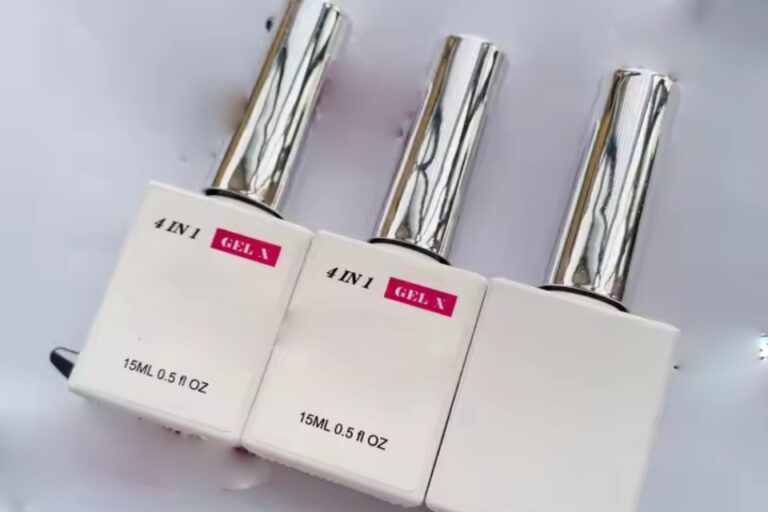
| Standardized 12 ml or 15 ml bottle family | Core gel polish retail SKUs | Fewer molds, easier reorder logic, tighter label templates | Calling five bottle shapes “brand storytelling” | Use one core bottle and one premium variant only |
| Mono-material PP or PE secondary components | Caps, inserts, applicator accessories | Better sorting odds and simpler sourcing | Mixing soft-touch coatings, metal shells, magnets | Strip decorative hybrids unless margin can defend them |
| FSC-certified paperboard carton only for kits | Gift sets, starter bundles, pro kits | Protects bundles without cartoning every single SKU | Boxing every bottle “for luxury” | Reserve cartons for bundles and fragile multi-item sets |
| QR-based digital inserts | Compliance, shade charts, usage guides | Cuts paper, updates faster, works globally | Replacing helpful instructions with zero guidance | Keep one tiny essential safety card, move the rest to QR |
| Salon refill or backbar packs | Base coat, top coat, remover-adjacent support items | Best waste reduction per unit sold | Offering refills for low-repeat novelty shades | Refill only high-turn formulas |
| Water-based inks and simpler labels | Cartons and shipper marks | Easier print runs, less chemistry, cleaner changeovers | Covering packs in heavy varnish and foil | Use restrained print, clear hierarchy, no theatrical finishes |
From my experience, a standardized custom-logo 15 ml gel polish platform can outperform a flashy packaging redesign by a mile because it calms the whole system down—fewer component exceptions, fewer label headaches, fewer purchasing surprises, fewer chances for line-side scrap, and fewer opportunities for somebody to sneak in one more useless decorative part. That’s not romantic. It is profitable.
Yet teams love starting with artwork because artwork feels like movement, while the real wins usually start in the annoying places—component maps, BOM cleanup, fill-size logic, shipper counts, tolerance checks, and an honest conversation about which decorative features are doing real work and which are just ego in physical form. Start there.
If I were fixing the packaging system tomorrow, I’d do it in this order: cut parts, standardize what survives, validate chemistry-pack fit, make disposal clearer, then prettify what’s left. I know. Unsexy sequence. But it holds up better under margin pressure, retailer scrutiny, freight abuse, and claims review than the usual “let’s make it feel more premium” detour.
What is sustainable packaging for nail brands?
Sustainable packaging for nail brands is packaging designed to reduce material use, improve recyclability or reuse, avoid problematic chemicals, survive chemical contact and shipping, and make disposal clearer for salons and end users without compromising formula protection, label legibility, or regulatory compliance.
In plain English, the pack has to do its job without dragging a pile of unnecessary material behind it. If it leaks, smears, overclaims, or needs three extra layers just to look expensive, I wouldn’t call it a strong sustainable packaging system.
Is refillable packaging always better for eco-friendly nail brands?
Refillable packaging is better only when the pack is reused enough times, returned at high enough rates, and paired with a format that does not simply replace one hard-to-recycle component with another, which is why salon backbar refills usually outperform small consumer refill experiments.
That’s the part people skip. Refill can work, sure—but only when logistics, behavior, and materials line up. In nail, the stronger odds usually sit with high-turn pro formats, not cute low-volume retail concepts.
Can nail brands legally say their packaging is eco-friendly?
An eco-friendly claim on nail packaging is a marketing statement that must be specific, provable, and matched to the actual package component or system, because broad terms such as “green,” “sustainable,” or “recyclable” can become legal bait when the evidence is thin or the wording is overbroad.
I wouldn’t lead with airy wording unless legal, sourcing, and operations can all back it up. Narrow claims sound less dramatic, but they age better—and they’re less likely to unravel when someone asks for documentation. (Reuters)
What packaging format works best for B2B nail brands and salons?
The best B2B packaging format for nail brands is usually a standardized, chemically compatible bottle family for retail paired with larger salon refill or backbar packs, because that combination cuts unit waste, simplifies procurement, improves label consistency, and gives operations a real volume lever instead of a cosmetic branding gesture.
That setup fits how pro buyers actually behave. They care about leak rate, reorder ease, storage efficiency, and whether the system survives daily use without turning into a station-side mess. If that’s the direction, start with quality assurance and use the contact page to build a packaging brief that reflects how the line will really be sold and used.