Talk to Our Expert
Our sales and engineers are available all the time, you can ask your specific requirements to our sales, and inspiration to our engineer here.

But here’s the problem: too many brands still bundle North America and Europe into one neat “Western” demand bucket, then wonder why a chrome-heavy launch flies in the U.S., drags in Germany, moves oddly in Italy, and leaves distributors muttering about dead stock, weak turns, and shade cards built by people who’ve never sold through a real salon channel. I’ve seen that movie before.
It’s expensive.
From my experience, the split isn’t cosmetic. It’s structural. North America usually rewards heat—speed, payoff, social pull, service-menu excitement. Europe, more often, rewards discipline—reliability, wearability, chemistry awareness, and products that still look premium on day 18 instead of just under a ring light on day one.
The lazy version of this conversation is, “Americans like bold nails, Europeans like classic nails.” That’s not wrong, exactly. It’s just incomplete to the point of being commercially useless. The real difference sits underneath the manicure: what gets reordered, what gets questioned, what gets merchandised, and what buyers are willing to tolerate when formulation, labeling, or finish consistency goes sideways.
And both regions matter. A lot. Circana’s August 2024 U.S. prestige beauty update put U.S. prestige beauty at $15.3 billion in the first half of 2024, up 8%. Cosmetics Europe’s 2024 market figures valued Europe’s cosmetics and personal care market at €104 billion in 2024. And Reuters’ April 2024 report on L’Oréal showed both North America and Europe growing more than 12% for the company in Q1.
So, no, this isn’t a side note. If a brand misreads the split, the damage shows up fast—wrong hero SKUs, overbought effect gels, thin replenishment, messy channel conversations, and a catalog that looks “big” but doesn’t actually fit either market cleanly.
Yet North America isn’t just “trendier.” That word is too soft. It’s more acceleration-driven. The manicure is often expected to do several jobs at once: look expensive, look new, photograph hard, justify a premium service, and maybe give a salon one more thing to post before the week is over. That changes everything.
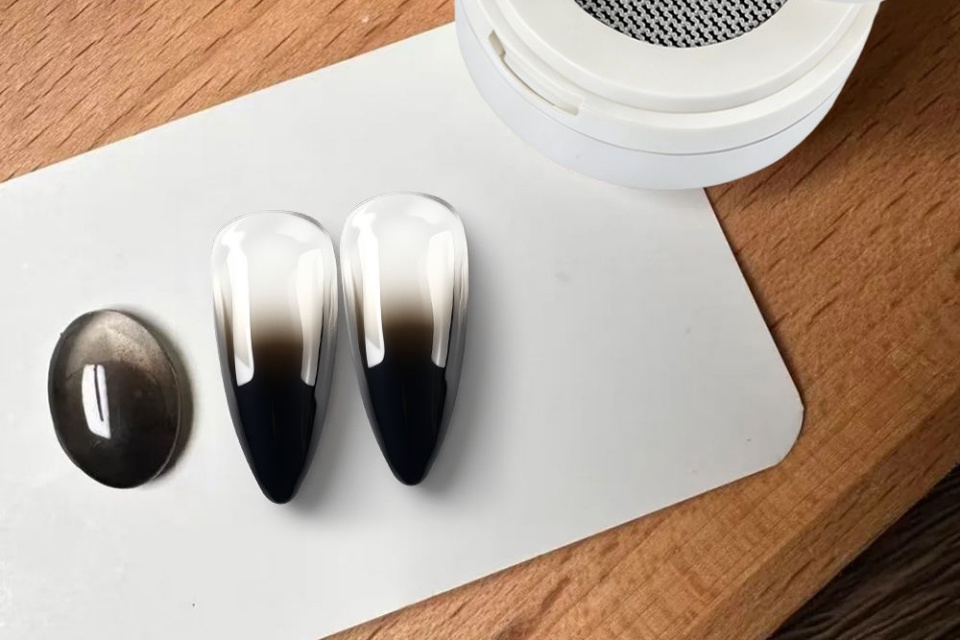
I frankly believe a lot of suppliers still underestimate thumbnail economics. If a shade can stop the scroll, get booked, and upsell into nail art, cat-eye, or layered effects, it has a shot. If not—well, it might still be a good formula, but that won’t save it. North America gel polish trends tend to favor longer almond and coffin shapes, bolder pigment stories, and finishes with immediate visual payoff: cat-eye, reflective glitter, syrup gels, chrome flashes, jelly reds, black cherry, and statement brights that look alive under salon lighting.
Fast market. Short memory.
That doesn’t mean basics don’t sell there. They do. But the market often rewards novelty more openly, and that creates a different assortment logic. Brands need more visual heat, more launch cadence, more merchandising energy. Safe can work. Safe alone usually doesn’t.
However, Europe’s demand curve often looks calmer on the surface and tougher underneath. Buyers there are more likely to ask whether a product holds up in routine service cycles, whether the self-leveling is clean, whether the shade flatters across a broad client base, whether the bottle copy is tight, and whether the whole thing feels credible—not just trendy.
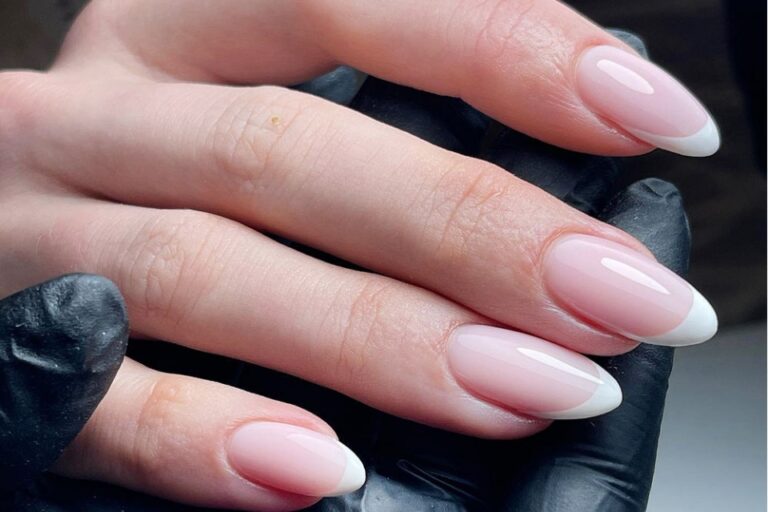
That’s why Europe gel polish trends tend to anchor around milky pinks, sheer nudes, cool beiges, mochas, soft whites, and disciplined reds. Not because Europe lacks imagination. Because those shades work. They move in salon environments where refill behavior, everyday wear, and long-term client trust matter more than one hot content spike.
And the system preference is different too. Builder-style services, BIAB-adjacent looks, rubber base, cleaner overlays, controlled structure—those categories have a deeper commercial role in Europe. The nail doesn’t have to shout. It has to last, look polished, and rebook well. From my experience, that’s the part outsiders miss: “classic” in Europe often means profitable, not boring.
Here’s the ugly truth: a lot of what people describe as Europe’s “taste” is actually Europe’s risk filter. The FDA’s nail care guidance makes clear that U.S. nail products are generally regulated as cosmetics and, except for most color additives, do not need FDA approval before going on the market. Europe, by contrast, has been tightening the screws: the European Commission’s microplastics restriction started applying on 17 October 2023, and the Commission’s guidance says make-up, lip, and nail products in scope run on a transition clock to 16 October 2035.
That changes buying behavior. Of course it does. When the regulatory air gets thicker, ingredient chatter stops being a niche chemist conversation and becomes front-of-house sales language. A distributor may not know every monomer in the bottle, but they know enough to ask whether the line is going to create friction later—with retail, with customs, with salons, with claims, with returns.
And the concern isn’t theoretical. A 2024 Amsterdam-led market survey published in Contact Dermatitis found HEMA in nearly 60% of 394 cosmetic nail products, while the required warnings were absent on 35% of packs for “For professional use only” and 55% for “Can cause an allergic reaction.” Then Amsterdam UMC went public in December 2024, saying 4% of patients tested at its allergy department showed acrylate sensitivity, double the rate of a decade earlier.
That lands.
So when European buyers ask harder questions about HEMA-free positioning, TPO-free options, odor profile, warning language, and documentation, I don’t read that as fussiness. I read it as a market that got wiser—maybe the hard way.
Ask two different markets to buy “gel polish,” and they don’t picture the same bottle. North America often pictures effect. Europe often pictures function. That’s the cleanest summary I can give.
In North America, stronger traction usually goes to bold red, black cherry, cat-eye green, chrome pearl, reflective silver, jelly textures, and seasonal stories that feel made for camera flash and social content. Painting gels, magnetic collections, glitter-led drops, and punchier art effects have more room to earn because they support premium service menus and visual differentiation.
In Europe, the reliable performers are usually quieter: milky pink, sheer nude, cool taupe, soft beige, clean white, blue-based red. Builder-based systems, rubber base, BIAB-style looks, and classic color gels make more sense there because they fit the refill rhythm and the salon logic. It’s not that effect gels can’t sell. They can. But they’re less likely to carry the whole commercial story.
That’s why I don’t like vague advice such as “offer a balanced range.” Balanced for who? The salon chasing magnetic-glass effects this month, or the distributor trying to build a stable reorder program around wearable shades and low-friction claims? Same category. Different job.
But if I were shaping a line for both regions today, I wouldn’t force one giant master assortment into two very different buying cultures and call it efficiency. That approach looks tidy in a spreadsheet and sloppy in the market. Better move: split the logic early.
I’d start with a gel polish catalog organized by systems and effect collections, use OEM/ODM gel polish services to localize formula feel, MOQ, and packaging, keep Europe-facing core SKUs inside HEMA & TPO-free base coat options and salon-friendly colored rubber base assortments, push cat eye gel collections harder for North America, and back the whole program with ISO 22716 quality assurance.
That setup reflects how the business actually moves. North America needs more heat, more drop energy, more visual hero products. Europe needs a disciplined core—cleaner claims, dependable textures, good paperwork, repeatable wear. Hard truth: pretty packaging might open the conversation, but it won’t rescue an assortment that doesn’t match local buying behavior.
| Market Signal | North America | Europe | What I’d Lead With |
|---|---|---|---|
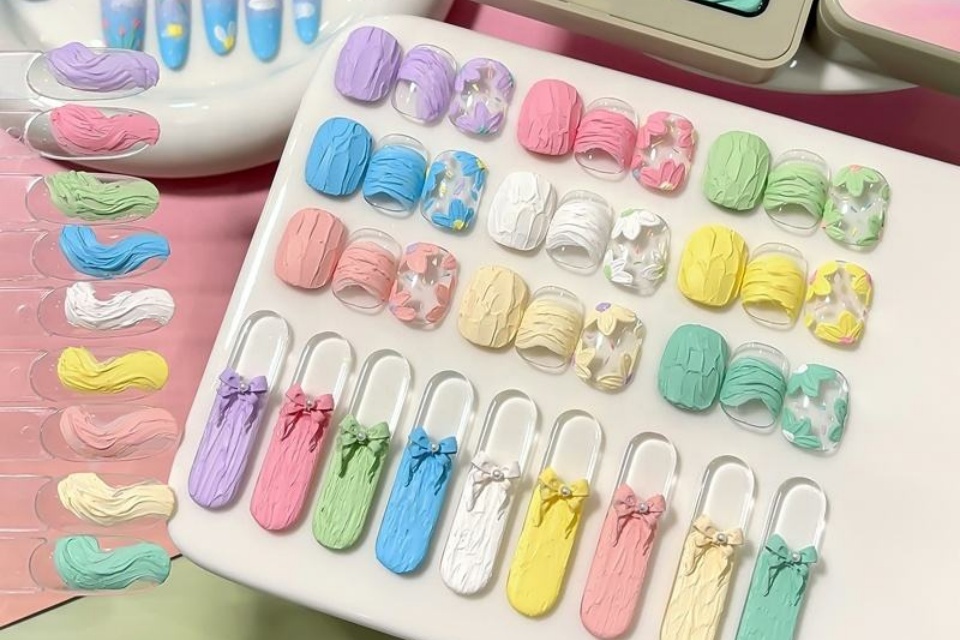
| Nail shape and length | Longer almond, coffin, statement sets | Short almond, squoval, wearable structure | Localize shape visuals by region |
| Color mood | Bold red, black cherry, chrome, cat-eye, bright seasonal shades | Milky nude, beige, mocha, soft white, blue-red classics | Separate core shade decks |
| Product preference | Effect gels, painting gels, glitter, magnetic finishes, fast novelty | Builder systems, BIAB-style looks, rubber base, classic gel finishes | Build region-specific hero SKUs |
| Buying trigger | Social proof, trend speed, upsell potential | Safety claims, compliance, repeat wear, salon practicality | Change sales pitch, not just color names |
| Reorder logic | Trend drop success and visual conversion | Quiet staples and reliable batch consistency | Forecast effects shallow, neutrals deep |
| Risk tolerance | Higher tolerance for experimentation | Lower tolerance for ingredient ambiguity | Put documentation upfront in Europe |
How do gel polish preferences differ in different markets? Gel polish preferences differ by market because consumers, salons, regulators, and retailers reward different combinations of trend intensity, wearability, chemistry confidence, and service practicality; in real terms, North America leans more heavily toward expressive finishes and rapid novelty, while Europe more often prioritizes controlled palettes, structure, and compliance-aware product selection. After that, the split shows up everywhere—shade planning, service menus, reorder logic, and even what claims actually help close a sale.
What are the best gel polish colors in Europe? The best gel polish colors in Europe are broad-appeal, repeat-purchase shades that fit salon workflows, office-friendly wear, and multi-week retention, especially milky pinks, sheer nudes, cool taupes, mochas, soft whites, and blue-based reds that look polished rather than aggressively trend-led. They win because they keep working. Week after week. And that consistency matters more in Europe than many brands want to admit.
Why are HEMA-free or TPO-free formulas discussed more in Europe? HEMA-free or TPO-free formulas come up more in Europe because ingredient restrictions, retailer checks, warning-language expectations, and broader compliance pressure have turned formulation questions into commercial filters rather than back-room technical details for chemists and product developers. In other words, the claim isn’t just a badge. It can affect whether a buyer trusts the line, whether a distributor feels exposed, and whether a salon sees the range as safe to build around.
Which products usually sell better in North America? Products that usually sell better in North America are visually dramatic, effect-led gel systems built for trend cycles, social visibility, and high-impact salon menus, including cat-eye gels, reflective glitter, painting gels, magnetic finishes, and bold seasonal colors with obvious visual payoff. They sell because they create attention fast. And in that market, attention still converts.
If the goal is stronger regional performance, don’t make the catalog bigger. Make it sharper. Build one disciplined Europe core, one faster North America trend deck, and let the gel polish strategy match how each market actually buys.