Talk to Our Expert
Our sales and engineers are available all the time, you can ask your specific requirements to our sales, and inspiration to our engineer here.

Last year, I watched a beginner fight a “best seller” black gel that looked rich in the pot, photographed beautifully on the swatch wheel, and then immediately started feathering when she tried to pull a tight smile line, which told me everything I needed to know about the formula before the lamp even came on. Wrong product. Again.
And that keeps happening because this corner of the nail business is noisy in all the wrong ways. People buy the jar, the shade card, the promo video, the fake luxury naming. Then they wonder why their line art looks mushy. I don’t think that’s a skill issue most of the time. I think it’s product mismatch dressed up as user error.
But here’s the ugly truth: buyers keep treating builder gel, color gel, painting gel, and line art gel like they’re just different labels on the same goo, when each one has a different body, different payoff, and a very different attitude once the brush starts dragging product across the nail. They are not twins.
I’ve seen people try to do scrollwork with bottle color gel. Bad idea. I’ve seen people attempt micro-detail with builder. Worse idea. And yes, I’ve seen cheap “art gels” that behave like syrup with a confidence problem. The market loves category blur because category blur sells more jars.
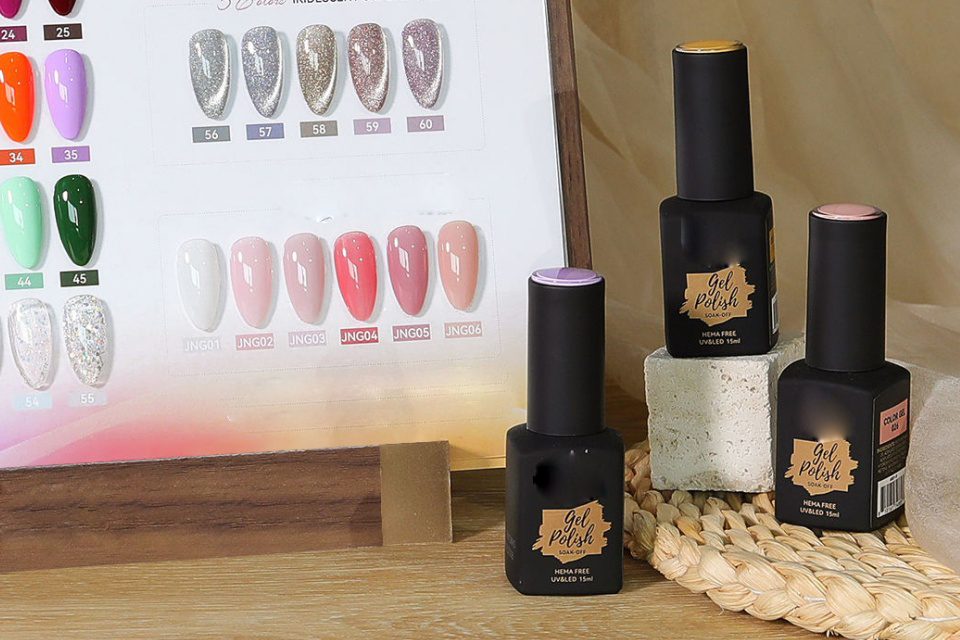
That’s why a dedicated painting gel collection matters. Not because the naming is cute. Because a real painting gel should be built to sit, not wander — to give you dense color without forcing three nervous passes over the same stroke.
What am I looking for? Control first. Always.
A proper painting gel for nails should hit hard in one thin pass, hold its edge long enough for you to breathe, and pull off the brush without that gummy snap or watery recoil that makes even a steady hand look sloppy. That’s the feel. You know it when it’s there.
And I frankly believe this is where people get fooled by marketing language. “Highly pigmented” sounds impressive, sure, but I’ve handled plenty of jars that were overloaded with color and still performed like a mess — too pasty, too draggy, weird cure behavior, ugly surface after top coat. Dense doesn’t automatically mean usable.
Black exposes everything. White too.
If a black gel skips when you pull a long line, or a white gel goes chalky and semi-sheer unless you baby it through two or three passes, I stop there. I’d rather work through a disciplined color gel range than chase a giant collection built for screenshots instead of salon work.
Yet this is where the conversation gets sloppy. Painting gel and line art nail gel overlap, yes, but they’re not the same beast once you start doing ultra-thin outlines, script accents, negative-space borders, or those tiny cuff lines that expose every wobble.
A line art gel needs body. Not bulk — body. Enough to resist lateral spread, enough elasticity to stay connected on a pull, and enough release that the brush doesn’t chatter halfway through a curve. Nail techs know that chatter. It’s that tiny stutter in the stroke that ruins a clean line and makes you mutter something rude under your breath.
Too loose, and it blooms after placement. Too stiff, and it tears. Too slick, and it runs into the sidewall while you’re still deciding whether the curve is right. That’s why I trust a dedicated SKU like this professional UV painting gel more than a vague all-in-one product page telling me one jar can handle full color, fine line, painting, and detailing equally well. Usually it can’t.
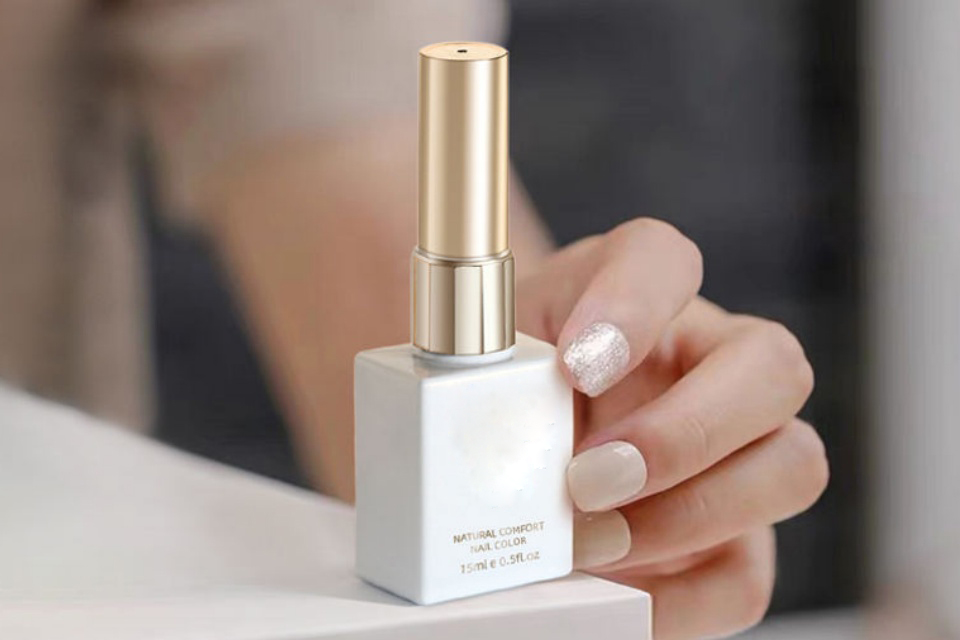
So, say I’m evaluating a new supplier and I can’t touch the product yet. I’m not starting with shade names. I’m not even starting with trends. I’m looking at how the company organizes its categories, how it talks about performance, and whether the product architecture looks like it was built by people who actually understand bench behavior — not just sales copy.
That’s why I pay attention to whether the brand has a coherent gel polish catalog, whether it explains its quality assurance, and whether “painting gel” is clearly separated from the broader catalog instead of buried under generic polish language. Messy taxonomy is usually a warning. Not always. Often enough.
If I get samples, the test is simple and mean: black, white, one mid-tone; then a straight pull, a spiral, and a small filled petal. After that, I wait a beat and watch. Does it spread? Does it string? Does it level too much? Does it cure flat? That little sequence tells me more than any polished brochure ever will.
| Factor | What to Look For | Why It Matters | Warning Sign |
|---|---|---|---|
| Pigment load | Near-opaque in one thin pass | Reduces rework and bulk | Requires multiple layers for visibility |
| Viscosity | Medium to medium-high control | Helps lines stay sharp | Floods into sidewalls or feels stringy |
| Cure response | Smooth, even surface cure | Prevents wrinkling and dull spots | Rippling, shrinkage, tack issues |
| Brush compatibility | Clean pull with liner brush | Improves stroke precision | Dragging, skipping, inconsistent release |
| Batch clarity | Consistent product naming and specs | Signals manufacturing discipline | Vague “art/color/liner” overlap |
| Quality controls | Visible manufacturing standards | Lowers procurement risk | No clear QA language or testing claims |
However, performance is only half the story. The other half — the half people skip because it isn’t fun — is labeling, ingredient disclosure, and whether the “cleaner” story survives contact with real data.
A 2024 Contact Dermatitis market survey found HEMA in nearly 60% of 394 nail cosmetic products, with missing mandatory warnings in more than 30% and mislabeling in 10%, which is exactly why I don’t take tidy packaging and comforting buzzwords at face value anymore. Read the 2024 market survey on HEMA and labeling. (PubMed)
And the clinical side is not some fringe issue. A 2024 Amsterdam UMC retrospective study looked at patients diagnosed with allergic contact dermatitis from acrylate-containing nail cosmetics between January 2015 and August 2023; it found 67 patients, 97% positive patch tests to HEMA, 73% consumers rather than professionals, and complete clearing in 80% after avoidance. See the Amsterdam UMC study on acrylate-related dermatitis. ([Amsterdam UMC][2])
Then there’s the exposure question — and this part gets waved away way too casually. A 2023 CDC/NIOSH summary on ten brands of “n-free” nail polishes reported that formaldehyde and toluene were detected in all tested polishes, with peak real-time formaldehyde exposures ranging from 0.18 to 1.19 ppm and 95% of brands exceeding the NIOSH recommended exposure limit of 0.1 ppm for peak exposure. That does not automatically condemn every art gel on the market, but it absolutely kills the lazy assumption that marketing language equals chemical discipline. See the CDC/NIOSH exposure summary. (CDC Stacks)
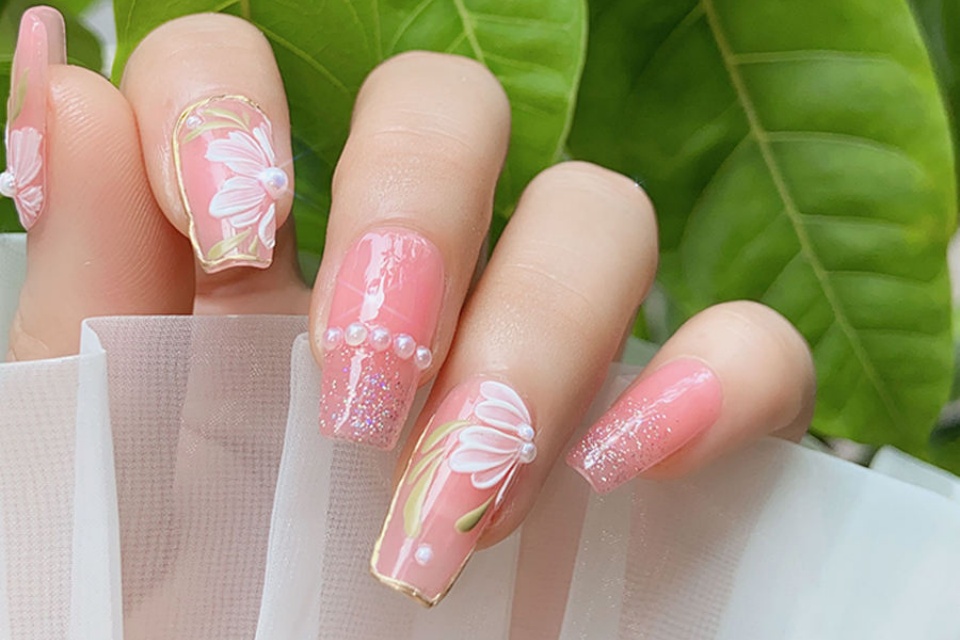
People love blaming brushes. Sometimes they’re right. Usually they’re early.
A bad brush will wreck good gel, no question, but the brush isn’t the hero of line art — it’s the amplifier. If the formula is too runny, the brush amplifies that. If the formula is too rubbery and drags, the brush amplifies that too. So yes, the best brush for nail line art matters. It just matters after the gel passes the first test.
From my experience, a short-to-mid synthetic liner with a tight point and decent snap-back beats those dramatic extra-long brushes most beginners buy because they look “pro.” Those long liners can be gorgeous in the right hands. In the wrong hands, they turn one shaky millimeter into a visible design problem.
And tools tell on brands as well. A properly grouped nail tool collection usually means someone on the product side understands workflow — detail brushes, cleanup tools, application brushes, actual use cases. When the tool section is a random pile, I get cautious fast.
So if someone asked me to build a starter setup for painting and line art without wasting money, I wouldn’t hand them a 24-color fantasy kit and wish them luck. I’d keep it tight. Almost annoyingly tight.
One black. One white. One mid-tone. One liner. One detail brush. One top coat you already trust.
That’s enough to learn what matters.
Because once those basics behave, everything else gets easier. You can add metallics later. You can mess with cat-eye, syrup textures, or raised effects later. But if your base art gel can’t hold a clean line or fill a petal without self-sabotaging, the extras are just decoration piled on top of a weak foundation.
What is the best gel for nail art? The best gel for nail art is a high-pigment, controlled-viscosity formula that can deliver visible detail in thin layers, stay where it is placed for a short working window, and cure evenly without wrinkling, dragging, or flooding fine edges during precision work.
My honest answer? A dedicated art gel beats a random color gel pretending to be versatile.
How do I choose nail art gel for painting and line art? Choosing nail art gel for painting and line art means evaluating opacity, spread control, brush release, cure behavior, and labeling reliability so the product performs predictably during thin strokes, filled shapes, and layered detail instead of forcing repeated passes and messy correction work.
I test black first. Always. Then white. Then one mid-tone that tends to show weakness fast.
Is high pigment nail gel always better? High pigment nail gel is usually better for detail work because it reduces the number of passes needed for coverage, which helps preserve line sharpness and lowers flooding risk, but only when the formula still moves cleanly and cures evenly in thin, controlled layers.
So no — not always. Some dense gels are just overpacked and awkward.
Can I use regular color gel for line art? Regular color gel can work for line art only when it combines strong opacity with controlled movement and stable brush release, but most standard color gels are built for surface coverage rather than precision drawing, which makes them less reliable for crisp detail.
You can get away with it sometimes. I wouldn’t build a routine around it.
What is the best brush for nail line art? The best brush for nail line art is a fine synthetic liner with a sharp point, controlled flexibility, and dependable snap-back, usually in the 5–7 mm range for most detail work, because that gives better stroke control than extra-long brushes for most users.
Boring answer. True answer.
Choosing nail art materials well has less to do with trend-chasing and more to do with repeatable behavior, supplier discipline, and whether the product still performs after the promo language wears off. Start with a focused painting gel range, review the broader gel polish catalog, and check the supplier’s quality assurance standards before you scale anything. That’s how you buy for performance — not disappointment.
[2]: https://pure.amsterdamumc.nl/en/publications/contact-allergy-to-acrylate-containing-nail-cosmetics-a-retrospec/ ” Contact allergy to acrylate-containing nail cosmetics: A retrospective 8-year study – Amsterdam UMC”