Talk to Our Expert
Our sales and engineers are available all the time, you can ask your specific requirements to our sales, and inspiration to our engineer here.

Three words: it stuck.
Not because consumers suddenly got smarter, but because the supply chain did what it always does when it smells repeat orders: it stabilized raw materials, narrowed the effect window into something teachable, and turned “cool trick” into a repeatable SKU that salons can price, influencers can film, and factories can batch without praying the pigment behaves.
So what changed?
The pigment. The magnets. The expectations. And, honestly, the risk profile.
Here’s the boring truth behind cat eye nails: the “line” is just magnetic particles moving through a gel matrix before cure locks them in place, and the whole effect lives or dies on viscosity, particle loading, and how fast the photoinitiator package kicks off polymerization under 365–405 nm LEDs.
Short sentence. Most formulas fail.
When brands talk about “galaxy” or “velvet nails (cat eye),” they’re describing different ways to herd the same magnetic pigment into different distributions—tight stripe, diffuse sheen, clustered bloom—using magnet shape, strength, and distance, not magic technique.
And yes, many magnetic pigments are iron-oxide based (often magnetite, Fe₃O₄) suspended in a binder, sometimes coated or blended to boost sparkle and depth. If you want to sound like you know what you’re doing in a factory meeting, ask about sedimentation control and re-dispersion after 30 days at 45°C. Watch how fast the room gets quiet.
I’ll be blunt. Cat eye gel nails became a fixture because they solved three business problems at once.
You want proof this is industrial now? Look at how many suppliers treat magnetic as a core category instead of a seasonal add-on. If you’re building a range, start by scanning a dedicated cat eyes gel polish collection on your supplier site and see whether the assortment looks like a real line, not six random bottles. For example, Best Gel Polish breaks it out as its own category here: cat eyes gel polish collection.
Two things can be true: cat eye nails are stunning, and gel nail chemistry can bite you.
First, allergy risk. Acrylate sensitization isn’t a meme. Academic and clinical sources have been flagging how at-home gel use (and sloppy curing) raises exposure to reactive monomers. A 2024 paper literally framed this as an “acrylate allergy epidemic” by analyzing dermatologic findings tied to at-home gel nails on TikTok. J Cutan Med Surg (2024) PubMed record. (PubMed)
Second, medical consequences. Amsterdam UMC published a 2024 explainer warning that acrylate allergy can be irreversible and can complicate future medical care because acrylates show up in medical adhesives and devices. Amsterdam UMC (Dec 2024): health concerns over gel polish. (amsterdamumc.org)
Now add the brand risk: if you sell magnetic cat eye gel polish and your customer gets a reaction, “But it’s HEMA-free” won’t save you. HEMA (2-hydroxyethyl methacrylate) is only one common sensitizer. You still need cure guidance, labeling discipline, and real QC.
And then there’s regulation pressure on sparkle. The EU’s microplastics restriction under REACH (Regulation (EU) 2023/2055) kicked in starting 17 October 2023, targeting intentionally added synthetic polymer microparticles—yes, this touches loose glitter and pushes brands to rethink what “sparkle” means. European Commission trade notice on the restriction (Oct 2023) and the legal text lives on EUR-Lex. (trade.ec.europa.eu)
You see where this goes, right?
Magnetic effects (particle movement inside gel) start to look like the cleaner long-term bet than dumping more plastic glitter into everything.
I’m not talking about “Do you have pretty colors?” I mean buyer questions that stop refunds and chargebacks.
Ask for:
If you’re sourcing, you’ll want to see how the supplier handles compliance and testing as a system, not a one-off promise. This is the kind of page I check first: quality assurance and batch testing.
And if you’re going private label, don’t pretend packaging is the hard part. The hard part is consistency across months, not days. That’s why you vet the capability behind the label, like an OEM/ODM private label production workflow that can actually document changes when raw materials shift.
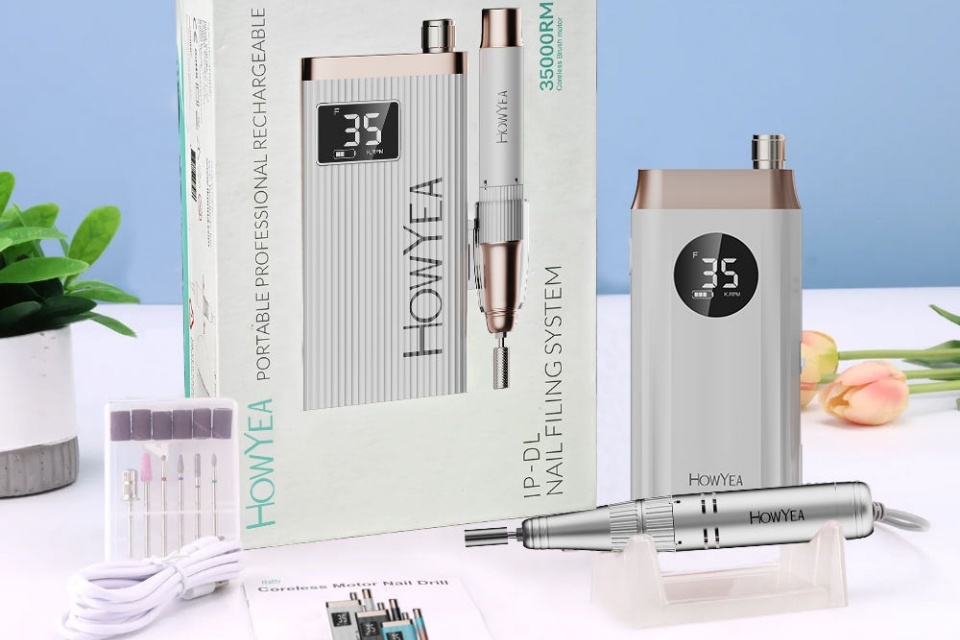
Tiny rant. Most “how to do magnetic cat eye nails” guides blame the user when the effect looks weak.
But the real reasons are usually:
So if you sell this category, you don’t just sell bottles. You sell a repeatable system: gel + magnet + cure instructions.
If you want a clean product anchor for buyers who care about the core effect, start with a straight “magnetic shimmer” base product page like magnetic shimmer cat eye gel polish (wholesale), then build trend sets on top of that.
And if you’re targeting safer positioning in 2024-era buying conversations, don’t bury the lede. Put it on the shelf: TPO-free moonlight cat eye magnetic gel set.
Velvet nails (cat eye) are basically the cat eye effect spread into a soft, even glow across the nail instead of a tight streak. The magnet approach changes—often using a stronger, broader field or different angles—to distribute particles like a halo rather than a line.
It photographs like suede. People pay.
Salons love it because it looks “custom” while being fast. Brands love it because it lets them repackage the same pigment technology as a new finish family.
| Effect name customers use | What’s happening in the gel | Magnet setup that usually works | Skill needed | Failure mode you’ll see |
|---|---|---|---|---|
| Classic cat eye stripe | Particles pulled into a tight band | Bar magnet close to surface, slight angle | Low-medium | Stripe looks fuzzy or disappears after cure |
| Galaxy / nebula | Particles clustered and offset for depth | Hover + twist motion, variable distance | Medium | Muddy “shimmer soup” look |
| Velvet nails (cat eye) | Particles distributed into a uniform sheen | Stronger field, sweeping angles | Medium | Patchy glow, streaking near cuticle |
| Crystal / glassy cat eye | High clarity base + tight particle control | Bar magnet + thin, even coat | Medium | Cloudiness from base pigments or over-thick layer |
| “Barcode” lines | Multiple linear pulls for striped reflect | Rectangular/edge magnet, repeated passes | Medium-high | Lines blend together before cure |
| 3D pop cat eye | Thick gel holds particle placement in relief | High viscosity + magnet + fast cure | High | Overheating, shrinkage, uneven cure |
If you’re building content, this table turns into product education fast. Pair it with a curated category browse so buyers don’t get lost. Example: a clean gel polish catalog that lets them jump from standard color gel to magnetics without digging through chaos.
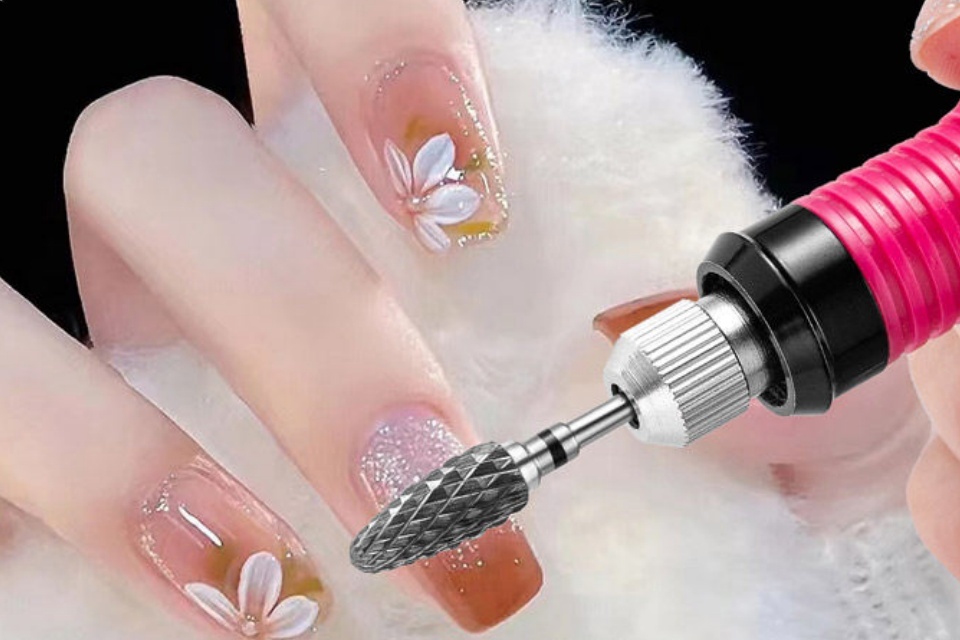
Cat eye nails are a magnetic gel manicure effect where tiny magnet-responsive particles inside gel polish move into a pattern (like a stripe, halo, or “velvet” glow) before curing, then get locked in place by UV/LED polymerization, creating shifting depth that changes with light and viewing angle. The effect isn’t one look. It’s a whole family of looks. What changes is particle load, gel viscosity, magnet strength/shape, and how quickly the layer cures.
Magnetic cat eye gel polish works by suspending magnet-responsive pigments in a gel base so a magnet can pull the particles into a controlled pattern for a few seconds, after which curing under a UV/LED lamp hardens the gel and freezes the particle arrangement into a stable reflective design. If the gel is too thin, particles drift. If it’s too thick, they barely move. That’s why “same color, different brand” can behave wildly differently.
Magnetic cat eye nails are a gel manicure variant that uses magnetic pigments, so the main safety concerns come from gel chemistry exposure (uncured acrylates) and curing quality, not from the magnet itself; poor application can increase skin contact and raise allergy risk for clients and technicians. If you want the hard reading, start with the 2024 PubMed-linked discussion of at-home gel nail allergy signals, and Amsterdam UMC’s 2024 warning about irreversible acrylate allergy and broader medical implications. (PubMed) Practical rule: keep gel off skin, cure correctly, and don’t treat “HEMA-free” as a magic shield.
Doing magnetic cat eye nails at home means applying a thin, even coat of magnetic gel, holding a strong magnet very close (1–3 mm) for 5–15 seconds to form the pattern, then curing immediately under the correct lamp spectrum so the particles don’t drift before polymerization locks them in. Work one nail at a time. Cure one nail at a time. And don’t “float” a thick blob—thickness causes heat spikes and uneven cure.
Velvet nails (cat eye) are a magnetic-particle distribution style that spreads reflective particles into a soft, uniform glow across the nail, while classic cat eye nails pull particles into a tight band or streak; both use magnetic gel, but the magnet angle, distance, and field shape change the final optical effect. If your velvet looks streaky, your magnet field is too narrow or your gel isn’t suspending well. Fix the tool or the formula, not your confidence.
Brands should test magnetic gel polish claims by verifying batch-to-batch consistency (viscosity, particle load, color), cure performance under common lamp bands (365/405 nm), stability after heat aging, and safety documentation (COA/SDS plus ingredient and regulatory positioning) before they market anything as “best.” Also: document the magnet spec you ship or recommend. If customers use weak magnets, they blame your polish, not their tool.
If you’re building a magnetic cat eye nails line and you want fewer returns, fewer “why is this weak?” emails, and fewer safety headaches, don’t start with packaging. Start with specs, testing, and a supplier that treats magnetics like a real category.
Browse the gel polish catalog, then look specifically at the cat eyes gel polish collection and the magnetic shimmer cat eye gel polish (wholesale) pages. If you want private label support with documented QC, check quality assurance and batch testing and OEM/ODM private label production, then reach out here: contact Best Gel Polish.