Talk to Our Expert
Our sales and engineers are available all the time, you can ask your specific requirements to our sales, and inspiration to our engineer here.

It’s not magic. It’s manufacturing discipline, trend packaging, and a brutally efficient feedback loop between Seoul salons, TikTok edits, and OEM labs that can prototype a “new look” faster than most Western brands can approve a label change—so ask yourself, are you watching a trend, or a supply chain?
Most people talk about Korean nail aesthetics like it’s pure artistry. I don’t buy that. The art is real, sure, but the bigger story sits behind the counter: standardized systems, repeatable effects, and products designed to make a complicated look easy to reproduce at scale.
And scale is the whole point.
When you zoom in, the famous Korean manicure styles don’t rely on one miracle gel. They rely on layered, purpose-built materials that do one job well:
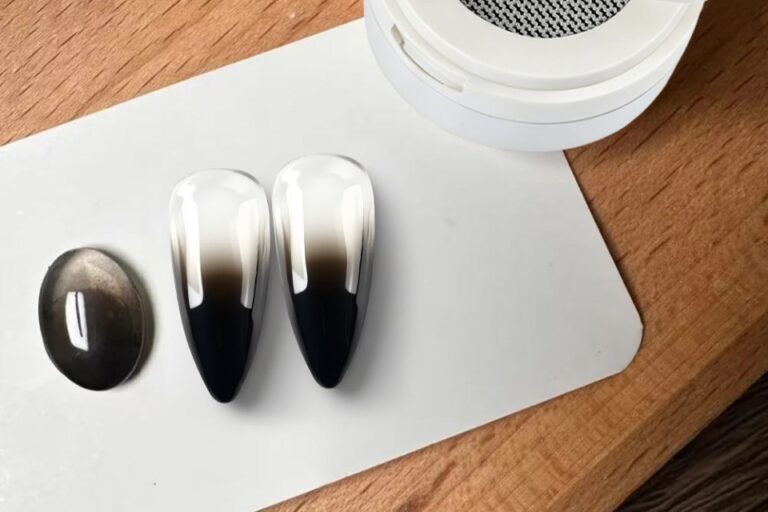
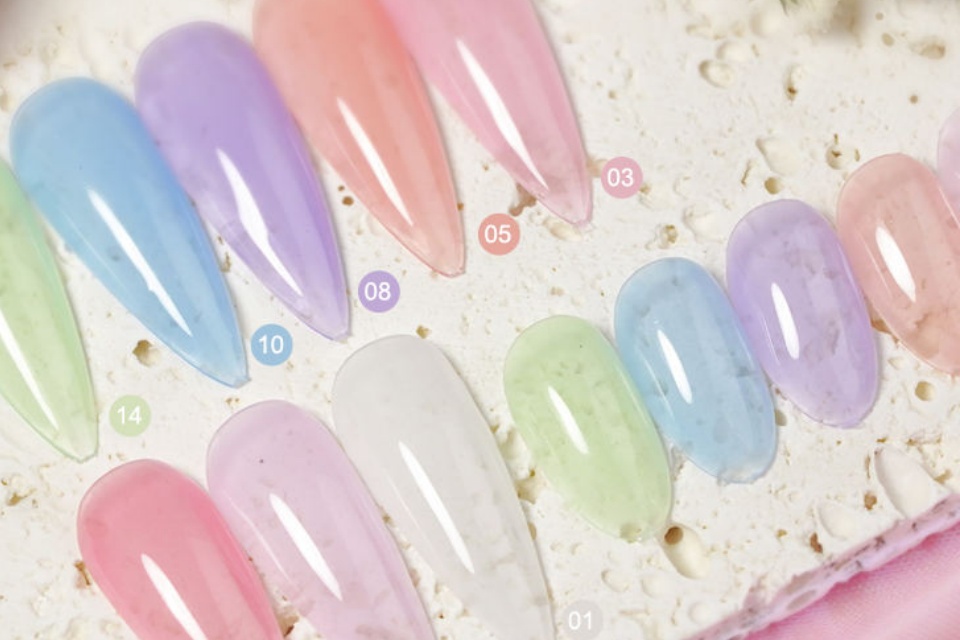
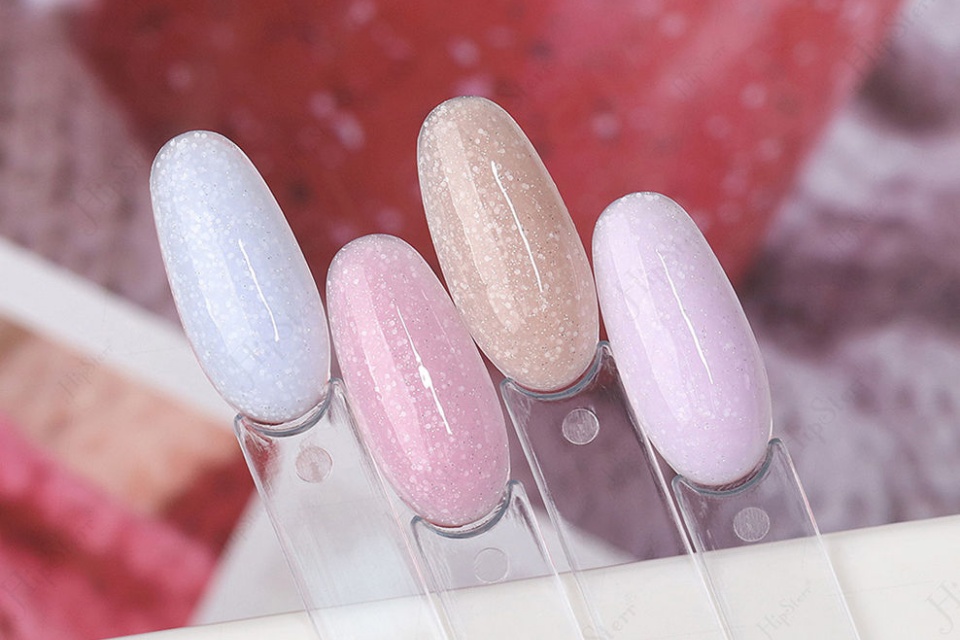
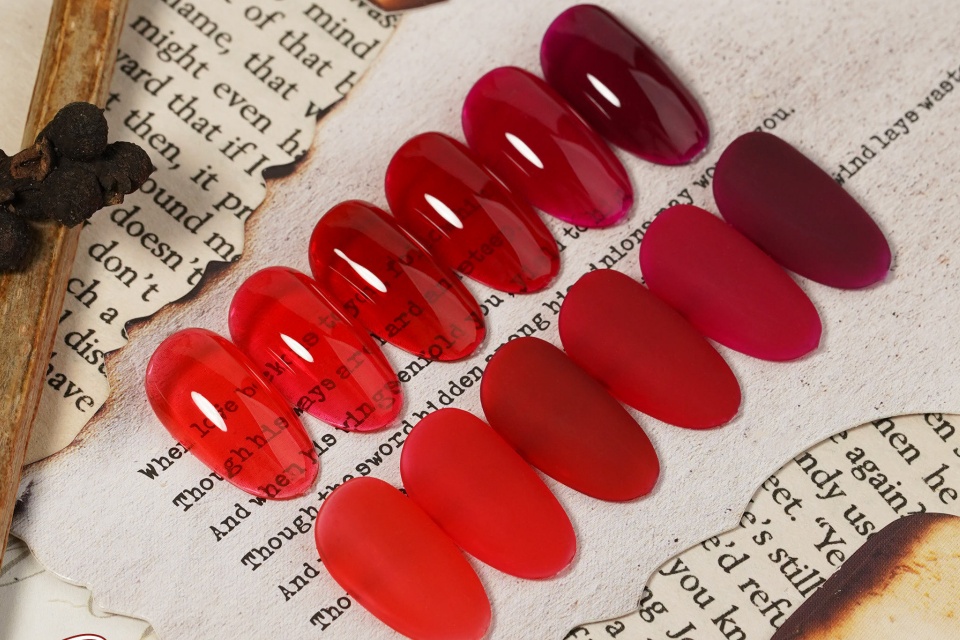
That last part matters more than people admit. K-beauty nail trends worldwide spread because they film well: reflective particles, “wet glass” shine, micro-gradients, syrupy translucence.
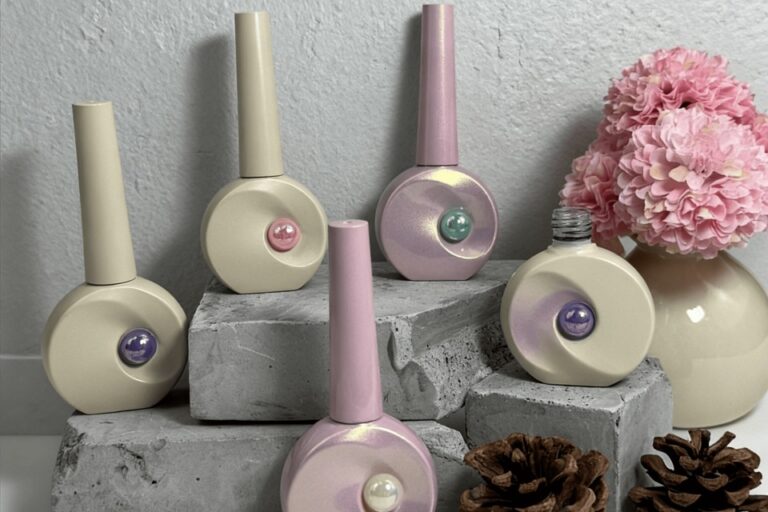
If you want to see how brands package that stack for buyers, look at a tight product catalog that lets you build complete collections quickly, not just single shades. This is why serious buyers start with a structured gel polish catalog for wholesale instead of chasing one viral color.
Glass nails look “expensive” because they hack light. Period.
The effect comes from high-clarity top coats, smooth self-leveling layers, and reflective or iridescent materials that bounce light back to the camera. Think ultra-fine shimmer, foil fragments, or “aurora” films under a clean top coat. The trick is controlling particle size and clarity so you get sparkle without haze.
Here’s the hard truth: glitter also became a compliance problem.
The EU’s REACH restriction on intentionally added microplastics (Commission Regulation (EU) 2023/2055) explicitly pulls plastic glitter into scope in key cases, starting a clock that brands can’t ignore forever. The European Commission’s own guidance spells out that loose plastic glitter is treated as a mixture and sits inside the restriction framework. European Commission microplastics restriction explainer. (single-market-economy.ec.europa.eu)
So if you’re selling “glass nails” built on sparkle, you need a plan: PET glitter vs mineral mica vs biodegradable options, plus documentation that survives a distributor audit.
If you stock effects, stock them with intent. A buyer-friendly example is reflective glitter powder for nail art that’s positioned as a controlled SKU rather than a messy add-on nobody can trace later.
Not the art. The format.
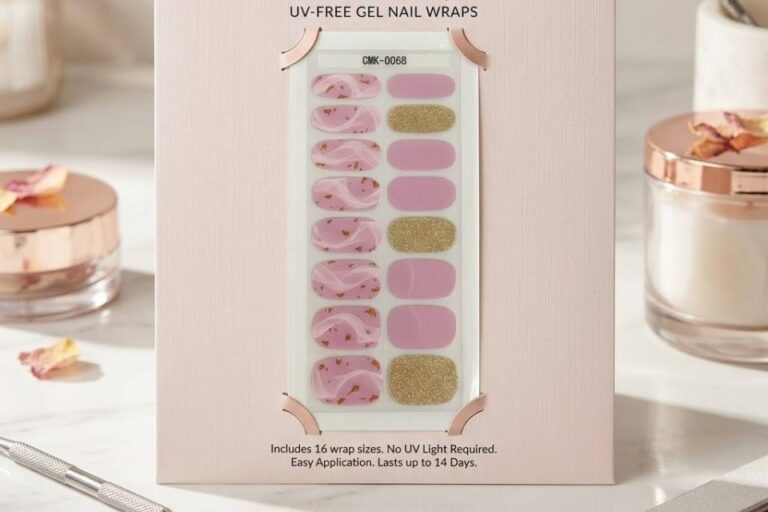
Korean gel nail stickers (especially semi-cured gel strips) flip the labor model. They move a big chunk of the “perfect finish” work into a controlled factory process, then let consumers finish curing at home with a lamp. That’s why adoption looks so fast: fewer steps, fewer tools, fewer ways to mess up.
Short sentence. It ships.
A typical business result: higher conversion for DIY customers, better repeat buying, and fewer returns compared with liquid gels for beginners (because placement beats brush skill). Brands love that.
If you’re building a line around this, you want SKUs that already fit the Korean visual language—marble, foil, syrup gradients—like these semi-cured gel nail stickers in a blue-gold marble style.
Now the uncomfortable part: stickers also raise new questions about photoinitiators, curing wavelengths (365–405nm matters), and allergic reactions when consumers under-cure or flood product onto skin. Many sellers pretend that risk doesn’t exist. That’s reckless.
Korea didn’t invent nail art. Korea productized it.
The best Korean nail art designs are built from repeatable modules:
That’s why the same look shows up across Seoul, LA, London, and Dubai within weeks. Someone packaged the look into a kit-able system, then OEM/ODM makers copied the stack, improved a few details, and shipped faster than the trend cycle could cool off.
If you’re a brand buyer, this is where you stop shopping like a hobbyist and start shopping like a product manager. Ask about batch control, viscosity drift, and stability testing. Then ask again.
I’d rather work with a supplier that shows their process than one that only shows pretty photos. That’s why I push buyers toward documented quality assurance for gel products instead of vibes.
You can’t talk about K-beauty gel nails taking over without talking about what regulators are doing.
Two datapoints matter because they hit real products, not theory:
And no, this isn’t “just California being California.” When a major market starts formal scrutiny, retailers notice. Distributors notice. Insurance underwriters notice.
The U.S. FDA also notes there’s no regulation that specifically prohibits MMA monomer in cosmetics at the federal level, which basically means: enforcement and retailer standards can become the real gatekeepers. FDA Nail Care Products overview. (U.S. Food and Drug Administration)
So what should a serious brand do? Reduce avoidable risk. Build cleaner spec sheets. Offer options like HEMA-free and TPO-free lines where possible. For example, if you’re constructing a modern “K-style” salon range, a buyer-ready option is HEMA/TPO-free UV gel nail polish for salon use, paired with documented QA.
People love simplistic comparisons. Korea = loud. Japan = subtle. That’s a lazy take.
Here’s what I think is closer to the truth: Japan traditionally optimized for precision technique (craft consistency inside salons), while Korea optimized for trend throughput (looks that scale fast across salons and DIY). Both can be high quality. The incentives just differ.
| Dimension | Korean gel nail trends | Japanese gel nail trends | What it means for buyers |
|---|---|---|---|
| Trend speed | Fast, social-first, look-based | Slower, craft-first, technique-based | Korea favors rapid SKU launches and seasonal drops |
| Signature finishes | Glass shine, syrup/jelly, high reflect | Clean overlays, restrained shimmer, meticulous shaping | Product clarity and leveling matter more than shade count |
| Product format | Strong sticker ecosystem + modular gels | Salon-centric systems + pro training focus | Sticker lines need curing guidance and low-skin-contact design |
| Typical “stack” | Rubber base + BIAB + jelly + effect + ultra-gloss top | Structured overlays + precise color + controlled top coat | Viscosity and self-leveling specs become purchase criteria |
| Compliance pressure points | Glitter/microplastics, photoinitiators, allergens | Similar, but often more pro-controlled usage | DIY growth raises under-cure and skin-contact risk |
K-beauty didn’t go global because it’s “cute.” It went global because Korea built a repeatable export machine and rode cultural demand.
Official Korean reporting tied to government releases puts 2024 cosmetics exports at about USD 10.2 billion, up roughly 20.6% year-on-year, with the U.S. and Japan as major importers. Yonhap summary of MFDS figures. (en.yna.co.kr)
Do I think that number is “nail polish only”? No. But nails benefit from the same channels: K-pop-driven discovery, e-commerce distribution, and contract manufacturing that can shift packaging and compliance docs quickly.
So when you see K-beauty nail trends worldwide, you’re seeing the edge of a much larger pipeline.
Stop copying surface-level looks. Build systems.
If you’re building a product line, especially private label, you need a supplier who can translate a trend into a stable formula, a compliant ingredient story, and repeatable production. That’s not romance. That’s operations.
Start with a supplier that can do OEM/ODM gel polish services with clear specs, then use your own trend lens to choose the finish direction: glass, syrup, cat-eye, sticker-led kits, or salon builder sets.
And yes—ask the annoying questions. The boring questions. Those questions save your business.
The latest Korean gel nail trends are a fast-moving set of looks built around syrupy “jelly” translucence, ultra-gloss glass-like shine, modular 3D accents, and semi-cured gel sticker formats—designed to look high-end on camera while staying repeatable in salons and DIY, with product stacks that emphasize self-leveling and clarity.
Right now, “clean but reflective” wins: sheer colors, controlled shimmer, and crisp top coats. Stickers keep growing because they reduce skill barriers.
Glass nails are a Korean-origin nail finish that creates a clear, high-depth shine by combining smooth self-leveling layers with reflective or iridescent materials under an ultra-clarity top coat, producing a light-bending “wet glass” effect that reads sharply in photos and short videos.
If the top coat hazes, the illusion dies. Clarity and leveling are the whole job.
Korean gel nail stickers are typically semi-cured gel systems that use real gel material pre-set in a strip format and then finished with full curing under a UV/LED lamp, while regular nail wraps are usually adhesive films that don’t rely on lamp curing and don’t form the same polymerized surface.
Under-curing is the risk point. Brands should give clear lamp guidance and skin-contact warnings.
Korean gel nails vs Japanese gel nails usually differs less in “quality” and more in optimization: Korean systems tend to prioritize trend throughput and camera-friendly effects (glass shine, syrup layers, stickers), while Japanese systems often prioritize technique precision and salon consistency, with product choices shaped around controlled application.
You can sell both. Just don’t market them as the same experience.
The regulations that matter most are the EU’s REACH restriction on intentionally added microplastics affecting glitter and similar materials (with phased timelines after the 2023 restriction) and U.S. state-level chemical scrutiny like California DTSC’s 2024 move toward regulating nail products containing MMA, which can influence retailer standards.
Even if you sell outside the EU or California, distributors may adopt the strictest standard anyway.
Sourcing private label products that match Korean manicure styles means choosing an OEM/ODM partner who can build a repeatable “stack” (rubber base, BIAB, jelly colors, effect materials, high-clarity top) with stable viscosity specs, batch testing, and compliance documentation, then packaging it into trend-ready sets that buyers can understand in seconds.
Start with your hero finish (glass, syrup, sticker) and build the rest around it. Don’t start with 200 colors.
If you want to launch K-beauty gel nails without guessing, build a real product system: trend-led sets, documented QA, and compliance-ready formulas. Browse the Best Gel Polish catalog, then reach out through the contact page and ask for an OEM/ODM plan that matches your market, not someone else’s trend moodboard.