Talk to Our Expert
Our sales and engineers are available all the time, you can ask your specific requirements to our sales, and inspiration to our engineer here.

Most people overfill. In salons and at home, I keep seeing techs treat every bit of regrowth like a routine gel nail fill, even when the apex has drifted forward, the sidewalls are whispering “lift,” and the old product is hanging on mostly out of habit. Why do we keep calling that maintenance?
Here is the hard truth: a fill is not a kindness, and it is definitely not an automatic follow-up service. It is a structural decision. If the existing enhancement is stable, well-bonded, and compatible with the product you are about to use, you preserve it. If it is cracked, detached, unknown, over-filed, or suspicious around the perimeter, you stop playing hero and remove it.
That distinction matters more now than it did five years ago. In a 2024 Amsterdam University Medical Centers study, 67 patients were diagnosed with allergic contact dermatitis from nail cosmetics; 97% had a positive patch test to 2-hydroxyethyl methacrylate, better known as HEMA, and 27% were professional nail stylists, not casual users. That is not fringe salon gossip. That is a warning about what happens when reactive chemistry meets skin, dust, and sloppy maintenance cycles. (PubMed)
And the supply side is not as tidy as marketing departments pretend. A 2024 product analysis published via PubMed reported that HEMA was present in nearly 60% of tested nail cosmetics, and violations of EU legislation occurred in more than 30% of products. So when I say I do not trust a mystery set from another salon, I am not being dramatic. I am being sane. (PubMed)
The regulator’s language is even less romantic. On its 2024 Nail Care Products page, the FDA says traces of reactive methacrylate monomers can remain after artificial nails are formed and may trigger redness, swelling, and pain in sensitized people; it also notes past court actions, seizures, and voluntary recalls involving products made with 100% methyl methacrylate monomer. That is why a compromised set should not be “touched up” just because the calendar says refill week. (U.S. Food and Drug Administration)
So what actually qualifies for a fill? A real gel nail fill makes sense when the service underneath is a structured overlay or enhancement built with a true builder gel, a flexible Builder in a Bottle gel, or another overlay system designed to be rebalanced. If the client is wearing ordinary soft gel color with no durable structure beneath it, I do not call that a fill. I call it removal and reapplication.
That sounds blunt because it is. The industry loves the word infill because it sounds technical and profitable, but too many techs use it to describe “adding fresh gel over old uncertainty.” I have seen enough overfilled thumbs with the apex parked halfway to the free edge to know how that ends: stress fractures, sidewall separation, and the client saying, three days later, “It just popped off.”
The other ugly detail is curing. The British Association of Dermatologists warns that sensitisation can happen when uncured product touches skin, that insufficient curing increases allergy risk, and that users should follow instructions and use the recommended UV lamp rather than mixing products and lamps casually. In other words, if you are rebalancing a builder system, the lamp, chemistry, and method still need to belong to the same universe. (bad.org.uk)
When the set is healthy, a rebalance is elegant. When it is not, a redo is cheaper than failure.
A proper gel nail fill is not “cover the gap.” It is controlled subtraction first, then careful rebuilding.
I start by removing top coat, color, and surface bulk so I can inspect the truth. That means looking for lifted edges, stress cracks, pocket lifting near the sidewalls, cuticle flooding, product shrinkage, and any green-gray discoloration that could signal trapped moisture or bacterial trouble. If I cannot see the product clearly, I cannot judge it honestly.
Then I remove every bit of detached material. Not most. All of it. This is where good professional nail tools matter, because a rebalance done with poor visibility, bad dust control, and a heavy hand turns into accidental thinning of the natural nail very fast.
Only after that do I prep the regrowth area. Light cuticle work. Surface refinement on the new growth. Cleanse, dehydrate, and prime according to the system. Then I add fresh product to the regrowth and blend it into the old, attached enhancement, rebuilding the apex where the stress zone now lives, not where it lived three weeks ago.
That last part gets missed constantly. A grown-out set does not just need more gel near the cuticle; it needs the architecture moved back into the right place. If you fill the gap but leave the apex stranded too far forward, you have not rebalanced the nail. You have decorated a lever.
| Situation | Rebalance gel nails? | Redo gel nails? | My reason |
|---|---|---|---|
| 2–3 mm regrowth, no lifting, no cracks, apex only slightly forward | Yes | No | The old product is still doing its job; preserve the bonded structure and rebuild the regrowth zone. |
| Minor lifting at one edge that can be fully removed without chasing large pockets | Usually | Sometimes | A limited rebalance works only if every detached section is gone and the remaining product is solid. |
| Apex has migrated well past the stress zone but bulk is still intact | Yes | No | This is a classic rebalance case: reduce old bulk and rebuild the architecture correctly. |
| Crack through the stress area, split at sidewall, or repeated corner breakage | No | Yes | The structure has already failed mechanically; hiding it under more gel is wishful thinking. |
| Unknown product from another salon, unknown lamp, unknown chemistry | Rarely | Yes | I do not stack fresh chemistry over mystery chemistry unless I enjoy trouble, which I do not. |
| Multiple fills already done and the set looks dense, cloudy, or patchy | Usually not | Yes | Old layers accumulate, shape drifts, and inspection gets worse with every cycle. |
| Green spot, pain, heat spike history, redness, or nail plate damage | No | Yes | Remove, assess, and do not trap moisture or irritants under more product. |
| Standard gel polish only, no builder structure underneath | No | Yes | That is not a builder gel infill; it is a remove-and-reapply service. |
My working rule is simple: if more than about a quarter of the visible product is compromised, or if I am spending too much time “saving” a set, I stop negotiating and redo it. Could you stretch a set one more cycle? Probably. Should you? Usually not.
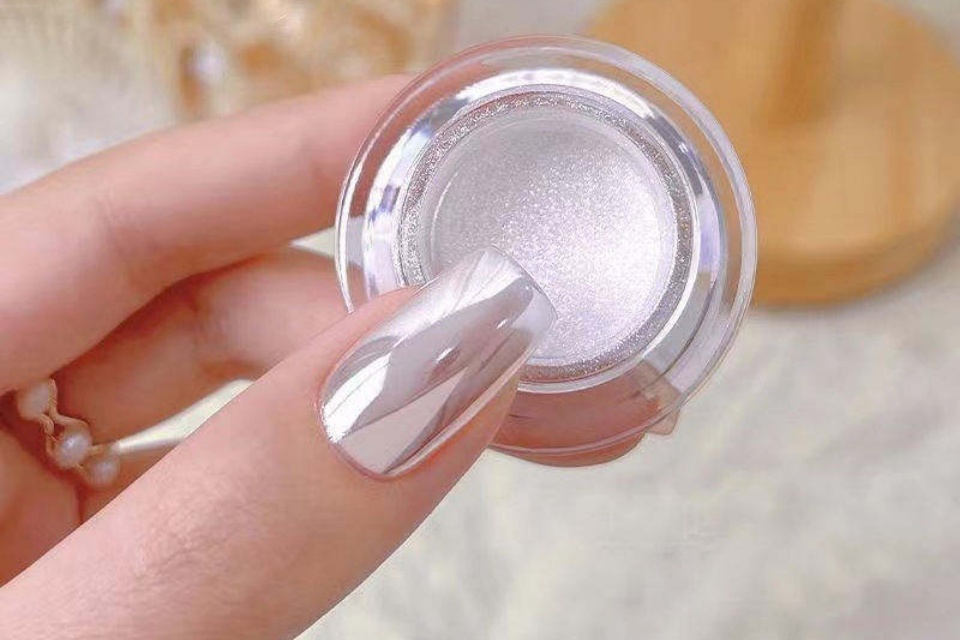
This part gets muddled because BIAB is marketed like a miracle in a bottle. It is not magic. It is just a builder format with a viscosity and flexibility profile that can be excellent for overlays when the tech respects the maintenance schedule.
A BIAB infill works best when the client has clean regrowth, minimal lateral lifting, a stable nail plate, and a predictable shape. If the product self-levels well, the lamp output matches the formula, and the previous application was not flooded into the cuticle, you can often rebalance beautifully instead of soaking off the whole set. That is why I like systems built for repeat maintenance, especially when they sit between flexibility and backbone rather than behaving like rubber in week one and glass in week three.
If the client’s nails are flatter, oily, or repeatedly stressed by typing, cleaning, gym work, or length abuse, I lean harder toward stronger overlay architecture or a reinforcing gel system rather than pretending the same soft structure will suddenly become durable through optimism alone.
Sometimes the smartest service is the least glamorous one. Remove it. Reset it. Move on.
If the formula is designed to soak off and the structure is no longer trustworthy, soaking off or filing down to a safe base and starting fresh is cleaner than performing a heroic patch-up. The point is not whether a product can technically survive another cycle. The point is whether the nail is safer, stronger, and easier to assess after another cycle. Those are different questions.
And yes, this is where brands matter. Formula consistency, pigment load, viscosity drift, self-leveling speed, photoinitiator behavior, and adhesion performance all change how safely a set can be rebalanced. If you are sourcing for salon use or private label, I would look hard at a manufacturer’s quality assurance process before I believed a single claim about “easy infills.”
Three words: hidden sidewall lifting.
Clients barely notice it. Some techs ignore it. And then everybody acts surprised when the rebalance fails from the edges first.
What looks like “a little gap” at week three is often the start of a bigger bonding failure. Add fresh product over it, and you create a prettier problem, not a smaller one. I would rather disappoint a client for 20 minutes with a redo than disappoint them for 10 days with a premature break, water trap, or irritated skin fold.
That is also why I dislike the fake economy of endless maintenance. A rebalance should extend a good set. It should not be used to delay the moment when you admit the old set has expired.
A gel nail fill at home is the partial replacement of an attached builder-gel or BIAB structure after full removal of every lifted area, precise prep of the regrowth zone, correct rebuilding of the apex, and full curing with the matching lamp and formula, not a casual dab of product over visible growth. If you cannot identify lifting, control dust, and match the lamp to the gel, home fills become guesswork fast. The BAD specifically warns that uncured product contacting skin can cause sensitisation and that insufficient curing raises allergy risk. (bad.org.uk)
A gel nail rebalance is the scheduled restructuring of a grown-out enhancement while the remaining product is still bonded, stable, and worth preserving, which for many clients lands around the two-to-three-week mark, though nail growth speed, length, occupation, and product type change that window. I judge by structure first, calendar second. Fast growers, long almond shapes, and heavy hand use usually shorten the safe interval.
A gel nail fill is the preservation of sound existing enhancement material while replacing regrowth and restoring the apex, whereas a full redo is the removal of the unreliable structure so the next set is built on a fully reassessed nail plate with no hidden lifting, cracks, or incompatible residue left behind. One saves healthy architecture. The other removes compromised architecture. Mixing those categories is where bad services start.
You should not fill builder gel or BIAB when the enhancement has meaningful lifting, cracking, unknown product history, structural imbalance, discoloration, pain, or repeated breakage, because the old material is no longer a trustworthy base and the safest next step is removal and reassessment rather than cosmetic patchwork. That is the line I hold hardest. Once trust in the old base is gone, the fill is gone too.
If you want a system that can survive an honest rebalance cycle, start with a reliable builder gel range, compare flexible Builder in a Bottle gel options, and look at the manufacturer’s OEM/ODM capabilities if you are building a private-label salon line. Good fills do not come from luck. They come from compatible chemistry, strict prep, and the courage to redo the set when the set deserves it.