How to Choose the Right Base Coat for Long-Lasting Gel Nails
If your gel manicures look perfect on day one but start lifting, chipping, or peeling a few days later, the base coat is usually the quiet troublemaker. Beautiful colors often get blamed for problems that actually start with the very first layer on the nail – the base.
In this guide, I’ll walk you through what really matters in a gel base coat so you can choose products that give strong adhesion, protect natural nails, and keep gel manicures looking flawless for weeks – whether you’re a salon owner, a nail tech, or a brand sourcing OEM/ODM gel systems.
Table of Contents
Why the Base Coat Matters More Than You Think
A gel base coat does three critical jobs:
- Grips the natural nail – it’s the “double-sided tape” between the nail plate and the rest of the gel system. If adhesion is poor, you’ll see lifting at the cuticle or free edge very quickly.
- Protects the nail surface – it creates a barrier so pigments and stronger products don’t stain or over-dry the nail.
- Creates a smooth foundation – it levels out small ridges so color lays evenly and wears better.
When that foundation is wrong – wrong formula for the nail type, poor flexibility, incompatible with the lamp – the manicure will never last, no matter how good the color or top coat is.
So instead of asking “Which color lasts the longest?”, start by asking: “Is my base coat actually built for long wear on this nail?”
Key Things to Look for in a Gel Base Coat
1. Match the Base Coat to the Nail Type
Not all nails – or base coats – are created equal. One of the fastest ways to improve durability is to pair the base with the nail condition.
For thin, bendy, or damaged nails
Look for:
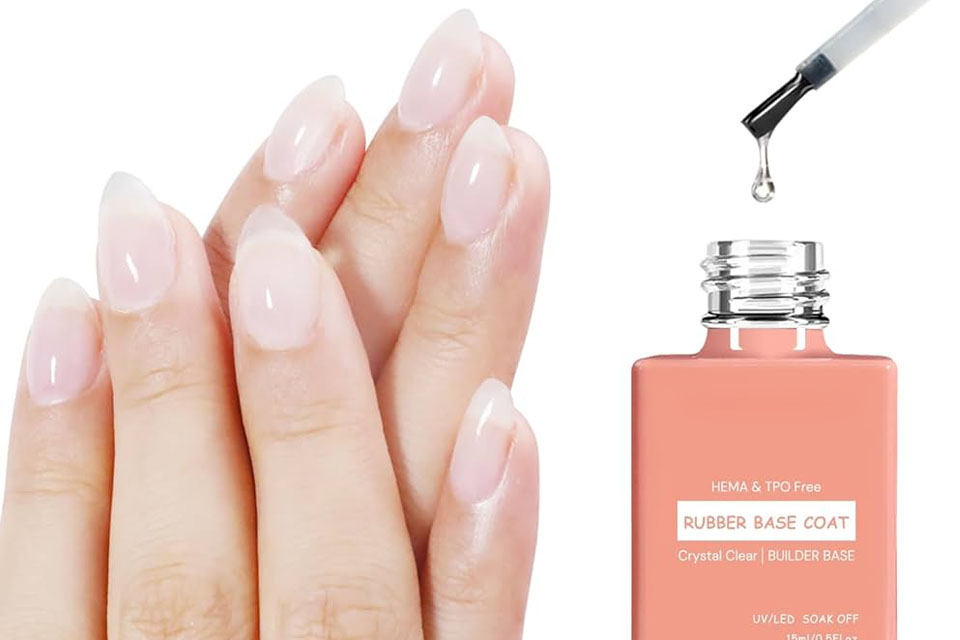
- Rubber base coats or flexible strengthening bases
- Descriptions like “elastic,” “flexible,” “rubberized,” “reinforcing”
Rubber bases have a thicker, more elastic structure. They move with the natural nail instead of acting like a rigid shell, which reduces cracking and lifting on fragile nails. They can also help smooth out ridges and add a little extra structure, making them ideal for clients who are trying to grow their nails without constant breaks.
For strong, normal nails
You can usually use:
- Standard base coats with medium viscosity
- Or a builder-in-a-bottle base if you want extra strength or a slightly thicker overlay
As long as adhesion is good and curing is correct, a classic base works very well on normal nails.
For very soft or heavily ridged nails
Consider:
- Builder base / builder in a bottle (BIAB) for a thin strengthening overlay
- Slightly thicker, self-leveling bases that can fill in ridges
Builder-type bases add “architecture” to the nail, helping prevent flexing that leads to tiny cracks and early chipping.
2. Understand Ingredients – Especially Adhesion & Allergies
When you look at a base coat ingredient list, you’ll often see:
- Acrylate oligomers and monomers – the building blocks that harden under UV/LED
- Photoinitiators – what react with the lamp’s light to start curing
- Adhesion monomers, such as HEMA (2-Hydroxyethyl Methacrylate)
Here’s what matters in practice:
HEMA and adhesion
HEMA and similar small monomers are widely used because they make gel stick extremely well to the nail and feel very durable.
The downside? They’re also among the most common allergens in gel and acrylic products. Repeated skin contact (especially around the cuticles or sidewalls) can trigger allergic contact dermatitis – red, itchy, blistered skin around the nails and fingers.
So, when you’re choosing a base coat:
- For clients with no history of sensitivity, a well-formulated classic base with HEMA can give excellent adhesion and durability.
- For sensitive clients or brands targeting “safer” formulations, look for:
- “HEMA-free” or “low-HEMA” base coats
- Updated photoinitiator systems in markets where certain ingredients are restricted
The key is balance: you want strong adhesion and responsible chemistry. For a professional brand, it’s wise to offer both a classic pro-strength base and a HEMA-free option for sensitive or at-home users.
3. Check Viscosity and Self-Leveling
Pick up the brush and watch how the base moves:
- Very thin, watery base coats
- Pros: easy to spread in a thin layer, fast to apply
- Cons: may provide less structure and can shrink if the formula is weak
- Medium-viscosity base coats
- A good general choice for most salon work
- Thin enough to apply in a smooth, even film
- Thick enough to gently level the surface
- Thick, rubber or builder-type bases
- Excellent for adding strength and smoothing ridges
- Should be self-leveling so they don’t leave bumps or brush marks
A good base coat for long wear usually has controlled flow and self-leveling: it doesn’t flood the cuticles, but it also doesn’t sit in streaks or ridges. That even foundation is critical for both adhesion and the look of the finished manicure.
4. Look for Flexibility and Adhesion – Not Just “Hardness”
Many techs assume “harder = stronger”. In reality, hard but inflexible products often crack or lift, especially on nails that flex a lot or on clients who use their hands heavily.
A durable base coat needs:
- Strong adhesion to the nail plate
- Enough flexibility to bend with the nail instead of popping off
Rubber bases are a good example: they form a flexible coating that cushions impact and reduces chipping and cracking on bendy nails.
If you notice that gels are lifting in “sheets” or cracking along stress lines, think not only about prep and application, but whether your base coat is too rigid for that nail type.
5. Make Sure the Base Coat Matches Your Gel System and Lamp
One common lifting complaint you see in forums sounds like this:
“I prep properly and cap the edges, but my gel still lifts after a few days.”
Often the problem is incompatibility:
- Using a base from one brand
- Color from another
- Top coat from a third
- And a generic lamp that doesn’t fully cure any of them
Gel systems are usually formulated and tested as a set – base, color, top, and lamp. The photoinitiators in the gel are designed to cure efficiently under a certain wavelength and intensity of light. If the lamp doesn’t match, you risk under-curing, which leads to poor adhesion and lifting.
For maximum durability:
- Stay within one system (base + color + top + lamp from the same brand) whenever possible.
- If you mix brands, at least ensure:
- Your lamp’s wavelength is compatible with the base coat’s chemistry
- Curing times are long enough for thicker or more pigmented layers
A well-formulated base coat that is fully cured will bond better, feel stronger, and reduce the risk of allergies from under-cured product sitting on the nail or skin.
6. Choose the Right Type of Base for the Service
There isn’t one “best” base coat; there is a best base for each situation.
Here’s a quick breakdown:
Classic Base Coat
- Thin to medium viscosity
- Designed purely for adhesion and protection
- Best for: standard gel polish manicures on healthy, normal nails
Rubber Base Coat
- Thicker, flexible, and often more adhesive
- Helps strengthen and cushion thin or brittle nails
- Best for: clients with weak, bendy nails; overlays for natural nail growth
Builder Base / Builder in a Bottle (BIAB)
- Thicker, self-leveling builder-type gel in a bottle
- Adds structure and can gently extend or reshape the nail
- Best for: ridged, very soft nails; clients who need extra strength without full hard-gel extensions
Colored or Tinted Base Coats
- Slightly pigmented (nude, milky, soft pink)
- Combine base + color in one product for quick salon work
- Best for: fast natural-look manicures, French bases, or “clean girl” sheer manicures
HEMA-Free / Low-Allergen Base Coats
- Formulated without HEMA and sometimes other common allergens
- Essential for sensitive clients and safer for at-home users if they accidentally touch skin with product
- Best for: allergy-prone clients, brands marketing “safer” or “sensitive” lines
When you’re choosing a base coat for long-lasting wear, think about which of these categories matches your real-world clients rather than just picking whatever is trending.
7. Simple Wear Tests Before You Commit
Whether you’re a salon choosing a new system or a brand sourcing OEM/ODM base coats, don’t just read the brochure. Test the product:
- Standard wear test
- Apply on different nail types: thin, normal, and strong
- Follow proper prep and curing according to manufacturer instructions
- Monitor lifting, chipping, and shine over 2–3 weeks
- Stress test
- Choose a client or tester who uses their hands intensively (typing, cleaning, hairdressing)
- See how the base holds up under real-world conditions
- Removal test
- Time how long it takes to soak off or file down
- Check the condition of the natural nail afterward
- A good base will remove cleanly without leaving the nail excessively rough or white from over-drying
If a base coat passes all three tests, you can trust it as a long-wear foundation in your service menu or product line.
8. Red Flags: When to Avoid a Base Coat
You don’t just want to know what to choose – you also need to know what to avoid.
Be cautious if you notice:
- Strong, harsh odor that does not improve after curing
- Heat spikes during curing that are intense and repeatable
- Chronic lifting even with excellent prep and correct curing
- Visible yellowing of the nail after several wears (with no smoking or staining products involved)
- Multiple clients reporting itching, redness, or blisters around the nails after using that base
Any of these are signs to reconsider the product, re-check curing, or test an alternative formula – especially in a professional or brand setting where you’re responsible for many clients’ nail health.
Application Still Matters: Don’t Let Technique Ruin a Great Base
Even the best base coat can’t save a manicure from poor prep or rushed application. For durability, combine a good product with good technique:
- Meticulous nail prep – remove cuticle on the nail plate, gently refine the surface, degrease and dehydrate properly
- Thin, even layers – especially with classic bases; on thicker bases, float product and let it self-level
- Avoid skin contact – keep a tiny margin away from cuticles and sidewalls to reduce lifting and allergy risk
- Proper curing – correct lamp, correct time, and correct distance for every layer
Think of durability as a partnership: part technique, part product choice. A carefully chosen base coat simply gives your technique the best chance to shine.
For Brand Owners and B2B Buyers: Questions to Ask Your Manufacturer
If you’re developing your own gel line with an OEM/ODM partner, your base coat is one of the first formulas you should lock in.
Here are smart questions to ask:
- What adhesion monomers does this base use? Is there a HEMA-free option?
- Is this base rubberized, builder-type, or classic? Which nail types is it designed for?
- What curing parameters has it been tested under (wavelength, wattage, time)?
- Is it compatible with your color and top coat formulas as a system?
- How has it been stability-tested (heat, light, shelf-life)?
- Can you provide safety and regulatory documentation for your target markets?
A strong, well-designed base coat becomes the backbone of your entire gel system. It’s the layer your brand reputation literally sits on top of.
Final Thoughts
When clients say “My gel never lasts,” they usually think they need a new color or top coat. In reality, the solution often starts with a quiet, clear product they hardly notice – the base coat.
If you:
- Match the base to the nail type,
- Choose formulas with reliable adhesion and responsible ingredients,
- Ensure compatibility with your lamp and gel system, and
- Back it up with solid application technique,
you’ll see gel manicures that stay glossy, chip-resistant, and beautifully intact for weeks.
Treat your base coat like what it really is: the foundation of every long-lasting gel manicure. Choose it carefully, and everything you build on top will last longer and look better.