Talk to Our Expert
Our sales and engineers are available all the time, you can ask your specific requirements to our sales, and inspiration to our engineer here.

Most buyers ask the wrong question, and I mean that literally, because they walk into a factory conversation asking whether the supplier can make a glitter gel, a matte top, or a custom bottle, when the question that actually decides profit is whether that same factory can repeat the result across batches, hold shade tolerance, keep cure performance stable, and still ship without turning your MOQ into a hostage note.
That part hurts.
From my experience, “flexible” is one of those factory words that gets abused to death. It sounds impressive on a website. In real production? It usually means one of two things: either the plant has genuine process control, or the sales team is freelancing and the lab will clean up the mess later. Guess which version shows up more often.
A flexible gel manufacturer is not just a supplier that says yes to a custom request. It’s a supplier that can change formula, finish, bottle decoration, brush type, outer pack, fill size, and documentation without wrecking stability, curing, or batch consistency halfway through the job.
That’s the clean definition. The messier truth is better.
Because once you start tweaking one thing in nail gel, something else usually moves with it—pigment load changes flow, glitter changes suspension, bottle geometry changes filling behavior, and destination market changes what can legally go on the label. It all stacks. Fast.
And honestly, this is why I don’t trust fast answers. I trust factories that push back a little. A supplier with a broad gel polish catalog and a clearly mapped OEM/ODM service process is usually more believable than a supplier whose whole pitch is basically “yes, yes, yes, no problem.” That’s not flexibility. That’s pre-trouble.
There’s also the paperwork side—boring, yes, but expensive when ignored. In December 2024, the FDA published guidance on cosmetic facility registration and product listing under MoCRA, clarifying who submits, what information must be included, and how those submissions are made. A factory that still treats regulatory support like a side quest is not ready for serious OEM work, especially if you’re trying to scale into stricter channels. FDA guidance on cosmetic registration and listing (fda.gov)
Here’s the ugly truth: most buyers hear “custom” and imagine unlimited freedom. Factories hear a bill of materials problem.
A capable custom gel manufacturer can usually customize shade family, shimmer profile, glitter load, viscosity window, self-leveling behavior, bottle print, cap finish, brush stem, carton surface, and private-label branding. That’s real. It happens every day. But not every change belongs in the same project, and definitely not in the same first PO.
Let’s talk formula first, because that’s where people get seduced. Custom glitter gel looks easy on a mood board, but once you get into actual bench work—particle size, reflective behavior, base tint, suspension aid, cure response under 365–405 nm UV/LED, viscosity drift after accelerated storage—you realize this isn’t “pick a sparkle and go.” It’s formulation. Real formulation. If you want a quick read on whether a supplier has done this kind of work before, I’d look at existing lines like glitter color gel options instead of gambling on a blank-slate promise.
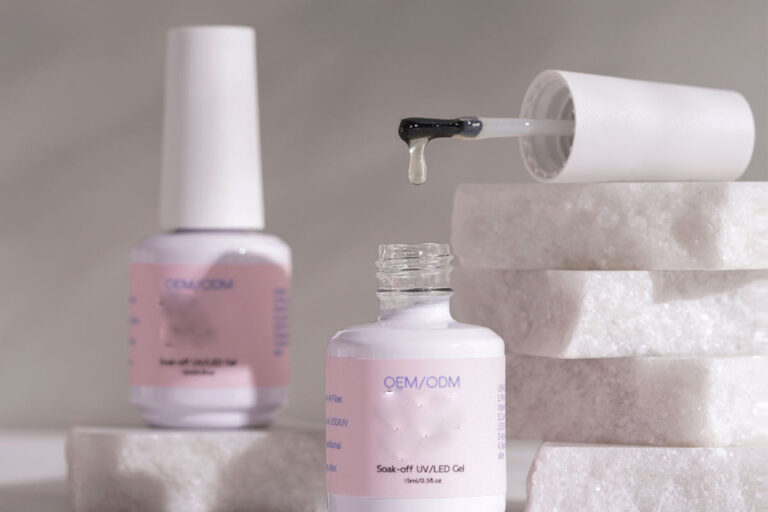
Packaging is where brands love to get dramatic. A private label gel manufacturer can do a lot with stock tooling if the buyer has any discipline at all—custom screen print, cap color, matte varnish, metallic foil, revised brush, upgraded carton, even subtle tactile finishes that make the pack feel more premium without forcing a full mold change. That’s usually the smarter move.
Because a custom bottle? Different animal.
New bottle tooling sounds sexy until you’re dealing with cap fit, wiper compatibility, brush pickup, label curvature, fill-line speed, carton dimension changes, and the first pilot run shedding defects you never saw in the render. I’ve watched brands spend real money trying to look “unique,” only to end up with a pack no customer cared about after the first use. Harsh, but true.
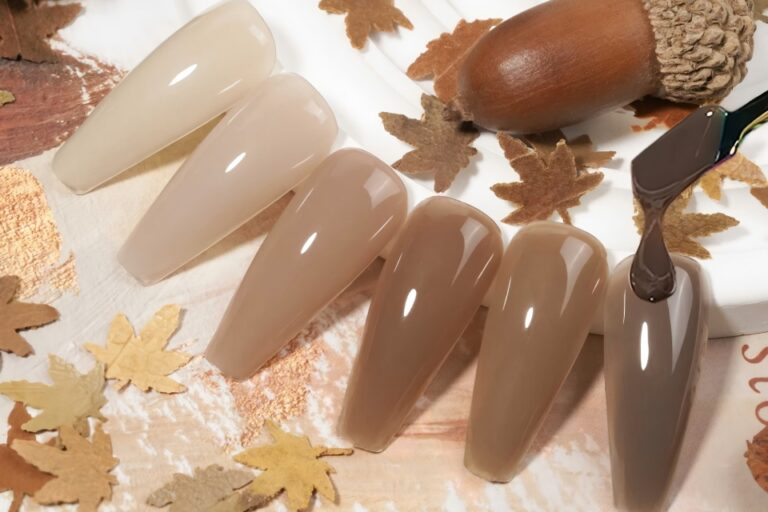
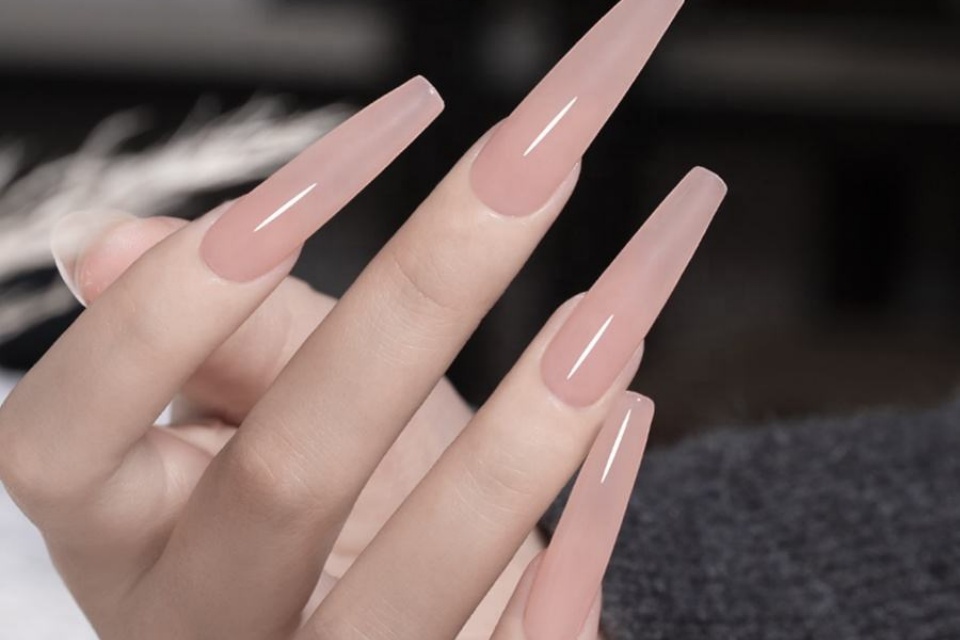
And yes, special finishes matter—matte, velvet, cat-eye, jelly, diamond, non-wipe, builder textures, all of it. But every effect system comes with trade-offs. If a supplier claims it can hit every finish, every compliance profile, every bottle request, and every low MOQ target at the same time, I wouldn’t call that confidence. I’d call that a weak BS filter.
Not in the sales meeting.
They break later—during sample round two, during scale-up, during bulk kettle adjustment, during line filling, during label review, during that awkward email where suddenly the MOQ is “a little different than expected.” That’s usually where the fantasy ends.
In my experience, most custom projects go sideways for four reasons: too many variables introduced at once, unrealistic MOQ assumptions, sloppy technical documentation, or a total disconnect between lab-sample beauty and production-lot reality. Buyers tend to chase looks first. The factory then has to fight physics afterward.
Take glitter. Everybody loves glitter—until it starts settling, clumping, muting opacity, or messing with cure. Same thing with “cleaner” requests like HEMA-free or TPO-free when the buyer also wants salon-level wear, specific texture, fast soak-off, low odor, and a friendly price point. Can it be done? Sometimes. Can all of it be done at once, cheaply, and fast? Usually not.
And the compliance angle is not just theory anymore. The European Commission’s guidance on the microplastics restriction makes clear that cosmetics containing glitter or other microplastics have transitional periods, and that make-up, lip, and nail products containing microplastics can continue to be sold until 16 October 2035, with labeling required from 17 October 2031 to 16 October 2035 in order to remain on sale. So if you’re planning custom glitter for Europe, this isn’t a “nice to know” side note. It’s product architecture. European Commission guidance on the microplastics restriction (single-market-economy.ec.europa.eu)
The market surveillance data backs that up, and not in a comforting way. The European Commission’s 2024 Safety Gate report recorded 4,137 alerts, with cosmetics accounting for 36% of alerts in 2024 versus 32% in 2023. The same report states that 97% of cosmetics alerts with a chemical risk involved products reported to contain BMHCA, a banned fragrance ingredient in the EU. If that doesn’t tell a buyer to get serious about formula records and compliance files, I don’t know what will. Safety Gate 2024 annual report (webgate.ec.europa.eu)
I frankly believe most OEM negotiations fail before the first quote is signed, because the buyer comes in with a mood-board brain and the supplier answers with a sales-deck smile, while nobody forces the ugly but necessary conversation about MOQ creep, tooling burden, validation cycles, rejection rates, artwork lock timing, and who owns the formula spec once the pilot lot becomes a real commercial item.
That’s the whole fight.
So don’t ask, “Can you do this?” Ask something sharper: which part of this brief changes MOQ, which part changes lead time, which part changes tooling cost, and which part is most likely to create a defect on the line? A real OEM gel manufacturer will answer that without flinching. A weak one will wrap it in optimism and hope you stop asking.
I’d also separate your brief into three buckets before you even start negotiating: what must be custom, what can stay standard, and what can wait until version two. That one move saves a ridiculous amount of money. It also exposes buyers who are trying to launch six products’ worth of ambition inside one SKU.
And yes, I check the boring stuff. Always. I want to see the supplier’s quality assurance process and compare it against the technical complexity of the item I’m buying. If the project includes thicker systems or extension categories, I’d rather work with a supplier that already handles related lines like builder gel products than one that swears it can “develop anything” after one phone call.
There’s also a commercial control issue that gets ignored until it’s too late. Reuters reported in May 2024 that proposed Chinese import requirements due from May 2025 would require cosmetics exporters to share detailed manufacturing information and accept inspections, raising concerns about loss of control over manufacturing know-how. So no—ownership language around formula files, artwork layers, test reports, and production specs is not legal fluff. It’s leverage. Reuters report on China-related cosmetics trade concerns (reuters.com)
Not everything matters equally.
A lot of first-time brand owners obsess over the visible part of the product—the bottle silhouette, the foil, the glamour shot finish—while underweighting the parts that actually determine whether the product can reorder cleanly three months later. That’s backwards, and the factories know it.
I’d prioritize in this order: base formula reliability, finish consistency, brush performance, decoration quality, then maybe structural packaging changes. Why? Because customers notice the result on the nail before they notice whether your bottle shoulder is slightly more distinctive than the next brand’s. The inside has to work before the outside gets fancy.
From my experience, selective customization usually beats full customization, especially early. Use a proven chassis. Tune the finish. Tighten the visual presentation. Keep the pack where the line can actually run it without drama. That doesn’t sound glamorous, but it’s how adults launch products.
| Custom request | What a flexible manufacturer can usually do | Typical impact on MOQ or timing | Main risk to watch |
|---|---|---|---|
| Custom glitter mix | Adjust particle type, density, base tint, and shimmer intensity | Moderate MOQ increase; extra sample round | Settling, poor cure, inconsistent finish |
| Special finish formula | Develop matte, velvet, jelly, reflective, or cat-eye effects | Extra validation time | Trade-off between appearance and wear performance |
| Stock bottle with custom decoration | Change logo, print method, carton, cap color, brush, and finish | Lower cost and faster launch | Limited shelf differentiation |
| Fully custom bottle design | New mold, shape, cap system, and pack identity | Higher tooling cost; longer lead time | Leakage, filling-line issues, higher scrap rate |
| Private label standard formula | Use proven formula with brand-specific packaging | Fastest route; lower MOQ | Easy for competitors to imitate |
| Full OEM development | New formula, packaging, and compliance package | Highest cost and longest timeline | Scope creep and misaligned expectations |
That table is the commercial reality, stripped of romance. Not every product needs deep OEM development. In fact, most don’t.
What they need is disciplined customization—enough to create a real market difference, not so much that the factory starts learning on your budget. That’s the sweet spot. Hard to find, but real.
A flexible gel manufacturer is a factory that can customize formula, effect, packaging, branding, and documentation in a controlled production system, while giving clear answers on MOQ, testing, timeline, and compliance instead of treating customization as an unlimited sales promise.
But that’s the textbook version. In practice, flexibility means the supplier knows exactly where the line is—and tells you before you pay for the mistake.
An OEM gel manufacturer can usually make custom glitter gel by adjusting glitter particle type, percentage, base color, viscosity, and suspension support, but the request becomes more complex when you also want strict cure performance, low odor, export-market compliance, and low minimum order quantities in the same launch.
It can be done. Usually. The real question is what gets sacrificed to make it happen.
Private label is usually the better starting model for a new nail brand because it reduces development time, lowers MOQ pressure, simplifies quality control, and lets the brand test market fit before investing in proprietary formula work, custom tooling, or complex compliance packages.
I’d start there unless the brand already has proof of demand. Otherwise you’re paying premium money to solve problems you haven’t earned yet.
You should negotiate custom requests with a gel OEM by defining which elements are non-negotiable, requiring written confirmation of MOQ, sample stages, tooling cost, validation time, compliance support, and ownership of technical files, and refusing to combine too many production variables into the first order unless the factory can prove it has done similar work before.
And get it in writing. Every time. Verbal reassurance is nice right up until the revised quotation arrives.
If you’re evaluating suppliers now, I’d keep the process tight: review the Best Gel Polish product range, compare it against the OEM depth, then use the contact page to ask blunt questions about customization, MOQ, sampling rounds, and compliance support. That’s how you figure out whether a gel manufacturer is actually flexible—or just fluent in sales language.