Talk to Our Expert
Our sales and engineers are available all the time, you can ask your specific requirements to our sales, and inspiration to our engineer here.

Looks almost medicinal.
But that’s how the trick works, right? First they sold shine, then wear time, then “clean,” and now the bottle wants to sound like a multivitamin for your hands—soft-focus words, lab-ish phrasing, little hints of repair and recovery, like your manicure suddenly joined the wellness economy. Cute move. Expensive move.
I frankly believe most of this category is built in the marketing department first.
Not all of it.
Some of it is real. I’m not saying otherwise. I’m saying the real part is usually hiding somewhere boring—inside the resin system, the flex profile, the cure response, the viscosity curve, the adhesion package, the soak-off behavior, the way the overlay handles day-10 stress at the free edge when a customer has been typing, opening parcels, shampooing, and living like a normal person. That part matters. The vitamin copy? Sometimes it’s just the ribbon on the box.
And buyers are primed for it. Of course they are. Circana’s August 2024 report said U.S. prestige beauty grew 8% to $15.3 billion in the first half of 2024, while Mintel’s 2024 beauty trends note showed consumers leaning harder into wellness-coded beauty, ingredient transparency, and products that promise they’re somehow “better” without giving up performance. So yes, nail brands were always going to jump on that train. Fast.
Here’s the ugly truth: strengthening gel polish usually strengthens the manicure system before it “strengthens” the nail itself.
That’s the bit nobody likes saying.
Because people hear “strengthening” and imagine recovery. Biology. Repair. Maybe even a little rehab arc for battered nails. But in practice? A lot of what’s being sold is mechanical support. A better overlay. A smarter film. A product that keeps the nail from bending like a cheap card when it catches on denim, cardboard, a laptop edge, or a kitchen drawer. That still has value. Real value. It’s just not magic.
And I think the category gets slippery when it starts pretending otherwise.
The FDA’s nail care guidance says many nail products contain potentially harmful ingredients, even though they may be permitted when used as directed, and it also reminds companies that retail cosmetics need proper ingredient declarations and warnings when appropriate. That matters more than the wellness branding. A lot more. Because “healthy gel polish” sounds comforting, but comfort isn’t a formulation standard.
Also—small industry pet peeve—harder doesn’t automatically mean healthier. The FDA also notes that formaldehyde in some nail hardeners can bond with keratin and make nails harder, but frequent use may also make nails brittle and more likely to break or peel. So when a product gets sold like it’s going to turn a flimsy nail plate into armor overnight, I get suspicious. Been around this trade too long.
So when I see “vitamin nail polish,” “calcium-infused nail polish,” or “nail care gel polish,” I don’t really react to the headline claim anymore. I translate it. I start asking ugly B2B questions. What’s the oligomer blend? Is the film glassy or forgiving? How much shrink are we getting at cure? Is the apex stable on a natural nail overlay? What does removal look like after two fills? If those answers are mushy, the wellness story is probably mushy too.
Skincare language. Salon nerves. Margin expansion.
That’s the formula.
And from my experience, the smartest brands aren’t actually selling vitamins—they’re selling relief. Relief from guilt. Relief from the old salon horror story where somebody walks out with a glossy set and comes back six weeks later with paper-thin nails because the prep was too aggressive and the removal was pure violence. Consumers remember that stuff. So do distributors.
But I wouldn’t hang the whole pitch on “infused” anything. I’d build it around systems that actually survive contact with reality: a reinforcing gel structure, a flexible builder in a bottle gel, and a lower-risk HEMA/TPO-free base coat. That stack makes sense in the chair. It also makes sense in procurement meetings, which is where all the dreamy copy gets tested by someone who wants batch consistency and fewer headaches.
And honestly? I’d rather hear ten minutes about quality assurance standards than thirty seconds of “clean beauty for nails.” That phrase has been stretched so hard it barely means anything now. QA still means something. Cure consistency means something. Raw material control means something. Stability means something. Those are the things that save a brand when the trend cycle moves on and buyers start asking for paperwork instead of mood boards.
Yet this is where the whole vibe gets less spa-like and more forensic.
A 2023 Nature Communications paper found that radiation from UV nail polish dryers caused DNA damage and mutation patterns linked to reactive oxygen species, and UC San Diego’s summary of the same work reported that a single 20-minute exposure led to 20% to 30% cell death, while three consecutive 20-minute exposures caused 65% to 70% of exposed cells to die. That doesn’t automatically prove salon catastrophe at population scale. But it absolutely kills the lazy old line that UV curing is a total non-story. It isn’t.
That changed things.
Then you’ve got regulation—always slower than chemistry, but still sharp when it lands. The European Commission’s TPO guidance says TPO was classified under Commission Delegated Regulation (EU) 2024/197 as a CMR category 1B reproductive toxicant, which later triggered its inclusion in Annex II of the Cosmetics Regulation, with the cosmetics prohibition applying from September 1, 2025. That is not a fluffy trend note. That is a compliance alarm bell, and decent manufacturers heard it before the market started yelling.
I’ve seen brands play cute here. “Transitioning.” “Monitoring.” “Legacy inventory.” Sure. Maybe. But if you’re still talking “wellness” while dragging old chemistry behind you like a dead extension cord, buyers notice. So do importers. So do people with legal departments.
And claims? That’s where things get messy fast.
The FTC’s health-claims guidance says companies need solid proof and proper substantiation for health-related claims. Which means the minute a gel polish brand starts drifting from cosmetic language into treatment language—“repairs damaged nails,” “restores nail health,” “clinically strengthens weak nails”—it’s not just writing copy anymore. It’s building a risk file. Or failing to.
So no, I don’t think the winning angle for the best strengthening gel polish is some syrupy “beauty meets wellness” line with a vitamin badge slapped on top. Too thin. Too easy. The stronger position—the one I’d bet on—is performance you can defend: lower-sensitizer story, cleaner photoinitiator choices, better flex, sane removal, tighter labeling, fewer silly claims. Less fairy dust. More shop-floor truth.
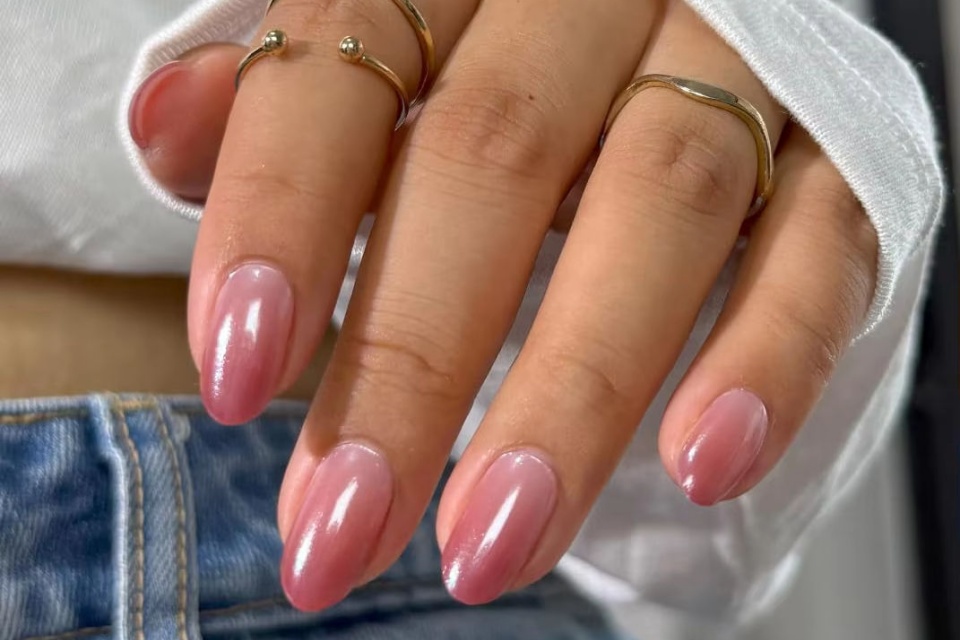
Use structure. Don’t butcher removal. Keep the plate intact.
That’s basically it.
If someone has weak, peeling, bendy nails, I’d usually go for a flexible reinforcement setup over the hardest shell in the drawer. Rubber-base systems, BIAB-style overlays, and certain reinforcing gels can take daily stress better because they move a little. That matters. Thin natural nails don’t need punishment—they need support that doesn’t crack the second life gets normal.
But—and this is where salons lose the plot—a great bottle can still be sabotaged by rough prep, over-filing, flooding product into the sidewalls, bad lamp matching, half-cured layers, or lazy peel-off removal. I’ve watched people blame the chemistry when the real issue was pure technique. Happens constantly. Way more than brands admit in public.
That’s why I’d rather see buyers start in a real gel polish catalog and ask sharp questions about cure specs, ingredient disclosure, lamp compatibility, and factory controls than chase every new “healthy gel polish” phrase that shows up in a pastel product launch. Boring? Maybe. Profitable? Usually.
| Label on the bottle | What it usually means in practice | What the buyer thinks it means | My read |
|---|---|---|---|
| Vitamin-infused gel polish | Added wellness-coded ingredients plus a premium positioning story | The formula nourishes the nail like skincare | Sometimes useful, often decorative marketing |
| Strengthening gel polish | A tougher or more flexible cured film that reduces bending and breakage | The natural nail is being biologically repaired | Mostly mechanical protection, not magic recovery |
| Calcium nail polish | Mineral-forward branding, sometimes paired with hardener language | Nails are being “remineralized” | Better as a sales story than a standalone proof point |
| Healthy gel polish | Usually HEMA-free, TPO-free, lower-odor, vegan, or gentler-use messaging | Safer in every possible way | Only meaningful when the full formula and usage support it |
| Nail care gel polish | Hybrid beauty-care positioning with repair, strength, or low-damage cues | Salon polish that also rehabilitates nails | Strong category idea, weak when unsupported |
That table? I use it like a cheat sheet.
Quick filter.
Because once you strip away the spa language, the supplement vibes, and the “care” buzzwords, the question is brutally simple: is this product genuinely reducing damage risk, or is it just wearing the costume of a safer product? I’ve found the answer is usually obvious once you stop reading the front label and start reading like a buyer.
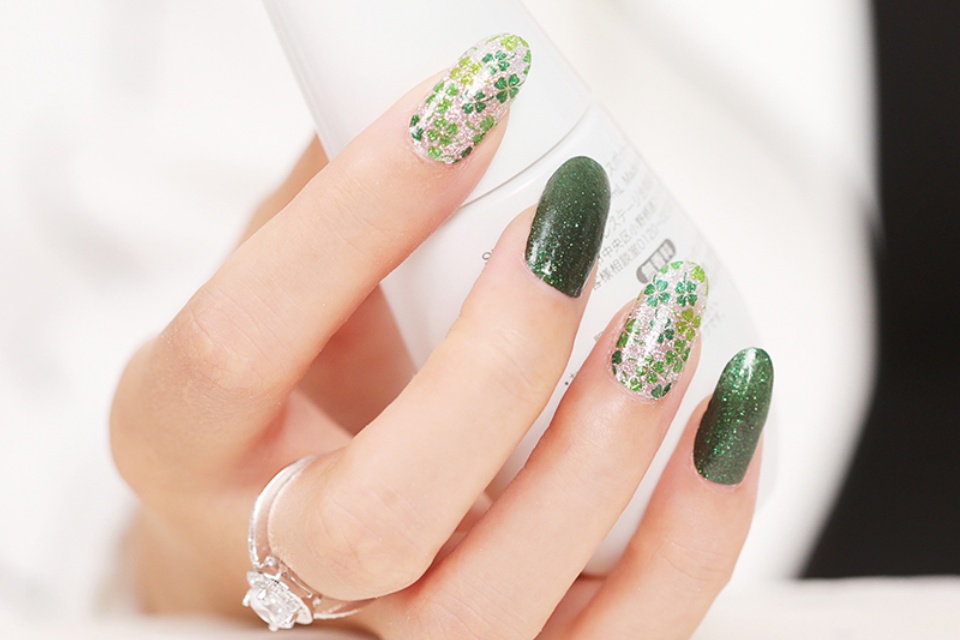
Strengthening gel polish is a UV- or LED-cured nail coating designed to reduce bending, splitting, and breakage by creating a tougher or more elastic film over the natural nail, often through builder, rubber-base, fiber, or resin-heavy systems rather than color alone. That’s the clean definition. My real-world version? It’s structural support in a bottle—when the formula flexes properly and the removal isn’t a demolition job.
Vitamin-infused gel polish is a gel manicure formula marketed with added ingredients such as vitamin E, biotin, calcium, or repair-focused actives, but its actual strengthening effect usually depends much more on the base chemistry, cure profile, adhesion, and removal process than on the vitamin claim itself. So yes, it can matter. Sometimes. But usually as supporting cast, not the lead actor.
Healthy gel polish is a marketing term for formulas positioned as lower-risk, usually through claims such as HEMA-free, TPO-free, lower odor, vegan, or reduced sensitizers, but safety still depends on the full ingredient system, correct curing, exposure patterns, and disciplined use. I wouldn’t trust the phrase on its own. The FDA, the FTC, and the EU all point the same way here: specifics beat vibes.
To strengthen nails with gel polish, use a flexible base or BIAB-style overlay that reduces bending stress, keep the application thin and fully cured, avoid aggressive filing on the natural nail, and remove the product gently so the manicure protects instead of abrades. That’s the method. Not glamorous. Just effective. From my experience, most nail damage blamed on gel starts at removal.
The best strengthening gel polish for weak nails is usually a flexible reinforcing or builder-style system matched to thin natural nails, because overly rigid coatings can crack or lift while softer rubber-base structures absorb daily impact and reduce peeling during wear. I’d choose balanced flex over brute hardness every time. Weak nails need support, not a punishment shell.
If you want to build a line around this trend without sounding like every other brand that just discovered the word “wellness,” start with the stuff that holds up under pressure: formula architecture, compliance, and claims you can actually defend when somebody pushes back. Browse the gel polish catalog, review the brand’s quality assurance process, and use the OEM/ODM services page to shape a private-label range that says less, proves more, and doesn’t collapse the moment a skeptical buyer asks the second question.