Talk to Our Expert
Our sales and engineers are available all the time, you can ask your specific requirements to our sales, and inspiration to our engineer here.

But “growth” is the lazy headline, and I’m tired of it—because the gel polish market doesn’t break when people stop buying, it breaks when your ops can’t ship the same viscosity band twice, your cure curve drifts under real 365–405 nm LEDs (not a lab setup), and your paperwork can’t survive one buyer audit. That’s the choke point. Not demand.
I’ve watched teams celebrate reorder velocity while a small mess brewed in the background: INCI doesn’t match SDS, a COA can’t be produced on request, someone swapped a photoinitiator “because supply,” and suddenly the line starts lifting on day seven and nobody wants to say it out loud. Awkward. Very.
So what happens in 2026? I frankly believe the winners will look boring from the outside: tighter documentation, tighter specs, fewer ingredient risks, and fewer “cool” effects that attract regulators like moths to a porch light.
Yet the buying behavior splits in two directions at the same time, and that’s what makes planning hard: salons want fast cure, self-leveling that doesn’t flood the sidewalls, low odor, low shrink, and a predictable inhibition layer so the top coat doesn’t haze, while consumers want “safe” and “gentle” and then cure with a tired lamp and blame the product anyway. That mismatch is constant. It never leaves.
If you sell a consistent gel polish product range—same handling, same cure behavior, fewer surprise batches—you can win B2B buyers who are sick of roulette purchasing. If you don’t, you’ll slide into price-only deals, and price-only deals are where quality quietly dies. Slowly. Painfully.
However, people still talk about “diversifying suppliers” like it’s a quick fix, which is cute until you realize that substituting one monomer or photoinitiator can change cure depth, heat spike, gloss retention, yellowing, and wear, meaning you’re not swapping vendors—you’re revalidating performance while the calendar keeps moving.
Here’s the blunt proxy I keep coming back to: in 2023, China exported about $243M of “manicure or pedicure preparations” (HS 330430), with the EU around $219M and the U.S. around $189M among top exporters; it’s not every gel SKU, sure, but it’s a loud clue about where export scale and infrastructure actually sit. See: Manicure/pedicure preparations exports (2023).
Clustered supply plus tighter rules equals fragile timelines. That’s the whole sentence.
So the “EU vs US” framing misses the practical point. The practical point: paperwork either flows, or it blocks your revenue.
The FDA pushed MoCRA’s registration/listing enforcement out to July 1, 2024, and that deadline forced exporters and private-label operators to build repeatable compliance workflows, because a documentation gap turns a working product into a shipping problem (and buyers hate shipping problems). Read it: MoCRA registration & listing deadline update.
Then Europe—always Europe—keeps tightening the environmental screws.
The EU adopted a microplastics restriction on 25 September 2023, with early measures starting 17 October 2023, and anything glitter-adjacent gets attention because it’s visible, measurable, and easy to headline. Start here: ECHA microplastics restriction.
And the ingredient risk? That’s not hypothetical either.
A 2024 PubMed paper (patch testing in Amsterdam) reported that allergic reactions to HEMA were very frequent in the tested group, and nearly two thirds of cases were caused by nail cosmetics—which is exactly why “HEMA-free” has moved from marketing fluff to procurement checklist. Read: PubMed – HEMA reactions & nail cosmetics.
Do buyers say all this politely? Sometimes. Mostly they just ghost.
But here’s the ugly truth: buyers don’t pay extra for “compliance.” They pay extra for fewer fires.
You win with stable photoinitiator packages, predictable conversion under the lamps people actually use, controlled monomer blends so the inhibition layer behaves, pigment dispersion that doesn’t drift after heat soak, and top coats that don’t haze after acetone wipes—because salons wipe everything, constantly, and real life is not your lab. Long sentence. Now three words: prove it.
This is why I keep pointing people to quality assurance and batch testing standards before they fall in love with shade names, because shade names don’t answer “show me your COA,” and shade names don’t fix a drifting viscosity band.
Also, the slang in buyer chats has changed. People keep asking for “reduced drama” formulas now. Less sensitization chatter. Less regulatory heat. Cleaner documentation. That’s why categories like HEMA & TPO-free UV gel polish options keep showing up on sourcing lists.
Yet most “cost impact” talk is too clean. Real cost impact is messy.
One substitution can trigger: cure-depth verification, viscosity drift checks, stability, packaging compatibility, updated paperwork, buyer review (again), and then the quiet part—salons dropping the line without filing a complaint because they don’t have time to debate chemistry. That’s the 40+ word reality. Here’s the 3-word reality: it spreads.
And the expensive pain points aren’t always the obvious ones: specialty photoinitiators, pigments that need tight dispersion, packaging that won’t swell or fog, labels that survive acetone wipes, freight lanes that jam, and the retesting loop triggered by even “small” edits.
So growth in the gel polish market isn’t “sell more.” It’s “sell more without breaking your spec.” That’s the job.
But I’m not handing you a single magic number. Single-number forecasts are a comfort blanket. Pressure points are more useful.
| Region | 2026 demand signal | Buyers push for | Compliance pinch point | What I’d ship (SKU strategy) |
|---|---|---|---|---|
| North America | Strong DIY + salon blend | “Safer” claims + fast cure | MoCRA registration/listing discipline | Low-odor, consistent-cure gels + clean documentation packs |
| EU | Premium salon demand, high scrutiny | Ingredient avoidance (sensitizers, flagged photoinitiators) | Microplastics rules + ingredient enforcement | Mineral shimmer options, tighter INCI discipline, conservative photoinitiator choices |
| China | Scale + price power | Speed + high throughput | Brand trust, export documentation | Standardized core colors, big-batch stability, export-ready labeling |
| Southeast Asia / India | Rapid channel build-out | Affordable sets + trendy finishes | Import controls vary by country | Modular collections, localized shade edits, strong QC to avoid returns |
| Middle East | Premium aesthetics | High-gloss, long wear | Claims scrutiny, import documentation | High shine systems, heat-stable packaging, consistent viscosity |
And OEM/ODM? Everybody wants it. Everybody underestimates it.
Private label buyers show up asking for “HEMA-free,” “TPO-free,” “15-free,” “vegan,” “no smell,” one-coat coverage, 60-second cure, no shrink, no returns, low MOQ, low price, and zero batch drift. That’s not a spec sheet. That’s a dare. Some suppliers take it. Then they bleed.
If you’re serious about this channel, force the conversation into specs and documentation early via OEM/ODM private label gel services, not just “inspo” boards and shade vibes.
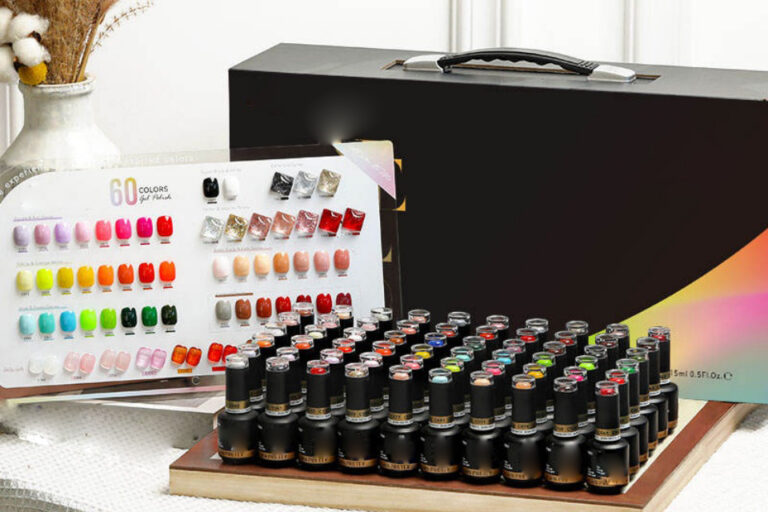
And don’t bury your structure. Serious buyers hate chaos. Use a clear gel polish catalog for wholesale buyers and map formulas to compliance profiles and use cases like you mean it.
However, “clean nails” marketing stays messy because it’s easy to claim and hard to prove.
Some brands slap “free-from” on a label without doing the boring work—supplier declarations, batch traceability, spot checks—then act shocked when a distributor tests, asks questions, or flags inconsistency. That’s not bad luck. That’s weak process.
Also, allergy risk isn’t just “user error.” The clinical signal exists, and it’s getting louder because clinics publish what they see. That 2024 HEMA paper isn’t cute. It’s a warning in academic language. Again: PubMed – HEMA reactions & nail cosmetics.
So the 2026 move is simple to say and hard to do: build lines that assume scrutiny, assume audits, assume buyers have been burned before. Because they have.
What is the gel polish market forecast for 2026? The gel polish market forecast for 2026 is a planning estimate of global sales and unit volume across salon and at-home channels, built from prior growth, pricing, trade flows, and regulatory constraints, and it’s mainly used to set capacity, compliance budgets, and SKU mix rather than predict one exact revenue number. If you want a supply sanity check, the 2023 export proxy is useful. (Manicure/pedicure preparations exports (2023))
Which regions will grow fastest in the gel nail polish market in 2026? The fastest-growing regions in the gel nail polish market in 2026 are typically markets where salon networks are scaling, e-commerce fulfillment is improving, and disposable income is rising, but growth rankings can flip quickly when import rules, ingredient scrutiny, or documentation checks slow shipments and force reformulation. Watch Southeast Asia and India for volume growth, and Europe for compliance-led formula shifts.
How do EU microplastics rules affect glitter gels and nail products? The EU microplastics restriction under REACH limits intentionally added synthetic polymer particles in many products, which matters for gel polish because some plastic glitter effects can be restricted or phased out, pushing brands toward mineral shimmer alternatives and tighter documentation that proves what the “glitter” particles actually are. Start with the regulator’s overview and treat glitter like a spec item. (ECHA microplastics restriction)
What does MoCRA mean for gel polish brands selling in the U.S.? MoCRA compliance for gel polish brands selling in the U.S. means your facility registration and product listings align with FDA rules, your ingredient and adverse-event records are organized, and your manufacturing and labeling controls are documented well enough that buyers and regulators don’t find gaps that delay shipments or force relabeling. Use the FDA guidance as the baseline. (MoCRA registration & listing deadline update)
Why are HEMA-free and TPO-free formulas becoming standard buyer requests? HEMA-free and TPO-free gel formulas are UV/LED nail products designed to avoid 2-hydroxyethyl methacrylate (HEMA, CAS 868-77-9) and the photoinitiator TPO, aiming to reduce sensitization signals and regulatory scrutiny while still delivering reliable cure speed, gloss, and wear in real salon conditions. The sensitization signal around HEMA shows up in clinical testing. (PubMed – HEMA reactions & nail cosmetics)
How do raw material costs actually hit gel polish margins? Raw material cost pressure in gel polish is the margin squeeze caused by swings in acrylate monomers, oligomers, photoinitiators, pigments, and packaging inputs, plus the extra testing and rework triggered by substitutions that can shift viscosity, cure depth, gloss, or adhesion even when the formula looks “similar” on paper. In 2026, backup suppliers and tight specs matter more than fancy claims.
If you’re planning a 2026 line and you want fewer surprises, start with the basics: a coherent catalog, a compliance-first formula matrix, and QA you can show without flinching.
Browse the full gel polish catalog, review the quality assurance standards, and if you’re building private label, look at OEM/ODM services.
When you’re ready to talk specs (not vibes), contact our team here.