Talk to Our Expert
Our sales and engineers are available all the time, you can ask your specific requirements to our sales, and inspiration to our engineer here.

I’ll say the quiet part out loud. Most “pro” gel setups are bloated.
I’ve walked into salons with 400 bottles on the wall and the same 12 shades getting used every week, while the owner keeps re-ordering because they’re always “missing something,” which usually means they’re missing a system, not a product—inventory without rules is just an expensive mood board, and it shows up in your cash flow.
So what’s actually “must-have”? What earns rent on your shelf?
If you sell “gel manicure” as one thing, you’ll buy like a hobbyist. If you sell services (quick gel, structured gel, extensions, repairs, art), you’ll stock like a business.
Three piles matter:
And yes, I’m going to talk about regulation and skin reactions, because that’s not “safety talk.” That’s refunds, re-dos, and reputation.
In 2023, the global nail polish market was estimated around $16.2B, with UV gel growing faster than old-school lacquer—meaning more clients will ask for gel, and more shops will compete on speed and finish. (市场研究公司)
Buy fewer base coats. Buy smarter ones.
You need:
If you’re building a tight, logical lineup, start with your categories and keep it clean: link your staff to one house standard, then allow one “upgrade” base for problem nails.
Use your own catalog pages as your internal training map:
Three-word reality check: uncured gel. Big trouble.
Uncured (or under-cured) product raises the risk of skin contact with reactive monomers, and allergies to (meth)acrylates are not rare “internet drama” anymore; a 2024 clinical paper on acrylate-containing nail cosmetics describes this as frequent in patch-tested patients and highlights HEMA (2-hydroxyethyl methacrylate) as a common positive test marker. PubMed summary of the 2024 study (PubMed)
One top coat is never enough. Sorry.
You need:
If your top coat chips, every other product gets blamed.
Build the link path for Google and your buyers:
Here’s what I’ve seen work (when owners track it honestly):
That’s it. Really.
When you want variety without drowning in single bottles, sell curated sets:
And don’t ignore what’s happening in Europe. It’s not a rumor.
The European Commission has published guidance around TPO in nail products, tied to EU classification rules, and the official Q&A explains how TPO’s classification connects to cosmetics restrictions (with key dates and compliance logic). If you sell into the EU, or you source from suppliers who do, you should read it, not guess. European Commission: “TPO in Nail Products – Questions & Answers” (内部市场与中小企业)
Cheap lamps create expensive problems. That’s the whole story.
You don’t need ten lamps. You need lamps that:
If your lamp is weak, your base coat gets blamed. If your lamp is inconsistent, your color line gets blamed. If your lamp is mismatched, your tech gets blamed.
And the client still wants a refund.
A salon’s removal setup is where “quality” quietly shows up.
Stock:
This is also where your tool ecosystem matters. If you don’t standardize, every tech removes differently, and your service times go chaotic.
Build a clean internal hub for staff:
| Priority | Product Category | Minimum Stock Rule | What It Protects | Common Owner Mistake |
|---|---|---|---|---|
| 1 | Base coat system | 2–3 bases max (normal + flexible + builder) | Retention, allergy risk, re-do rate | Buying 8 “miracle” bases |
| 1 | Top coat system | Gloss + matte + tough option | Finish quality, chip complaints | Using one top for everything |
| 2 | Lamp setup | Standardize 1–2 lamp models | Full cure consistency | Mixing random lamps per station |
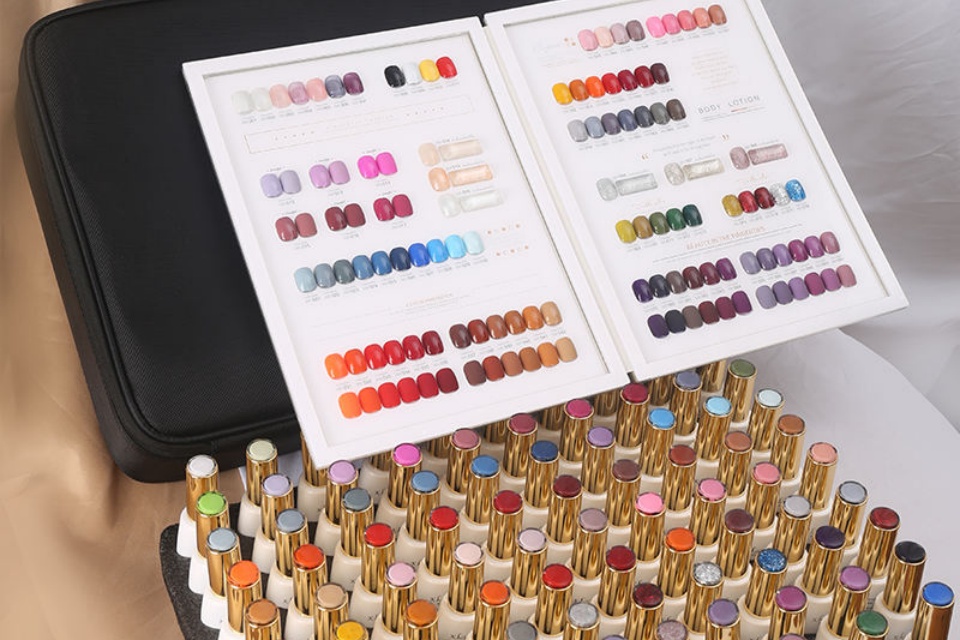
| 2 | Core color library | 25–40 shades total, rotate quarterly | Upsells, speed, less dead stock | Stocking “every color” |
| 3 | Effects & art gels | 4–8 high-demand effects | Margin boosts | Buying niche powders nobody asks for |
| 3 | Removal supplies | Debulk + soak flow standardized | Nail health, service time | Over-filing to “save time” |
If you’re sourcing for a salon brand, your supplier’s process matters more than their product photos.
I look for:
If you want to show buyers and salon partners you take it seriously, don’t bury your proof:
A salon needs a complete gel system that covers prep, adhesion, color, curing, and removal, meaning at minimum: a compatible base coat lineup, at least one high-gloss top coat, a reliable UV/LED lamp matched to your gels, a curated color range, and standardized soak-off removal supplies. After that, add builder gel (if you offer structure), and a small set of effects for upsells. The “full service” part isn’t more bottles. It’s fewer products that work together.
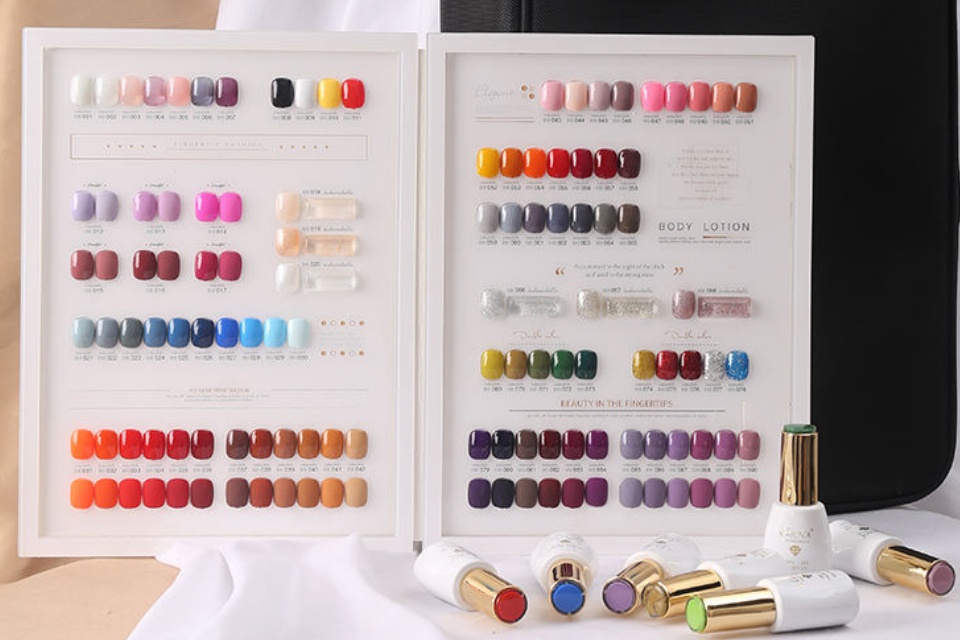
The best salon color range is a controlled library built around demand, not personal taste, usually 25–40 total shades that include core neutrals, year-round staples, and a rotating seasonal block, so you minimize dead stock while keeping clients excited and your display looking fresh. In practice, I’d keep 10–15 neutrals, 6 staples, 10 seasonals, and a few effects. Track usage weekly. Retire slow movers fast.
HEMA-free or TPO-free options are gel formulations marketed to reduce exposure to specific sensitizers or regulated ingredients, which matters because acrylate allergies are a real clinical issue and EU compliance rules can force reformulation or product changes depending on where you operate or sell. The business angle is simple: fewer reactions, fewer disputes, fewer “my nails are burning” moments. Also, if you serve EU markets, the official EU guidance on TPO is worth reading directly.
Choosing pro base and top coats means selecting a matched system that cures properly under your lamps, fits your client nail types, and stays consistent across batches, because most “it peeled in two days” complaints come from incompatibility, under-curing, or tech-to-tech variation—not from bad luck. Standardize your base options (normal + flexible + builder) and keep your top coats purpose-based (gloss + matte + tough). Then train to one method.
The fastest quality-safe way to cut time is to standardize your product system and steps—lamp model, base choice rules, color viscosity range, and removal workflow—so techs stop improvising and you reduce re-dos, which are the hidden time-killers that wipe out any “speed” you think you gained. Tight menu. Tight inventory. Tight training. You’ll feel the difference in two weeks.
If you want this turned into a tight, profitable salon lineup, don’t start by buying more bottles. Start by defining your service tiers, then match the products to the tiers.