Talk to Our Expert
Our sales and engineers are available all the time, you can ask your specific requirements to our sales, and inspiration to our engineer here.

Flex sells fast.
Rubber base coat is one of those categories that “magically” appeared right when salons needed faster services, longer wear, and higher ticket sets, and the market responded by blurring three different things—adhesion base, reinforcement layer, and thin builder—into one jar with a soft-focus marketing name.
So here’s the uncomfortable question: are you buying performance, or are you buying a story?
Traditional base coat has a boring job. It sticks. It wets the nail plate, forms a thin cured film, and gives color something clean to bite into. Rubber base coat tries to do two jobs at once: stick and flex and (often) fill minor ridges while pretending it isn’t a builder.
That “two jobs” part matters because it changes the failure mode. Traditional bases usually fail by lifting at the cuticle or sidewalls when prep is sloppy. Rubber bases can fail the same way, but they also fail by micro-peeling under stress because soft films move, and the moment they move too much, they shear.
You’ll see it first on weak nails. Ironically.
Rubber base coat isn’t rubber. Not the way buyers imagine it.
It’s still an acrylate/methacrylate UV-curable system, typically a mix of oligomers + reactive diluents + photoinitiators. The “rubber” feel usually comes from formulation choices that lower the cured film’s stiffness and raise elongation, often by shifting to more flexible oligomers (think urethane acrylates) and using monomers that keep the network less brittle.
And that’s where the buyer risk starts. Softer networks can leave more “forgiveness” under impact, but they also raise the penalty for bad curing. Under-cure a flexible base and you don’t just get dullness or soft tips. You get residual monomer sitting where skin touches it.
That’s not a vibes issue. That’s an allergy pipeline.
One molecule you should actually know by name is 2-hydroxyethyl methacrylate (2-HEMA, C₆H₁₀O₃). It shows up in nail allergy literature again and again, and it’s widely used as a reactive monomer in nail systems. PubChem keeps the core identity clean if you want to sanity-check the chemistry: 2-Hydroxyethyl Methacrylate (HEMA).
If you’re sourcing, don’t let “HEMA-free” become your only filter. “HEMA-free” can still mean “other methacrylates that sensitize,” and real-world case reports keep proving that point.
Three words: allergies don’t reset.
Acrylate allergy is often lifelong, and it can spill into medical settings (dental materials, surgical adhesives). That’s not me being dramatic; it’s what clinicians keep warning about when gel systems are misused or under-cured.
In a 2024 paper from Amsterdam UMC’s patch-test population, 67 women were diagnosed with allergic contact dermatitis from nail cosmetics (2015–2023), representing 2.3% of all women patch tested there; the authors also highlight how often 2-HEMA flags these cases. If you want the primary source, start here: Contact allergy to acrylate-containing nail cosmetics (Contact Dermatitis, 2024).
Now zoom out. A 2024 dermatology paper looking at at-home gel nail content and reactions circulating on TikTok bluntly frames at-home gel kits as a risk factor for developing acrylate allergies, and it’s coming from an academic dermatology context, not a brand blog: Unveiling an Acrylate Allergy Epidemic (Weill Cornell / J Cutan Med Surg, 2024).
And if you want a number that should make any product manager pause: a 2024 analysis in Acta Dermato-Venereologica reports that 2-HEMA identified acrylate-induced allergic contact dermatitis in 85% of cases when using the extended (meth)acrylate testing approach. Read it directly: Extended (Meth)acrylate Series – Nails (2024).
If you sell rubber base as “gentle” because it flexes, you’re selling the wrong promise. Flex has nothing to do with sensitization. Exposure does.
Buyers love to pretend nail chemistry lives in a cute bubble. It doesn’t.
California’s Department of Toxic Substances Control moved to list nail products containing methyl methacrylate (MMA, C₅H₈O₂) as a Priority Product in a formal regulatory process (proposal notice dated November 1, 2024). That’s not a TikTok scare; it’s government rulemaking behavior. Here’s the document: DTSC proposed action on nail products containing MMA (2024).
Different ingredient, same message: regulators are watching nail systems because exposure is messy, and consumer misuse is common.
In the EU, the pressure is also real. The European Commission published a clear Q&A that prohibits TPO in cosmetic products as of 1 September 2025 (important if you’re planning long contracts and private label runs that straddle regions): TPO in Nail Products – Questions & Answers (European Commission).
Even if you don’t ship to the EU, suppliers reformulate globally to reduce SKU chaos. Buyers feel that ripple as “sudden” lead-time changes, shade drift, and cure behavior shifts.
Rubber base coat usually buys you three things when it’s formulated well and cured properly:
But it costs you in three places:
And buyers keep missing the hidden fourth cost: claims risk. If your product page implies “safe” or “hypoallergenic,” you’re stepping into a liability zone where case reports and patch-test data don’t play nice with marketing.
If you’re building a range, anchor your base strategy in function, not fashion. Traditional base coat still has a home, especially under hard color systems and for clients with stable nails who just need adhesion.
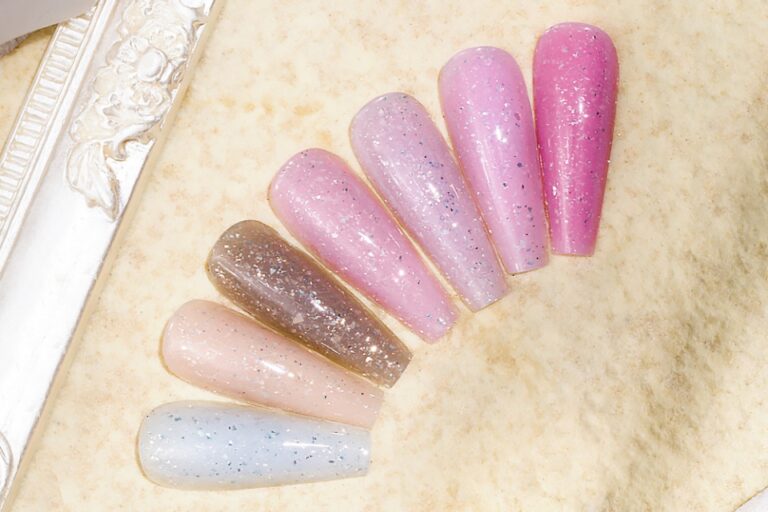
If you want to see how a brand organizes the category split in real product architecture, scan a dedicated base section like base coat gel options and compare it with a separate colored rubber base range. The product taxonomy tells you what the manufacturer thinks the product is for.
This is where buyers get fooled by viscosity.
Rubber base sits in the middle: thicker than traditional base, usually thinner than true builder, often more flexible than both. Builder gel (including BIAB) is typically designed to create structure—apex, extension support, and stronger load-bearing shape.
If your customer wants strength and shape control, rubber base is a compromise. If your customer wants a “forgiving” overlay on short nails, builder is often overkill.
But. And it’s a big but.
Many BIAB-style systems blur into “soft builder” territory, which means your real comparison should be rubber base vs soft builder, not rubber base vs classic hard builder. If you’re evaluating both, treat them as separate lanes and compare them directly in the catalog, like builder-in-a-bottle (BIAB) gels.
Short sentence. Read this.
If a supplier can’t answer these cleanly, they’re not ready for serious buyers:
If you’re doing private label or bulk sourcing, you should also look at how the factory talks about process control. A real quality assurance testing page won’t fix a bad formula, but it tells you whether the supplier understands what buyers get punished for: inconsistency.
| Buyer factor | Traditional base coat | Rubber base coat (flexible base coat / rubber base gel) | What I’d do as a buyer |
|---|---|---|---|
| Primary job | Adhesion layer | Adhesion + flex + light reinforcement | Decide which job you’re paying for, then buy the product built for that job |
| Typical layer feel | Thin, “invisible” | Thicker, cushiony | Don’t let thickness replace structure when extensions are involved |
| Best for weak nails | Only if nail is stable and prep is solid | Often better for short, bendy nails | Still control curing; weak nails + under-cure = skin exposure risk |
| Common failure mode | Edge lift from prep or contamination | Slow shear lift, soft edge separation | Watch for clients who pick; soft edges invite picking |
| Curing sensitivity | Moderate | High | Specify lamp requirements in your SOP and on packaging |
| Removal | Usually straightforward soak-off | Can be gummy depending on formula | Test removal on real nails, not tips |
| Claim risk | Lower (fewer “treatment” vibes) | Higher (buyers oversell it) | Avoid “safe” language; talk function and instructions |
Rubber base coat is a thicker, more flexible UV-curable base designed to add light reinforcement and shock absorption, while a regular (traditional) base coat is a thinner adhesion layer meant mainly to bond color to the natural nail with minimal added structure. Rubber base tends to self-level more and feels “cushioned” after cure, which can help on short, bendy nails. The tradeoff is tighter curing discipline and more risk if users flood cuticles or under-cure. If your brand sells to DIY users, that tradeoff isn’t theoretical.
Rubber base coat is a flexible base layer that can reduce cracking and chipping on thin, bendy nails by letting the cured film move slightly under daily impact instead of snapping like a brittle coating. But “better” depends on behavior. Weak nails often come with picking, peeling, and thin cuticles. Rubber base that’s applied too thick or cured poorly raises skin exposure. If you want the weak-nail story, pair it with strict prep and curing guidance, not just “flex.”
Rubber base coat is a hybrid base that adds mild reinforcement, while builder gel is a higher-structure gel meant to create strength and shape (apex) and to support longer wear and, in many systems, extensions. If your customers mostly do short overlays and quick services, rubber base wins on speed. If they build shape or support length, builder wins on structure. Many ranges solve this by carrying both lanes and clearly separating them, like a dedicated BIAB category plus rubber base options.
Most gel nail allergy cases involve sensitization to acrylate and methacrylate monomers, with 2-hydroxyethyl methacrylate (2-HEMA, C₆H₁₀O₃) repeatedly showing up as a key marker in patch testing for nail cosmetic reactions. The 2024 clinical literature keeps circling the same pattern: exposure plus under-cure plus skin contact. That’s why “HEMA-free” labeling can help some buyers but never guarantees “no allergy,” because other reactive monomers can still sensitize.
The best rubber base coat is the one that cures reliably at realistic layer thickness, maintains adhesion under stress without soft-edge shear, removes predictably, and comes with transparent documentation (SDS/INCI where applicable) so buyers can manage risk and compliance claims. So test it like a buyer, not a fan. Run real wear tests on different nail types, verify lamp compatibility, and review how the supplier handles batch-to-batch consistency. If the supplier can’t explain failure modes, they don’t understand their own product.
HEMA-free means the formula does not use 2-hydroxyethyl methacrylate as a reactive monomer, but it does not automatically mean “safe” because other acrylates and methacrylates can still trigger allergic contact dermatitis, especially with repeated skin exposure or under-cure. There are published case reports of reactions to products marketed as HEMA-free, and clinicians keep emphasizing technique and curing as the real risk multipliers. Treat HEMA-free as one filter, not the finish line.
If you’re building a base coat lineup for a brand, stop treating rubber base like a trendy add-on and start treating it like a higher-risk, higher-reward chemistry choice.
Browse your base categories with intent, not vibes: compare base coat gel options against the colored rubber base range, and decide where you want to sit on the flex-versus-discipline curve. If you need a compliance-friendly angle, review the HEMA/TPO-free base coat line and align it with your target markets.
And if you’re sourcing private label or bulk, ask hard questions early. If you want help pressure-testing specs, documentation, and QA expectations, talk to the team behind the OEM/ODM services or reach out via the contact page.