Talk to Our Expert
Our sales and engineers are available all the time, you can ask your specific requirements to our sales, and inspiration to our engineer here.

I’ve watched brands lose money over “finish.”
Not because the product was trash. Because the promise was fuzzy, and the customer’s camera was honest.
Three words: returns don’t lie.
Here’s the ugly truth. When you pick matte vs glossy top coat, you aren’t choosing a vibe. You’re choosing what problems show up first—scuffs, smudges, dulling, micro-scratches, stain pickup, lamp sensitivity, the whole messy chain from tech application to customer wear to refund email.
And yeah, I’m saying this out loud: your finish is a claim even if you never print it. Matte says “editorial, soft-touch, niche taste.” High shine says “premium, classic, showroom gloss.” Customers “read” that before they read your label. Fast.
So what are you selling—mood, or proof?
But the finish also changes the photo physics, which changes your marketing economics, because matte kills reflections (flatter, calmer, easier to style) while glossy throws light back at the lens (deeper, wetter, louder), and those two behaviors push customers to post different angles, lighting, and expectations.
It matters. A lot.
Matte posts get saved. Glossy posts get zoomed.
If you’ve ever wondered why a matte launch gets “so aesthetic” comments but fewer repeat purchases, while a clean glossy system quietly becomes a salon staple, that’s part of it—people shop with their eyes, then they live with their hands.
And salons? They don’t want your philosophy. They want options that behave. That’s why, in the real world, you end up needing both a matte top coat collection for nail art finishes and a shiny top coat option for high-gloss looks inside the same brand system. Because the tech decides at the desk, not in your Shopify theme.
Silica eats shine.
That’s the part buyers don’t think about when they ask for “velvet matte” like it’s just a filter. A lot of matte top coat formulas rely on matting agents (often silica, SiO₂, or treated powders) that scatter light—and that scattering also changes wear, because the surface feels more “grabby,” picks up oils, and shows friction marks like a chalkboard shows fingerprints.
Glossy top coats play a different sport. They chase clarity and leveling. They want the surface to behave like glass—smooth film formation, fewer micro-defects, better depth, and higher gloss retention after a week of hand sanitizer and key jangling.
So, sure, you can talk “matte gel top coat” vs “high shine gel top coat.” But the real question is this: do you want your customer to feel the finish, or see the finish?
Yet I keep seeing brands pick matte because it looks expensive in still photos, then act surprised when salons complain about scuffing, stain pickup, and “it looks dirty on day four” messages—especially on deep shades and on people who live in denim, makeup, and hair dye.
Matte can win. I’m not anti-matte. I’m anti-fantasy.
From my experience, if your brand sells to high-volume salons (service menus, quick turn, predictable outcomes), glossy wins more often than anyone wants to admit. It forgives brush marks. It reads clean under random lamps. It matches what the average client expects when they hear “fresh set.”
But if you’re targeting editorial sets, alt aesthetics, “soft touch” packaging buyers, or content-first techs who build mood boards for a living, matte can outperform—if you control the system (lamp, layer thickness, cure time, and the way the tech caps the free edge). That “if” is where brands bleed.
Here’s how I segment it when I’m being practical, not poetic:
And yes, price is part of this. Matte often costs you more in stability work (keeping matting agents dispersed, preventing settling, maintaining consistent GU across batches). It looks simple on paper. It isn’t.
So let’s talk about the part that kills brands quietly.
Reactions.
Top coats sit right at the edge of skin contact. They’re reactive chemistry. People get sloppy. Techs flood the cuticle. DIY buyers cure under weak lamps and call it “done.” Then the inbox starts filling with “itchy,” “burning,” “allergic,” “what’s in this?”
One repeat name in the allergy conversation is HEMA (2-hydroxyethyl methacrylate, C₆H₁₀O₃). In a 2024 paper on acrylate-containing nail cosmetics, researchers reported allergic contact dermatitis cases where HEMA showed up again and again in positive patch tests. That isn’t influencer noise; it’s clinical signal. Contact allergy to acrylate-containing nail cosmetics (PubMed). (pubmed.ncbi.nlm.nih.gov)
And in the U.S., the FDA world is getting less casual about cosmetics paperwork because MoCRA shifted the tone—brands scaling without documentation will feel it first through retailer compliance checklists and supply chain audits, not a friendly warning. FDA: Registration & Listing of Cosmetic Product Facilities and Products (MoCRA). (fda.gov)
And if you sell into the European Union, don’t pretend glitter doesn’t count. If your shiny line leans on effect mixes—sparkle top coats, reflective powders, loose add-ins—microplastics rules can become a real commercial friction point depending on what’s “intentionally added” and how the category is defined. EU notice on the microplastics restriction. (trade.ec.europa.eu)
Do you see what’s happening?
Test it.
Not once. Not in perfect conditions. Not with your best tech on a good day.
I want:
And I want paperwork. Boring paperwork. The kind nobody posts on Instagram.
If you need a baseline for how grown-up manufacturing looks, start with quality assurance and batch testing standards and ask for COAs, viscosity targets (cP), and retention samples. If a supplier can’t talk about retention samples, I get nervous. (You should too.)
One more thing—because brands forget this: your manufacturing model shapes your finish choice. ODM often means you inherit a “house” matte or glossy base with known quirks. OEM means you can steer the spec harder, but you also own the risk when the spec is unrealistic. That’s why OEM/ODM gel polish services for private label brands belongs in this decision even if you just wanted a pretty finish.
| Decision Factor | Matte Top Coat | Glossy / Shiny Top Coat | What This Means for Your Brand |
|---|---|---|---|
| Visual signal | Soft-focus, fashion/editorial | “Wet look,” premium, classic | Matte feels niche; glossy feels universal |
| Photo behavior | Hides reflections, flattens depth | Boosts depth, sparkle, contrast | Glossy sells effects; matte sells silhouette |
| Wear complaints | “Looks dirty,” scuffs show fast | “Chips show,” shine loss over time | Matte needs stain/scuff testing; glossy needs hardness + gloss retention |
| Application forgiveness | Lower (thickness + cure habits matter) | Higher (levels better, hides waves) | DIY customers usually tolerate glossy better |
| Nail art compatibility | Great for line work, velvet looks | Great for chrome, glitter, jelly depth | Decide based on your core hero looks |
| Compliance tripwires | Often tied to powder additives | Often tied to effect mixes/glitter | EU microplastics rules can bite effect products first |
If you want customers to browse both finishes without bouncing, don’t scatter them across random pages. Put the choice where it’s obvious and comparable—inside a single top coat product category hub.
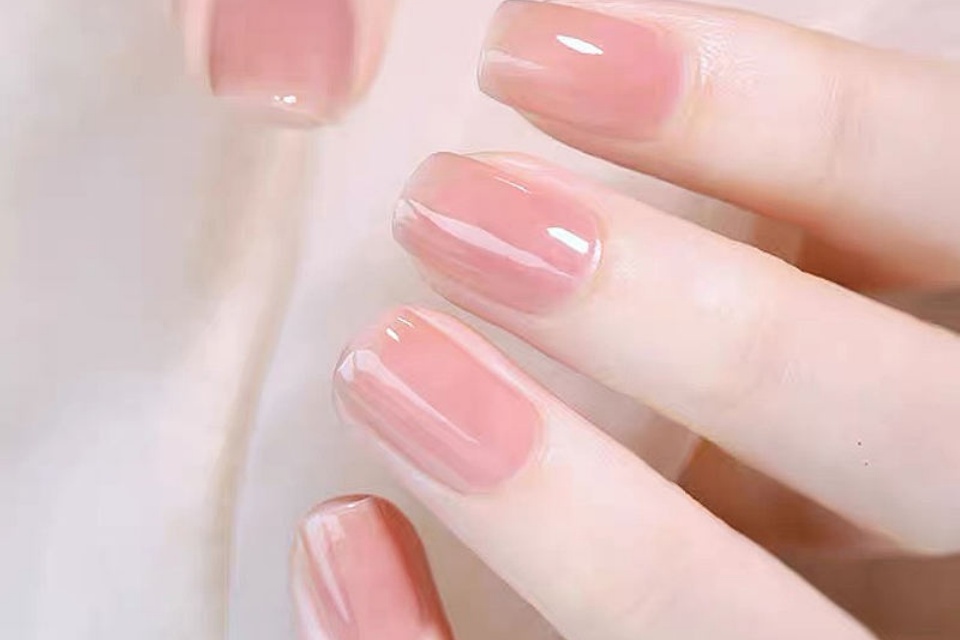
Is a matte vs glossy top coat choice mainly about appearance? A matte vs glossy top coat choice is a brand positioning decision that changes how nails photograph, how wear problems look, and what customers complain about, because matte scatters light and shows scuffs while glossy reflects light and highlights chips and shine loss. After that, you pick based on audience and usage.
What’s the best top coat finish for a nail brand selling to salons? The best top coat finish for a nail brand selling to salons is usually glossy because it’s more forgiving in application, reads consistently under different lamps, and matches what most service menus promise—durable shine that clients recognize instantly. Matte can still work, but it’s safer as a premium add-on.
When does a matte gel top coat outperform a glossy top coat? A matte gel top coat outperforms a glossy top coat when your brand’s core looks rely on texture, soft-focus color, or detailed line work, because matte reduces glare and can make designs look cleaner in photos. It also helps when your content strategy favors editorial shots over “sparkle and depth.”
Does a high shine gel top coat reduce returns or complaints? A high shine gel top coat can reduce returns and complaints when your buyers care about uniform results, because glossy formulas tend to level better and hide minor surface issues that matte finishes expose. It won’t fix weak prep or poor curing, but it usually creates fewer “this looks dirty” messages.
Do “no-wipe” top coats matter in the matte or glossy decision? A no-wipe top coat is a top coat designed to cure without a sticky inhibition layer, which affects user workflow, salon speed, and the final surface feel, because wipe steps introduce variation and contamination risk. Many brands pick no-wipe glossy first, then add no-wipe matte once stability is proven.
What compliance issues should I watch when choosing shiny top coat effects? Compliance issues for shiny top coat effects often involve ingredient reporting, facility/product documentation, and restrictions that can impact microplastic-based glitter or effect additives, because regulators and retailers increasingly scrutinize what’s intentionally added and how it’s labeled. If you sell across regions, plan compliance early.
If you’re stuck between matte and glossy, don’t pick one like it’s a tattoo. Build a two-finish plan: one “default” top coat that carries your volume, and one finish that gives your brand a recognizable signature.
Start by mapping your lineup under the top coat product range, then pressure-test it with real QC expectations, not mood boards. And if you need help turning that into a manufacturable spec, I’d begin with OEM/ODM support for your private label roadmap and a direct conversation through the contact page for project quotes and samples.