Talk to Our Expert
Our sales and engineers are available all the time, you can ask your specific requirements to our sales, and inspiration to our engineer here.

People are breaking out. And the industry’s response is predictable: remove one famous monomer, print a cleaner label, and pray the buyer doesn’t ask what replaced it.
Here’s the uncomfortable part: allergic reactions to gel nail systems aren’t rare edge cases anymore, and they don’t stay politely around the cuticle. In a retrospective clinic study from Amsterdam (8 years of patch testing), nail-cosmetic allergic contact dermatitis showed up in 1.6% of all tested patients and 2.3% of women tested; 97% of those cases reacted to 2-HEMA (HEMA) on patch test, and 80% cleared when they stopped touching acrylate products. (PubMed)
So yes, the shift to HEMA-free gel polish has a rational motive. But I don’t buy the fairy tale that “HEMA-free” automatically means “safe.”
HEMA (2-hydroxyethyl methacrylate, CAS 868-77-9) became the “headline villain” because it’s a strong, common sensitizer in nail cosmetics, and it’s easy to test for. The clinical literature is blunt: a 2023 review summarizes recent prevalence rates of HEMA contact allergy at >3% in the USA + Canada and 1.5%–3.7% in Europe, and notes that most modern cases trace back to nail cosmetics—both consumers and nail pros. (PubMed)
That creates a buyer’s market for reformulation. Brands can say: “We heard you.” Distributors can say: “We fixed it.” And salons can say: “We’re switching.”
But here’s the trick question.
Switching to what?
Allergic contact dermatitis from nail gels is usually a (meth)acrylate story: monomers + skin contact + incomplete cure + repetition. It’s not mystical. It’s chemistry meeting biology at the exact wrong place: the thin periungual skin, often already irritated from filing, acetone, over-prep, or micro-cuts.
One stat that should make any professional pause: a 2024 Finnish product analysis tested 37 artificial nail products (31 gel, 6 acrylic). 32/37 contained (meth)acrylates—and every single one of those had label discrepancies versus what lab analysis found. HEMA appeared in 20/37 samples and HPMA in 9/37, and packaging often failed to declare them; isobornyl acrylate showed up too. Gloves weren’t a magic fix either: neoprene lasted 20 minutes against nail gel; thin nitrile and PVC lasted about 5 minutes, and acrylic liquid penetrated fast. (PubMed)
That’s not a “consumer education” problem. That’s a supply chain honesty problem.
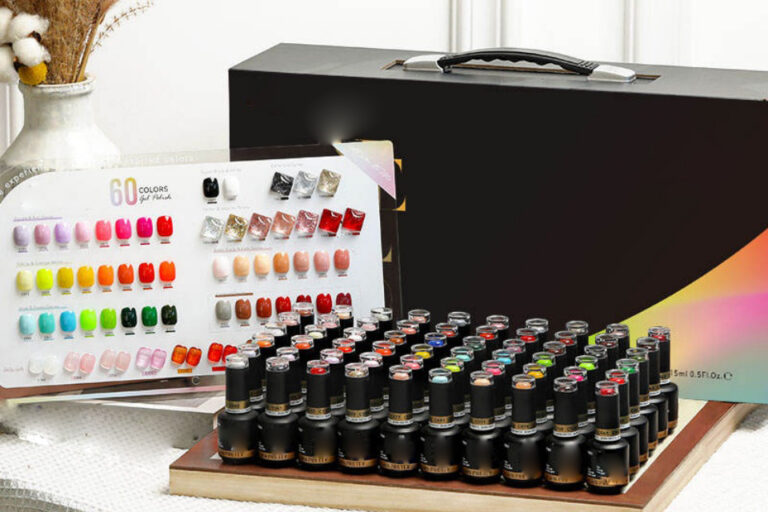
If you want to browse what “HEMA-free” looks like across categories (color gels, builders, bases), start with a structured catalog like this gel polish catalog and look for systems, not single SKUs—because the allergy risk usually lives in the whole routine (base, color, top, builder), not one bottle.
Short sentence: People still react.
Long sentence: Even when you remove HEMA, you often replace it with other reactive monomers—HPMA, isobornyl acrylate, urethane acrylates, various dimethacrylates—so the label gets prettier while the sensitization potential can remain very real, especially when DIY users flood the cuticle, under-cure, and leave uncured residue for hours. So what exactly did you “solve”?
A 2024 case report in Contact Dermatitis describes angioedema-like allergic contact dermatitis linked to a “vegan ‘HEMA-free’” gel nail polish that still contained other reactive ingredients. (PubMed) That’s the lesson the industry hates: “HEMA-free” can be true and still be misleading.
And it’s not just dermatology journals. Even conference reports and clinical writeups have pointed out allergic contact dermatitis from products marketed as “hypoallergenic” and “HEMA-free,” because methacrylate allergy can still be triggered by other acrylates and related compounds. (ScienceDirect)
So when someone asks, “Is HEMA-free gel polish safer?” my answer is: sometimes—but only if the reformulation is paired with tight controls on residual monomer, labeling, and cure performance, and only if “free-from” doesn’t hide a swap to another problem monomer.
Europe already signaled the risk profile years ago. Under Commission Regulation (EU) 2020/1682, nail products containing HEMA (and Di-HEMA TMHDC) are tied to warning language like “for professional use only” and “can cause an allergic reaction.” (EUR-Lex)
The SCCS scientific opinion also frames the core regulatory compromise: these monomers can be considered acceptable when applied appropriately to the nail plate within specified concentration limits (the document discusses up to 35% for HEMA and 99% for Di-HEMA TMHDC in artificial nail modeling systems), with the assumption that trained application keeps product off the skin and curing is done correctly. (Public Health)
Now look at the market reality: at-home gel kits, social video tutorials, cheap lamps, and “close enough” curing times. That pro-only assumption collapses. And once sensitization happens, it’s not just “no more gel nails.” Acrylates show up in other materials too.
I’d use a simple checklist. Not vibes. Not influencer comments.
If you’re comparing suppliers or building a line, it also helps to look at how they organize product families—bases, builders, colors, tops—because a consistent system reduces “random bottle roulette.” You can see the structure across gel polish categories.
| Label claim you’ll see | What it actually controls | What it does not control | The question I’d ask |
|---|---|---|---|
| “HEMA-free gel polish” | Removes 2-HEMA as a listed ingredient | Other acrylates/methacrylates; mislabeled monomers; curing failures | “List the top 10 reactive monomers used, and provide COA/SDS for the full system.” |
| “Hypoallergenic gel polish” | Usually nothing standardized | Real-world reaction risk; cross-reactive monomers | “What testing supports this claim—patch test data, HRIPT, or just marketing?” |
| “Professional use only” | Signals higher-risk chemistry needs trained handling | DIY misuse, skin flooding, cheap lamps | “What training and cure protocol do you provide to salons?” |
| “Low odor / gentle” | Often reduces solvents/fragrance perception | Sensitization potential of monomers | “Show monomer profile and residual monomer controls.” |
| “Accurate labeling” | Reduces surprise allergens if true | Doesn’t stop under-curing | “Do you verify labels vs lab analysis (GC-MS)?” (because discrepancies are common) (PubMed) |
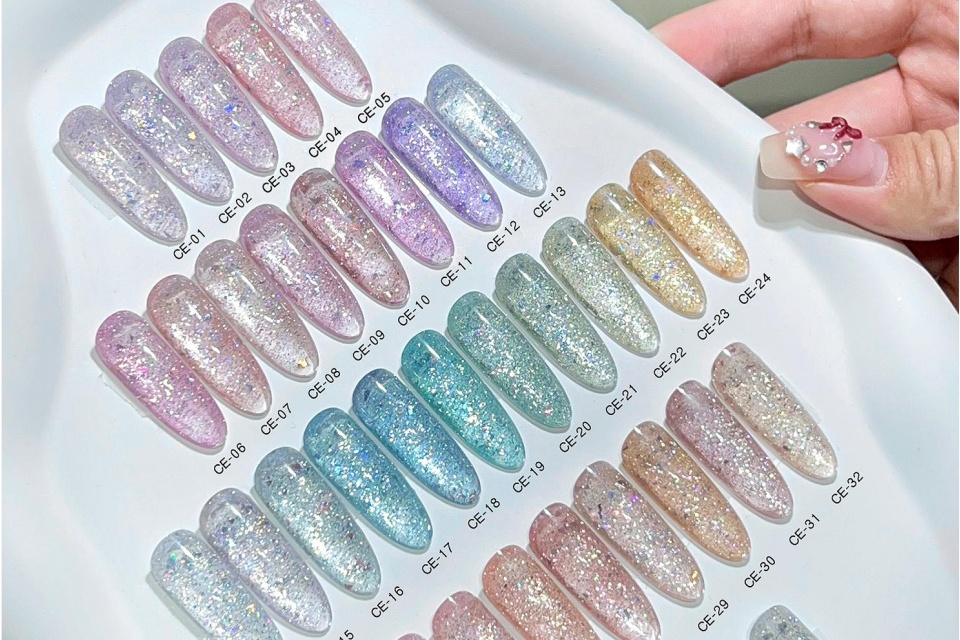
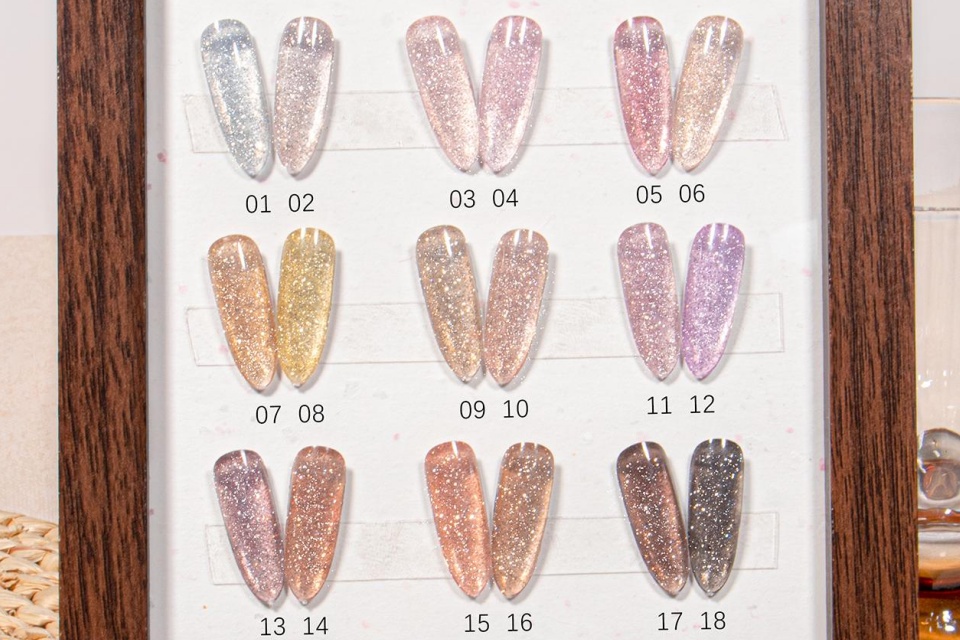
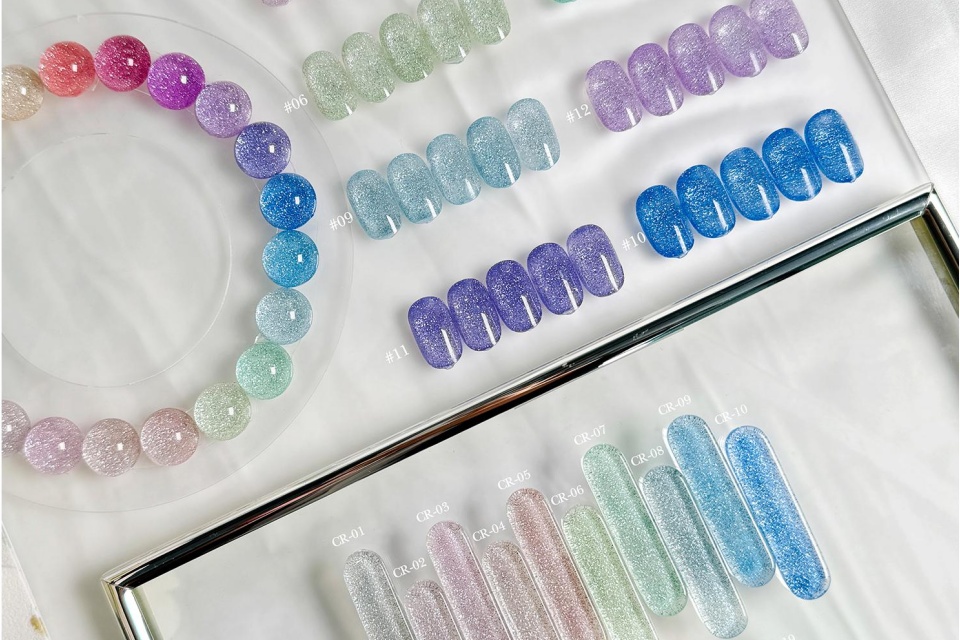
If you’re sourcing HEMA-free lines specifically, look for suppliers that can show consistent SKUs across color and builder formats—example: a HEMA-free poly gel/acryl gel set for wholesale or a curated color run like a HEMA-free gel polish series for OEM/ODM—then ask for the paperwork behind the pretty photos.
“HEMA-free” became popular because it’s legible. One acronym. One villain. One fix.
But sensitization doesn’t care about your label design. It cares about exposure. And exposure is driven by behavior (skin contact), tooling (lamp output), and formulation (what monomers remain free after curing). The strongest evidence we have points to nail cosmetics as a primary driver of modern HEMA allergy cases. (PubMed)
So if you’re a brand responding to allergy concerns, the honest strategy is bigger than removing HEMA. It’s documentation, training, and chemistry choices you can defend under questioning.
HEMA-free gel polish is a UV/LED-curable nail coating formulated without 2-hydroxyethyl methacrylate (2-HEMA) as an intentionally added ingredient, typically to reduce exposure to a well-known contact allergen; it still usually contains other acrylate or methacrylate monomers needed to polymerize into a hard film. (PubMed) After that definition, here’s the buyer reality: “HEMA-free” is a starting filter, not a safety guarantee, because other sensitizers can remain and labels can be incomplete.
HEMA-free gel polish is “safer” only in the narrow sense that it removes one common allergen from the formula, which may lower the chance of sensitizing some users; however, overall risk still depends on the full monomer blend, labeling accuracy, and whether curing and application prevent skin exposure to uncured residues. (PubMed) If you’ve already reacted to gels, you should assume cross-reactivity is possible and treat “free-from” claims with suspicion.
An allergic reaction to gel nail polish is most often allergic contact dermatitis caused by repeated skin exposure to reactive (meth)acrylate monomers—especially when product touches the cuticle/skin or cures incompletely—leading the immune system to become sensitized and react with redness, itching, blistering, or swelling. (PubMed) The part that surprises people: reactions can show up away from the nails (face/eyelids) after transfer and sensitization.
Yes—because “hypoallergenic” and “vegan” do not automatically remove the reactive monomers that trigger methacrylate allergy, and published clinical reports describe allergic contact dermatitis from products marketed as “HEMA-free,” sometimes severe enough to mimic angioedema-like swelling of lips/eyelids. (PubMed) Translation: your skin reacts to chemistry, not brand values.
Choosing HEMA-free gel polish brands means verifying the full system (base/color/top) with documentation—SDS/COA, disclosed monomer profile, cure protocol by lamp wavelength/time, and evidence that labeling matches chemical reality—because studies show widespread label discrepancies and undeclared sensitizers in nail products. (PubMed) If a supplier can’t or won’t provide this, you’re gambling with your customers’ skin.
If you’re building or sourcing a HEMA-free line, don’t shop by slogans. Shop by proof.
Browse a structured system in the gel polish catalog, then pressure-test the supplier’s quality assurance process, and if you’re going private label, start with OEM/ODM gel polish services so you can lock specs, documents, and batch traceability from day one. When you’re ready to get specific (monomer list, compliance docs, MOQ), use the contact page and ask for the paperwork first.